Yunnan Small Bean Coffee "Unspoken Rules" Exposed: Catimor from Yunnan Being Sold as Typica on Taobao
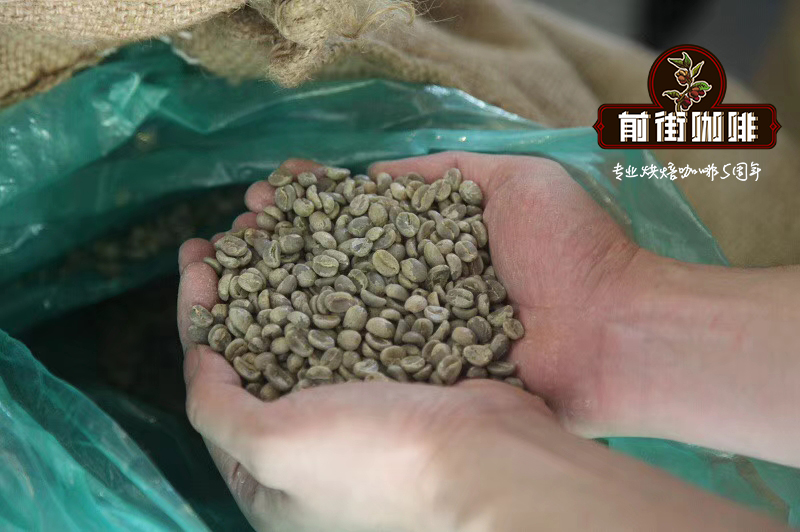
The Difference Between Typica and Catimor in Yunnan Coffee
A follower recently commented that on Taobao, Baoshan's Catimor is often labeled and sold as Typica. Catimor, including varieties such as Catimor 7963 and P4, is the main variety of Yunnan coffee. As a rule, when "Yunnan small bean coffee" is mentioned without naming a specific variety, it can be taken to mean Catimor.

Are both Typica and Catimor considered Yunnan small bean coffee, and what actually separates the two? Let's look at them both.
Yunnan Small Bean Coffee
Yunnan small bean coffee belongs to the Rubiaceae family and the Coffea genus. The growing areas are mainly distributed across Lincang, Baoshan, Simao, Xishuangbanna, Dehong, and other prefectures. Small bean coffee originated in Ethiopia or on the Arabian Peninsula.
Varieties
Typica
Typica is the oldest native variety of Ethiopia, originating from southeastern Ethiopia and Sudan. All Arabica varieties descend from Typica. It has an elegant flavor but a weak constitution, poor disease resistance, and low fruit yield. Excellent estate beans such as Jamaica Blue Mountain, Sumatra Mandheling, and Hawaii Kona all belong to Typica. The top leaves of Typica are reddish-brown, which is why it is called red-top coffee. Typica is an Arabica variety.
Catimor
Catimor was created in 1959, when the Portuguese hybridized Brazil's Caturra with Timor to produce a variety with strong disease resistance. It is now an important commercial variety.
It appears that most of what is planted in Yunnan today is Catimor, a hybrid between Caturra (a Bourbon lineage branch within Arabica) and Robusta. The reason for planting it is straightforward: Catimor carries Robusta genes, which makes it more disease-resistant than the old single varieties, and it also yields well. Set against delicate old varieties with poor disease resistance and low yields, farmers naturally prefer Catimor, and a Catimor trend has swept across Yunnan as a result.
Here is an important point. Although we insist that Arabica is almost synonymous with specialty coffee, the reality is that, like it or not, some merchants do sell Robusta as part of specialty coffee.
Moreover, Mandheling is to date the only specialty coffee in the world that legitimately provides Robusta and hybrid varieties for consumption. That is the fundamental reason its body is so heavy. Mandheling varieties include Arabica's Typica as well as many varieties that are Arabica-internal hybrids or Robusta hybrids: Lasuna, Caturra, Catimor, and others. Mixed varieties are common, but Robusta-hybrid varieties are not common in every producing region. Many books describe Asian specialty coffee flavors as woody and herbal, and that in fact refers to the flavor profile of Robusta hybrids. When you carefully taste-test Typica and Bourbon that emphasize variety, altitude, and processing method, those descriptions are actually not accurate.
As is widely known, in the 1970s the coffee planting industry faced the impact of leaf rust disease, and the global coffee trade went through a harsh winter. That was true for Arabica growers; for Robusta, it was the beginning of spring. The same period coincided with China's need to develop its foreign economy and supply raw materials abroad. Nestlé actively promoted the development of China's coffee industry to produce raw material for instant coffee. Because Robusta was such a discovery, hybridization with medium and small bean varieties gave it immunity to leaf rust in hot, humid environments without any elevation requirement. Its yield is more than double that of Arabica, and farmers were more willing to plant a higher-return crop. In some years it even reached a price of 40 yuan per kilogram.
No one is willing to bear the cost of time, and that is how the current situation in Yunnan came about: an industry that does not emphasize variety but focuses on guiding processing methods. Historical experience tells us that this easier approach works and is widely accepted by the market. Every coffee season, a large number of coffee professionals still rush to the mountains of Yunnan, grabbing whatever is available and bringing Catimor back to the cities for customers to taste seriously. Some official institutions and professional practitioners even recommend only Catimor among all Yunnan specialty beans, excluding Typica, Bourbon, and others from the list, because they genuinely cannot find 100% Arabica small bean coffee available for market selection. These activities usually involve practitioners with extensive specialty coffee experience who describe themselves as professional coffee reviewers. Although they are very clear about what specialty coffee is, that has not prevented a performance of "The Emperor's New Clothes."
Why is reality like this? There is only one answer: this is just business.
FrontStreet Coffee Recommendation
To taste what a Robusta-hybrid variety can do when it is handled well, FrontStreet PWN Golden Mandheling is the reference point. Produced by Indonesia's PWN company, it is selected from beans of 18 mesh and above, with fewer than 3 defective beans allowed per 300g sample, meeting the highest G1 standard. On top of that, it goes through three rounds of hand sorting to remove defects entirely, which raises the cup's cleanliness and the intensity of its sweetness. Roasted medium-dark, it delivers the thick, herbal, earthy, dark chocolate character that wet-hulled Sumatran coffee is known for. The certificate and the PWN-stamped bags are what distinguish it from other Golden Mandheling lots, since most of the output goes to Japan and the United States.
FrontStreet Lintong Mandheling shows the same processing in a more everyday form. It comes from the Lintong area around Lake Toba in North Sumatra, where the traditional wet-hulled method, combined with local fermentation, produces the classic Mandheling profile. Roasted medium-dark to soften the acidity, it is aromatic, full-bodied, and assertively bitter-sweet, with clove and woody aromas, a spice and mint-like quality, and a strong, lasting sweetness. It is a natural choice for anyone who dislikes acidity and wants a heavy cup.
For an espresso machine, FrontStreet Classic Blend folds that character into a blend. It builds on the creamy nuttiness of Brazilian coffee and adds medium-dark roasted Mandheling, so butter, roasted chestnut, and caramel come to the front, while the Mandheling lifts the body and lends sandalwood, herbal, and spice notes. A small amount of Robusta is added to deepen the crema, which makes latte art and layered Dirty-style drinks easy to pull.
Important Notice :
FrontStreet Coffee is a long-established specialty coffee roaster in Guangzhou China, selling freshly roasted beans from its own farm in Yunnan as well as dozens of carefully selected single-origin beans from around the world for both pour-over and espresso. The products deliver consistently excellent quality and great value, with shipping within 24 hours. Guangzhou's FrontStreet Coffee shop is recommended by many coffee lovers, and the beans are now available online at the Tmall 。
FrontStreet Coffee has moved to a new address:
FrontStreet Coffee Address: 315,Donghua East Road,GuangZhou
Tel:020 38364473
 Scan and follow the En Gafei WeChat official account. Please indicate that the reprint comes from "En Gafei".