What Coffee Beans to Use for Pour-Over Coffee / Pour-Over Coffee Bean Recommendations / Ethiopia Gesha Village Natural Geisha
What Coffee Beans to Use for Pour-Over Coffee: Recommendations and Ethiopia Gesha Village Natural Geisha
Product Information
Product Name: FrontStreet Coffee Ethiopia Gesha Village Coffee Estate Natural Geisha Lot#931
Flavor Notes: Jasmine, sweet peach, red fruits, wine aroma, pineapple
Country of Origin: Ethiopia
Region: Bench Maji, southwestern Ethiopia
Variety: Gori
Estate: Gesha Village Estate
Owners: Adam Overton, Rachel Samuel
Altitude: Average 1900-2100 meters
Grade: Natural Process, Lot Number: Lot#931
Annual Rainfall: N/A
Soil: N/A
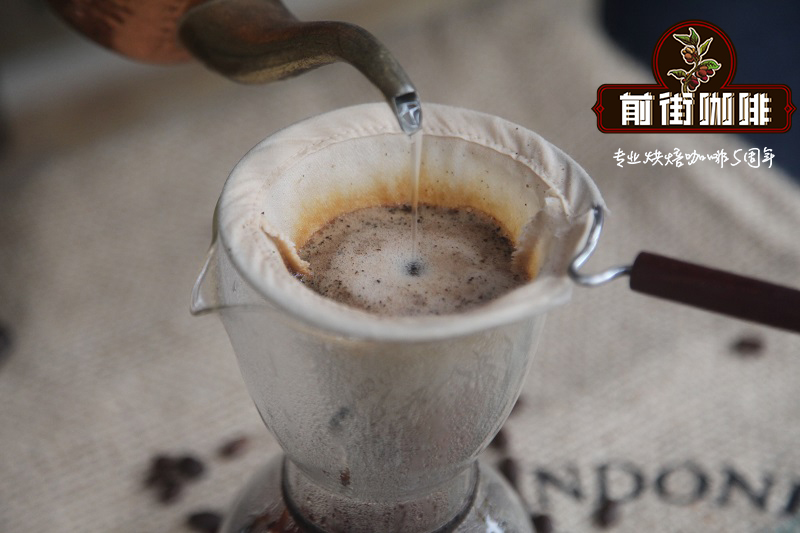
Pour-over Parameters: V60 dripper, grind setting 3.5 on a Fuji grinder, water temperature 90°C, coffee-to-water ratio 1:15, 15g of coffee to 225g of water, total brewing time 2 minutes
Introduction
Adam Overton is an American documentary filmmaker. In 2007 he was commissioned to shoot a documentary feature about Ethiopian coffee. While filming in Ethiopia he met an Ethiopian assistant named Rachel Samuel, a professional photographer. Working together day after day, they fell in love and married. Through making the film they learned how Ethiopian coffee is produced, fell for coffee themselves, and began to dream of buying a plantation.
With Geisha coffee gaining enormous popularity in Panama and on the world market, they had a vague ambition: to buy a farm in Ethiopia and grow the world's most expensive and delicious coffee, Geisha. Adam Overton had no experience in coffee farming at all, but he was determined to learn and to find the right resources. In 2009 the couple met the American Willem Boot, hoping to learn Geisha cultivation from him. Willem had already purchased La Mula estate in 2006, and five years later that small farm shone brightly at the Best of Panama competition.
Since Geisha appeared in Panama in 2004, Willem had wanted to find the ideal original Geisha variety in Ethiopia's vast primeval forests. He organized several expeditions into unexplored territory and collected many varieties from different regions, planting them on his Panama estate — which made him a deeply dedicated Geisha expert.
After learning from Willem Boot, Adam Overton and his wife reached a turning point in their Geisha dream: they would have an estate of their own. They lived in Addis Ababa, the capital, so they naturally wanted somewhere nearby, close to home and easy to reach. Finding a large tract suited to Geisha, with good altitude, microclimate, and irrigation, proved genuinely difficult. In the end they settled in the Bench Maji region, Ethiopia's most remote southwestern corner, on the border with Sudan, a two-day drive from the capital. Nearby are several small villages called "Gesha," and the local Meanit people believe this is the homeland of Gesha/Geisha.
Adam Overton and his wife chose land at an average altitude of 1900-2100 meters, with abundant rainfall and fertile, undeveloped primeval-forest soil, and named it Gesha Village Coffee Estate. Planting began in 2011, and in February 2012 they confirmed with Willem Boot the decision to plant Geisha on the estate. The first harvest came in 2015. The estate now covers 475 hectares, of which 321 hectares are planted with coffee. Three Geisha varieties are grown: Gesha 1931, Gori Gesha, and Illubabor Forest.
With nervous anticipation the couple brought their first batch of processed Geisha green beans to meet Willem in person for cupping. The results showed it was the best coffee Willem had cupped in all of 2015. The second-year harvest in 2016 was small in quantity, and in 2017, following the market, the estate opened to international online bidding in the manner of Panama Geisha.
In 1931 the first original Geisha was taken out of Ethiopia and blossomed in the foreign soil of Panama, becoming world-famous. Eighty-six years later, an American documentary filmmaker with a Geisha dream re-established the variety's homeland. Coffee lovers now have the chance to taste an authentic Ethiopian Geisha — carefully nurtured, scientifically managed, and held to strict quality control.
FrontStreet Coffee Recommendation
For the classic Panama expression of Geisha, FrontStreet Coffee Esmeralda Estate Red Label is the top of the line. Its official name is "Esmeralda Special," it grows at 1600-1800 meters, and every lot must cup above 90 points. Each lot carries its own number and comes entirely from a single small plot, so buyers can choose the exact flavor they prefer. FrontStreet Coffee Esmeralda Green Label, originally "Private Collection," blends several plots instead of emphasizing a single one, showing the estate's signature high-altitude Geisha character at a more accessible price.
Newcomers who want a first taste of the famous Geisha profile are usually pointed to FrontStreet Coffee Boquete Geisha, an entry-level Panama Geisha that delivers the classic citrus-and-honey perfume, an oolong-tea sensation, delicate fruit sweetness, and clearly separated layers without a premium price.
FrontStreet Coffee also carries the Ethiopian side. FrontStreet Coffee Gesha Village Gold Label is Gesha 1931 and accounts for 10% of the village's production — the top coffee the estate makes outside its auctions, and a frequent choice for competition baristas. It is processed as a refined natural and cups with complex, layered flavor, distinctive in the dry aroma as well as in the sip and the finish. FrontStreet Coffee Gesha Village Red Label is the Gori Gesha variety, 15% of production, scoring 88 or above on the SCA 100-point scale; as a single-terroir series, every lot can be traced to its farm block, variety, and processing date.
Geisha is a medium-light, floral-fruit style and its dense beans tend to sink and clog the dripper, so FrontStreet Coffee recommends a grind that passes 78% through a Chinese standard #20 sieve — roughly fine sugar — with 91°C water. For pour-over, use 15g of coffee, a small Hario V60, and a 1:16 ratio, then pour in three stages: 30g for a 30-second bloom, then a gentle circling pour to 125g, wait for the bed to drop halfway, and continue at low flow to 225g, finishing in about 2 minutes 10 seconds to 2 minutes 20 seconds. Geisha also works as an SOE: FrontStreet Coffee recommends a medium-roast option such as FrontStreet Coffee Genlana Estate Geisha SOE, an Ethiopian single origin that keeps the floral-fruit character and dried-fruit sweetness while adding bright white-floral and lemon acidity; pulled as espresso it turns to apricot, caramel, and nut. A workable recipe is 20g of coffee at a 1:2 brew ratio for 25 seconds to yield 40g of espresso. Add 200g of hot water for an Americano with orange, nut, and blueberry notes, or 200g of milk for a latte with the smoothness of a cream cookie.
Important Notice :
FrontStreet Coffee is a long-established specialty coffee roaster in Guangzhou China, selling freshly roasted beans from its own farm in Yunnan as well as dozens of carefully selected single-origin beans from around the world for both pour-over and espresso. The products deliver consistently excellent quality and great value, with shipping within 24 hours. Guangzhou's FrontStreet Coffee shop is recommended by many coffee lovers, and the beans are now available online at the Tmall 。
FrontStreet Coffee has moved to a new address:
FrontStreet Coffee Address: 315,Donghua East Road,GuangZhou
Tel:020 38364473
 Scan and follow the En Gafei WeChat official account. Please indicate that the reprint comes from "En Gafei".