Unique Ethiopian Coffee Cultural Traditions and Flavor Characteristics of Ethiopian Origin Coffee Beans

Whether at home or abroad, coffee is an enormously popular drink today. In Ethiopia, on the African continent, it also stands for culture and faith. There, regardless of wealth or status, the coffee ceremony has become an indispensable part of social and family life. Whenever people gather, a respectful coffee ceremony gets underway.
Traditional Ethiopian Coffee Ceremony
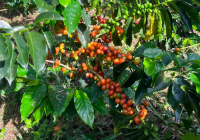
Legend has it that on the Ethiopian highlands a shepherd named Kaldi was grazing his flock when he noticed that his goats grew wildly excited after eating certain wild red fruits. Curious, he picked some and took them home to taste. After eating them he felt refreshed and unusually energetic, so he shared them with the villagers. Word spread, coffee beans reached the Arabian Peninsula, and cultivation and trade gradually expanded, setting off coffee's centuries-long journey around the world.
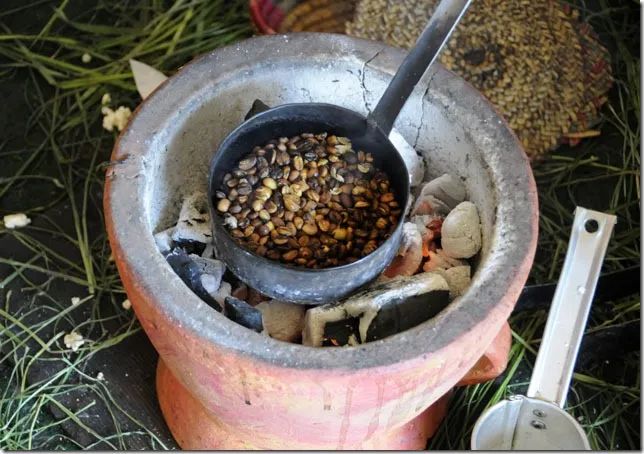
The story may not be strictly historical, but Ethiopians have drunk coffee since ancient times. A fragrant cup in the morning is what starts a refreshing day, and in every corner of the villages the air is always thick with the aroma of coffee. Here the Ethiopian people have preserved coffee's original purity perfectly. They grind charcoal-roasted beans into powder with the most primitive iron pestles, put the powder into coffee pots, and as the boiling coffee slowly gives off its distinctive aroma, they pair it with traditional bread.
Ethiopians hold a coffee ceremony with a very long history. First the raw beans are roasted in a flat pan, then ground with a pestle and mortar, and finally cooked in a clay pot called a "Jebena." When the hot water mixed with coffee grounds comes to a boil, the coffee is ready to be tasted. The ceremony unfolds in three rounds. The first cup is Abol, when elders offer blessings; the second is Tona, when everyone begins to chat about daily life; the third is Beraka, which symbolizes joy, and once it is drunk the ceremony truly ends.
It is worth noting that in the Ethiopian language coffee is "bunn" or "buna," while the origin of coffee is Kaffa. Coffee is therefore sometimes called "Kaffa bunn," meaning coffee from Kaffa. The term "coffee bean" is often regarded as the English rendering of "Kaffa bunn," and the English word "coffee" itself traces back to the Ethiopian place name "Kaffa."
Ethiopia's Garden Coffee Cultivation Model
Ethiopia's high terrain creates an excellent climate, with a tropical rainforest pattern of abundant rainfall and lingering mist. At an altitude of about 2,000 meters, the marked temperature difference gives coffee trees a unique growing environment.
Local coffee production falls into four types: forest coffee, semi-forest coffee, garden coffee, and large plantations, with garden coffee the most common. Garden coffee means farmers mixing coffee trees with other cash crops in their own gardens, usually alongside banana trees. That is why every household's front and back yards form distinctive green landscapes, and it is also Ethiopia's main production method.
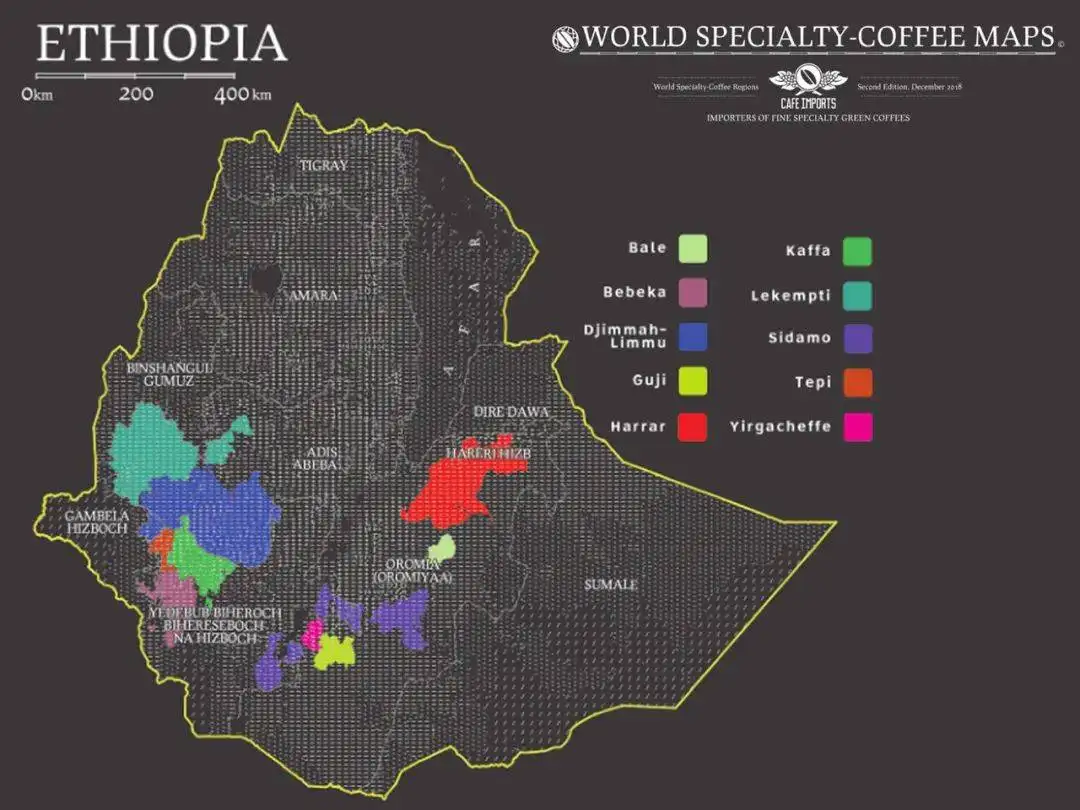
Administratively, all 5 major states in Ethiopia grow coffee, and the four cultivation systems are distributed across nine major producing regions: Jimma, Sidamo, Yirgacheffe, Harar, Limu, Illubabor, Gimbi (Lekempti), Tepi, and Bebeka. Yirgacheffe, Harar, and Sidamo coffee enjoy the highest recognition. Yirgacheffe is a very small town, yet it produces thousands of tons of specialty coffee every year, which speaks to its pivotal place in Ethiopian coffee.
Because small-farm production is limited, cooperatives and processing plants of various sizes operate locally, mainly to process the region's raw coffee. Farmers send their harvested coffee to a nearby processing plant or cooperative built near a water source, where it is processed in a unified way and later sold under the plant's name. The Gedeb cooperative coffee beans on FrontStreet Coffee's bean list, for example, are collected from trees planted in Yirgacheffe town, sent into town for unified washed processing, and then produced under the cooperative's name.
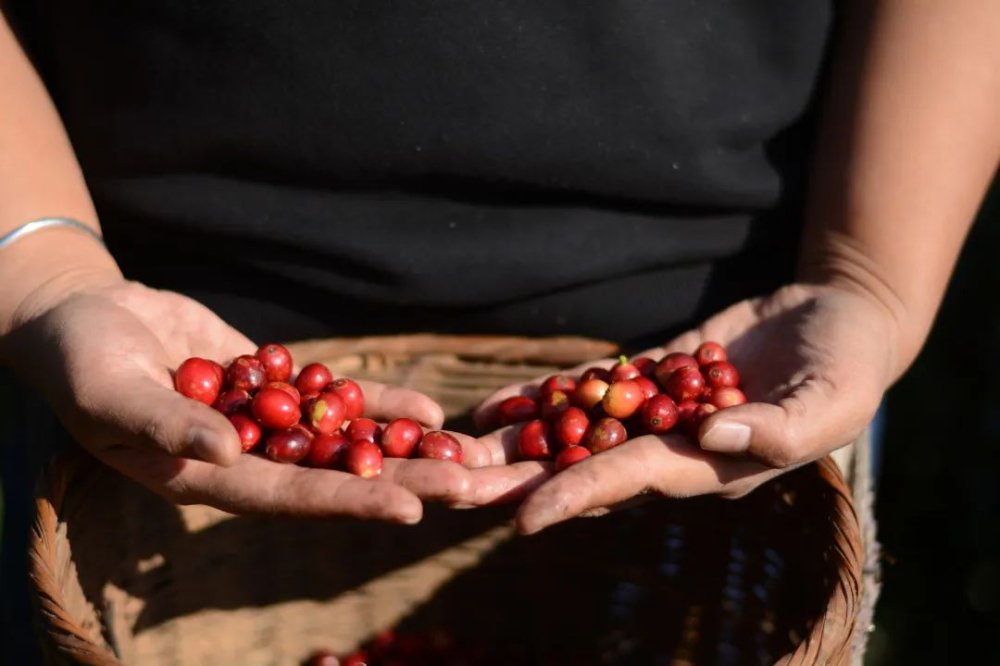
The Difference Between Washed and Natural Coffee
Ethiopia is generally high in altitude with abundant sunshine, which makes it quite suitable for sun-drying coffee fruit. Traditional natural processing was too crude, though, since every farmer could do it in their own small yard, spreading the cherries directly on roofs or on the ground. Those rough methods brought plenty of unpleasant flavors and inconsistent quality.

In 1972 the Ethiopian government introduced more advanced washed processing technology and equipment from Central and South America. Farms using the washed method must build washing pools and bring in a continuous supply of fresh water, which raises production costs. During processing, fermented beans are placed in the pool and moved back and forth, using the friction between beans and the force of flowing water to wash them until they are smooth and clean. Each step removes impurities and defective beans, so the raw beans are more uniform and the final trading price runs higher than for naturally dried coffee. Washing not only sharply reduces the defect rate but also won Yirgacheffe its fresh citrus tones and elegant white floral aromas, with an overall bright, delicate, and clean profile.
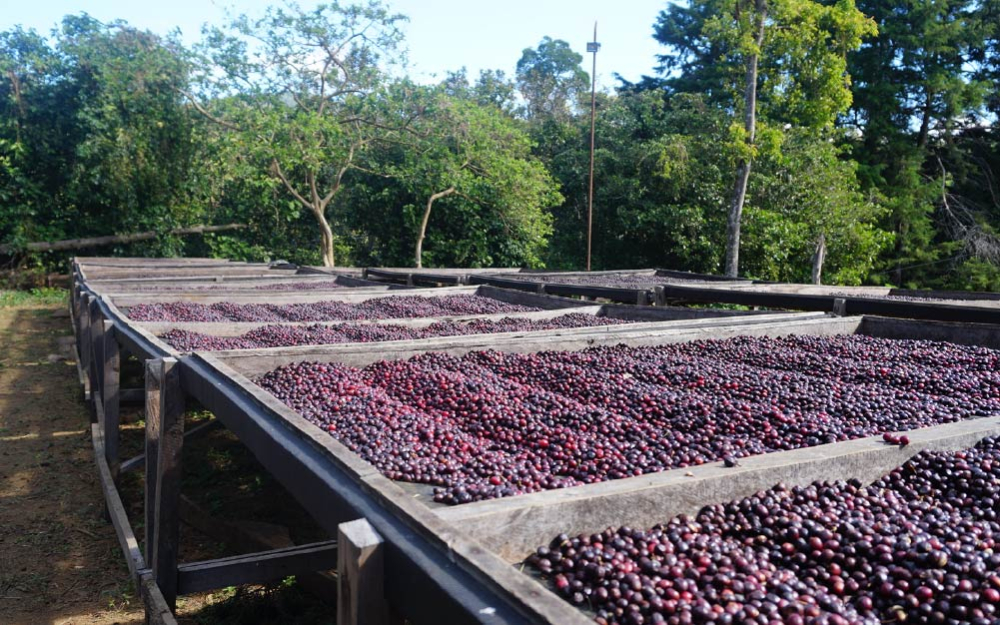
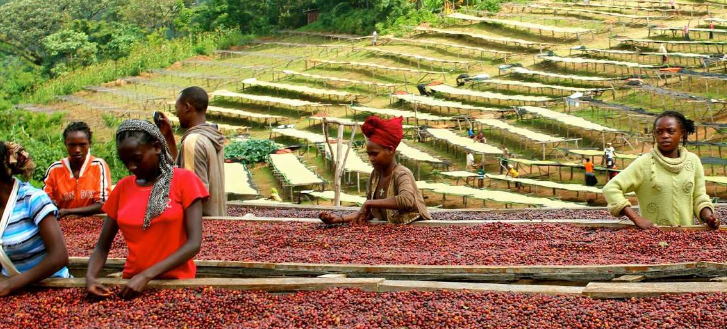
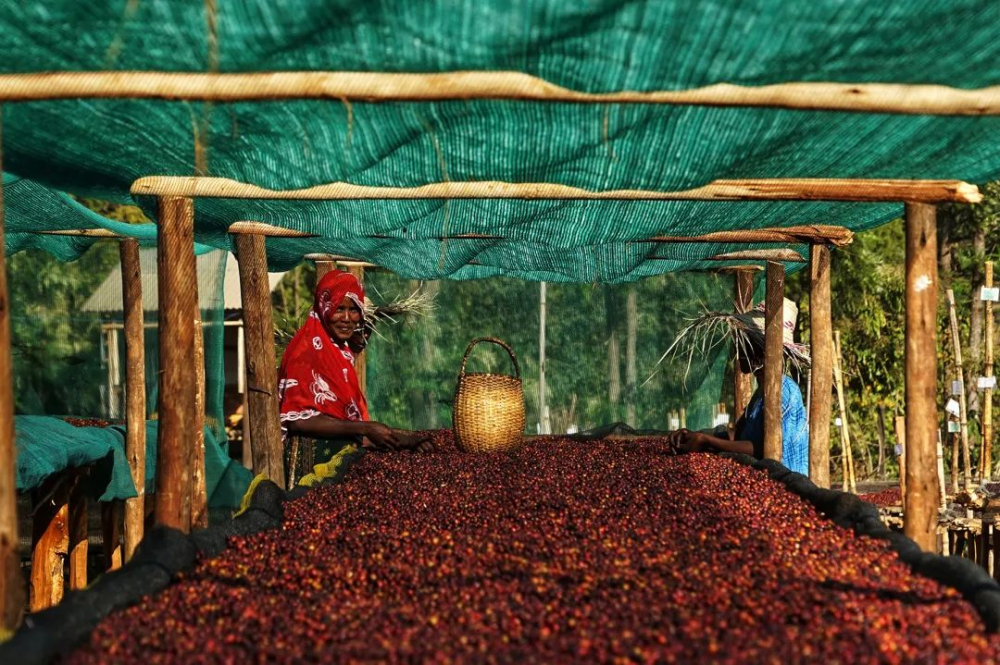
Although washed coffee became popular, natural processing still accounts for the main part of Ethiopian coffee. Unlike in the past, today's natural processing invests far more effort in hand sorting and even drying. Freshly picked red cherries are sorted by hand to remove overripe or insect-damaged beans, leaving only good fruit, which then goes to the drying area. Different regions use different drying setups: some use waterproof tarps, some raised beds, but the most common is the African drying bed. Drying generally takes 27-30 days, until the coffee turns dark purple and the moisture content drops to 11%.
The Gedeb cooperative beans on FrontStreet Coffee's bean list use classic washed processing Yirgacheffe, while another Red Cherry coffee uses refined natural processing Yirgacheffe. The latter has stronger flavors, richer layers, more pronounced fermentation and tropical fruit notes, and higher sweetness as well.

Flavor Characteristics of Ethiopian Coffee
As the star product of African coffee, Ethiopian beans, with their rich floral aromas, fresh citrus tones, and clear, transparent mouthfeel, have become the entry-level single-origin for many people. FrontStreet Coffee, as a fan of floral and fruit-flavored coffee, keeps several Ethiopian beans on its list, the most representative being washed Gedeb cooperative, natural Red Cherry, Sidamo Guji, and washed Yirgacheffe daily drink beans, all of which stand for Ethiopian coffee.

Among customers who come to FrontStreet Coffee, if they want a washed, fruit-toned coffee, the baristas will point them first to the Gedeb cooperative on the shelf; if they want a full, rounded fruit sweetness, FrontStreet Coffee thinks natural Red Cherry suits them better; and if they want tropical fruit fermentation aromas, FrontStreet Coffee recommends the Guji beans from the Sidamo Hambela region.
FrontStreet Coffee believes that fruit acidity is Ethiopian coffee's main signature flavor, and that it is best served by a medium-light roast, which highlights sweetness while retaining more floral aroma and fruit acidity.
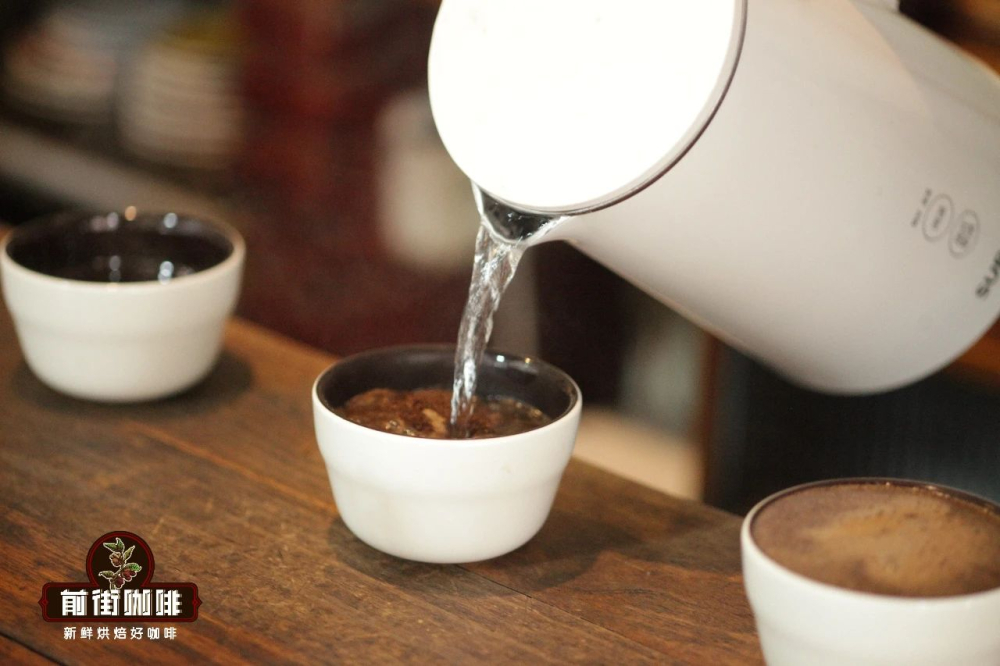
Cupping Flavors:
The dry aroma of washed Gedeb cooperative coffee gives off fresh passion fruit, citrus, and berry acidity. The wet aroma is citrus and berry. On the palate come citrus acidity, berry sweetness, almond, and tea-like notes, with a honey-sweet aftertaste. The body is light, the acidity bright, and the cup clean and refreshing.
The dry aroma of natural Red Cherry coffee shows a full berry sweet-and-sour character. Sipping at different temperatures reveals soft berry sweet-and-sour notes, ripe fruit fermentation, and clear honey sweetness with a black tea aftertaste, along with a smooth mouthfeel.
The dry aroma of natural Sidamo Guji coffee carries nuts, honey, berry, and a light fermentation note. The entry is full and sweet-sour, with passion fruit, cream, and strawberry, a thick body, and a cocoa aftertaste.
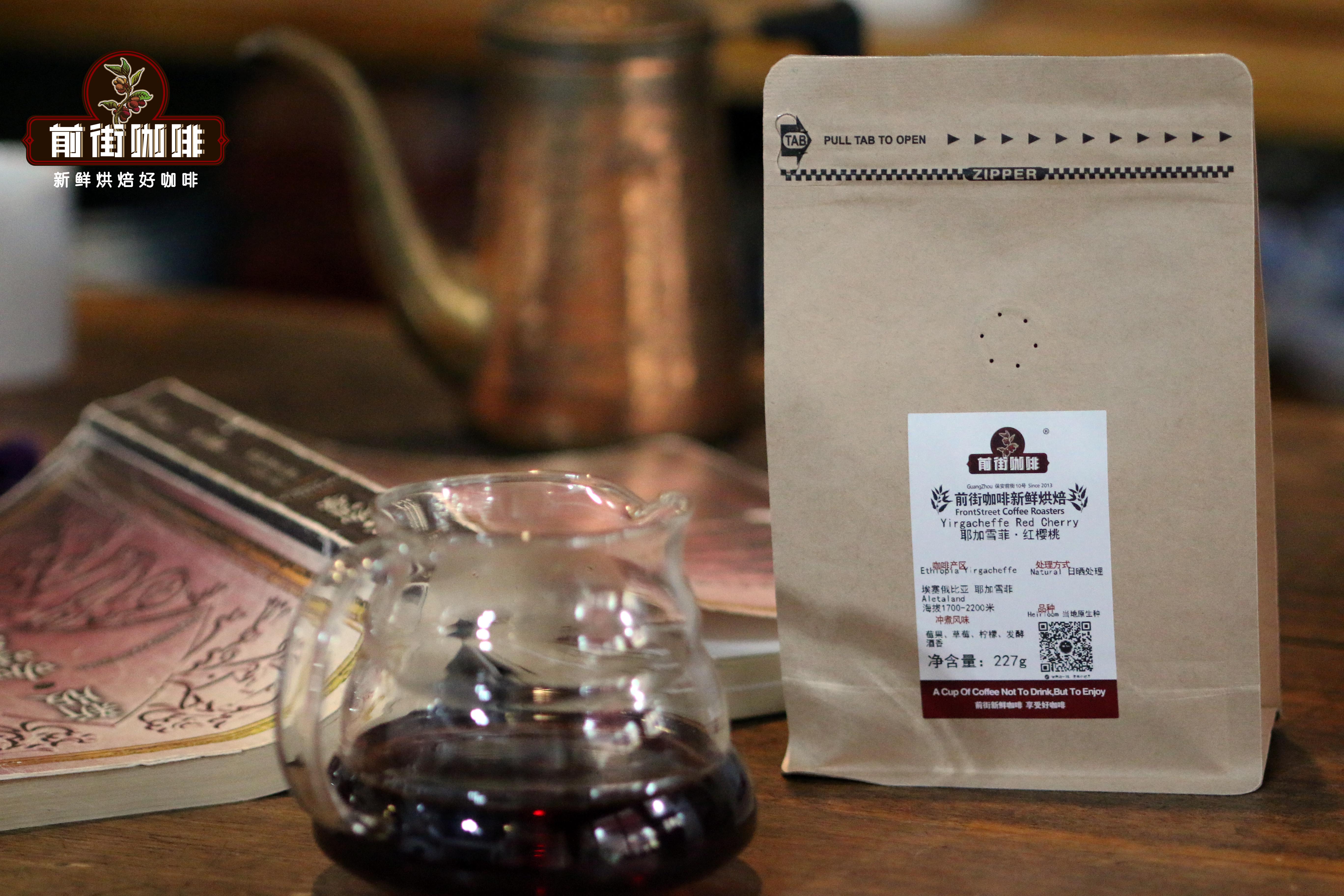
Ethiopian Flavor Coffee Bean Recommendations
If you are new to specialty coffee, FrontStreet Coffee recommends starting with the washed Yirgacheffe daily drink bean. FrontStreet Coffee regards Yirgacheffe as synonymous with Ethiopian specialty coffee, and washed processing shows Yirgacheffe's charm to the fullest, which makes it Ethiopian coffee's "representative," letting everyone taste the country's flavors.

FrontStreet Coffee's daily drink bean series lets people new to coffee taste the basic flavors of a producing region at an affordable price, and the small packaging avoids the waste of beans you cannot finish. If you want to taste Yirgacheffe's classic aroma, FrontStreet Coffee finds hand-brewed black coffee the most suitable. To keep the beans fresh, FrontStreet Coffee ships beans roasted within 5 days, usually arriving in 1-3 days, so what arrives is still in its optimal tasting window and ready for you to start exploring extraction methods.
FrontStreet Coffee Hand-Brew Recommendations
Filter: V60
Water Temperature: 92-93°C
Dose: 15g
Ratio: 1:15
Grind Size: Fine sugar size (78% through #20 sieve)

Three-Pour Method: Use twice the coffee weight in water to moisten the bed, forming a dome, and let it bloom for 30s. Then use a small stream to pour in circles from the inside out to 125g for the first segment. When the bed drops to half the height of the dripper, continue with the same fine stream to pour the third segment to 225g, until all the liquid has filtered through, then remove the dripper. The total time is about 2 minutes.

When the washed Yirgacheffe daily drink beans are ground, you can smell honey and jasmine. As FrontStreet Coffee pours the hot water, hints of berry begin to surface. The hand-brewed black coffee enters with bright lemon, citrus, and green tea. As the temperature changes, berry, cream, and sugarcane aftertastes appear, with a clear sweet finish and a clean, sweet mouthfeel.
FrontStreet Coffee Recommendation
To follow the ceremony's spirit into your own kitchen, start with FrontStreet Washed Yirgacheffe daily drink coffee. It is the classic introduction to the region, built on white jasmine, bright citrus and lemon acidity, and a tea-like body, and its modest price makes it the first specialty bean for many drinkers.
The Gedeb cooperative beans mentioned above are also available directly as FrontStreet Gotiti Cooperative coffee. From the Woka production area at the southeastern edge of Yirgacheffe and processed with the most traditional washed method, it carries fresh, bright citrus and lemon acidity with a jasmine fragrance and none of the heavy bitterness people often expect.
For the fruitier, sun-dried side of Ethiopia, FrontStreet Natural Red Cherry coffee uses only fully ripe red cherries. It keeps the region's citrus acidity while adding tropical fruit, juicy berry character, honeyed sweetness, and a creamy smoothness.
Important Notice :
FrontStreet Coffee is a long-established specialty coffee roaster in Guangzhou China, selling freshly roasted beans from its own farm in Yunnan as well as dozens of carefully selected single-origin beans from around the world for both pour-over and espresso. The products deliver consistently excellent quality and great value, with shipping within 24 hours. Guangzhou's FrontStreet Coffee shop is recommended by many coffee lovers, and the beans are now available online at the Tmall 。
FrontStreet Coffee has moved to a new address:
FrontStreet Coffee Address: 315,Donghua East Road,GuangZhou
Tel:020 38364473
 Scan and follow the En Gafei WeChat official account. Please indicate that the reprint comes from "En Gafei".