How to Make Drip Coffee? Portable Drip Coffee Brewing Guide with Illustrated Methods
A Quick Introduction to Drip Coffee
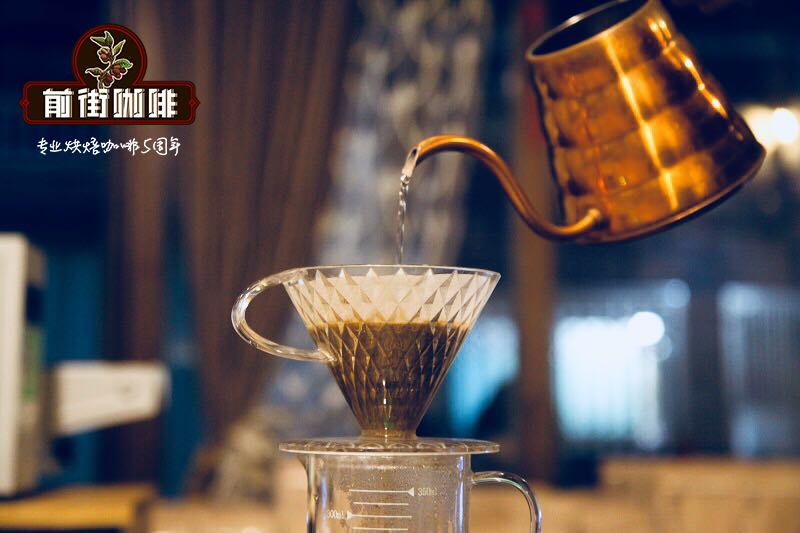
Drip coffee, simply put, is the process of placing ground coffee in a paper filter and slowly pouring hot water over it, letting gravity carry the water through the grounds and separate the finished coffee from them.
It sounds simple - and it really is simple to make. But doing it well takes a fair amount of knowledge and skill.
The Equipment You Need
1. Dripper
Drippers come in many shapes and materials. The most common design historically was a roughly cone-shaped dripper with three holes in the bottom - the "three-hole dripper" - which was the standard before specialty coffee took off. Even the filter baskets in American drip machines still use the same design.
Later came single-hole cone drippers and round flat-bottom drippers, and in recent years cone drippers with ever-narrower taper angles have appeared.
As for materials, you can find plastic, ceramic, and metal mesh versions; there are even models where both the dripper and its built-in filter are made entirely of ceramic. Genuinely fascinating!
2. Filter Paper
Despite the name, filters are not limited to paper. There are also flannel (cloth) filters and metal mesh. The material you choose shapes the taste: paper yields a clean cup, flannel gives a full-bodied one, while metal mesh lets fine particles through for a relatively coarse, textured mouthfeel - though that is arguably the closest to a cupping setup.
3. Pour-Over Kettle
To control the flow of water, brewers have long used kettles with very long, thin spouts - the so-called "needle-spout kettles." They come mainly in stainless steel and copper, with spout designs that vary by brewing style. In recent years, Japanese enamel pour-over kettles have become popular, thanks to spouts engineered for finer flow control and bodies that hold water temperature well.
4. Glass Server
The glass server sits under the dripper to catch the brewed coffee. "Can't I just put a cup underneath?" you might ask. That was my thinking too - until I kept ending up with coffee overflowing everywhere. So yes, the server matters!
Capacity markings are a bonus. When choosing one, make sure it holds the dripper stably, has an opening that is neither too wide nor too narrow, and - crucially - is heat-resistant.
How to Brew Drip Coffee
- Fold the sealed edge of the filter paper, set it in the dripper, and place the dripper on the glass server.
- Pour a little hot water over the filter paper to rinse it and make it adhere to the dripper.
- Add the coffee grounds to the filter and level the bed.
- Discard the rinse water that drained through in step 2.
- Use a finger to make a hole about one knuckle deep in the center of the grounds.
- Starting from that hole, slowly pour hot water at about 88-92°C (190-198°F) in circles from the center outward, using just enough water to wet all the grounds.
- Let it sit for 20-30 seconds (this is the "bloom").
- Keep pouring slowly, working from the center outward and back in, keeping the water level at a consistent height.
- Once you have extracted enough coffee, remove the dripper immediately - do not wait for every last drop to drain through.
- Pour the coffee into your favorite cup and enjoy!
FrontStreet Coffee Recommendation
Drip coffee is only as good as the beans, and for beginners FrontStreet Coffee's Yirgacheffe Guodingding is a wonderfully easy first step. This washed Ethiopian carries bright citrus, berry, and floral notes with a green-tea-like sweetness in the finish; unlike the harsh "sour coffee" many newcomers fear, a quality Yirgacheffe shows soft, luminous acidity closer to fresh fruit than to vinegar. Its gentle, approachable profile makes it a forgiving bean for learning your pour.
If you want something bolder from the same V60 dripper, FrontStreet Coffee's Ethiopia Huakui is one of the most celebrated beans in recent specialty coffee: intense tropical fruit aromas of strawberry, passion fruit, jackfruit, and even lychee, with obvious sweetness, almost no bitterness, and a smooth, juice-like body. The V60's fast extraction flatters exactly these floral, fruity, tea-like coffees - and FrontStreet Coffee's Panama Esmeralda Red Label Geisha, with its elegant jasmine, citrus, bergamot, and black tea layers, is the ultimate expression of what this brewing style can reveal.
Important Notice :
FrontStreet Coffee is a long-established specialty coffee roaster in Guangzhou China, selling freshly roasted beans from its own farm in Yunnan as well as dozens of carefully selected single-origin beans from around the world for both pour-over and espresso. The products deliver consistently excellent quality and great value, with shipping within 24 hours. Guangzhou's FrontStreet Coffee shop is recommended by many coffee lovers, and the beans are now available online at the Tmall 。
FrontStreet Coffee has moved to a new address:
FrontStreet Coffee Address: 315,Donghua East Road,GuangZhou
Tel:020 38364473
 Scan and follow the En Gafei WeChat official account. Please indicate that the reprint comes from "En Gafei".