Top 5 Indonesian Coffee Brands & Characteristics of Wet-Hulled Golden Mandheling Coffee Beans
An Introduction to Indonesian Coffee
When FrontStreet Coffee thinks of Indonesian coffee, the first thing that comes to mind is Golden Mandheling. "Golden Mandheling" is a registered trademark of Indonesia's PWN company, so only Mandheling produced by PWN is authentic Golden Mandheling. Of course, Indonesian coffee is far more than Golden Mandheling — let's walk through what makes Indonesian beans distinctive.
Mandheling Coffee Growing Regions
Indonesia's main coffee-producing areas are the islands of Sumatra, Java, and Sulawesi, with "Mandheling" from Sumatra the most famous of all — so famous that Mandheling is often simply called "Sumatra coffee." Most coffee from North Sumatra is Gayo, primarily of the Ateng variety; coffee from the Lake Tawar area in the north may be labeled Aceh coffee or Lake Tawar coffee. The Lintong area and the Lake Toba region to the south produce what is properly called Mandheling — Lintong is the true heartland of Mandheling. The coffee comes from the mountains surrounding Lake Toba, a high-altitude freshwater lake north of Medan, Sumatra's capital, at an average elevation of roughly 900 meters.

Lake Toba lies geographically north of Medan. Diamond-shaped, it runs 100 kilometers long and 30 kilometers wide, covering 1,130 square kilometers; the surrounding highlands average 1,100–1,600 meters, and the lake itself is the world's largest volcanic lake. "Mandheling" refers to Typica and its variants grown in the mountains around Lake Toba, with Lintong the most celebrated producing area on the lake.
The Aceh Gayo Mountain Growing Region
The Gayo Mountain region sits in Aceh Province on the northern side of Sumatra, with coffee grown on the slopes around the town of Takegon and Lake Tawar at altitudes averaging 1,110–1,600 meters. Smallholder farmers cultivate it under shade trees and use the wet-hulled process to bring out its unique flavors and deep, lively richness. Aceh, at Sumatra's northernmost tip, is a fascinating and complicated place.
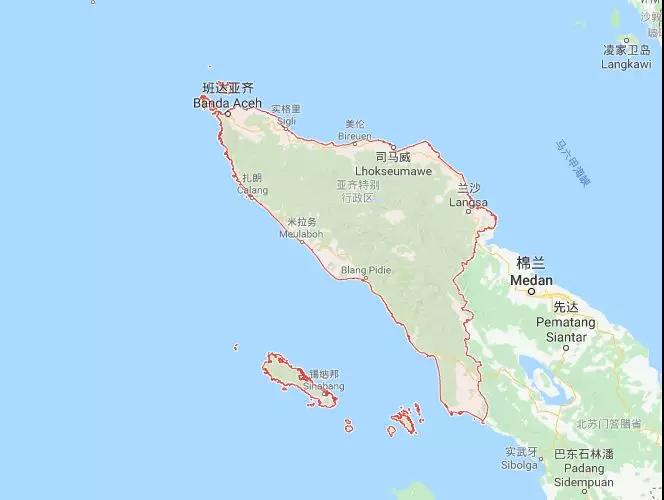
Because of long-term political instability, Aceh sees few tourists. Most of the farmers around Gayo are locals, and the name comes from the Indigenous Gayo communities of the region. Growing conditions are ideal, the cultural history is long, and the flavors are distinctive. The area farms largely organically, without chemical fertilizers, which is why Gayo coffee is often marketed as green or organic Gayo coffee.
How Mandheling Is Processed
Wet hulling — called "Giling Basah" locally — is Indonesia's traditional processing method. The name sounds similar to washed processing, but the two produce completely different cup profiles: wet-hulled coffee is typically thick, intense, and full of personality.

Wet hulling unfolds in two stages:
In the first, a wooden pulper removes the skin and fruit, the beans ferment for about 3 hours, and then they dry until semi-dry, at 30–50% moisture. In the second, the mucilage and parchment are hulled off mechanically while the beans are still damp, exposing the green bean directly to the air to speed the final drying, which takes 2–4 days and brings moisture down to 12–13%.
FrontStreet Coffee's Mandheling Comparison Test
Recently FrontStreet Coffee acquired eight Mandheling coffees for roasting and blind tasting — the baristas doing the cupping didn't know which was which. The lineup included FrontStreet's PWN Golden Mandheling, Lake Toba Golden Mandheling, West Java Mandheling, Malabar Mountain natural Mandheling, Gayo Mountain Mandheling G1, FrontStreet's Lintong Mandheling, Indonesian Aceh Mandheling, and Sumatra Mandheling G2.
FrontStreet Coffee's Mandheling Roasting Records
FrontStreet Coffee's roaster ran the PWN Golden Mandheling and Lake Toba Golden Mandheling on a Yangjia 800N in 480g batches. Beans went in at 200°C with the damper at 3; after 1 minute the heat dropped to 160°C with the damper unchanged. At 5'40" (148°C) the bean surface turned yellow, the grassy smell vanished, and drying was complete; the heat was reduced to 140°C and the damper set to 4. At 9'40", wrinkles and dark speckles appeared on the bean surface and the toast smell gave way to coffee aroma — the prelude to first crack, when you listen carefully. First crack began at 9'54"; the heat dropped to 60°C, the damper went to 5, and the beans were dropped at 204.5°C.

The remaining lots — West Java, Malabar Mountain natural, Gayo Mountain G1, Lintong, Aceh, and Sumatra G2 — used the same Yangjia 800N in 480g batches, beans in at 200°C with the damper at 3, heat lowered to 160°C after 1 minute. At 5'18" (148°C) the beans yellowed and drying completed; heat went to 140°C and damper to 4. At 8'00" the surface wrinkled and darkened as toast became coffee aroma, the prelude to first crack. Crack began at 9'00"; heat was cut to 80°C, damper set to 5, and the beans dropped at 202°C.
FrontStreet Coffee's Cupping Report
In the blind round, several baristas could already tell from the aroma alone that three of the beans — the PWN Golden Mandheling, the West Java Mandheling, and the Lintong Mandheling — stood apart from the other five. The first three gave off a red-date tea fragrance, clearly superior to the dull herbal smell of the rest.

On tasting, the PWN Golden Mandheling was recognized for its clean richness and clear sweetness — the result of three rounds of hand sorting that make bean size uniform, roasting more even, and flavor expression clearer and sweeter. The West Java Mandheling, a Typica, showed purer sweetness with a slight acidity. The Lintong Mandheling was less spectacular but distinguished itself with a clean herbal profile.
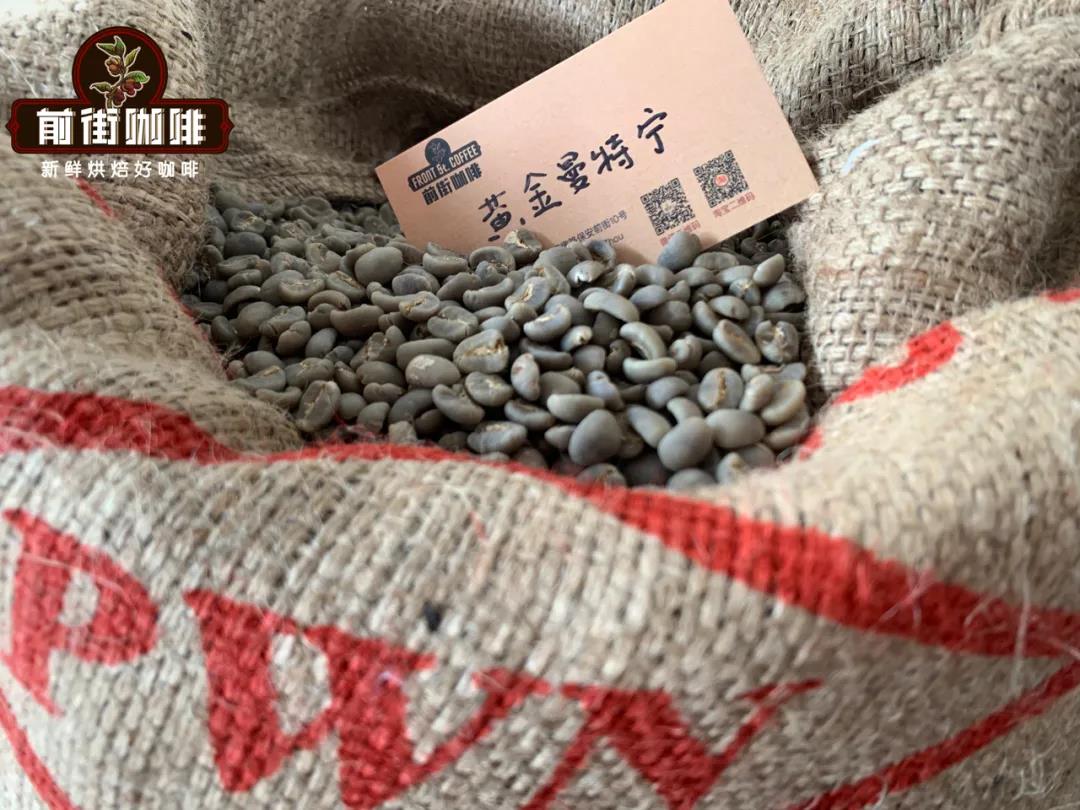
It's no exaggeration to call FrontStreet Coffee the number one fan of PWN Golden Mandheling — our baristas identified it instantly in the blind cupping, thanks to its long aftertaste and sugarcane aroma. Credit goes to PWN's strict sorting: after processing, the green beans pass density and color sorting plus multiple rounds of hand picking, yielding beans of uniform color and consistent shape. The Golden Mandheling specification is screen 18 or above, with fewer than 3 defects per 300g green bean sample — the highest G1 grade — with a dark-green color and flat, tidy form. After such strict sorting it lacks the earthy impurity taste of ordinary Mandheling, tasting cleaner, brighter, and noticeably sweeter.
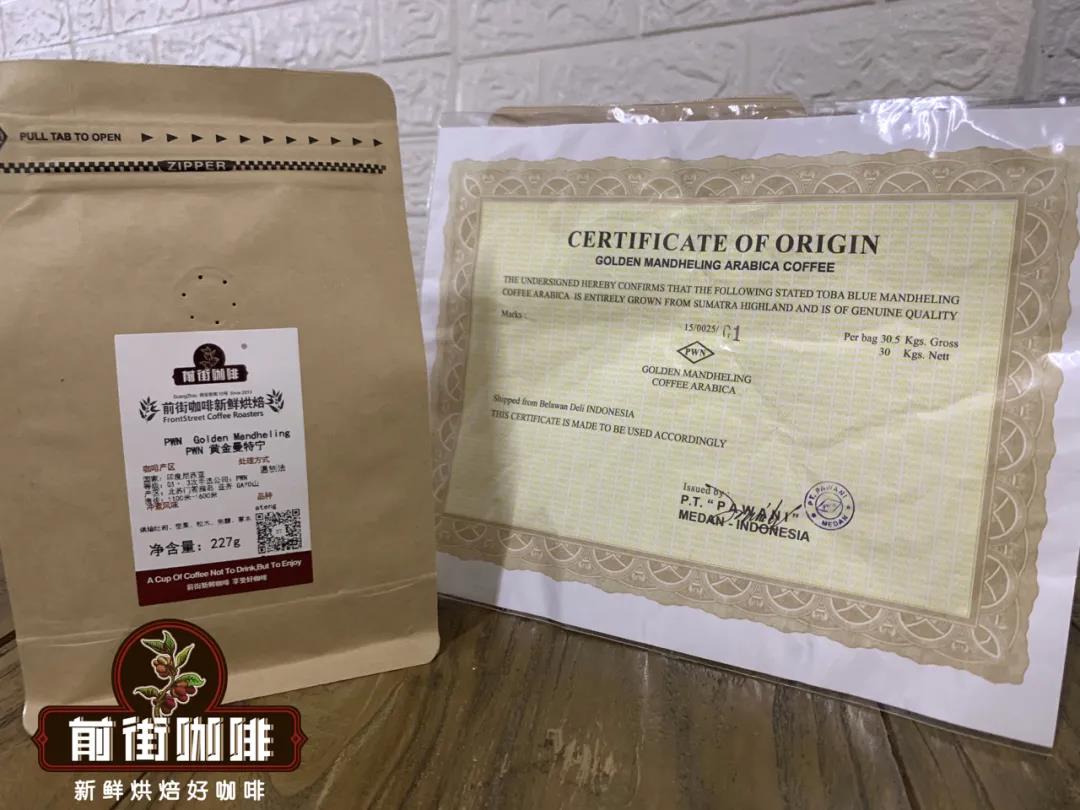
How to Identify Genuine PWN Golden Mandheling
Although only PWN's Mandheling may truly be called Golden Mandheling, PWN's annual output is limited, and much of the large-bean "Golden Mandheling" on the market is not from PWN. If in doubt, ask the seller for the PWN burlap bag or the certificate that accompanies the beans — that's how you know it's the real thing.
FrontStreet Coffee's PWN Golden Mandheling Brewing Tips
Brewing parameters: Kono dripper
Water temperature: 88°C
Coffee: 15g
Coffee-to-water ratio: 1:15
Grind size: Medium-fine (70–75% pass-through on a #20 standard sieve)

FrontStreet Coffee's brewing process: pour the grounds in slowly and keep the bed as level as possible, without shaking the dripper (shaking compacts the grounds and hinders degassing during the bloom). First, pour 40g of water in small circles at the center and bloom for 30 seconds — the bed will swell into a "hamburger" shape. Second, pour 120g in circles from the center outward, keeping the pour height close to the bed and moving slowly to avoid over-agitating. Finally pour the last 100g and let the dripper drain completely into the server. Total extraction time: 2 minutes.

FrontStreet Coffee's PWN Golden Mandheling Flavor Description
Nuts, chocolate, spice, herbs, caramel — FrontStreet's Golden Mandheling tastes cleaner than the Lintong: the herbal, earthy, woody tones of ordinary Mandheling are almost gone, while caramel sweetness is stronger and the fruit acidity brighter and more elegant.
FrontStreet Coffee Recommendation
Why PWN Golden Mandheling Is Worth Seeking Out
Coffee's road to Indonesia began in the late 17th century, when the Dutch planted seedlings on Java; the crop thrived, spread to Sumatra, and gave the word "Java" its meaning. After leaf rust devastated Java's trees in the early 20th century, production moved north to Sumatra, which today grows over 60% of Indonesia's Arabica and Robusta. Sumatran Arabica is what the world calls Mandheling, from Aceh's Gayo mountains around Lake Tawar — a rising region prized for delicate aroma and bright body — and the traditional Lintong area around Lake Toba, where the wet-hulled process and local microbial fermentation create the dense aroma, heavy body, and intense flavor that define classic Mandheling.
Indonesia's rainy season overlaps with cherry harvest, making the African-style three-week sun drying impossible; instead, growers hull off the parchment while the beans are still half-dry, letting the exposed beans dry faster and pick up wild, earthy-herbal character in the humid air. Among many Mandhelings, Golden Mandheling is the perfectionist's choice. FrontStreet's PWN Golden Mandheling is built on screen-18-plus beans with fewer than 3 defects per 300g sample (G1 grade), then hand-sorted three times — for exceptional cleanliness and sweetness, and limited supply. The beans ship with PWN's certificate and branded burlap bags, which is how FrontStreet distinguishes the genuine article. Brewed at 87–88°C, 15g at 1:15, ground to coarse sugar with a three-stage pour, it shows a thick, full body with caramel sweetness, chocolate, and nuts — perfect for anyone who dislikes sour coffee. And for espresso, the high-repurchase FrontStreet Classic Blend layers medium-dark Mandheling over Brazil's creamy nuttiness, adding butter, roasted chestnut, caramel, sandalwood, and spice notes with a touch of Robusta for richer crema — ideal for latte art or a layered Dirty.
Important Notice :
FrontStreet Coffee is a long-established specialty coffee roaster in Guangzhou China, selling freshly roasted beans from its own farm in Yunnan as well as dozens of carefully selected single-origin beans from around the world for both pour-over and espresso. The products deliver consistently excellent quality and great value, with shipping within 24 hours. Guangzhou's FrontStreet Coffee shop is recommended by many coffee lovers, and the beans are now available online at the Tmall 。
FrontStreet Coffee has moved to a new address:
FrontStreet Coffee Address: 315,Donghua East Road,GuangZhou
Tel:020 38364473
 Scan and follow the En Gafei WeChat official account. Please indicate that the reprint comes from "En Gafei".