The Coffee Kingdom—An Introduction to Brazil's Cerrado Coffee Growing Region, Flavor and Aroma Characteristics, and Brewing Parameter Recommendations

Coffee newcomers who can't quite appreciate coffee's bright acidity — yet find bitterness equally hard to swallow — will often hear the baristas at FrontStreet Coffee recommend a Brazilian bean from the daily brew series. Brazilian Cerrado coffee is defined by low acidity, excellent body, a smooth and sweet entry, and nutty notes.
Brazil's Global Coffee Influence
Brazil ranks first in global coffee production, and the climate, transport conditions, and yield of its growing regions move world coffee prices. In the 2020/2021 season, for example, a once-in-a-century drought pushed Brazil's harvest down from more than 70 million bags (60 kg per bag) in the previous season to just over 50 million bags — and coffee market prices nearly tripled.

How Coffee Came to Brazil
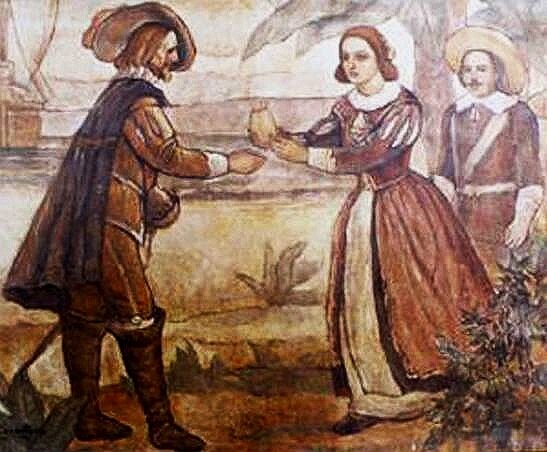
For all its current dominance, 300 years ago Brazil did not have a single coffee tree. The credit belongs to a Portuguese officer named Francisco de Melo Palheta. As James Hoffmann recounts in The World Coffee Atlas, the officer, on a diplomatic mission to French Guiana, met and charmed the local governor's wife — who, upon his departure, handed him a bouquet with coffee seeds hidden inside. Back in Brazil, Francisco planted them; the trees took to the climate immediately and spread southward.
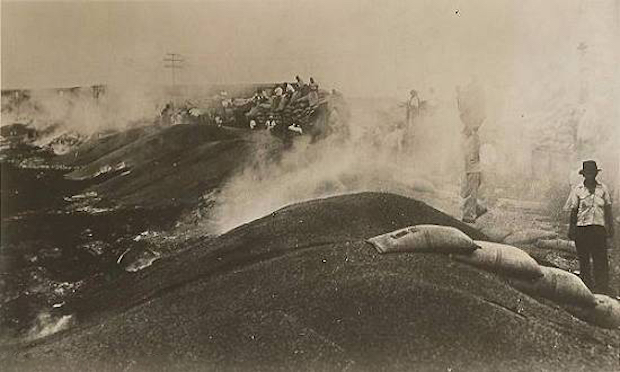
By 1830, Brazil produced 30% of the world's coffee; by 1840, 40%. Around 1920, Brazil dominated some 80% of global output, and in the 1930s coffee exports made up half of Brazil's export income. Then came the Great Depression: Brazilian coffee prices collapsed by nearly 90%, export markets evaporated, warehouses swelled with unsold stock, and prices plummeted further. The Brazilian authorities ultimately decided to burn billions of pounds of coffee.
Brazilian Coffee Bean Grades
Many people know the G1 and G2 grades of Ethiopian coffees. Attentive visitors to FrontStreet Coffee stores will notice the burlap bags of green coffee, whose markings are essentially the beans' identity card.
Brazilian bags typically read 'Brazil NY.2 SC – 17/18 FC'. Most people spot the 17/18 screen size and stop there. Here is the full breakdown.
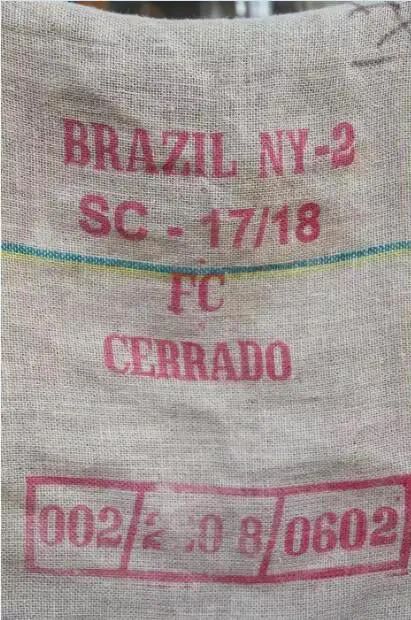
'Brazil NY.2 SC – 17/18 FC': the first word is obviously Brazil; the rest splits into three parts — defect rate, bean size, and cupping quality.
Defect Rate
The defect rate spans 8 levels, counted as defective beans per 300 grams of green coffee.
| Grade | Defect Count (per 300g) |
|---|---|
| NY.2 | 6 |
| NY.2/3 | 9 |
| NY.3 | 13 |
| NY.3/4 | 21 |
| NY.4 | 30 |
| NY.4/5 | 45 |
| NY.5 | 60 |
| NY.5/6 | >60 |
Bean Size
Green beans are graded through screens in 1/64-inch increments, typically from 14 to 20 mesh.
| Grade | Quality |
|---|---|
| NY.2 | 17-18 mesh FC |
| NY.2/3 | 14-16 mesh FC |
| NY.3/4 | DD Quality |
| NY.4/5 | 14-16 mesh GC |
Cupping Quality
Cupping grades run from Fine Cup, Fine, and Good Cup through Fair Cup to Poor Cup and Bad Cup. Fine Cup (FC) and Good Cup (GC) are the ones you will meet most often.
Brazilian Coffee Regions
As FrontStreet Coffee has covered in earlier articles, Brazil's growing areas divide into six major regions: Bahia, Minas Gerais, São Paulo, Mato Grosso and Mato Grosso do Sul, Espírito Santo, and Paraná.
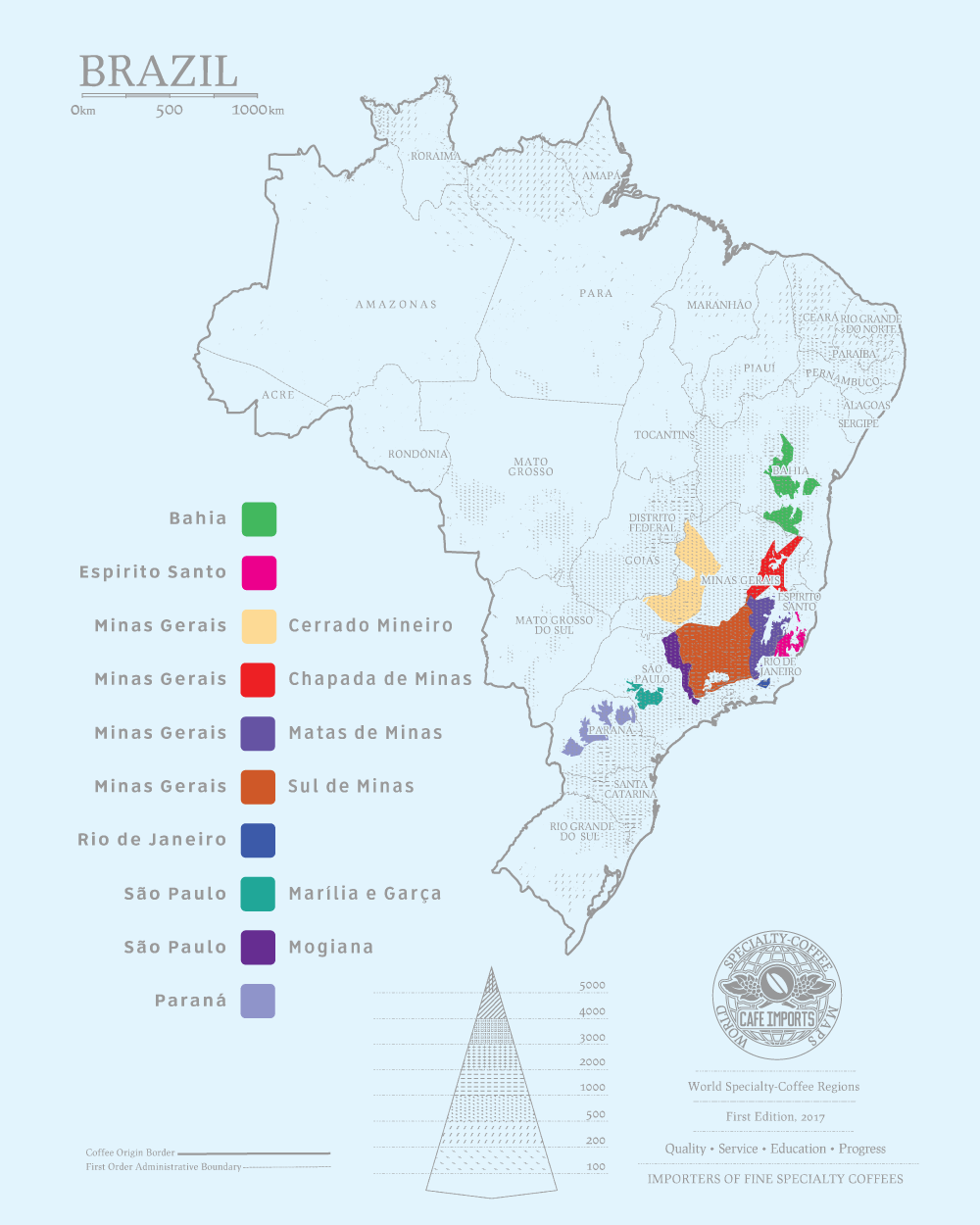
Bahia
Coffee cultivation here began in the 1970s, and thanks to high-quality varieties and high-tech agriculture, the region's coffees draw growing attention. Most of Bahia's coffee land sits at higher elevations, with rainy winters and dry summers.
Minas Gerais
Minas Gerais is by far Brazil's most important coffee state, accounting for nearly half of national production. Its fertile soils and higher elevations make it the perfect home for Brazil's most famous specialty coffees. Within it, the Cerrado sub-region was the country's first to receive designation-of-origin status — "Cerrado" means "tropical savanna" in the local language. The region averages 800 to 1,300 meters in elevation, with humid summers and dry winters.
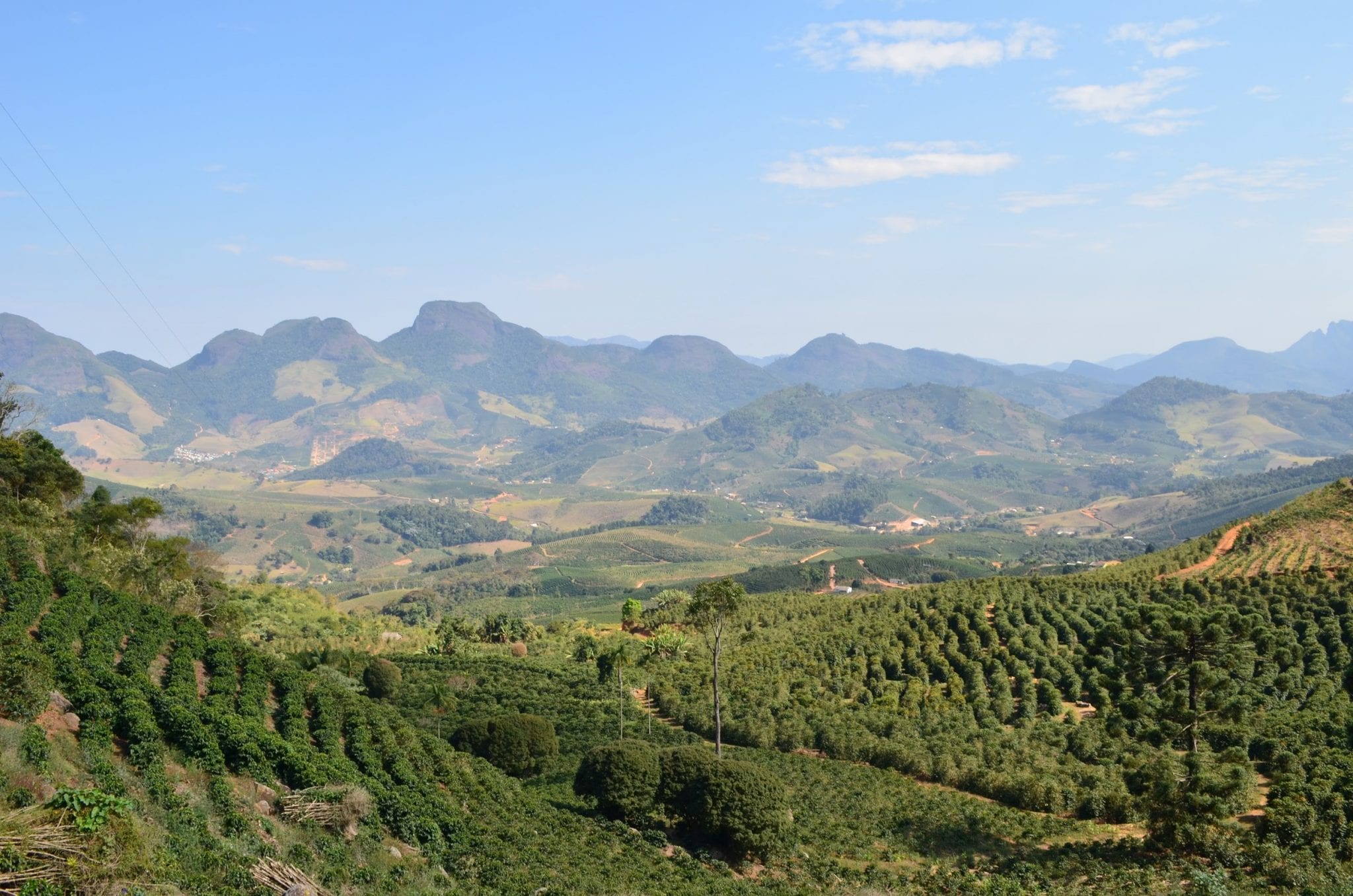
São Paulo
São Paulo is both a growing region and the home of the Port of Santos, Brazil's coffee export gateway. The Mogiana sub-region within the state offers fertile red soil, near-ideal elevation (900 to 1,100 meters), complex terrain, and temperate conditions.
Mato Grosso and Mato Grosso do Sul
This region produces little coffee — its vast flat highlands are far better suited to cattle ranching.
Espírito Santo
Espírito Santo is Brazil's second-largest coffee region, though nearly 80% of its trees are Robusta. At elevations of 700 to 1,000 meters it produces coffees with rich fruit flavors and high acidity.
Paraná
Paraná bills itself as the world's southernmost coffee-growing region. It covers just 2.5% of Brazil's total area yet produces nearly 25% of the country's agricultural crops. It lacks high elevation but enjoys a cooler climate that slows cherry maturation — to the coffee's benefit.

Colombian vs. Brazilian Coffee
Colombia and Brazil are the world's top two arabica producers, and they share a border. So how do their coffees differ? Cupping them side by side, FrontStreet Coffee finds each with its own character.
Colombia's complex topography, high elevation, and low latitude produce high-quality beans with rich chocolate flavors and jam-like sweetness — every sip reminiscent of fruit-filled chocolate. FrontStreet Coffee's Colombian Flower Moon Night is an excellent example.
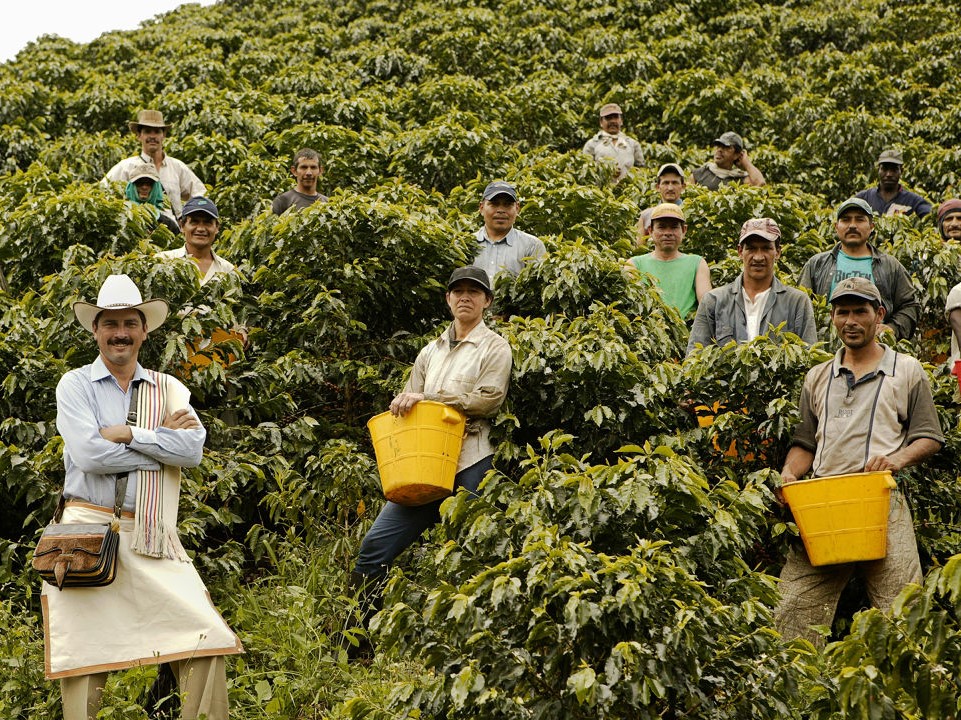
Most Brazilian coffee is sun-grown, letting cherries absorb heat quickly for maturation. The beans are soft in structure and therefore soft in flavor. Han Huaizong's Specialty Coffee Studies describes soft-bean flavors as: low acidity, heavy nuttiness, chocolate sweetness with good body, slightly woody and earthy, with subtle floral and orange aromas. In short: Brazilian coffee is low-acid, mild, and smooth, with solid body and sweetness.
To taste the contrast for yourself, try FrontStreet Coffee's daily brew series — carefully selected representative beans from famous origins, including both Brazil and Colombia. For the Brazilian daily brew, FrontStreet chose the Cerrado region; for the Colombian, Huila.

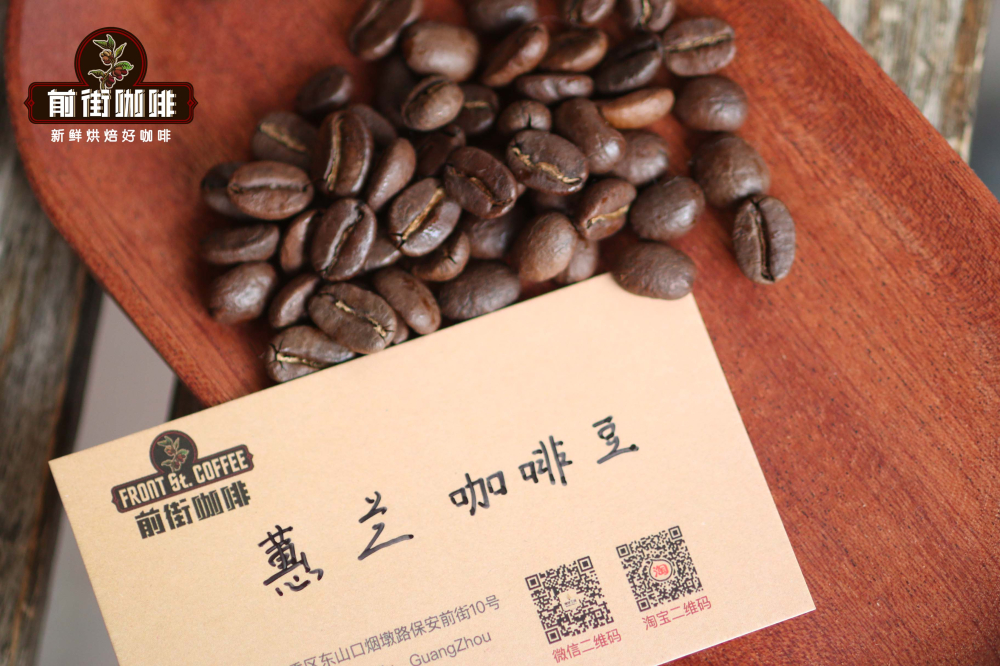
FrontStreet Coffee Brazilian Cerrado — Bean Information
Region: Brazil, Cerrado
Elevation: 1,000 meters
Variety: Red Bourbon
Processing: Pulped Natural
Flavor: Nuts, chocolate, cream, peanut, caramel
FrontStreet Coffee Colombian Huila — Bean Information
Region: Colombia, Huila
Elevation: 1,500-1,800 m
Variety: Caturra
Processing: Washed
Flavor: Nuts, dark chocolate, caramel, soft fruit acidity
Brewing could hardly be simpler. FrontStreet Coffee recommends pour-over with these parameters:
Dose: 15 g
Ratio: 1:15
Water temperature: 88°C
Grind size: 75% passing a #20 sieve
Dripper: Kono
Pouring method: three-stage pour

First stage: pour 30 ml and bloom for 30 seconds. Second stage: pour 100 ml in circles from the center outward, and wait for the water level to drop slightly. Third stage: pour 95 ml, then let the coffee finish dripping — about 2 minutes in total.
FrontStreet Coffee Recommendation
Brazilian coffee's low acidity, mellow balance, and friendly price make it a fixture in FrontStreet Coffee's lineup — and medium roasting is where it shines. Darker roasts grow bitter and heavy; lighter ones, acidic and thin. Medium, by contrast, draws out Brazil's nutty aromatics, mellow sweetness, and gentle acidity, working beautifully as either a single origin or a blend component.
Beyond the Cerrado daily brew profiled above, the Queen Estate Yellow Bourbon from Mogiana is the connoisseur's pick: grown on fertile red volcanic soil near Sul de Minas, this rare mutation of Red Bourbon has a cleaner fruit character, and through pour-over, moka pot, or home espresso it reveals a sugarcane sweetness found nowhere else, alongside fruit and chocolate notes. The Cerrado Red Bourbon itself, roasted medium, offers creamed peanut, toast, caramel, and hazelnut aromas in a rounded cup with no sharp acidity and only the faintest pleasant bitterness — equally comfortable in a pour-over, a moka pot, an espresso SOE, a siphon, or a French press.
Brazilian beans also anchor many FrontStreet espresso blends — the crema-rich Classic Blend, the nut-forward Premium Blend, the balanced Black Cocoa Blend, and the café-oriented Commercial Blend all contain Brazil-grown coffee, contributing chocolate and cream aromatics, a soft sweet-sour-bitter structure, and extraction stability that baristas rely on daily.
Important Notice :
FrontStreet Coffee is a long-established specialty coffee roaster in Guangzhou China, selling freshly roasted beans from its own farm in Yunnan as well as dozens of carefully selected single-origin beans from around the world for both pour-over and espresso. The products deliver consistently excellent quality and great value, with shipping within 24 hours. Guangzhou's FrontStreet Coffee shop is recommended by many coffee lovers, and the beans are now available online at the Tmall 。
FrontStreet Coffee has moved to a new address:
FrontStreet Coffee Address: 315,Donghua East Road,GuangZhou
Tel:020 38364473
 Scan and follow the En Gafei WeChat official account. Please indicate that the reprint comes from "En Gafei".