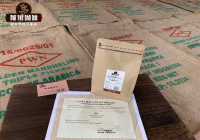
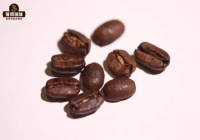
Introduction to PWN Gold Mandheling Coffee Bean Varieties and Grades - Origin Flavor Characteristics and Pour-Over Requirements for Indonesian Mandheling

Among Asian coffee beans, none is more familiar than FrontStreet Coffee's Indonesian Mandheling—the most representative Asian bean and once known as the world's mellowest coffee. For anyone who dislikes acidic coffee, this FrontStreet Mandheling is worth trying. Mandheling has a rich texture, with most lots showing herbal plant and dark chocolate flavors. FrontStreet Coffee finds that those who love it are devoted to it and order it every time, while those who dislike it dismiss it as dishwater. Many newcomers to specialty coffee are confused by Mandheling's intensity and mistake it for Robusta.
Sumatran Mandheling Coffee Beans
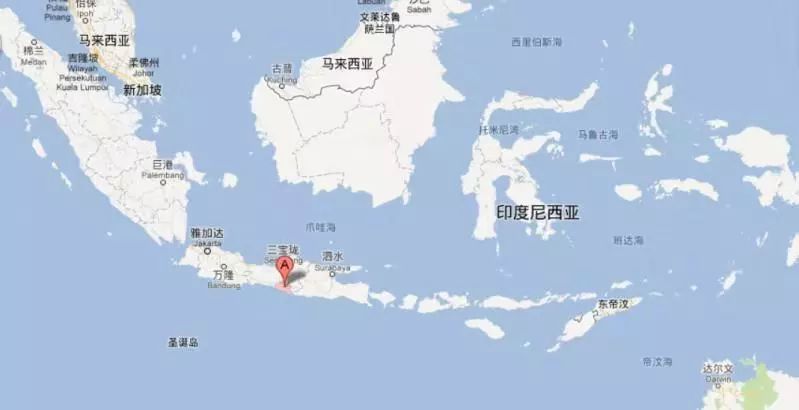
Sumatran Mandheling is a famous Indonesian specialty coffee and one of the best-selling Indonesian beans in FrontStreet Coffee's daily selection. Indonesia's coffee history dates to 1696, when Dutch plantation owners sought broader areas for coffee cultivation. After extensive exploration they settled on Java Island. Over 30 years Indonesia built a solid foundation in the coffee market. Today, however, the representative of Indonesian coffee is actually the Mandheling produced in Sumatra—not surprising, since much of the "Java" coffee originally exported to Europe actually came from the Sumatra region, and Mandheling originates there. Sumatra is therefore an important coffee-producing area in Indonesia.
What Is Golden Mandheling?
FrontStreet Coffee's Mandheling is an Indonesian specialty coffee, while FrontStreet's Golden Mandheling is the cream of the crop among Indonesian specialty coffees. Is it more premium than regular Mandheling? FrontStreet Coffee explains: Golden Mandheling is not a grade but a registered trademark of the Indonesian company P.W.N. Pawani Medan (PWN), established in 1957. The company exports Indonesian products including coffee, rubber, cinnamon, cloves, and patchouli oil. It was the first company to export coffee from North Sumatra Island and the first to make "Mandheling coffee" famous in Japan.
Since 1977 the company has focused on exporting premium Sumatran Arabica Mandheling Grade 1 and Robusta AP-I Grade 2, primarily to Japan, Taiwan, and the United States, with exports to Japan and Taiwan accounting for over 95%. In Japan and Taiwan, "PWN" has become synonymous with quality assurance. PWN holds the "Golden Mandheling" trademark, which is why Japanese companies had to register the separate "Gold Top Mandheling" trademark.
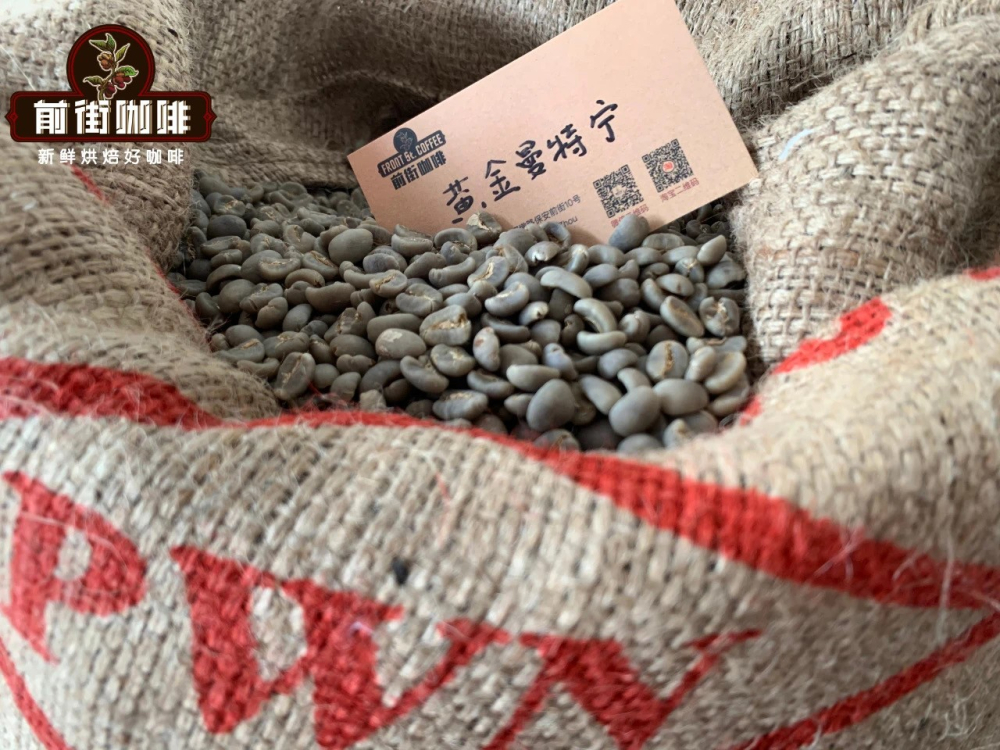
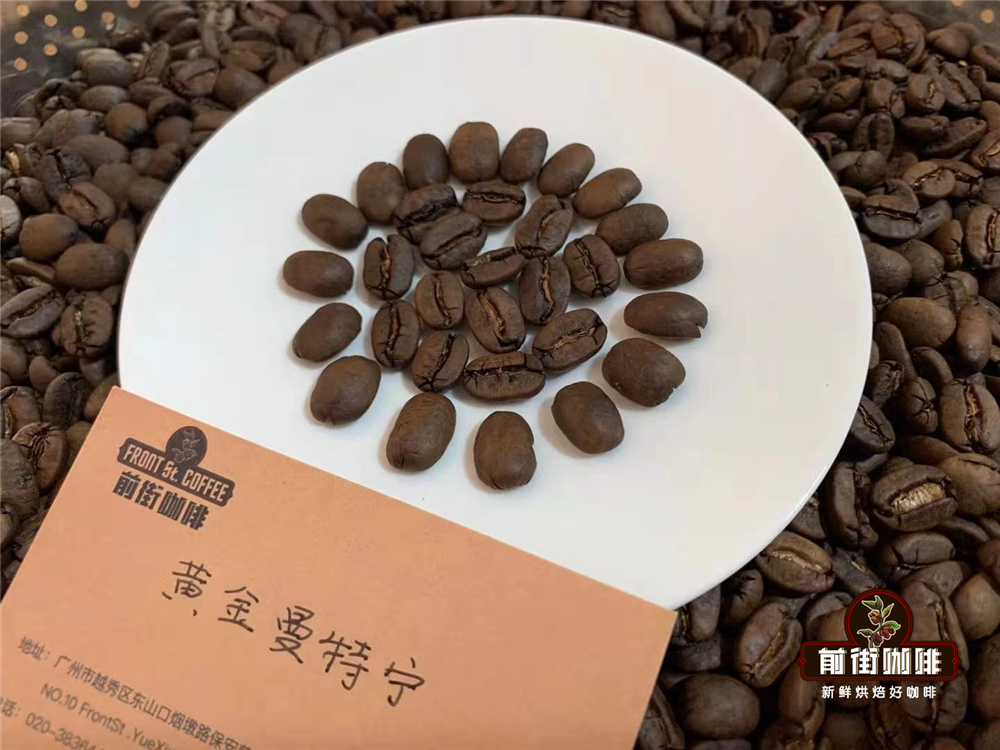
Since PWN Golden Mandheling is among the finest coffee, its price runs higher than regular Mandheling. Some merchants label their beans "Golden Mandheling" to charge more without indicating whether they come from PWN. FrontStreet Coffee currently sells FrontStreet Golden Mandheling sourced from PWN's Golden Mandheling beans. PWN Golden Mandheling undergoes at least three rounds of purely manual selection after harvesting and drying, ensuring beans reach size 18 or above with fewer than 3 defective beans in a 300g raw bean sample, which belongs to the highest G1 grade. FrontStreet's PWN Golden Mandheling raw beans are deep green and uniform in shape.
Golden Mandheling Varieties
FrontStreet Coffee's new-season Golden Mandheling is produced in the Gayo Mountains of Aceh, North Sumatra. The variety is Ateng, a hybrid between Arabica and Robusta widely cultivated across Sumatra and other Indonesian islands. Ateng is actually the local name for Catimor. Catimor was created in 1959 when the Portuguese moved the Brazilian Bourbon mutant Caturra to East Timor to hybridize with Timor, which carries Robusta bloodlines. It has extremely high disease resistance and yields three times the production capacity of Typica. During the leaf rust crisis, the Indonesian government not only introduced Robusta (whose flavor differs greatly from Arabica) but also brought in Timor from East Timor to replace Typica. Later investigations found that a batch of Timor seeds introduced by the Indonesian government in 1980 was mixed with some Catimor seeds. These were planted in Aceh, northern Sumatra, and Catimor was first noticed in central Aceh, so locals also call it "Ateng," taken from Aceh Tengah (Central Aceh).
Aceh's Gayo Mountains lie at the northernmost tip of Sumatra Island. Coffee cultivation there centers on the town of Takegon and the hillside areas beside Lake Tawar. Production areas average 1,100-1,600 meters in altitude, and quality has always been excellent. Due to earlier political instability, coffee from the region was difficult to export; in recent years, with stability improving, cultivation in Aceh has developed, and its quality now surpasses the Lintong region.
FrontStreet Coffee's PWN Golden Mandheling has even stricter requirements, first ensuring the beans reach size 19 with full, uniform particles. They then undergo one machine selection and three manual hand-pickings to control the raw bean defect rate—a clear demonstration of confidence in the quality from the Aceh Gayo Mountains.
Golden Mandheling Processing Method
FrontStreet Mandheling's unique flavor is fundamentally tied to its processing method. Because of Indonesia's perennial hot, humid climate and water scarcity, Indonesian farmers developed a way to dry beans better while conserving water: the wet-hulling method, also known as wet dehulling. This is the standard processing method for Mandheling. Wet hulling is characterized by staged, rapid drying and hulling of the parchment during drying. Han Huaizong describes it as "a rare processing method worldwide that accidentally created Mandheling's special low-acidity, thick, and mellow aroma." FrontStreet Coffee's PWN Golden Mandheling also uses wet hulling.

FrontStreet Coffee believes that PWN Golden Mandheling, as Indonesia's unique specialty coffee, delivers rich aroma from each carefully selected, full and plump bean. The taste is more intense, rounded, and mellow than regular Mandheling, with a slightly sweet aftertaste. FrontStreet Golden Mandheling holds an undefeated reputation among bold coffees.
How to Brew FrontStreet Golden Mandheling
Coffee beans come in light and dark roasts, and pour-over considerations differ. FrontStreet Golden Mandheling is dark-roasted, so the water temperature should not be too high, and a Kono dripper is recommended. The lower temperature avoids extracting excessive undesirable flavors: with dark roasting, many aromatic substances have already been released, and continuing with light-roast water temperatures would cause over-extraction. FrontStreet Coffee chooses the Kono dripper because V60's flow rate is too fast and could cause under-extraction at low water temperatures. The Kono dripper has few ribs at the bottom, and the filter paper fits tightly against it, restricting airflow, increasing contact time between water and grounds, ensuring full extraction, and enhancing the rich texture.

FrontStreet Brewing Parameters for PWN Golden Mandheling
Water temperature: 88°C, Coffee amount: 15g, Coffee-to-water ratio: 1:15, Grind size: medium-fine (70% pass-through rate on a #20 sieve).
Use staged extraction, blooming with twice the coffee amount in water (30g water for 30 seconds). Blooming lets the grounds release internal carbon dioxide, ensuring more stable extraction later. Pour with small circular motions until reaching 125g, then continue to 225g and stop. Remove the dripper once all the water has dripped through, timing from the start of pouring—extraction time is 2'00". Then pick up the whole cup, shake it well, and pour into cups for tasting.

FrontStreet PWN Golden Mandheling Flavor Profile
Overall the coffee has complex layers, rich and clean, with intense nut and caramel aromas, chocolate notes, a persistent aftertaste, and high balance.
FrontStreet Brewing Recommendations
For brewing, FrontStreet Coffee recommends using freshly roasted beans to maximize the rich flavors. FrontStreet Coffee ships beans roasted within 5 days, because it understands that freshness greatly affects flavor. The roasting philosophy is "Freshly Roasted Quality Coffee," ensuring every customer receives the freshest coffee. The resting period is about 4-7 days, so when customers receive their coffee it is at peak flavor.
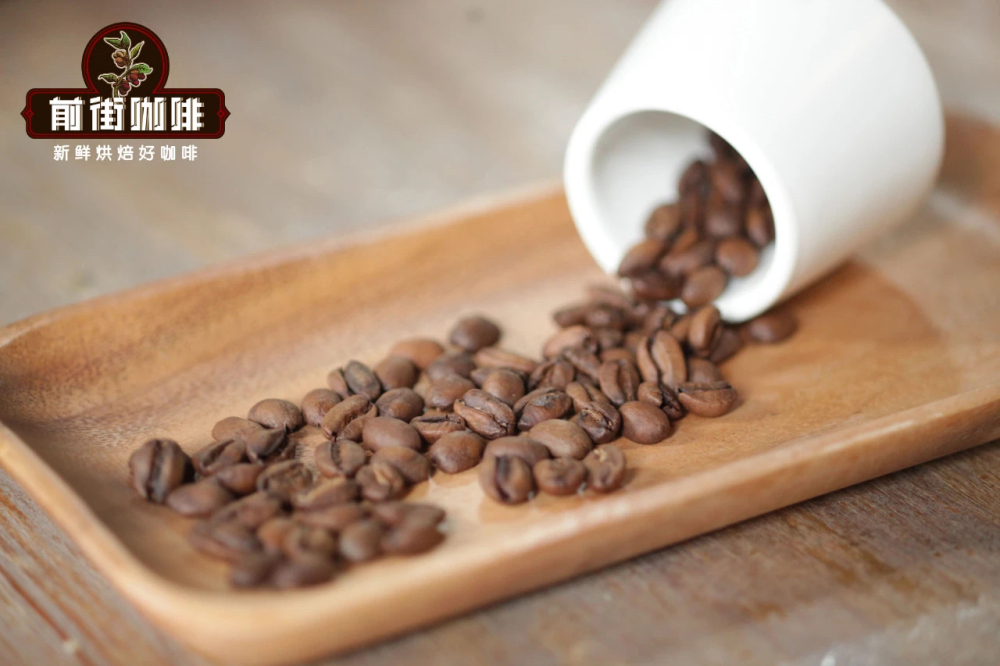
Some customers need their beans ground, which is fine, but FrontStreet Coffee must remind you: when beans are pre-ground, no resting period is needed, because during transport the pressure from carbon dioxide inside the packaging also helps round out the flavor, so you can brew a cup immediately upon receiving the ground coffee. Ground coffee, however, should be brewed promptly because it oxidizes quickly when exposed to air, so the flavor dissipates relatively fast and the coffee will not taste as good. FrontStreet Coffee therefore recommends buying whole beans and grinding fresh before brewing.
This FrontStreet PWN Golden Mandheling has always been the most popular bean in FrontStreet stores. The FrontStreet Indonesian Lintong Mandheling in the daily selection series is also an economical and popular choice. Besides Indonesian beans, there are dozens of single-origin beans from different regions in South America and Africa—welcome to try them.
FrontStreet Coffee Recommendation
Mandheling is the theme here, so these three FrontStreet options cover the full range of wet-hulled character.
FrontStreet PWN Golden Mandheling is the highest grade of wet-hulled Mandheling. PWN buys only high-quality Mandheling green beans, then applies one machine selection and three manual hand-pickings, so the output is uniformly specialty-grade. The beans are even, plump, and bright with a low defect rate; medium-dark roasting adds rich roasted aroma. The brewed black coffee is clean and full-bodied, a great fit for anyone who dislikes acidic coffee. For pour-over, use 87-88°C water, 15g of grounds, a 1:15 ratio, a coarse-sugar grind, and a three-stage pour, which best expresses the full body and caramel sweetness.
FrontStreet Lintong Mandheling is an everyday, value-focused Mandheling that pairs wild herbal and earthy notes with a strong, stimulating entry, clove and woody aromas, low acidity, and a spice-and-mint character with a strong, lasting sweetness.
FrontStreet Classic Blend brings the Mandheling character to the espresso machine. It builds on the creamy nutty flavor of Brazilian coffee with medium-dark-roasted Mandheling, making butter, roasted chestnut, and caramel especially prominent. Mandheling not only lifts the body but also adds distinctive sandalwood, herbal, and spice notes, while a small amount of Robusta boosts the richness of the crema—making latte art and Dirty layers easy.
Important Notice :
FrontStreet Coffee is a long-established specialty coffee roaster in Guangzhou China, selling freshly roasted beans from its own farm in Yunnan as well as dozens of carefully selected single-origin beans from around the world for both pour-over and espresso. The products deliver consistently excellent quality and great value, with shipping within 24 hours. Guangzhou's FrontStreet Coffee shop is recommended by many coffee lovers, and the beans are now available online at the Tmall 。
FrontStreet Coffee has moved to a new address:
FrontStreet Coffee Address: 315,Donghua East Road,GuangZhou
Tel:020 38364473
 Scan and follow the En Gafei WeChat official account. Please indicate that the reprint comes from "En Gafei".