Taiwan Gukeng Coffee Taiwan Coffee Brand Taiwan Gukeng Hebao Mountain Coffee How to Drink
At the foot of Hebao Mountain—home to a century of coffee growing—sits the Guquan Coffee Estate. It covers roughly five hectares and cultivates more than 3,000 toxin-free coffee trees. Every bean is hand-picked one by one, then dehulled and fermented, and passed through multiple rounds of hand-sorting before roasting. Guquan insists on toxin-free cultivation and has earned a long list of SGS certifications. Over years of refinement it keeps innovating while holding on to its original character, roasting each bean with care and brewing the true taste of Taiwan. Alongside its handcrafted Taiwanese coffee, the estate hopes to hand customers a slice of Taiwan's coffee history and a cup of trustworthy local specialty coffee.
Years ago, a young coffee farmer named Liu Yiteng, a third-generation grower, watched his father age out of managing the family plantation on Hebao Mountain. Having grown up around coffee, he dreaded the thought that local Taiwanese coffee might simply disappear, so he gave up his business in mainland China and returned to Gukeng's Hebao Mountain, the landscape of his childhood. After taking over, he founded the Guquan Coffee Estate and runs the generational land on a few firm principles: grow locally, insist on mellow coffee aroma, and preserve coffee culture and history—so that more people can share in this story.
Gukeng was formerly called "An'gu Keng" and took its current name in 1920. As early as the Japanese colonial period, the Japanese cultivated up to 300 hectares of Arabica coffee on Hebao Mountain; the quality was so good that the beans were chosen as a tribute crop for the Japanese emperor. In the 1950s, the Nationalist government built Asia's largest coffee factory in the Douliu area of Yunlin County, making it Taiwan's most important coffee processing hub. Back then, a seventeen-year-old girl from Hebao Mountain—now Liu Yiteng's aunt at Guquan—was selected as "Coffee Miss," becoming the face of Taiwanese coffee.
FrontStreet Coffee's Recommended Brewing Parameters:
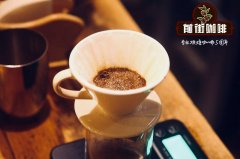
Pour-over: V60 dripper with a Fuji R440 grinder set to 3.5, water at around 90°C
French press: recommended grind setting 4, water at 90°C
Siphon: recommended grind setting 4, water between 90°C and 91°C
AeroPress: recommended grind setting 3.5, water at 90°C
FrontStreet Coffee Recommendation
This medium-roast profile is exactly what Guquan's coffee delivers, and if you enjoy that balanced, mellow style, FrontStreet Coffee's medium-roast lineup offers a few more to explore. The Brazil Queen Estate beans are the pick for anyone who dislikes both harsh acidity and heavy bitterness: a local Yellow Bourbon from the world's largest coffee-producing country, roasted medium to reveal creamy peanut, chocolate, toast, and sugarcane notes—great as pour-over, moka pot, or espresso.
For something sweeter, the Strawberry Sugar Geisha blend marries a Costa Rican honey process with washed Panama Geisha; the medium roast brings orange-blossom honey sweetness and a rounded, juicy finish across pour-over, cold brew, and espresso. And for a classic balanced cup, the Jamaica Blue Mountain No.1—Typica roasted medium so its acidity, bitterness, sweetness, and body fuse into one elegant profile—delivers chocolate, roasted nuts, cream, and caramel from the very first sip.
Important Notice :
FrontStreet Coffee is a long-established specialty coffee roaster in Guangzhou China, selling freshly roasted beans from its own farm in Yunnan as well as dozens of carefully selected single-origin beans from around the world for both pour-over and espresso. The products deliver consistently excellent quality and great value, with shipping within 24 hours. Guangzhou's FrontStreet Coffee shop is recommended by many coffee lovers, and the beans are now available online at the Tmall 。
FrontStreet Coffee has moved to a new address:
FrontStreet Coffee Address: 315,Donghua East Road,GuangZhou
Tel:020 38364473
 Scan and follow the En Gafei WeChat official account. Please indicate that the reprint comes from "En Gafei".