Hawaiian Coffee Bean Story: How to Brew Hawaii Kona Coffee Beans and Kona Coffee's Flavor Characteristics

The volcanic soil along Hawaii's western coast supplies abundant nutrients to the coffee trees, giving rise to rich, mellow coffee. Hawaii produces over 8 million pounds of coffee every year, making it the only coffee-growing state in the United States. FrontStreet Coffee's Hawaiian coffee is smooth and aromatic, with an enticing nutty flavor and balanced acidity. When it comes to describing coffee flavor, everyone has their own interpretation, and what FrontStreet Coffee really wants to do is guide newcomers to specialty coffee in finding a connection between coffee and their own palate.
Hawaiian Coffee
Twenty years after American independence, the coffee industry was still dominated by the commercial model. Europe had made substantial profits and America wanted its share of the coffee market, but the mainland was not suited to growing coffee. The annexation of Hawaii solved that problem. Typica was introduced from Guatemala and planted widely. By then Jamaica's Blue Mountain coffee already had 60 years of development behind it and was quite mature, and since Hawaii was also an island, it could not help but follow that model. That is why we so often see Jamaican Blue Mountain and Hawaiian Kona compared side by side.

Hawaii is an American archipelago in the central Pacific. Among the many islands, only the Big Island grows coffee. That is not only because the Big Island has the highest elevation of the islands, but also because it has the most suitable climate and lacks excessive hybrid varieties, preserving a pure growing environment.
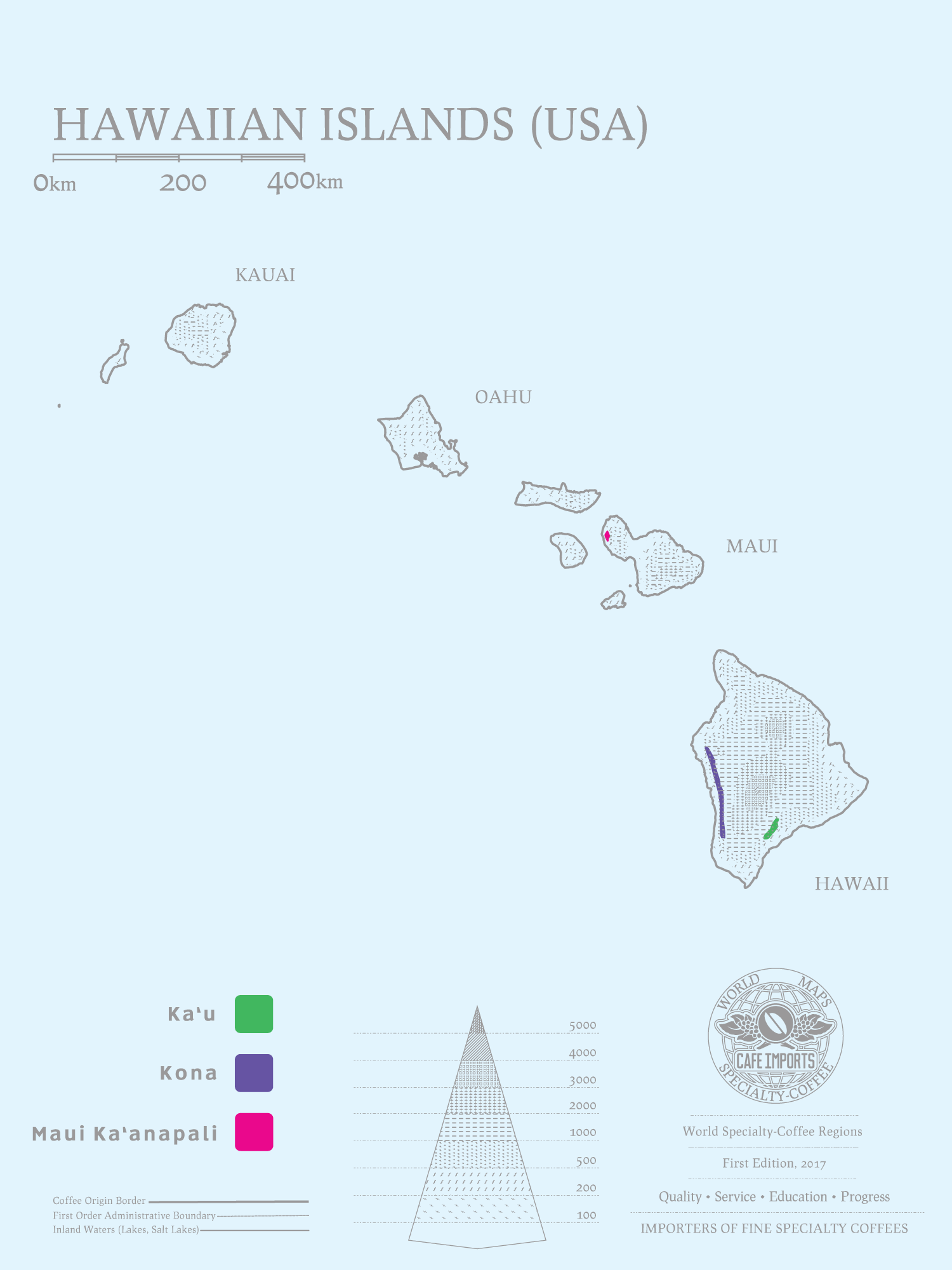
Although the Big Island has the highest elevation in the chain, its coffee areas reach only 300 to 1,100 meters. By the usual elevation requirements for specialty coffee, that does not meet the standard. Yet nobody would say Kona coffee is not specialty coffee. Is that not contradictory? Those of us at FrontStreet Coffee often discuss with other professionals how the concept of specialty coffee seems to carry certain standards, yet there are always distinctive coffees that break them. That is exactly what makes coffee so fascinating.
Kona remains the most famous, but coffee is now grown on every major island, across more than 950 farms, with a harvested area exceeding 7,900 acres. Hawaii's year-round warm, sunny weather, rich volcanic soil, rolling hillsides, gentle trade winds, and abundant rainfall combine to make Hawaiian coffee among the finest in the world.

In 1813 the first plants were brought to Oahu, although sugar far surpassed coffee as a crop for farmers. In the late 1820s, Bourbon variety coffee was brought to the Big Island, and over the following decade the first coffee-focused plantations were established.
Coffee did not develop smoothly here, however. In 1858, blight halted production on Kauai, and then came competition from sugar as landowners switched from coffee to sugar to raise income. These factors led many plantations to be abandoned and later divided into smaller farms. The United States began occupying the islands in 1898 and removed protective tariffs on coffee, further weakening the market, so more farmers turned to sugarcane. It was not until the 1980s, when sugar prices fell, that coffee found a turning point.

Today there are 12 coffee regions across the islands, with Kona the most famous. Because production is limited and costs are high, and because demand for specialty coffee has risen in recent years, Kona's market price now rivals that of Jamaican Blue Mountain, making high-quality Kona beans harder and harder to find. Hawaiian coffee is often expensive, but it offers excellent traceability.
Kona Coffee Grading
Kona beans are divided into five grades, the first three being the most common: Extra Fancy, Fancy, No. 1, Primary, and Peaberry. Peaberry, the round "male" beans specially selected because some drinkers prefer them and they fetch higher prices, makes up about 5% of Kona coffee. Apart from Peaberry, which is selected by hand, the other four grades are classified by bean size, weight, and defect ratio.
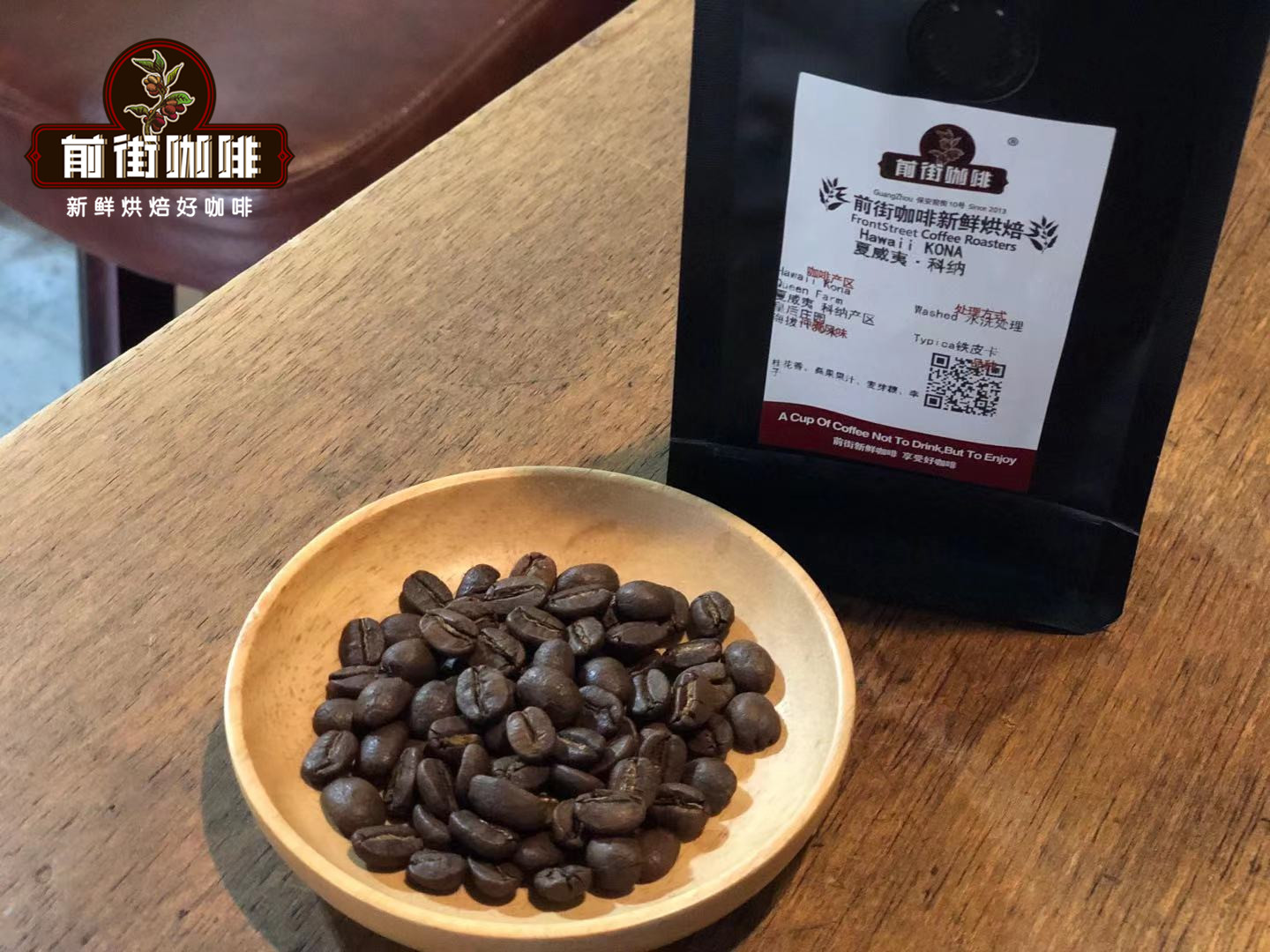
FrontStreet Coffee's premium Hawaiian Kona offers balanced acidity with subtle wine-like aromas, very rich flavor, and an irresistible fragrance.
FrontStreet Coffee · Hawaiian Kona Coffee
Kona green beans are labeled with numbered tags on burlap sacks before export, indicating certification by the Hawaii Department of Agriculture and accompanied by official identification seals, which makes them more expensive. Kona's market price is second only to Blue Mountain's. Kona also relies entirely on manual labor, from sowing and harvesting to washing, sun-drying, and polishing, so annual production is limited. Today, 100% Kona coffee and Blue Mountain coffee are jointly recognized as symbols of premium coffee.
The unique natural environment of the Kona region nurtures Arabica coffee and makes it one of the world's highest-yielding coffee plantations. Quality is guaranteed, and coffee grown in this distinctive environment and climate offers even richer flavors. Kona beans are very attractive in appearance, full, round, and brightly colored, earning the title "the most beautiful coffee beans in the world."

Most coffee trees in the Kona region grow on volcanoes and can absorb abundant nutrients stored in the soil. Combined with manual cultivation, each bean has a unique appearance. The coffee brewed from these beans is silky-smooth and richly aromatic, with captivating nutty notes and moderate acidity, as moving and meaningful as Hawaii's colorful scenery.
Kona coffee cultivation has always followed a family-farming model. The harvest runs from late August each year until January of the following year, with farmers picking ripe fruit in batches and processing them into coffee. Originally only men worked the coffee gardens, but later women joined. Hawaiian family production prefers to rely on family effort rather than hired workers, so it was normal for Hawaiian families to have eight or nine children. Later, new immigrants kept arriving from the Philippines, the mainland United States, and Europe to work in coffee. Over time Hawaii developed a social atmosphere centered on family culture while remaining open to foreign influences, which is one of the island's special characteristics.
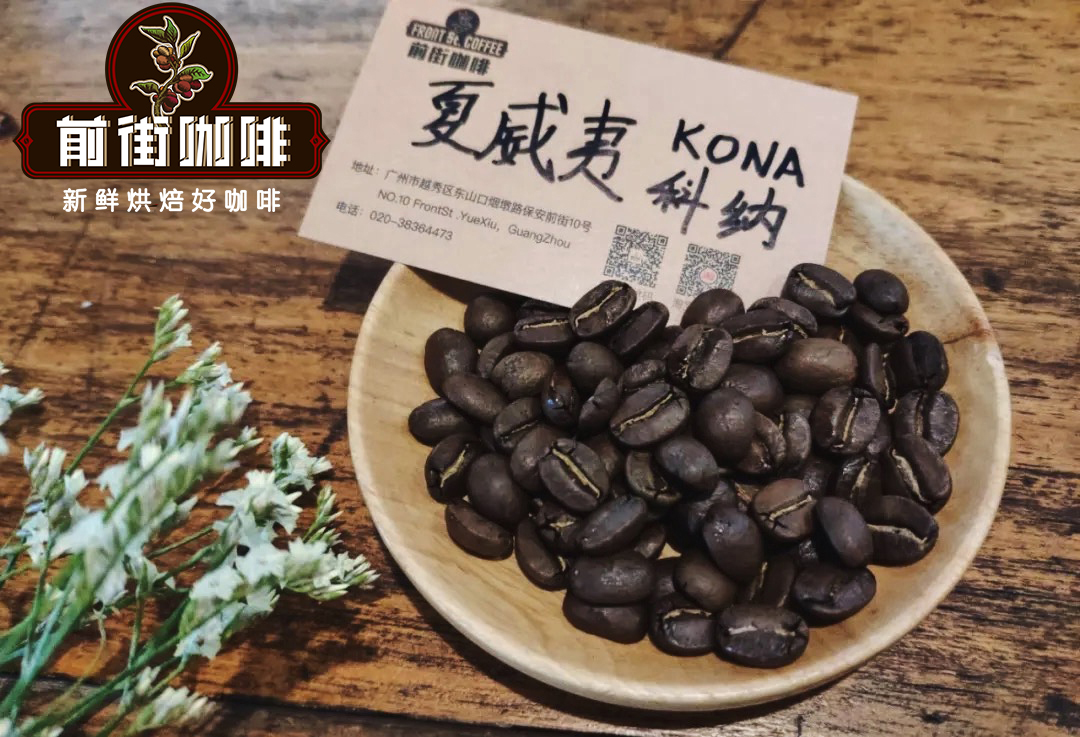
Queen's Estate
FrontStreet Coffee's Hawaiian Kona comes from Queen's Estate Farm, which won second place in the 2009 and 2011 Gevalia (Hawaii KONA Cupping Competition). Seventy percent of its harvest is considered top-tier premium specialty beans, and it is a farm known for high quality. Even its slightly lower-grade specialty beans have aromas comparable to premium beans, earning praise from the roasting industry.
Besides the Kona region of the Big Island, common Hawaiian coffees on the market come from estates on Maui, Kauai, and Molokai. Common Hawaiian varieties include Typica, Mocca, and Catuai.
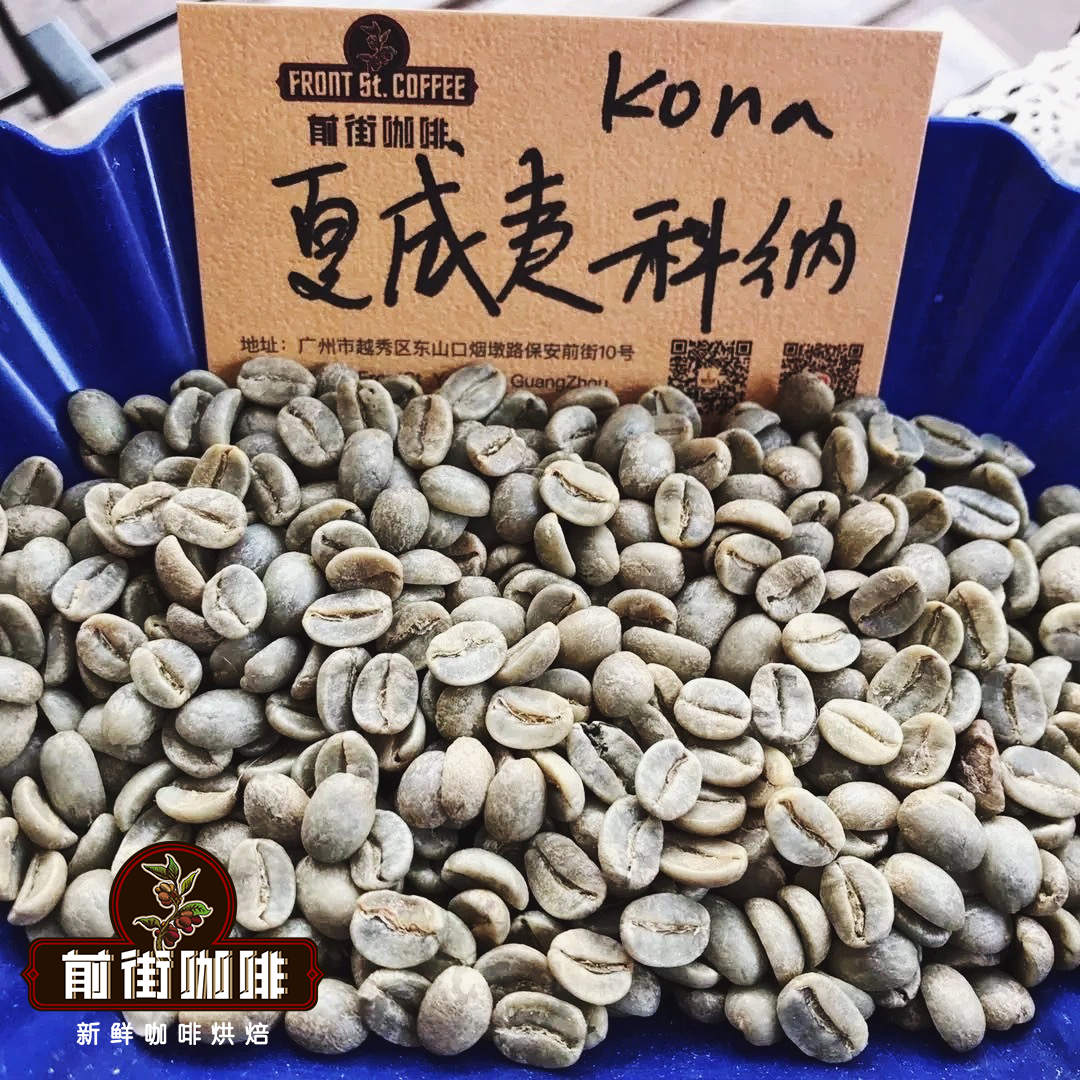
FrontStreet Coffee · Hawaiian Kona Coffee Beans
Region: Kona Region
Estate: Queen's Estate
Altitude: 1100m
Variety: Typica
Processing: Washed
Roasting Recommendations
Like FrontStreet Coffee's Jamaican Blue Mountain, Hawaiian Kona consists of low-density beans, so the initial temperature cannot be too high. When sweet aromas emerge and the color turns light yellow, the high moisture content calls for sufficient steaming time. The beans are clean and solid with substantial weight. FrontStreet Coffee suggests not roasting Kona too dark and recommends a medium-light roast.
Machine: Yangjia 800N, 550g green beans
Entry temperature: 200℃
Yellowing point: 5'35'', 150.1℃
First crack: 9'30'', 187℃
Development after first crack: 1'50'', discharged at 193.4℃
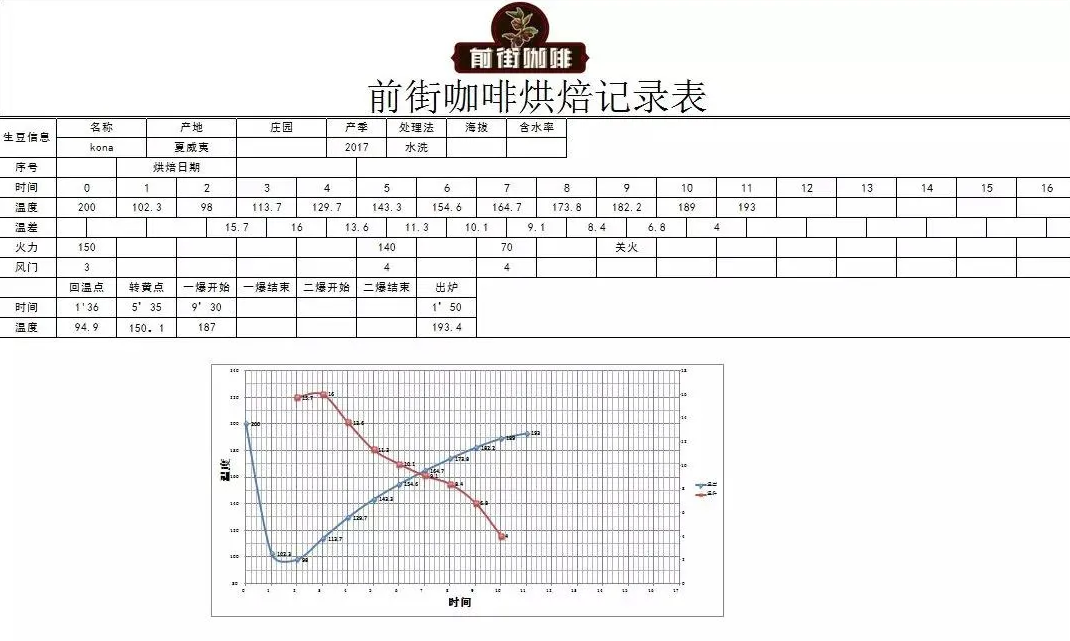
Preheat the roaster to 200℃ with the air damper at 3. After 1 minute, reduce the heat to 150 degrees, keeping the damper unchanged. At 5'35'', when the temperature reaches 150 degrees and the bean surface turns yellow and the grassy aroma disappears completely, dehydration is complete: reduce the heat to 140 degrees and set the air damper to 4.
At 9'30'', the bean surface shows ugly wrinkles and black spots, and the toast aroma clearly turns into coffee aroma. This is the prelude to first crack, so listen carefully for the crack. When first crack begins at 9'30'', reduce the heat to 70 degrees and open the air damper fully, being very careful not to reduce the heat so much that cracking stops. Turn off the heat at 182 degrees and discharge at 193.4 degrees.
Brewing Methods for FrontStreet Coffee's Hawaiian Kona
FrontStreet Coffee tested five brewing tools, the Hario V60, siphon pot, AeroPress, French press, and KONO, to compare the flavor differences.
1. Hario V60
Water temperature: 90℃
Coffee amount: 15g
Coffee-to-water ratio: 1:15
Grind size: Fine sugar (80% passing a China standard No. 20 sieve)
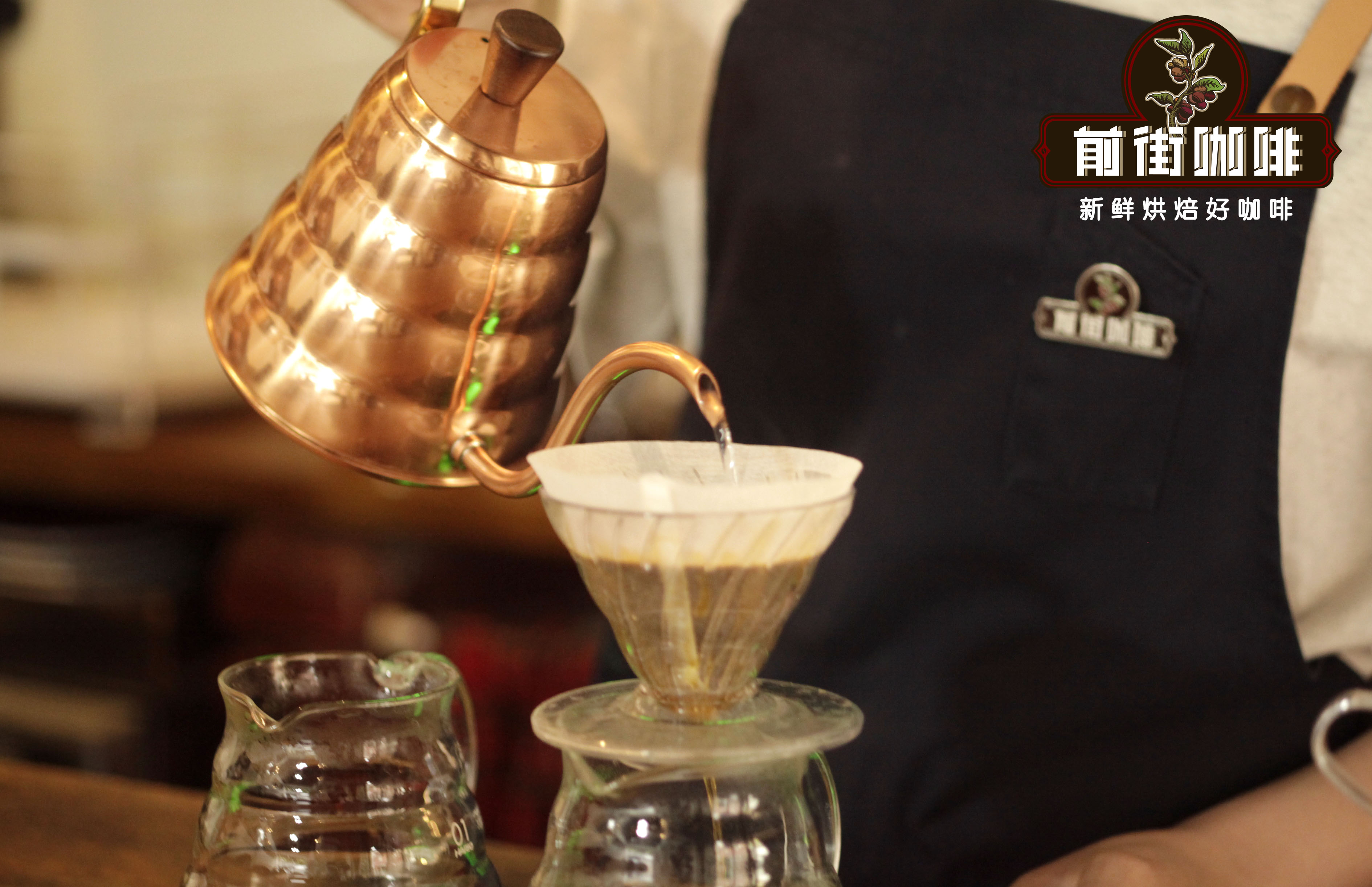
Brewing Method
Use 30g of water for a 30-second bloom. With a small stream in circular motion, pour to 125g, then pause. When the water level drops to just before exposing the coffee bed, continue pouring to 225g and stop. Remove the filter when the water level again drops to just before exposing the bed (timing starts at the bloom). Total extraction time: 2'00".
Flavor Description
Balanced and smooth osmanthus-honey sweetness with an elegant, full body. The brewed coffee gives off mulberry aromas that bring a sweet happiness. The finish has a smooth malt flavor and, when cooled, is like a cup of mulberry tea.
2. Siphon Pot
Coffee amount: 20g
Coffee-to-water ratio: 1:10
Grind size: BG-6M

Brewing Method
Add 210g of water to the lower chamber. When it reaches 90℃, insert the upper chamber tightly. When the upper chamber reaches 90℃, add the grounds and stir so coffee and water make full contact. After 30 seconds, stir again to break the crust. At one minute, remove from the heat and wipe the lower chamber with a dry cloth to speed the return of the coffee liquid.
Flavor Description
Chestnut, caramel, almond, hazelnut, plum, toffee, an overall rounded mouthfeel with prominent aromas.
3. AeroPress
Water temperature: 88℃
Coffee amount: 10g
Coffee-to-water ratio: 1:15
Grind size: BG-5R

Brewing Method
Pour directly to 147g, then press crosswise 3 times. Stir 3 circles at 50 seconds. Press at 1 minute 30 seconds. Total extraction time: 1 minute 41 seconds.
Flavor Description
Sandalwood, herbal, chocolate, plum, peach, nuts, and cream: a rounded mouthfeel with rich layers and a soft fruit acidity.
4. French Press
Water temperature: 88℃
Coffee amount: 17g
Coffee-to-water ratio: 1:13
Grind size: BG-5R

Brewing Method
Pour directly to 223g and stir 5 circles. At 50 seconds of steeping, stir 4 more circles. At 1 minute, insert the plunger and press down the grounds. Total pouring time for the coffee liquid: 1'31''.
Flavor Description
Brown sugar, nuts, cream, herbal, and dark chocolate: a very smooth, oily texture with high sweetness.
5. KONO Dripper
Water temperature: 88℃
Coffee amount: 15g
Coffee-to-water ratio: 1:15
Grind size: BG-6M

Brewing Method
Use 30g of water for a 30-second bloom. With a small stream in circular motion, pour to 125g, then pause. When the water level drops to just before exposing the coffee bed, continue pouring to 225g and stop. Remove the filter when the water level again drops to just before exposing the bed (timing starts at the bloom). Total extraction time: 2'00".
Flavor Description
Berries, chocolate, cream, spices, fermented notes, and hazelnut: a smooth texture with lively fruit acidity.

Conclusion
In brewing FrontStreet Coffee's Hawaiian Kona with different methods, FrontStreet Coffee found that the V60 and KONO drippers extract more layered flavors with a softer fruit acidity. The AeroPress, siphon pot, and French press all retain some oils, giving a mellower texture that leans toward nutty and cream flavors. So if you prefer rich layers, try the V60 or KONO; if you enjoy a mellow body, reach for the AeroPress, siphon pot, or French press.
FrontStreet Coffee Recommendation
Kona's closest rival in the premium coffee world is Jamaica Blue Mountain, and FrontStreet Coffee's Jamaica Blue Mountain No. 1 shows why. This is the highest grade of Jamaican Blue Mountain, with strict standards for bean size, defect rate, and overall quality, and FrontStreet backs it with full origin certification and the original wooden barrels, traditionally shipped in 15, 45, and 70-kilogram sizes, so the source can be traced clearly.
Take FrontStreet Coffee's Blue Mountain No. 1 from the historic Clifton Mount Estate, where coffee has been grown since around the mid-18th century, roughly 1750. Its fields sit at an average of 4,300 feet (1,310.64 meters), where altitude, gentle afternoon cloud cover, ample sunlight, and mineral-rich soil give the trees ideal growing conditions and a longer cherry-ripening period. Roasted medium-dark and best brewed in a KONO dripper, it shows the classic balance of the island style: clean, complex, and mild, with chocolate sweetness and a strong body.
Important Notice :
FrontStreet Coffee is a long-established specialty coffee roaster in Guangzhou China, selling freshly roasted beans from its own farm in Yunnan as well as dozens of carefully selected single-origin beans from around the world for both pour-over and espresso. The products deliver consistently excellent quality and great value, with shipping within 24 hours. Guangzhou's FrontStreet Coffee shop is recommended by many coffee lovers, and the beans are now available online at the Tmall 。
FrontStreet Coffee has moved to a new address:
FrontStreet Coffee Address: 315,Donghua East Road,GuangZhou
Tel:020 38364473
 Scan and follow the En Gafei WeChat official account. Please indicate that the reprint comes from "En Gafei".