What Are the Flavor Characteristics of Indonesia's National Treasure Toraja Coffee Beans? The Story of Indonesian Coffee
Professional coffee knowledge exchange. For more coffee bean information, please follow Coffee Workshop (WeChat public account: cafe_style).
An Indonesian National Treasure Coffee Bean Hidden in Deep Mountains
Classic Toraja Indonesian Coffee
Sulawesi is one of Indonesia's renowned coffee-producing islands, blessed with exceptional natural conditions and a long history of coffee cultivation. The uniquely smooth texture of Toraja Indonesian coffee has gradually earned acceptance and affection from countries around the world in recent years.
Because Toraja coffee is produced in limited volume, it has been treated as a specialty bean since the Dutch colonial era.
Compared with Sumatra, Toraja farmers hold a strong sense of quality: they select only ripe cherries at harvest, which stretches out the picking season.
In Sulawesi's Toraja region, coffee is also processed using the Giling Basah method. Combined with Sulawesi's rich iron ore deposits and the high iron content of its soil, these two factors create the unique flavor of Toraja Indonesian coffee.
PS. (Giling: grind; Basah: wet)
In recent years, some traders have begun importing Toraja coffee to Taiwan, gradually building recognition for it in the market.
Knowledge about Toraja, however, is mostly limited to terms like Toraja Kalosi Celebes, which causes some confusion among coffee shops using Toraja green beans over price and quality definitions.
Are you buying Toraja, Kalosi, Toraja Kalosi, or Celebes?
Here is a simple explanation. People commonly referred to it as Toraja Kalosi because, after farmers harvested Toraja coffee, they sold it to local middlemen, who transported it to processing facilities in the so-called Kalosi region. Toraja coffee thus became associated with Kalosi. In reality, Kalosi mainly serves as a distribution center for green coffee beans rather than being famous for cultivation.
It is therefore nearly impossible to tell from which high-altitude mountain coffee region the commonly purchased Toraja green beans actually originate.
Aside from the 2009 collaboration between the Forestry Bureau and Toarco Jaya Company to cultivate fifty hectares, most of the Toraja region consists of small-scale farmers who grow their own coffee and sell it to middlemen, without developing what could be called large plantation models.
In recent years, Toraja coffee's fame has grown considerably while production remains scarce, leading some green bean buyers to go directly into Toraja's mountains to acquire beans. Toraja has gradually begun to build a reputation of its own.
A young man from Taiwan, after months of research and testing in the deep mountains of Toraja, finally decided to begin acquiring beans from the Toraja - Sapan mountain region in central Sulawesi.
Sapan's coffee forest region sits at an altitude of 1,300-1,500 meters, the ideal height for growing high-quality Indonesian Arabica coffee forests, with an average annual temperature of approximately 22-28 degrees Celsius.
The area has optimal soil quality, with a humus layer exceeding 30 centimeters in thickness and consisting entirely of black soil. Coffee here not only receives enough nutrients to grow large but also offers exceptional flavor.
Furthermore, unlike the Toraja coffee sold by other traders, we maintain complete control from the moment farmers harvest the cherries, cooperating with farmers through semi-contractual arrangements and requiring the harvest of absolutely ripe cherries.
The typical coffee processing method in the Toraja mountain regions is quite primitive. After pulp removal, the beans undergo a simple wash to remove fruit pulp while filtering out unripe or diseased beans, followed by 2-3 days of direct sun drying.
Mountain regions receive minimal sunlight, however, so most beans are simply air-dried before being bagged and awaiting a middleman's purchase. As a result, the Toraja beans (in parchment) commonly seen on the market remain extremely moist and often develop mold.
To prevent this, after removing the coffee husk we immediately bag the beans and transport them directly to Rantepao's parchment removal factory for 2-3 days of sun drying before removing the parchment. The beans are then transported to Makassar for sun drying (because of Makassar's high sun-drying temperatures) and hand-picked grading.
Origin: Sulawesi - Sapan Mountain Region
Characteristic: Surface color doesn't easily darken during roasting
Variety: Non-Jember variety
Harvest Period: July 2010
Toraja Cultural Knowledge Sharing
The local ethnic group in Toraja differs significantly from neighboring regions, forming the unique Toraja people. Their cultural distinctiveness includes:
1. Architecture
The unique Tongkonan houses exist because locals believe their ancestors came from the sky, arriving here by boat. To commemorate this - or perhaps to return to their ancestors' dwelling place - they build their houses with boat-shaped roofs.
2. Funeral Customs
Toraja people do not bury their dead.
a. People of status (not necessarily wealthy) who can approach heaven may have holes carved into rock faces to create hanging coffins. For people of status, after death, locals carve wooden sculptures of their likeness and place them outside their coffins as memorials.
b. Ordinary people: cemeteries are built in their own fields, shaped like regular houses but without windows.
c. Children: if infants under one year old pass away, tradition calls for binding the child to a sacred tree, allowing the child to return to heaven along the sacred tree.
d. Those unable to afford burial: the deceased are first placed in their original living room at home, waiting for burial until funds become available.
e. Funerals: these are more expensive than weddings. During funerals, cattle must be slaughtered because cattle are regarded as protective deities locally. The deities must be invited to escort the deceased back to heaven.
f. Most cattle in Toraja are water buffalo, with very few yellow cattle. Cattle are not primarily for consumption but for sacrifice. A typical water buffalo costs approximately 25 (around 80,000 NT dollars), while those with white spots on their heads start at 70 (approximately over 200,000 NT dollars), and those with completely white heads start at 200 (approximately over 600,000 NT dollars). Believe it or not, you read that number correctly.
This is why, when someone in an ordinary family passes away, they often have to wait three to five years before holding funeral services for the deceased.
g. Funeral record: in 2005, when the county magistrate's mother-in-law passed away, the magistrate rented out the local stadium and held continuous funeral banquet services for seven days. It was reported that 500 pigs and 500 cattle were slaughtered, with total expenses exceeding 5 billion Indonesian rupiah (work out the rest yourself - I'm not good at math; divide by the exchange rate of 300). At the time, however, the KPK (Corruption Eradication Commission) had no jurisdiction over Sulawesi, so he got away completely.
3. Harvest Festival-like Celebration
Every December, after the final rice harvest, the local community holds harvest festival-like activities to thank heaven for its care throughout the year. The harvest festival includes bull fighting, but with "water buffalo"...
FrontStreet Coffee: a roastery in Guangzhou with a small shop but diverse bean varieties, where you can find various famous and lesser-known beans, while also providing online store services. https://shop104210103.taobao.com
FrontStreet Coffee Recommendation
Indonesia's islands each bring something different to the cup, and FrontStreet's range covers that spread well. Reflecting Sulawesi's own reputation, Indonesian coffee is generally known for plump beans and a rich aroma, while Indonesia as a whole produces about 90% Robusta - one reason the arabica lots that do stand out there are worth seeking out.
For the classic Sumatran style, FrontStreet's wet-hulled Mandheling comes from the Lintong area around Lake Toba. It is wet-hulled, then given a medium-dark roast to bring out the signature low-acid, full-bodied Mandheling profile: caramel, dark chocolate, and toasted bread, with a long sweet finish. Those who enjoy a strong, bitter-sweet cup will find it immediately familiar.
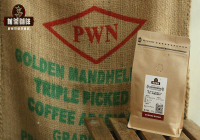
At the top of the line, FrontStreet's PWN Golden Mandheling is the flagship product of the Pwani Coffee Company, which buys only specialty-grade Mandheling and sorts each lot by density, size, shape, and color, combining machine selection with careful manual picking. The result is whole, even, plump, and translucent beans with the earthy and grassy notes largely removed - sandalwood, herbs, spice, roasted hazelnut, caramel, and dark chocolate in a clean, mellow, richly layered cup.
Important Notice :
FrontStreet Coffee is a long-established specialty coffee roaster in Guangzhou China, selling freshly roasted beans from its own farm in Yunnan as well as dozens of carefully selected single-origin beans from around the world for both pour-over and espresso. The products deliver consistently excellent quality and great value, with shipping within 24 hours. Guangzhou's FrontStreet Coffee shop is recommended by many coffee lovers, and the beans are now available online at the Tmall 。
FrontStreet Coffee has moved to a new address:
FrontStreet Coffee Address: 315,Donghua East Road,GuangZhou
Tel:020 38364473
 Scan and follow the En Gafei WeChat official account. Please indicate that the reprint comes from "En Gafei".