Characteristics of Yunnan Arabica Coffee | Is Yunnan Coffee Delicious? How to Brew Yunnan Coffee Beans?

To many people coffee still feels like a foreign import, an exotic product that could only come from abroad. Yet Yunnan coffee is already a serious part of global production. According to FrontStreet Coffee's research, Yunnan produced 108700 tons of coffee in 2021. To explain what makes Yunnan coffee distinct, FrontStreet Coffee uses its own home-roasted Yunnan small-bean coffee as an example.
What Is Yunnan "Small Bean" Coffee?
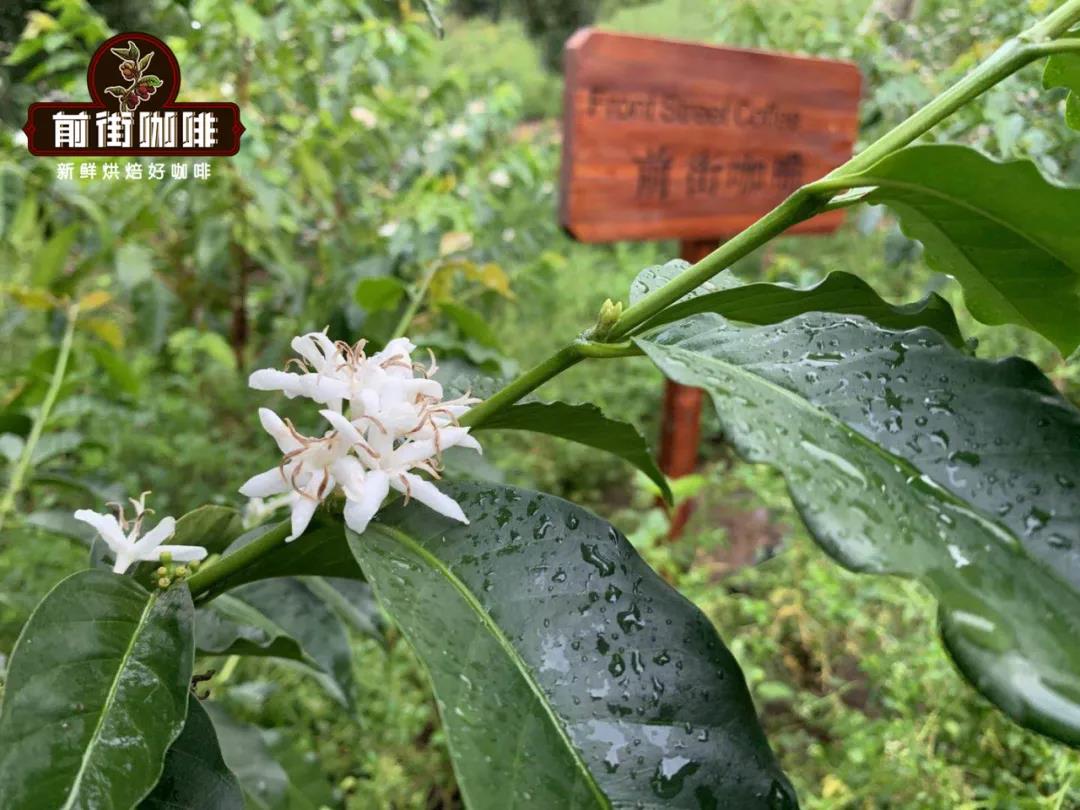
Like many growing regions, Yunnan cultivates the small-seeded Arabica plant. Because Hainan province grows the larger-seeded Robusta, farmers distinguish Yunnan's crop by calling it "small-bean coffee."
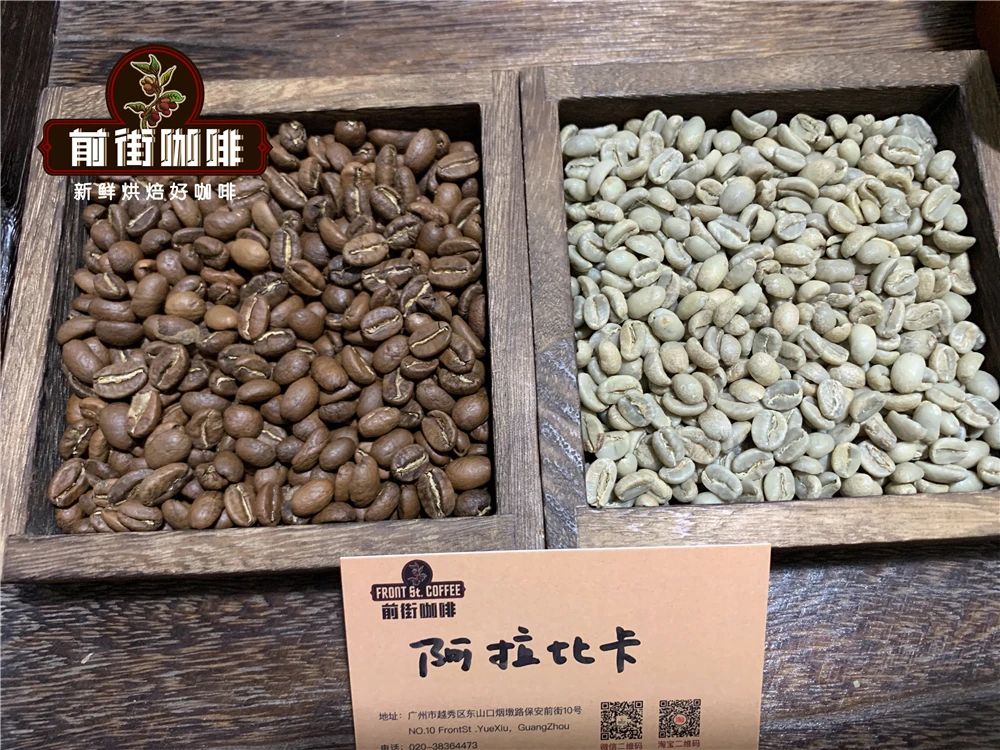
Yunnan's coffee history goes back to 1904, when the French missionary Alfred Tiedje carried the first coffee seeds to Zhukula Village in Binchuan, Dali, and planted them there. That first variety was the ancient Typica, a pure Arabica with rich, varied fruit acidity and a delicate cup, long considered a premium variety. The industry later collapsed twice over: leaf rust killed trees across the region on a large scale, and many farmers, unconvinced that coffee paid well enough, switched to other crops and shrank the planted area.
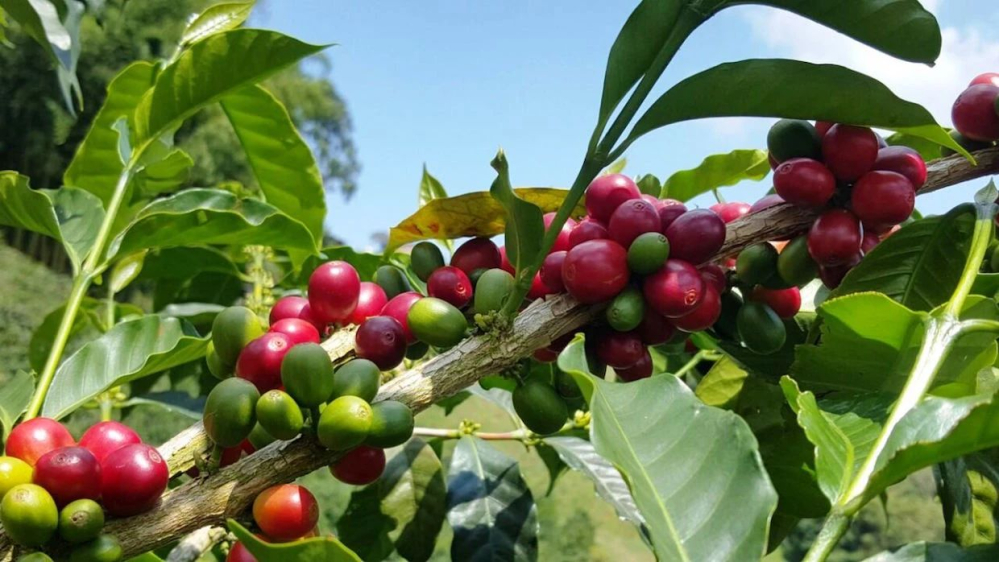
During the Reform and Opening-up period of the 1980s, Yunnan coffee re-entered international markets. In 1988 foreign companies such as Nestlé set up operations in China and supported the industry in several ways: they introduced high-yielding, disease-resistant varieties such as Catimor, and they promised to buy Yunnan beans as raw material at the prevailing US futures price. Planted area expanded, farmer enthusiasm rose, and Catimor displaced the old Typica trees to become the backbone of Yunnan coffee.
Catimor 7963 is a hybrid bred specifically for rust resistance by the Portuguese Tropical Research Institute (HCT), with a remarkably stable plant shape. It is compact and dwarf, heavily branched, with short fruit nodes, vigorous growth, and enormous vitality. Its two great strengths are outstanding rust resistance and high yield, which is why Yunnan farmers favor it so strongly — today more than 90% of the region's coffee trees are Catimor.
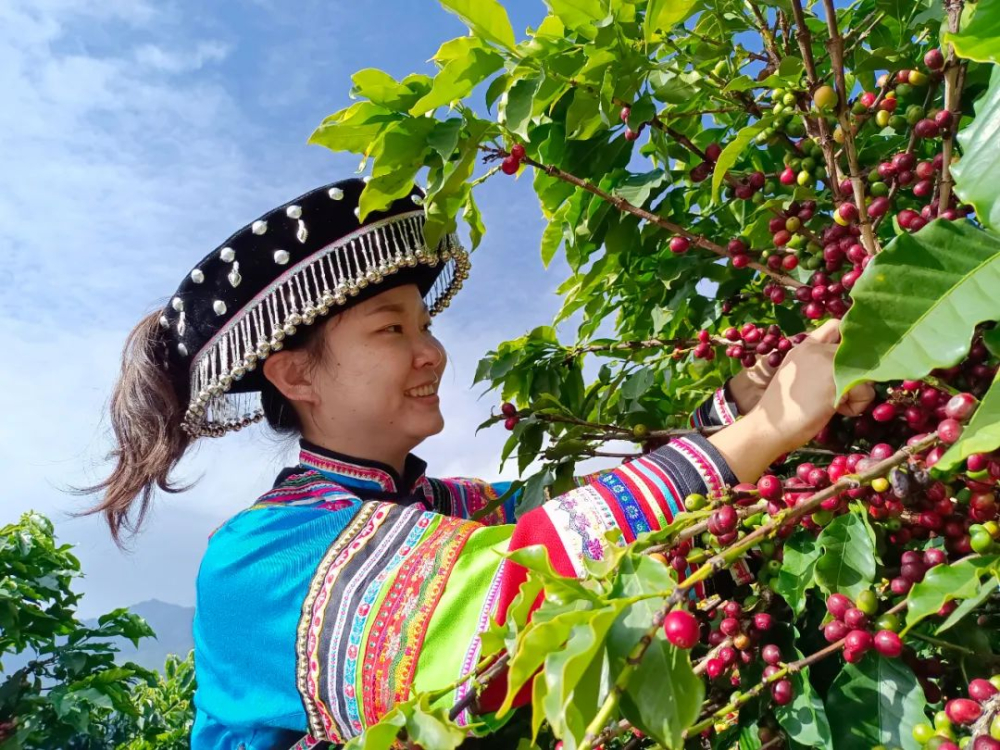
Catimor, however, is not a pure Arabica. It is a cross between rust-resistant Timor and Caturra, and it carries roughly one quarter Robusta lineage. Anyone who knows varieties will recognize the consequence: Robusta is heavier in the cup, plainly bitter, dominated by grain and walnut, and prone to earthy flavors when processing is careless.
Inheriting those Robusta genes, and often paired with rough green-bean handling, Catimor has frequently been criticized for a harsh aftertaste. In recent years the Yunnan industry has been improving steadily, paying closer attention to cultivation and management, picking and sorting, and post-harvest processing. FrontStreet Coffee believes that with the efforts of coffee professionals, Yunnan coffee quality will keep rising.

Yunnan's Growing Regions
As China's domestic coffee market and supply chain mature, Yunnan's planted area and output keep growing. Coffee is now grown across 9 prefectures and 35 counties, including Pu'er City, Baoshan City, Dehong Prefecture, Lincang City, Wenshan Prefecture, and Xishuangbanna. FrontStreet Coffee's Yunnan small-bean daily coffee comes from Baoshan.
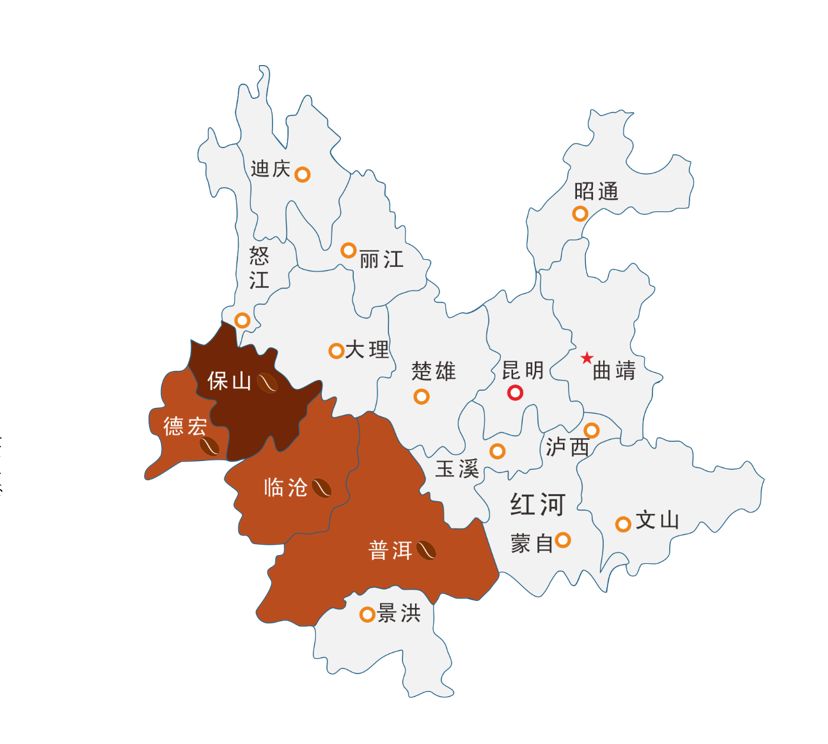
Baoshan was the earliest area in Yunnan to cultivate coffee on an industrial scale, with a history reaching back to the mid-1950s. Baoshan small-bean coffee earned praise for qualities summed up as "uniform and full particles, fresh aroma, rich fragrance, mellow taste, rich but not strong." In the late 1950s it was rated first-grade on the London market and given the name "Lujiang No. 1," which made small-bean coffee famous.
Baoshan's frost-free, warm climate suits small-bean coffee well. The Lujiangba area in particular has a dry-hot valley climate with little annual temperature variation but a wide day-night difference, and that swing is what creates Baoshan coffee's distinctive sweet aftertaste. Combined with modest, well-distributed rainfall, it gives cherries excellent growing conditions. That is why FrontStreet Coffee chose Baoshan small-bean coffee as one of its flagship regional daily coffees, so drinkers can taste for themselves what Yunnan small-bean coffee is like.
Yunnan Coffee Processing Methods
Some drinkers try a Yunnan coffee processed with a novel method, find the aroma unusually loud, and conclude that this is what Yunnan tastes like. In reality most Yunnan growers work with difficult conditions and no expensive processing equipment, so the great majority of beans are processed simply — washed or natural. Novel post-harvest methods do add aroma, but FrontStreet Coffee believes that if you want the original Yunnan flavor, washing is the better route: it lowers the defect rate and produces a more consistent, cleaner cup.
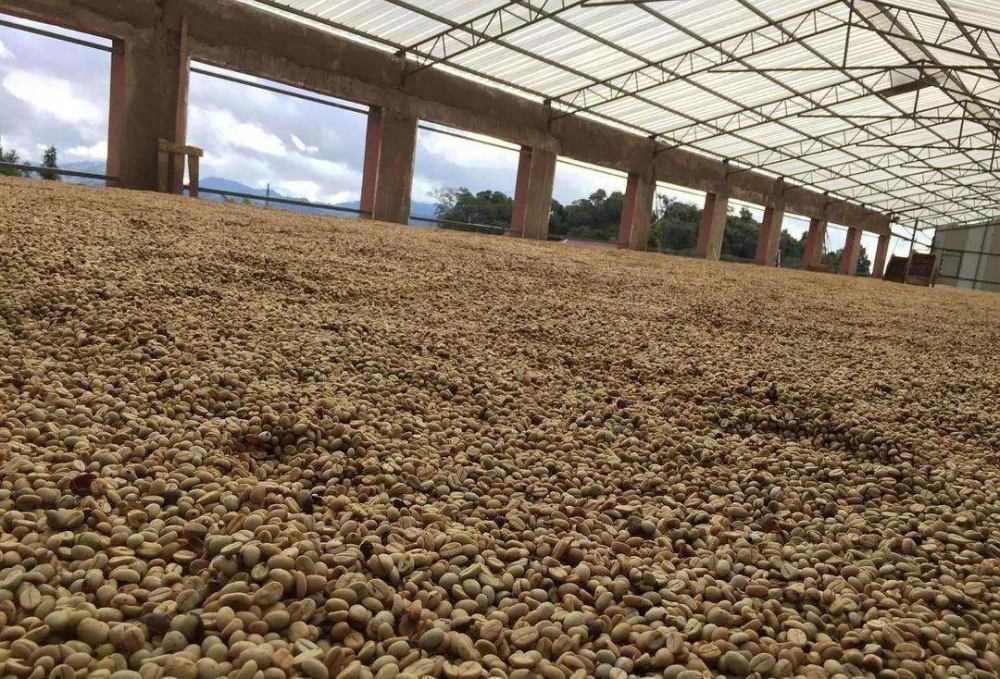
FrontStreet Coffee also offers a well-loved bean called FrontStreet Coffee 2013. As the name suggests, it is an exclusive house product. It comes from FrontStreet Coffee's own plantation in Lincang, Yunnan, and is made from the elegant-flavored Typica, dried naturally in the sun to build sweetness. Every November, as the cherries ripen one after another, workers pick the red fruit by hand and spread it out under the sun, turning it at irregular intervals so it dehydrates evenly and does not over-ferment. Once the beans have dried to a purplish-red color and reached target moisture, they are hulled and roasted.
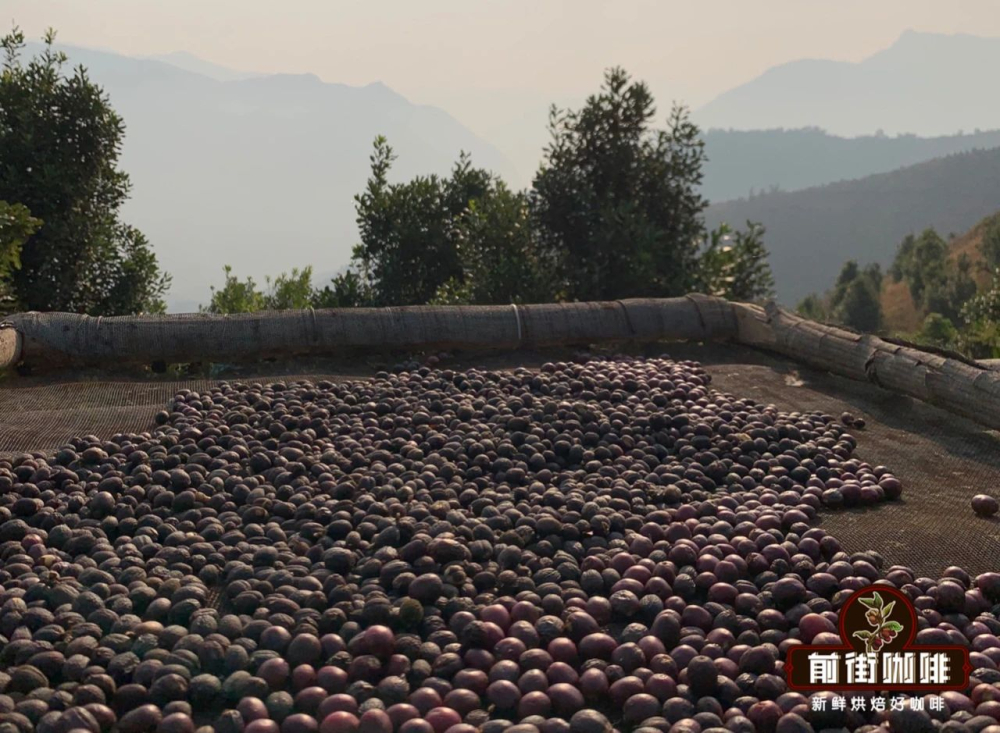
Yunnan coffee does not have the bright floral-fruit acidity of African coffee, the deep chocolate aroma of the Americas, or the spice of Indonesia. FrontStreet Coffee sees Yunnan small-bean coffee as a neutral, balanced profile — acidity, sweetness, and bitterness all present. Yunnan coffee is therefore roasted medium to highlight roasted chocolate and nut aromas while keeping some acidity. FrontStreet Coffee's cupping of the Yunnan small-bean daily coffee finds nutty, herbal, and brown-sugar aromas, melon-like sweetness, and plum acidity, balanced throughout. The natural-processed Typica shows fuller tropical-fruit fermentation with a persistent sweet aftertaste.

FrontStreet Coffee's Baoshan Small-Bean Pour-Over Method
Below, FrontStreet Coffee brews a café-style cup of its home-roasted Yunnan small-bean daily coffee. Every flavor description FrontStreet Coffee publishes is based on freshly roasted beans; once beans have been stored for more than a month the aroma fades and the original flavor becomes hard to reproduce. FrontStreet Coffee understands how much freshness matters, so it ships only beans roasted within 5 days, letting customers enjoy the full flavor window on arrival.
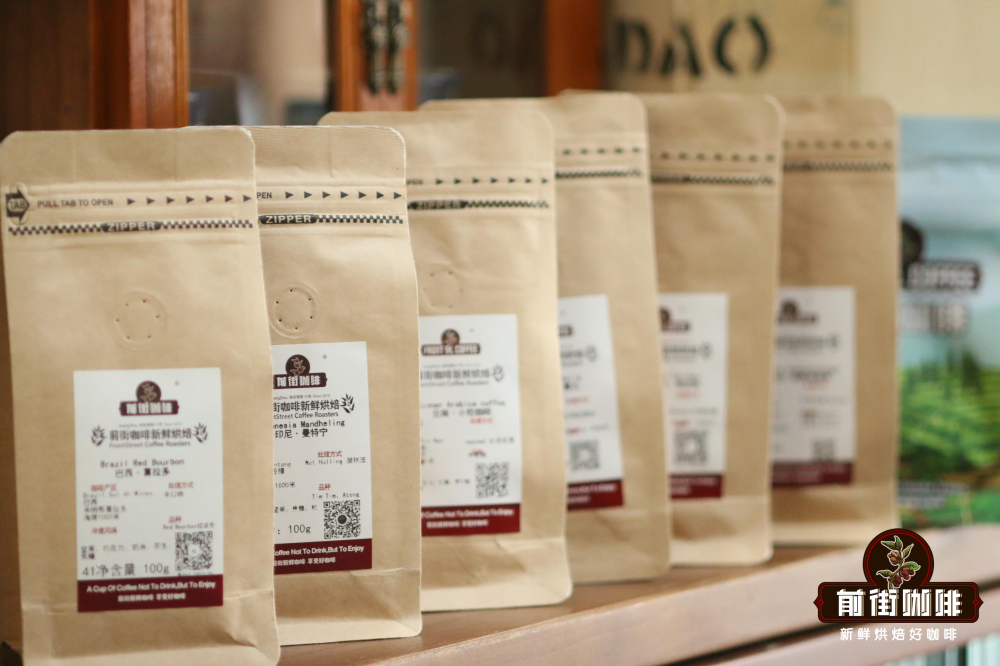
Because the Yunnan small-bean daily coffee is a medium roast leaning toward rich, mellow nut and chocolate notes, the deeper roast makes the beans more porous and the grounds more absorbent, which calls for a medium grind. To avoid pulling out too many unwanted flavors, FrontStreet Coffee uses a moderate 90°C water temperature and a KONO dripper.
Unlike a V60, the KONO dripper's only exhaust area is the one-quarter rib section. When the water level rises above the ribs, pressure builds through the weight of the water itself. With a relatively small outlet, the contact time between coffee and water is extended, so solubles are extracted as the water flows and the cup gains body and richness.
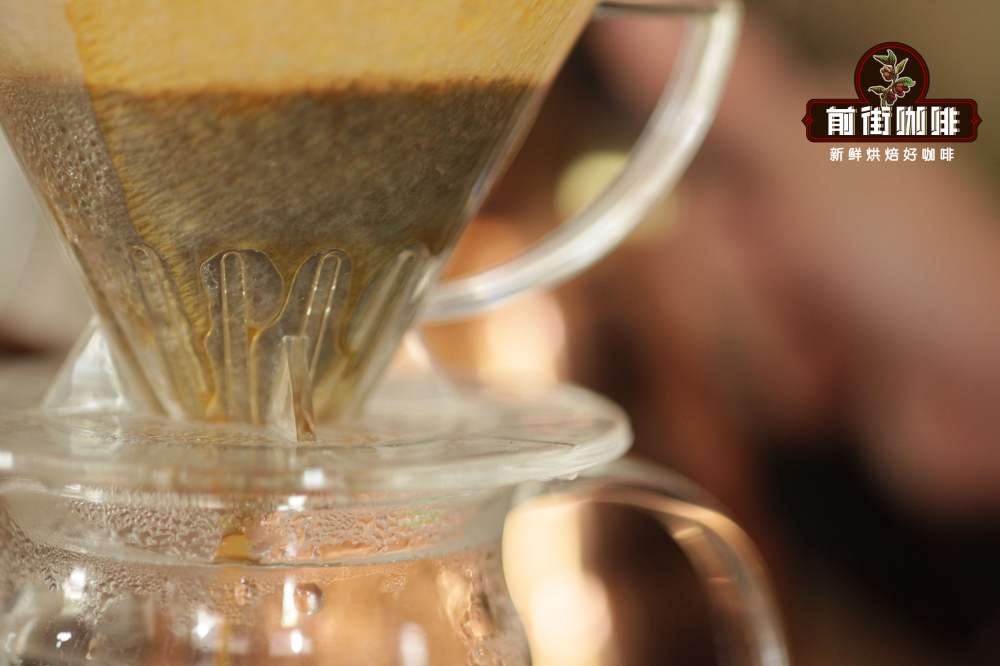
Brewing Parameters:
Dripper: KONO dripper
Water temperature: 90°C
Grind size: 75% pass-through rate on a #20 standard sieve
Coffee-to-water ratio: 1:15
Coffee dose: 15g
Three-stage extraction
With three-stage extraction, grind the coffee, pour it into the filter paper, and start with 30g of water from the center for a 30-second bloom. Keep the stream small and steady throughout, spiraling from the inside out. For the second stage pour 95g of water, and when the coffee liquid has nearly finished draining, start the third stage with 100g until all the coffee has filtered through, then remove the dripper. Total time is about 2 minutes, give or take 10 seconds.

The washed small-bean Catimor has nutty, dried-berry aromas. In the cup you taste nuts, herbs, chocolate, and brown sugar, with balanced plum acidity and a light fruit acidity in the aftertaste.
FrontStreet Coffee Recommendation
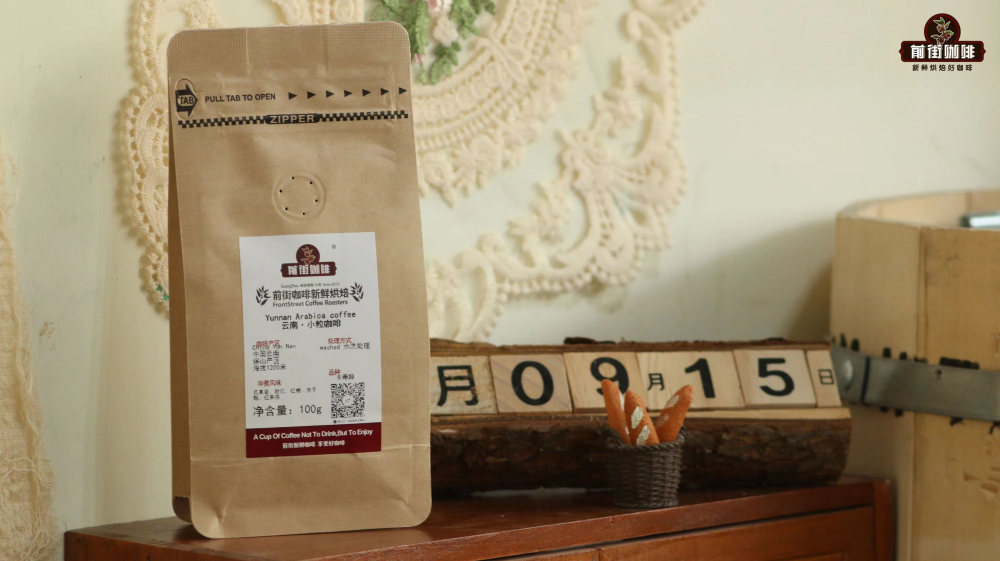
FrontStreet Coffee Yunnan Small Bean is the entry point to the region: grown in Baoshan, washed, and roasted medium. The wash removes the mucilage through fermentation and rinsing before drying, which is what lets the bean express its terroir cleanly. In the cup it shows soft nut and chocolate sweetness with a light plum acidity, at a price that makes it an easy first taste of Yunnan.
For a clearer, more layered expression, FrontStreet Coffee 2013 Yunnan Sun-Dried Typica comes from FrontStreet Coffee's own estate and uses the oldest and most traditional post-harvest method: natural sun-drying. Typica is one of the purest and oldest Arabica varieties, and the natural process gives this lot a heavier body and sharper sweet-sour contrast, with citrus and berry notes, a hint of fermented wine aroma, caramel sweetness, and a creamy finish.
To drink Yunnan as espresso, FrontStreet Coffee Black Cocoa Blend pairs Yunnan small bean with Brazil Cerrado. The Brazilian component supplies mixed-nut aroma and balance, while the Yunnan coffee carries chocolate and citrus. The result is an Americano with balanced acidity, sweetness, and bitterness and a nutty, brown-sugar sweetness, and a latte with the smooth texture of almond and cream — an easy blend for beginners.
Important Notice :
FrontStreet Coffee is a long-established specialty coffee roaster in Guangzhou China, selling freshly roasted beans from its own farm in Yunnan as well as dozens of carefully selected single-origin beans from around the world for both pour-over and espresso. The products deliver consistently excellent quality and great value, with shipping within 24 hours. Guangzhou's FrontStreet Coffee shop is recommended by many coffee lovers, and the beans are now available online at the Tmall 。
FrontStreet Coffee has moved to a new address:
FrontStreet Coffee Address: 315,Donghua East Road,GuangZhou
Tel:020 38364473
 Scan and follow the En Gafei WeChat official account. Please indicate that the reprint comes from "En Gafei".