Introduction to Finca Altieri in Panama - How to Make Pour-Over Coffee with Panama Beans
Finca Altieri: A Legacy of Excellence
Eugene P. Altieri, the owner of Finca Altieri, is a New York-born American who has lived in Panama for over 40 years. He owns two estates, both in the Boquete growing region: one at a lower average altitude of about 1,350 meters, the other at 2,000 meters. The varieties grown include Criollo, Caturra, Catuai, Catimor, and Geisha. He runs both estates very successfully - in recent years he has collected awards at the Best of Panama (BOP) competition year after year, while steadily refining his production techniques.
Community Development and Social Responsibility
As coffee quality has risen, so has the standard of living for the indigenous farmers and workers on the estate. What began as modest improvements has grown, through Eugene's and his management team's forward-looking planning, into a dramatic upgrade in daily life: today every farming family has an independent apartment with private rooms, a kitchen, and bathroom facilities - amenities these families never had before. Eugene's team asks each family to sign an agreement committing to proper use of the facilities, and the community manages itself: families elect management committees to keep the living environment clean. They also gather weekly for religious services, and the women can join sewing classes to make handmade home decor for sale, bringing in additional household income.
A Model of Excellence
It is clear that Eugene and his team are driven by more than coffee. Their commitment runs not only to producing excellent beans but to being a working model of how an estate can support the people who grow them.
Panama Coffee: The Rise of Geisha
Over the past 5-6 years, Panama has become the most sought-after coffee origin in Central America, largely on the strength of the Geisha variety - a bean that drives enthusiasts into a frenzy and is often hailed as the finest coffee in the world. For that reason, the Best of Panama auction is held separately from other Central and South American cupping competitions, and Panama was the first country to hold its auction annually in mid-May. Impressively, Panama is not a one-variety story: its mills keep innovating in green-bean processing. Alongside traditional washed processing there is the honey method popularized by neighboring Costa Rica, plus small volumes of naturally processed coffee that are steadily gaining a name in Central America and drawing attention from coffee professionals worldwide. Given Eugene P. Altieri's recent award-winning record with his Geisha at the annual Best of Panama competition, his quality control clearly deserves the praise it gets.
Brewing Recommendations
FrontStreet Coffee suggests the following parameters:
Pour-over: V60 dripper, Fuji R440 grinder at setting 3.5, water temperature around 90 degrees C
French press: grinder setting 4, water temperature 90 degrees C
Siphon: grinder setting 4, water temperature 90-91 degrees C
AeroPress: grinder setting 3.5, water temperature 90 degrees C
FrontStreet Coffee Recommendation
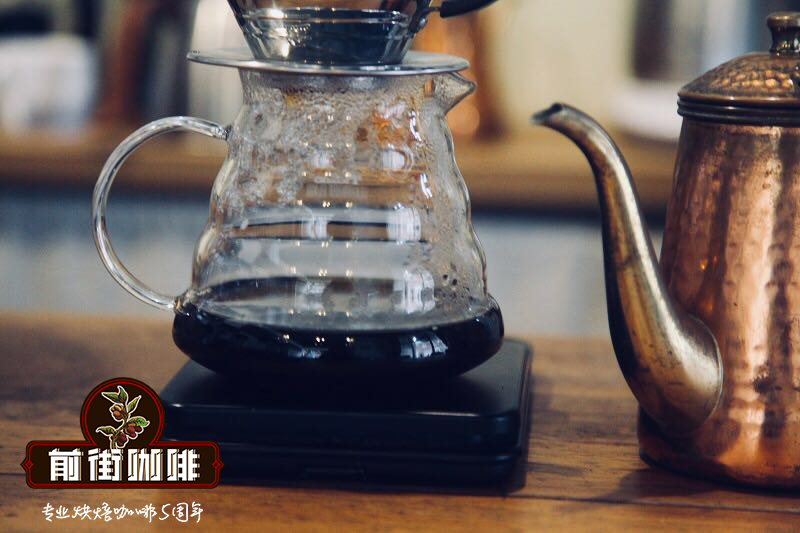
Geisha is the variety that made Panama famous, and it rewards careful brewing: it is a dense, medium-light-roast coffee with strong floral and fruit character, but the grounds tend to sink and clog the bed, so FrontStreet recommends a slightly coarse grind - about 78% pass-through on a #20 sieve, roughly the texture of fine caster sugar - and water at 91 degrees C. For a reference brew, use 15g of coffee in a small Hario V60 at a 1:16 ratio in three pours: 30g to bloom for 30 seconds, then gentle circular pours to 125g and again to 225g once the bed drains halfway, for a total extraction time of about 2 minutes 10 seconds to 2 minutes 20 seconds.
- FrontStreet Boquete Geisha - the ideal entry point to the classic Panama Geisha profile. At a friendly price it delivers the signature orange-blossom sweetness, an oolong-tea texture, delicate fruit acidity, and clearly defined layers.
- FrontStreet Esmeralda Red Label (Special) and Green Label (Private Collection) Gesha - the top of the Esmeralda line. The Red Label grows at 1600-1800 meters, must cup above 90 points, and comes from single named plots such as Hari Miyo; the Green Label blends lots across the estate's high-altitude plots for the same signature Gesha flavor at a more accessible price.
- FrontStreet Granana Gesha - from the Granana washing station at the border of the Kochere and Granana Abaya areas in Yirgacheffe, founded in 2014 and run by Israel Degefa, with some 700 hectares of coffee land, much of it uncultivated, fertile soil under forest shade. Hand-picked ripe cherries dry on raised beds for 14-20 days depending on the weather; at a medium-light roast it shows bright citrus acidity, elegant ginger-flower aroma, and the full sweetness of ripe fruit with the variety's signature refined finish.
However you brew it, Geisha served as pour-over is where those delicate aromatics truly sing - worth experiencing at least once from Panama, where it made its name, and Ethiopia, where it was born.
Important Notice :
FrontStreet Coffee is a long-established specialty coffee roaster in Guangzhou China, selling freshly roasted beans from its own farm in Yunnan as well as dozens of carefully selected single-origin beans from around the world for both pour-over and espresso. The products deliver consistently excellent quality and great value, with shipping within 24 hours. Guangzhou's FrontStreet Coffee shop is recommended by many coffee lovers, and the beans are now available online at the Tmall 。
FrontStreet Coffee has moved to a new address:
FrontStreet Coffee Address: 315,Donghua East Road,GuangZhou
Tel:020 38364473
 Scan and follow the En Gafei WeChat official account. Please indicate that the reprint comes from "En Gafei".