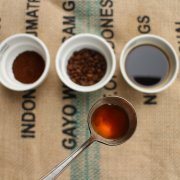
How to Taste Single-Origin Coffee to Experience Such Complex Flavors? How Should You Drink Single-Origin Coffee?
Introduction to Coffee Tasting
Tasting single-origin coffee is a genuine art, one that calls for a good deal of experience and knowledge.
A coffee's flavor profile can be broadly sorted into five dimensions: acidity, sweetness, bitterness, body, and aroma.
Start by trying to identify which of those five stands out most strongly in what you're tasting.
Then think about the coffee you drink most often — what makes it enjoyable? Where does it fall short?
Above all, explore coffees from different origins and roasters to enrich your tasting experience and broaden your palate.
Once you have comparisons to draw on, you'll understand each bean's unique character far better.
Developing Your Coffee Palate
In my own experience, there are moments when I taste or smell something familiar but can't quite place what memory it maps to. That's a sign my flavor vocabulary and mental reference cards aren't broad enough.
Begin by naming the general flavors present and recalling the taste of those specific things. Descriptors you'll commonly hear include nutty, jammy, wild berry, wild ginger flower, red wine notes, and chocolate undertones.
It's essential to build, step by step, your ability to tell flavors apart and to grow your personal flavor database. Through repeated tastings you'll eventually land on the profiles you love most.
Understanding Coffee Flavor Components
Aroma
Coffee's aroma is made up of hundreds of volatile compounds — acids, alcohols, aldehydes, ketones, esters, sulfur compounds, phenols, and nitrogen compounds. Lipid components work with coffee's acidity and bitterness to create a smooth taste. A loss of aroma therefore signals declining quality.
Common aroma descriptors: Floral, Nutty, Fruity
Bitterness
Bitterness is a fundamental trait of coffee, defined as much by its quality as its intensity. Green beans hold only trace amounts of bitter compounds; bitterness develops during roasting through the caramelization and carbonization of sugars, starches, and fibers.
As a rule, coffees with stronger acidity tend to have milder bitterness, while bitterness-dominant coffees often lack sufficient acidity.
Acidity
In terms of growing altitude, coffee from higher elevations usually shows more acidity than lower-grown coffee. Lighter roasts generally preserve more acidity, while darker roasts diminish it.
Freshly harvested beans with high moisture content, when properly processed, can develop a pleasant acidity that enriches flavor and adds depth.
Acidity descriptors: Berry-like, Peach-like
Body
Body is the texture of coffee in your mouth — from watery and thin to thick and syrupy — as well as how much it coats the palate after a sip.
Body descriptors: Thin, Mellow, Full-bodied
Sweetness
During roasting, some carbohydrates such as sucrose and glucose caramelize, while the remaining components contribute to sweetness. Sweetness is usually detected in a coffee's aroma or as a pleasant aftertaste at the bottom of the cup.
Flavor descriptors: Herbal, Vanilla-like, Caramel-like
Aftertaste
Aftertaste descriptors: Sweetness, Long-lasting, Smoky
Understanding Complexity in Coffee
When you first explore single-origin coffee, you'll inevitably run into the word "complexity." Complexity describes how flavors evolve from the moment the coffee enters your mouth to after you swallow, when the lingering aromas keep unfolding.
A coffee with good complexity reveals its flavors in sequence, letting you pick out note after note rather than facing a jumble of flavors so intense that nothing can be told apart.
FrontStreet Coffee Recommendation
Tasting is easier when the cup plays to a balanced, medium roast, and FrontStreet Coffee's medium-roasted lineup is a good place to sharpen your palate. The Brazil Queen Estate is a Yellow Bourbon from Brazil, the world's largest coffee producer. Medium roasted, it shows creamy peanut, chocolate, toast, and sugarcane aromas and sweetness, and it brews well by pour-over, moka pot, or home espresso machine.
If you want a sweeter medium roast, FrontStreet's Strawberry Candy Geisha Blend is the one to try. It marries two well-known Central and South American origins — a honey-processed coffee from Costa Rica and a washed Geisha from Panama — and FrontStreet roasts it medium to draw out both an orange-honey note and a rounded sweetness. It suits cold brew, pour-over, and espresso alike, and drinks refreshingly.
For a Chinese specialty coffee, FrontStreet's 2013 Sun-Dried Typica carries the authentic character of Yunnan small bean; a medium roast keeps its balance and softness, with gentle notes of nut, brown sugar, black tea, and dried apricot. It works for pour-over, cold brew, and American drip machines, at excellent value. And as a benchmark of balance, FrontStreet's Jamaica Blue Mountain No. 1 — the Typica variety, medium roasted — fuses acidity, bitterness, sweetness, and body into an elegant whole, delivering chocolate, roasted nuts, cream, and caramel the moment it hits the tongue.
Important Notice :
FrontStreet Coffee is a long-established specialty coffee roaster in Guangzhou China, selling freshly roasted beans from its own farm in Yunnan as well as dozens of carefully selected single-origin beans from around the world for both pour-over and espresso. The products deliver consistently excellent quality and great value, with shipping within 24 hours. Guangzhou's FrontStreet Coffee shop is recommended by many coffee lovers, and the beans are now available online at the Tmall 。
FrontStreet Coffee has moved to a new address:
FrontStreet Coffee Address: 315,Donghua East Road,GuangZhou
Tel:020 38364473
 Scan and follow the En Gafei WeChat official account. Please indicate that the reprint comes from "En Gafei".
What are the flavor differences between various single-origin coffee beans? Which single-origin coffee beans are recommended for beginners?