Coffee Bean Grind Size 1-10: Which is Finest & How to Adjust Pour-Over Coffee Grinding Standards
Which Coffee Grind Size from 1 to 10 Is the Finest?
In most cases, the smaller the number, the finer the grind. Grind size plays a decisive role in extracting a good cup: grounds that are too fine will over-extract in a pour-over, while grounds that are too coarse will leave you with under-extraction. Different origins, with their distinct characters, also call for different grind standards. So how do you adjust grind size correctly? Most grinders on the market today offer settings from 1-10, and making sense of them can be daunting. In this article, FrontStreet Coffee shares what you need to know about coffee grind standards.
What Is Coffee Bean Grind Size?
As FrontStreet Coffee noted above, grinding matters because particle size directly governs how efficiently hot water extracts the coffee. In theory, the more uniform the particles, the more consistent the extraction across the whole bed — and the better the cup. Concentration and extraction rate fall as the grind gets coarser and rise as it gets finer. Grind size determines not just the size and shape of the grounds but their total surface area: the finer the grounds, the larger the surface area exposed to the water, and the more material gets pulled into the cup. A larger surface area (that is, a finer grind) also gives carbon dioxide more escape routes from inside the bean particles.

Grind size is often described simply as the coarseness of the grounds. When grounds are coarser, the particles are larger and water needs more time to penetrate them and extract their contents. When grounds are finer, the particles are smaller and water extracts from them that much faster.
So for the same bean over the same contact time, a finer grind extracts more material and produces a stronger, more intense cup, while a coarser grind extracts less and can taste thin and bland. That is how central grind size is to unlocking a coffee's full flavor potential.
What Are the Common Grind Sizes?
Generally, grinders on the market fall into three categories by grinding range: those built for the espresso range, those that cover most ranges but not espresso, and those with a wide range suitable for every brewing method.
Matching recommended grinds to brewing methods yields a familiar ladder of coarseness. The finest grind belongs to Turkish coffee, followed by espresso, then the medium-coarse setting for pour-over and drip coffee, slightly coarser still for siphon brewing, and finally the coarsest grind of all for French press.
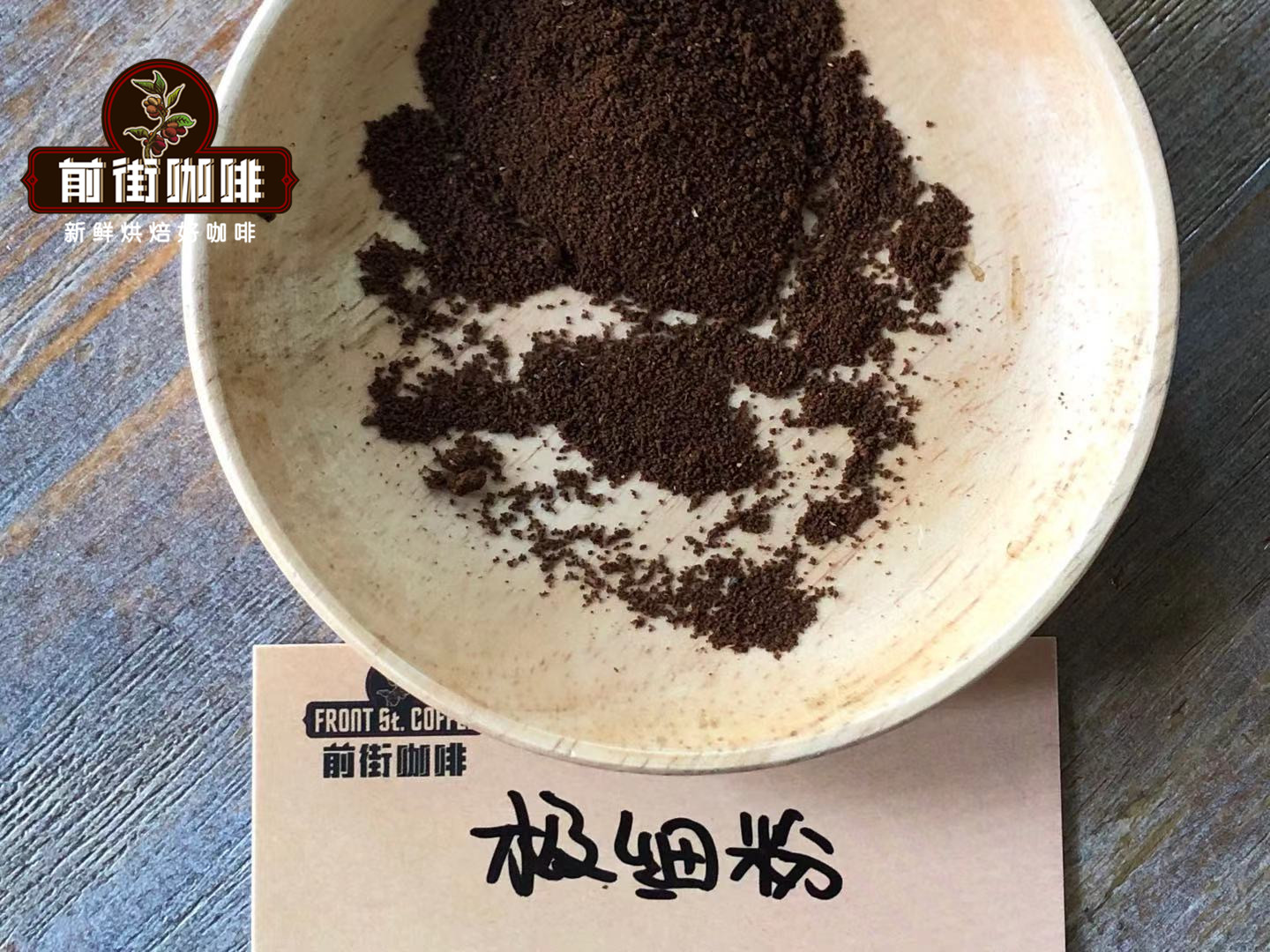
Espresso's grind is fine for good reason. Espresso extraction is very short — typically 20-30 seconds — and the shot usually serves as the base for most Italian-style drinks, so it must extract enough material to stand up to dilution with water or milk. Compared with other methods, espresso demands a far finer grind.
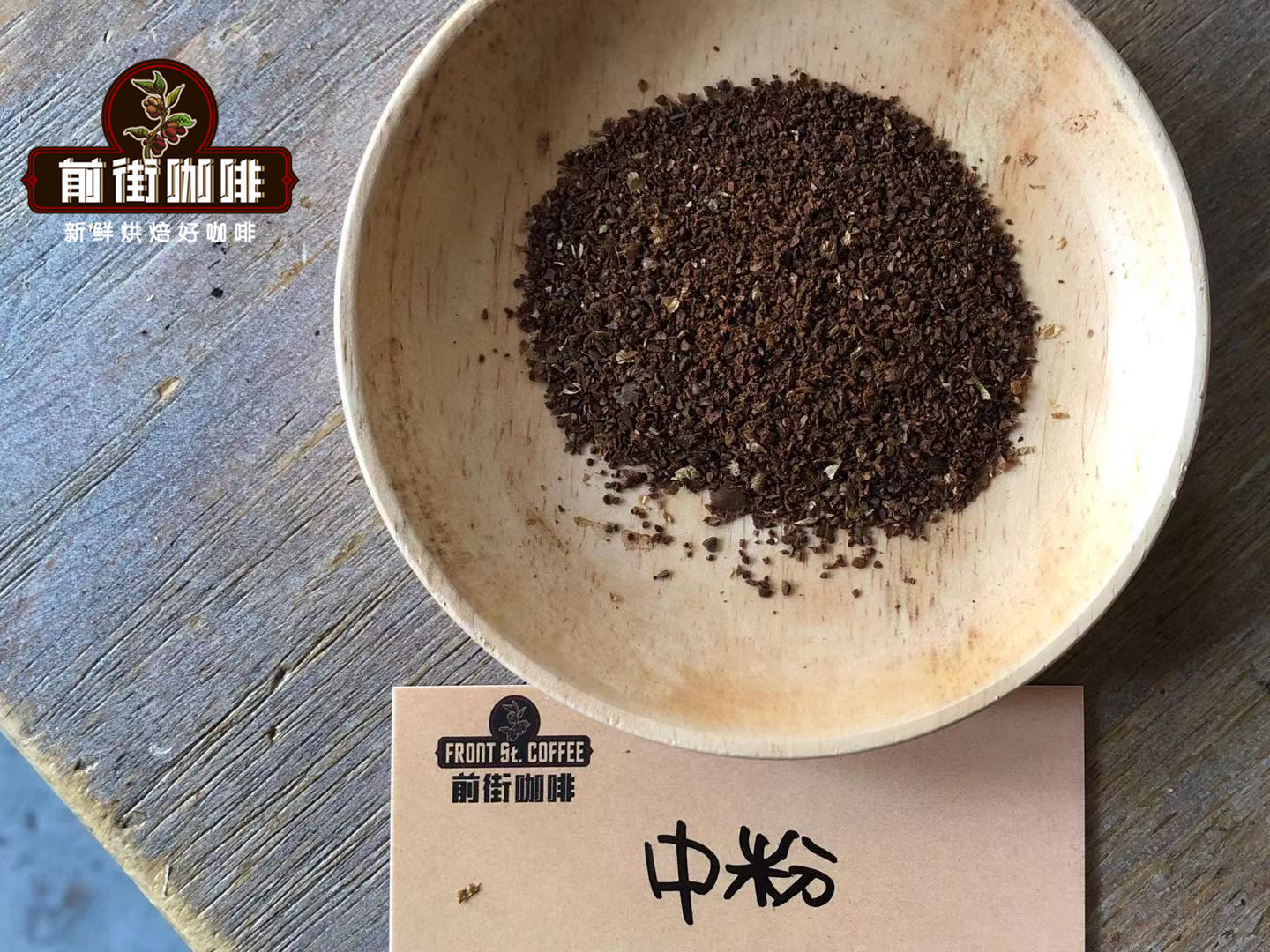
Pour-over sits in the middle of the extraction-time spectrum, averaging around 2 minutes — anything from 1 to 3 minutes can work, though most single-serve recipes land near 2. Because it has more time than espresso, pour-over doesn't need such a fine grind and the over-extraction risk that comes with it; it belongs to the medium-coarse category.
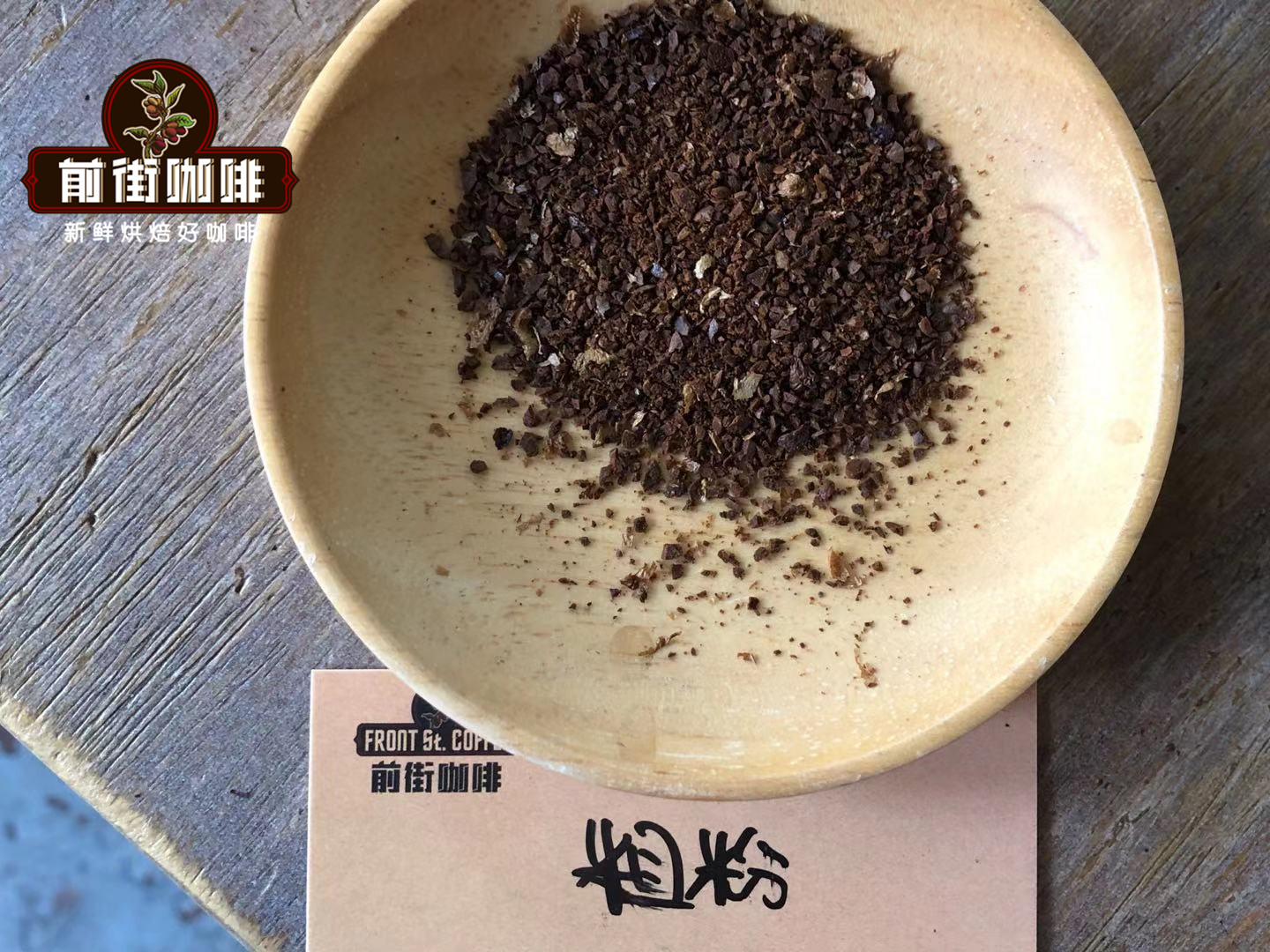
French press extraction runs 4 minutes or longer — well beyond pour-over — so it uses the coarsest grind of all to keep that long immersion from tipping into over-extraction.
How to Adjust Coffee Bean Grind Size from 1 to 10?
Different extraction methods need different grinds, and because every grinder model behaves differently, the numbers rarely translate one-to-one. One grinder might hit espresso fineness at setting 3; another might need setting 1 for the same result. In cases like these, sieving is the only reliable way to confirm where you actually are. FrontStreet Coffee will walk through it using pour-over as the example.

What Grind Size Should Be Used for Pour-Over Coffee?
Take FrontStreet Coffee's fresh-roasted beans as the reference. Pour-over single origins divide into two camps: medium-light roasts and medium-dark roasts.

FrontStreet Coffee's medium-light roasts: these beans typically lead with acidity, and their caramelized compounds don't surrender easily. FrontStreet recommends a medium-fine grind (80% pass-through on a #20 sieve with 0.85mm mesh, roughly the texture of fine sugar). The medium-fine setting slows water's passage through the bed, drawing out more of the acids, sweets, and caramelized compounds for a balanced expression of the coffee. Brew it at 90-91°C: too hot, and the caramelized compounds over-extract into bitterness; too cool, and you extract only part of the acids and sweets, leaving a bland, uninteresting cup.

FrontStreet Coffee's medium-dark roasts: these have lower acidity and pronounced body — meaning caramelized compounds are abundant. FrontStreet recommends a medium-coarse grind (70% pass-through on a #20 sieve with 0.85mm mesh, roughly the texture of raw sugar). The coarser setting speeds water through the bed, keeping those caramelized compounds from over-extracting, so flavor and mouthfeel stay sweet and rich without unpleasant bitterness. Brew it at 88-89°C: too hot and the cup turns bitter and hard to drink; too cool and the flavors go flat and dull.
How to Use a 0.85mm #20 Sieve?
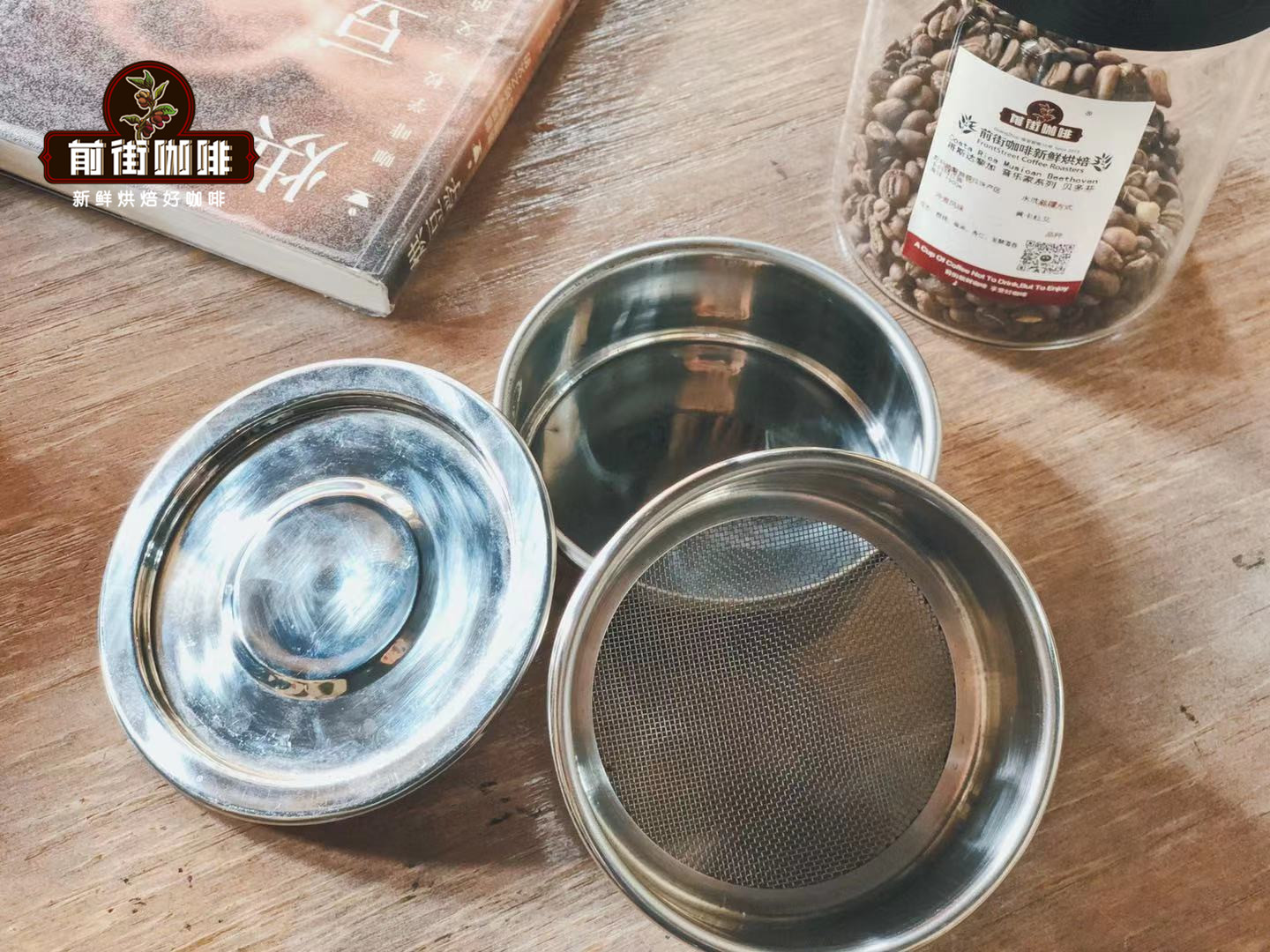
FrontStreet Coffee calibrates grind by sieving, following the SCAA's pour-over grind recommendations combined with plenty of hands-on verification. If you don't own a sieve, watch the water flow instead: if it runs too fast, the grind is too coarse; if it runs too slowly, the grind is too fine.

Start by grinding 10g of beans. Set the grinder by eye against fine sugar or raw sugar as your reference, then pour the grounds into the sieve, cover, and shake side to side until nothing more passes through into the collection tray. Tare an electronic scale with a container on top, pour in the sieved grounds, and weigh. Eight grams through means a medium-fine grind; seven grams means medium-coarse. If the pass-through rate is too high, go coarser; if it's too low, go finer.
Here are the sieve benchmarks FrontStreet Coffee has compiled through extensive brewing practice, for reference:
Fine → Coarse
Pour-over & Siphon 80% pass-through → American drip 75-80% pass-through → Cupping 70-75% pass-through → French press 65-70% pass-through
The Importance of Grind Uniformity
Uniformity matters as much as size. Once ground, the distribution of particle sizes heavily influences cup quality: the more tightly the particles cluster within the target range, the more even the extraction and the better the flavor. Too many boulders, and the coffee's deeper flavors never come out; too many fines, and the cup turns muddled and bitter. If your grinder produces severe unevenness, FrontStreet Coffee's advice is to replace it.
That's FrontStreet Coffee's complete rundown on grind size — we hope it helps coffee lovers adjust their grind correctly in every future brew.
FrontStreet Coffee Recommendation
If you're new to pour-over and wondering which grinder setting to aim your beans at, it helps to know which beans to put through the V60 in the first place. The V60 itself is a classic: designed by Hario, the Tokyo glassware maker founded in 1921 that originally built heatproof laboratory glass, and redesigned in 2004 into the form we know today — named for its 60-degree "V" cone and launched the following year. The cone and 60-degree angle force water toward the center before it drips through, extending contact between water and grounds for fuller extraction of aroma and flavor, while the single large outlet leaves flow rate almost entirely in the brewer's hands. That fast extraction is exactly what makes the V60 shine with the third-wave style of coffee — florals, lively fruit acidity, delicate sweetness, and tea notes — which is why floral-fruity beans like FrontStreet's Konga Yirgacheffe, the tropically fruity Huakui, the Geisha-style Strawberry Candy blend, and the raisin-toned Mozart are perfect matches for it.
For lighter roasts — the medium-fine, 90-91°C camp — FrontStreet's Yirgacheffe Konga is the classic first stop: bright citrus, berries, florals, and a green-tea-like sweet finish, with an acidity that is soft and fruity rather than harsh. The natural Huakui is the star of recent years, exploding with strawberry, passion fruit, jackfruit, even lychee, so juicy and low in bitterness that fans call it "the coffee that doesn't taste like coffee." Panama's Esmeralda Red Label Geisha remains the ultimate pursuit — jasmine, citrus, bergamot, and black tea in a clean, transparent, endlessly layered cup — while Kenya lovers should try FrontStreet's Kenya "cherry tomato" from Thika at 1,550-1,750 meters: SL28 and SL34 given a 72-hour double-washed fermentation, light-roasted for vivid cherry tomato and dried plum acidity, snow pear and black plum sweetness, and a clean yellow-sugar finish.
For medium-dark roasts — the medium-coarse, 88-89°C camp — FrontStreet's PWN Golden Mandheling delivers deep, lingering body with herbal and dark chocolate aromas and barely any acidity; Brazil's Queen Estate balances low acidity with rich nut, cocoa, and caramel sweetness and superb crema, at home as pour-over, espresso, or moka pot; Jamaica Blue Mountain No. 1 is famously the "specialty coffee everyone can love," balancing cream, caramel, chocolate, nut, honey, and a whisper of fruit; and the 2013 Yunnan sun-dried Typica, which FrontStreet has carried since 2013, weaves citrus and caramel with nut, chocolate, and brown sugar for a clean, harmonious cup that tastes unmistakably of Yunnan.
Important Notice :
FrontStreet Coffee is a long-established specialty coffee roaster in Guangzhou China, selling freshly roasted beans from its own farm in Yunnan as well as dozens of carefully selected single-origin beans from around the world for both pour-over and espresso. The products deliver consistently excellent quality and great value, with shipping within 24 hours. Guangzhou's FrontStreet Coffee shop is recommended by many coffee lovers, and the beans are now available online at the Tmall 。
FrontStreet Coffee has moved to a new address:
FrontStreet Coffee Address: 315,Donghua East Road,GuangZhou
Tel:020 38364473
 Scan and follow the En Gafei WeChat official account. Please indicate that the reprint comes from "En Gafei".