Types of Pour-Over Coffee Beans and Which Single-Origin Beans Are Best for Pour-Over
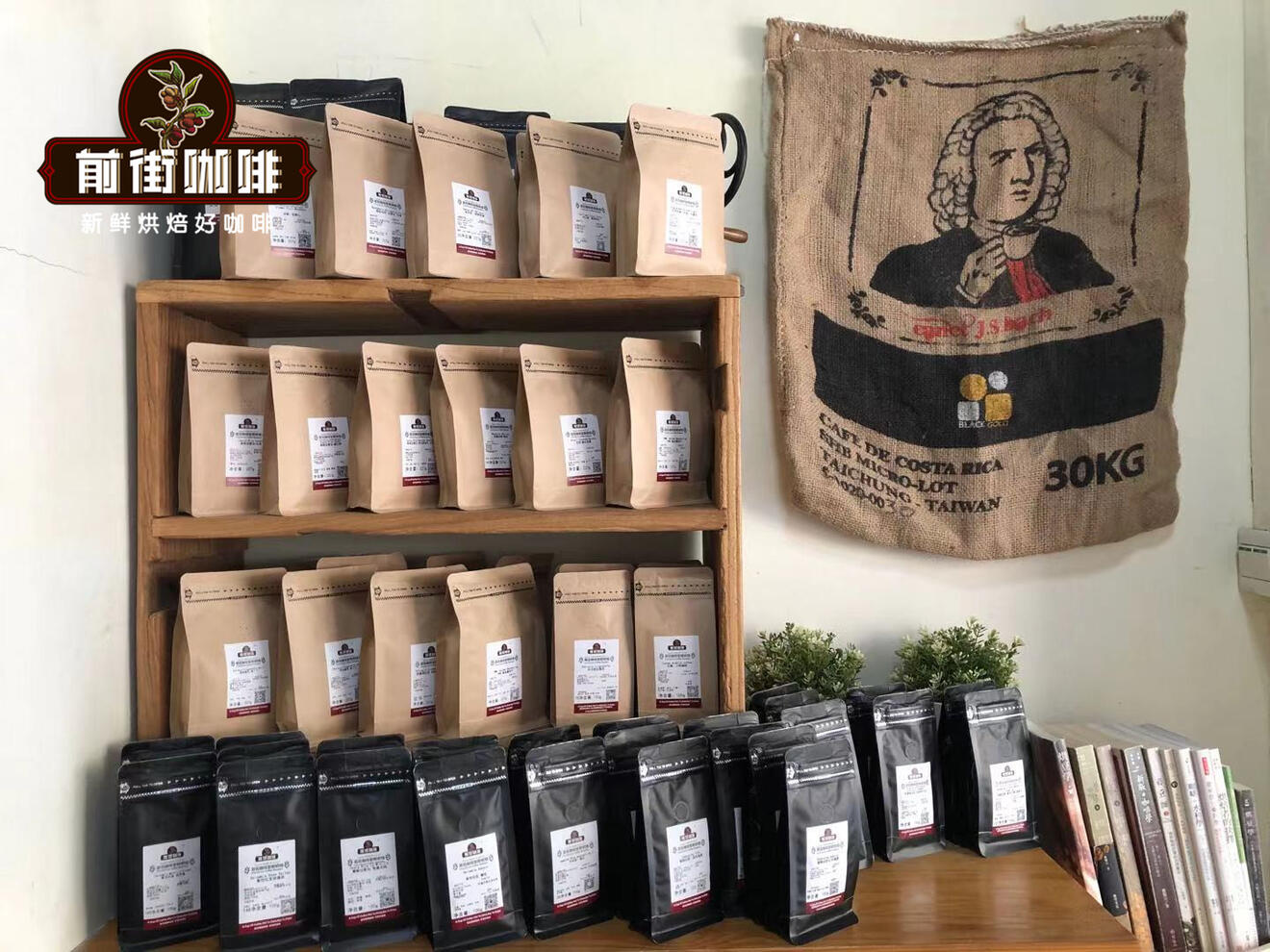
As the specialty coffee market grows, more and more coffee lovers are learning to brew pour-over at home. They come to FrontStreet Coffee to pick up freshly roasted beans—and freeze at the shelf, because FrontStreet Coffee alone carries more than two hundred single-origin beans, with over fifty varieties on the shelf at any given time. Choosing is genuinely hard. So in this article, FrontStreet Coffee recommends pour-over beans worth your attention.
What Is Pour-Over Coffee?
At FrontStreet Coffee, "pour-over coffee" means what the market usually calls specialty coffee, or single-origin coffee: beans from a single growing region, traceable all the way back to the origin—down to the specific farm and its character—so you can understand the coffee's story from the source.
Specialty coffee regions span the globe but fall across three continents: Asia, Africa, and Latin America. Each continent's altitude and climate impart distinct traits, so their coffees taste recognizably different—while differences within a single continent are comparatively small. Broadly speaking, then, coffee flavors divide into three great families.
Asian coffees lean spicy and herbal with a rich body; African coffees offer refreshing citrus-lemon or cherry-tomato acidity, clean and bright; and Latin American coffees sit between the two—balanced, with nutty and cocoa notes, a reflection of the wide variation in climate and altitude across that continent. Below, FrontStreet Coffee recommends representative beans from each.
Asian Growing Region Pour-Over Coffee Recommendations
Asia's coffee production ranks second only to Latin America's, with Vietnam the continent's largest producer. Having cupped widely, FrontStreet Coffee finds Asian coffees fuller-bodied than either Latin American or African coffees, though with less refined acidity—woody, herbal, spicy notes and deep mellow aromas outweigh bright fruity acidity. Representative origins include Indonesia and Yunnan, China.
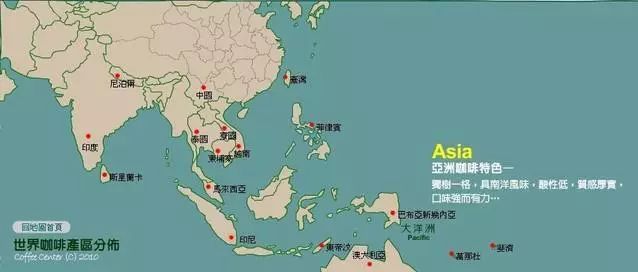
Indonesia Coffee Growing Region
Indonesia sits in Southeast Asia with a classic tropical rainforest climate: annual temperatures of 25-27°C, no true seasons, and 1600-2200mm of yearly rainfall. The country lies along a volcanic belt, so soils are fertile and mineral-rich—ideal for coffee. Elevations range from 900-2100 meters, with the main coffee zones concentrated around 1200 meters.
Indonesia's Processing Method: Wet Hulling
Much of Mandheling's fame comes from Indonesia's local wet-hulled processing. The method arose because the weather is rainy and typhoon-prone, denying producers the long dry stretches sun-drying requires, while the local economy of the time couldn't support the costlier washed process.
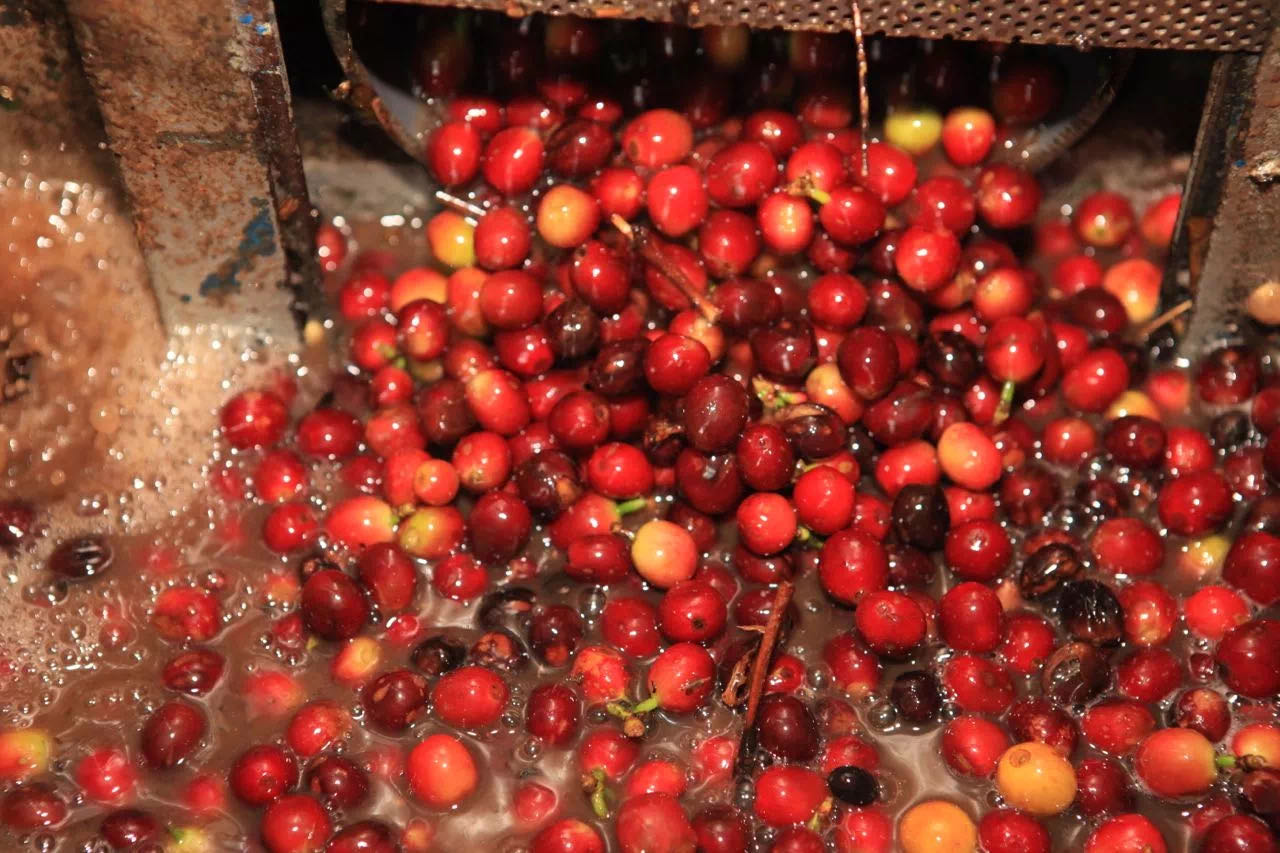
So the distinctively local wet-hulled method took shape. Indonesian coffee is no longer the impoverished industry it once was—many estates and companies could wash their coffee now—but they haven't abandoned wet hulling. FrontStreet Coffee sees it as the key factor that put Mandheling on the world stage: say "Mandheling" and coffee lovers immediately think "wet-hulled." The two are inseparable.
FrontStreet Coffee · PWN Indonesia Golden Mandheling Coffee Beans
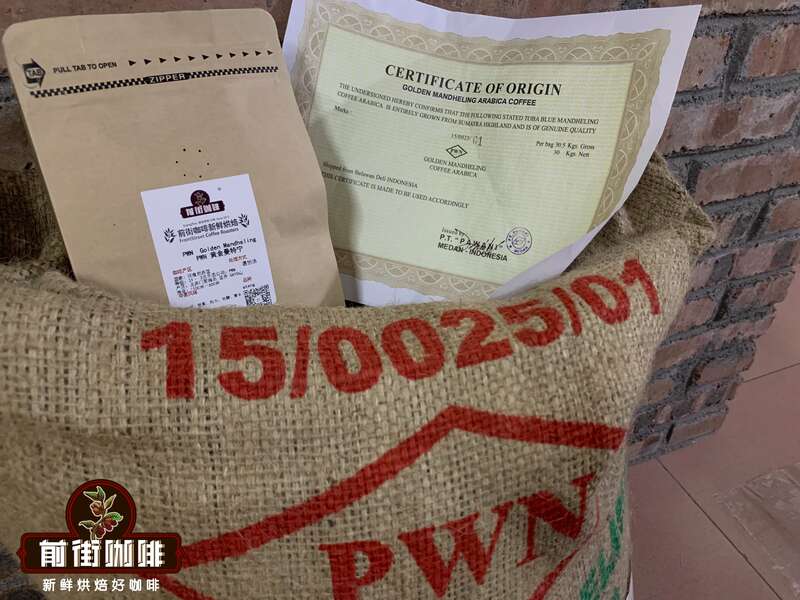
Country: Indonesia
Region: Sumatra, Aceh, Gayo Mountain
Altitude: 1100-1600m
Variety: Ateng
Processing: Wet-Hulled
Flavor: Toasted bread, nuts, pine, caramel, herbal
The Golden Mandheling on our menu is PWN's newest release of recent months. Unlike the PWN Golden Mandheling FrontStreet Coffee bought years ago, this batch comes from the Gayo Mountain region of Aceh in Sumatra, whereas the earlier one came from Lake Tawar. After cupping and brewing the new arrival, FrontStreet Coffee found it shows more toasted-bread character than its predecessor, with an even richer body.
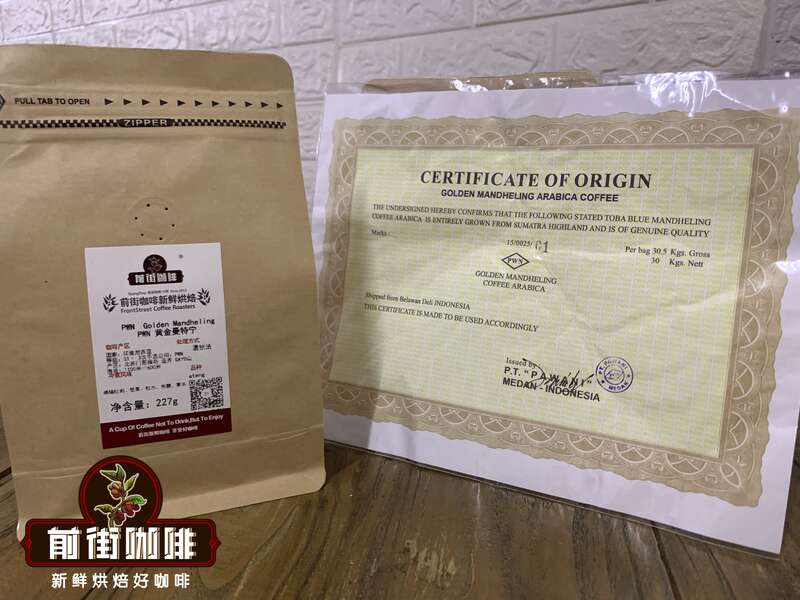
Furthermore, FrontStreet Coffee's PWN Golden Mandheling meets specifications of 18 mesh or above, with fewer than 3 defective beans in a 300g green sample—the highest G1 grade—with a deep green color and uniform, flat bean shape. After rigorous sorting, FrontStreet Coffee found it not only lacks the earthy impurities typical of ordinary Mandheling but tastes cleaner and brighter.
FrontStreet Coffee · Indonesia Tiger Mandheling Coffee Beans
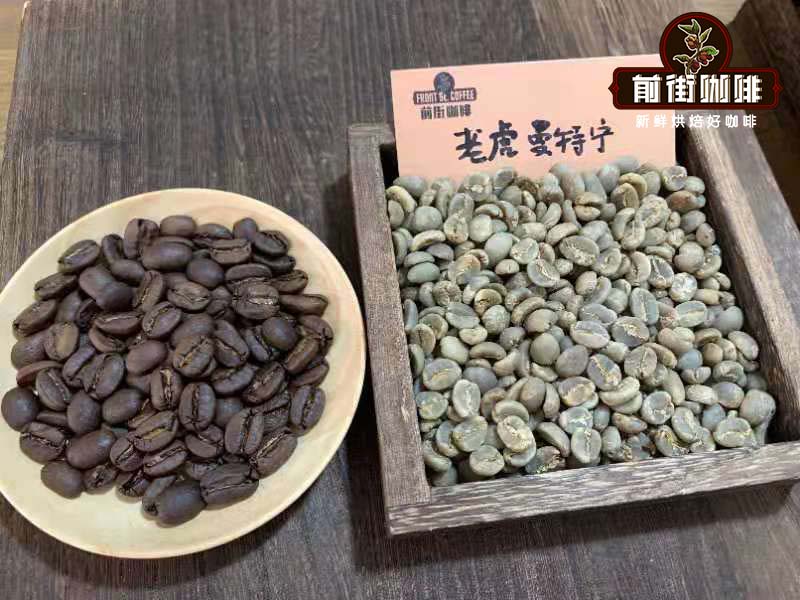
Country: Indonesia
Region: Sumatra
Altitude: 1500m
Variety: Caturra, Typica, Sidikalang
Processing: Wet-Hulled
Flavor: Cream, dark chocolate, nuts, balanced
Only Mandheling at 17 mesh or above with a defect rate below 4% earns the name FrontStreet Coffee Tiger Mandheling. Because its main varieties are Caturra and Typica—Caturra contributing citrus-lemon acidity and Typica a lingering sweet finish—Tiger Mandheling tastes notably even, with high clarity.
FrontStreet Coffee · Indonesia Aged Mandheling Coffee Beans
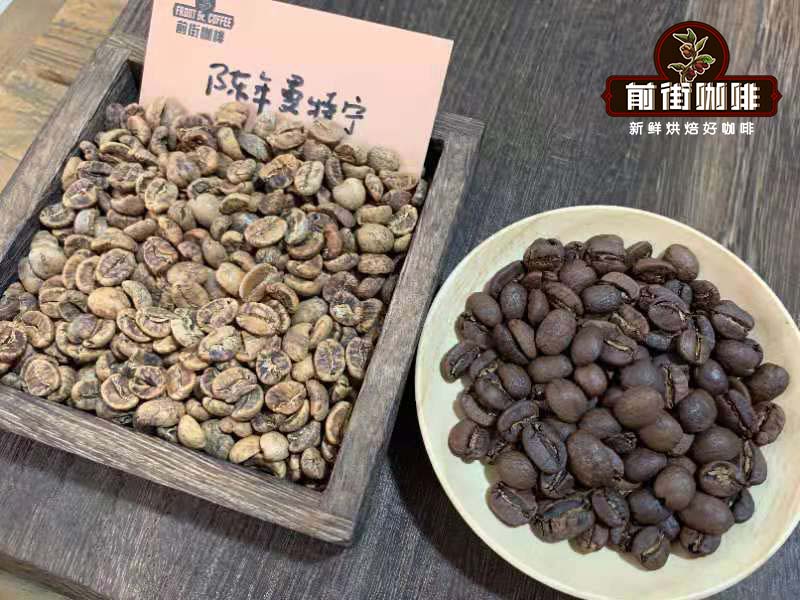
Country: Indonesia
Region: Sumatra
Altitude: 1500m
Variety: Caturra, Catuai
Processing: Wet-Hulled
Flavor: Ripe pu-erh tea, caramel, herbal, chocolate, low acidity
FrontStreet Coffee Aged Mandheling is wet-hulled coffee deliberately matured: the green beans are stored for an extended period—usually 2-3 years—to age naturally, which softens acidity and shifts the beans' color. Aging storage must be cool and ventilated to guard against mold and moisture; given the dark conditions and long duration, poorly handled aged coffee often picks up muddled flavors reminiscent of mold, burlap, or leather.
Yunnan, China Coffee Growing Region
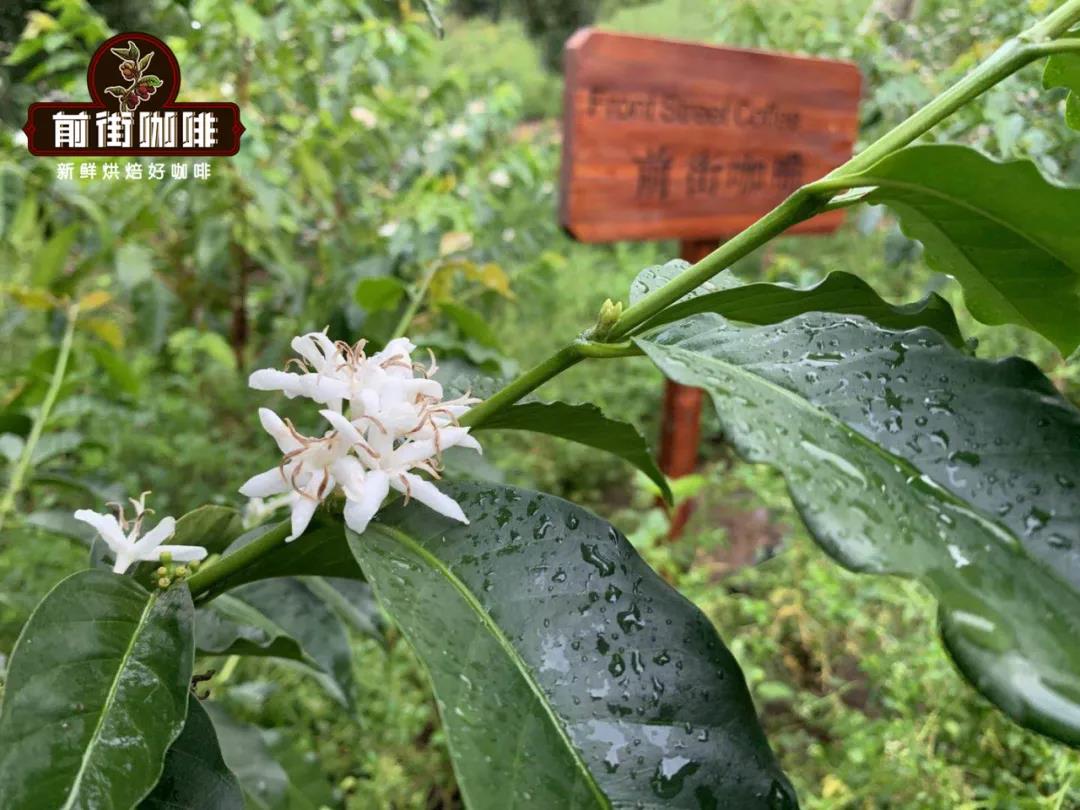
Next, coffee from Yunnan Province. Yunnan has a long coffee-growing history, though its presence in the specialty market is recent. FrontStreet Coffee believes in Yunnan's potential—so much so that we established a farm on the border of Yunnan's Baoshan region and Myanmar, dedicated to growing Typica. Here are the beans from FrontStreet Coffee's own farm.
FrontStreet Coffee · Yunnan Flower Fruit Mountain Coffee Beans
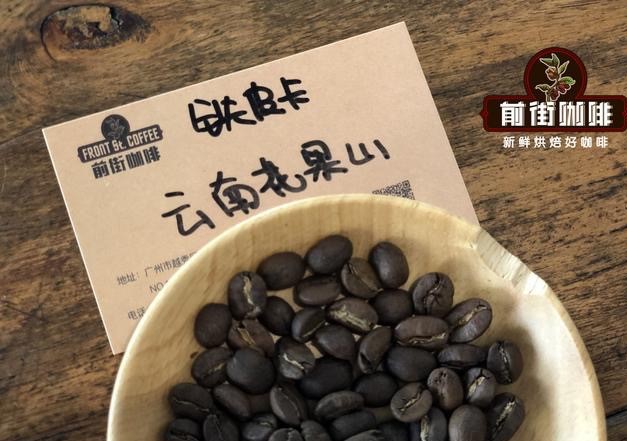
Country: China
Region: Yunnan Baoshan
Altitude: 1450-1550m
Variety: Typica
Processing: Washed
Flavor: Citrus, nuts, plum, melon fragrance, brown sugar, black tea sensation
The difference between FrontStreet Coffee's estate-grown Yunnan Flower Fruit Mountain and FrontStreet Coffee Yunnan Small Bean is variety: Flower Fruit Mountain is Typica, while Yunnan Small Bean is Catimor. Both qualify as "small bean" coffee, but because Typica's floral and fruit acidity is gentler and more complex, we named it Flower Fruit Mountain to set the two apart.
FrontStreet Coffee · Yunnan Small Bean Coffee Beans (Everyday Coffee)
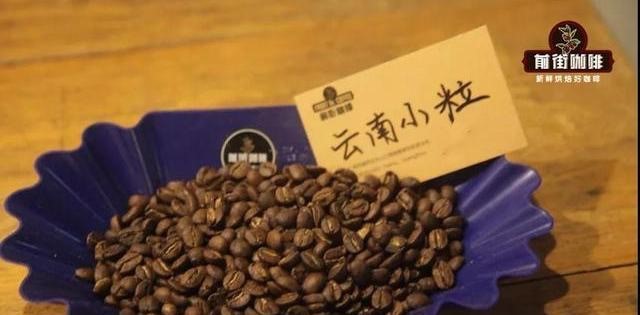
Country: China
Region: Yunnan Baoshan
Altitude: 1200m
Variety: Catimor
Processing: Washed
Flavor: Herbal, nutty aroma, chocolate, caramel
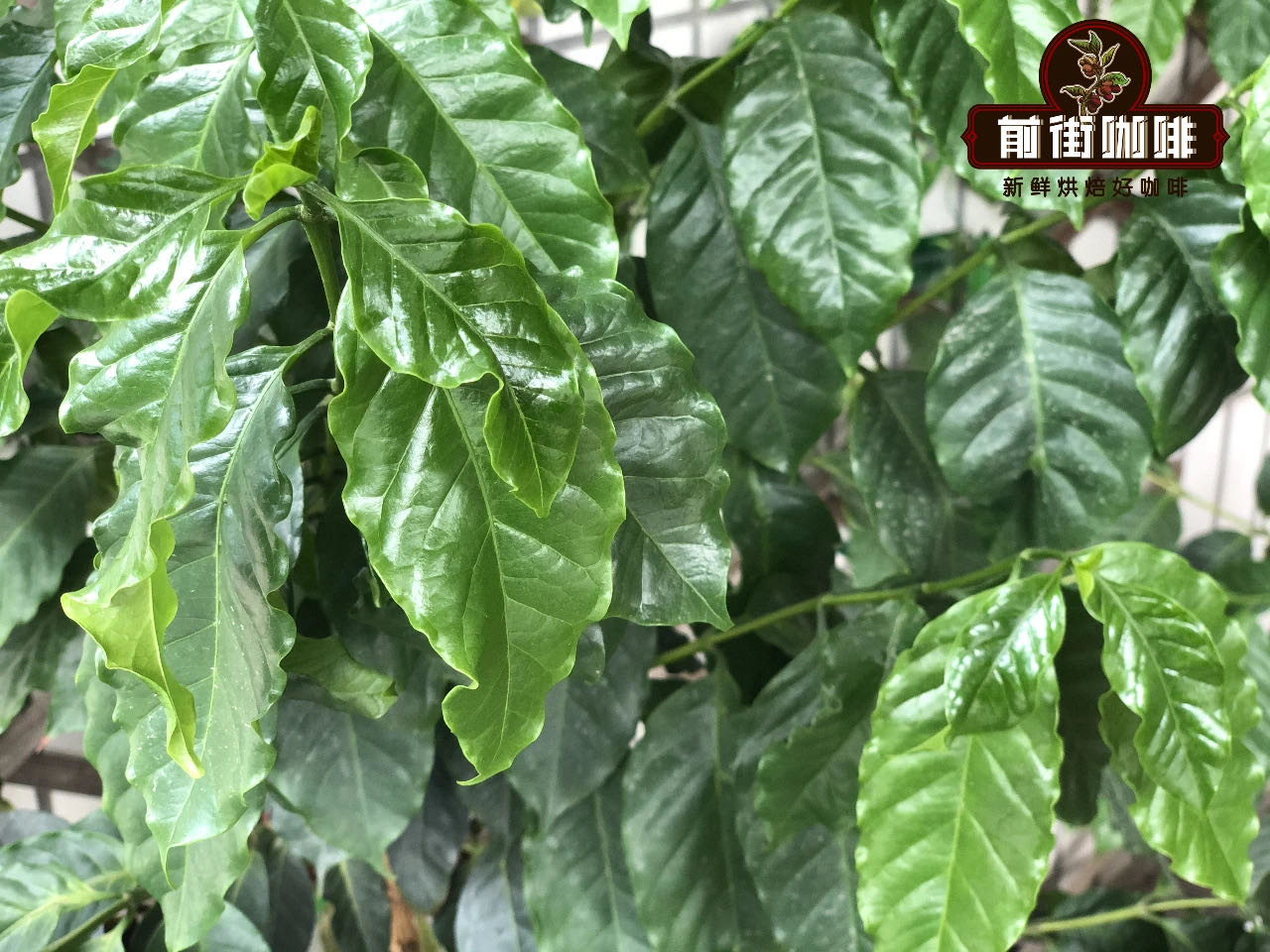
FrontStreet Coffee Yunnan Small Bean refers to arabica ("small bean") coffee cultivated in Yunnan. Coffee is an evergreen shrub of the Rubiaceae family native to Africa; the two main cultivated species are arabica (small bean) and robusta (medium bean). The "small bean coffee" traditionally grown in Yunnan refers specifically to mixed populations of Bourbon and Typica varieties.
Arabica is the most widely planted species in the Coffea genus. Tolerant of cold and of short cold snaps, it grows at tropical altitudes up to 2100 meters, but it dislikes drought; its branches are fragile and wind-vulnerable, its disease resistance relatively weak, and ripe fruit drops easily. In the cup, it rewards you with aromatic flavor and lower caffeine.
FrontStreet Coffee · Yunnan Natural Catimor Coffee Beans
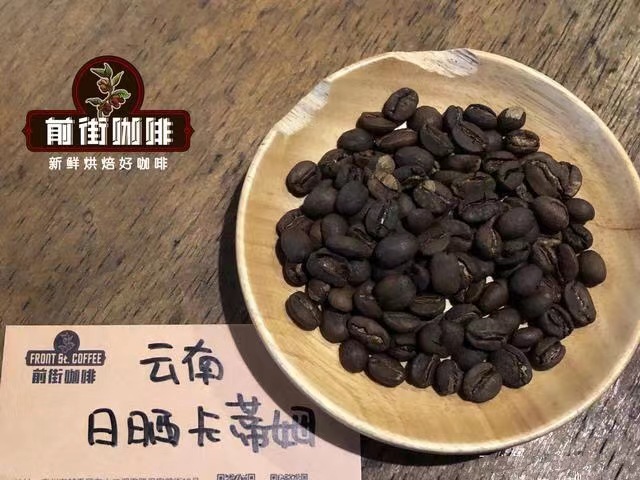
Country: China
Region: Yunnan (Baoshan)
Altitude: 1450-1550m
Variety: Catimor
Processing: Red Cherry Natural
Flavor: Caramel, dried fruit, cocoa, dark chocolate, herbal, woody
Most of Yunnan now plants Catimor, a hybrid of Caturra (a Bourbon-line arabica) and Robusta. The Robusta genes make Catimor far more disease-resistant than the delicate heirloom varieties, with better yields—so farmers naturally favor it, and a Catimor wave has swept across Yunnan.
These are the more popular Asian beans currently on FrontStreet Coffee's shelves. Coffee lovers who enjoy a rich body and spicy, herbal flavors should start here.
African Growing Region Pour-Over Coffee Bean Recommendations
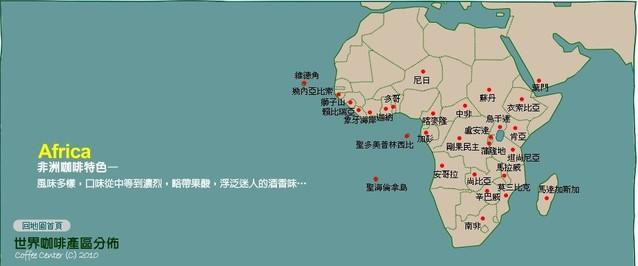
As coffee's birthplace, Africa has developed an enormous variety library—and, FrontStreet Coffee suspects, still holds many varieties unknown to science.
As noted above, African coffee is characterized by rich aroma and charming fruit acidity—lively, bright, unforgettable. The trade-off is that body tends toward the thin side and sweetness is understated. Representative origins are Ethiopia and Kenya, both household names among coffee lovers.
Ethiopia Coffee Growing Region
Ethiopian coffee is dominated by citrus-lemon acidity, and the most celebrated beans come from Yirgacheffe. FrontStreet Coffee considers Yirgacheffe the single best expression of the African continent's coffee character. Sidamo also produces many excellent lots—such as FrontStreet Coffee Sidamo Flower Queen, with its strawberry-cream flavors—making it another great pick.
FrontStreet Coffee · Ethiopia Yirgacheffe Natural Red Cherry Coffee Beans
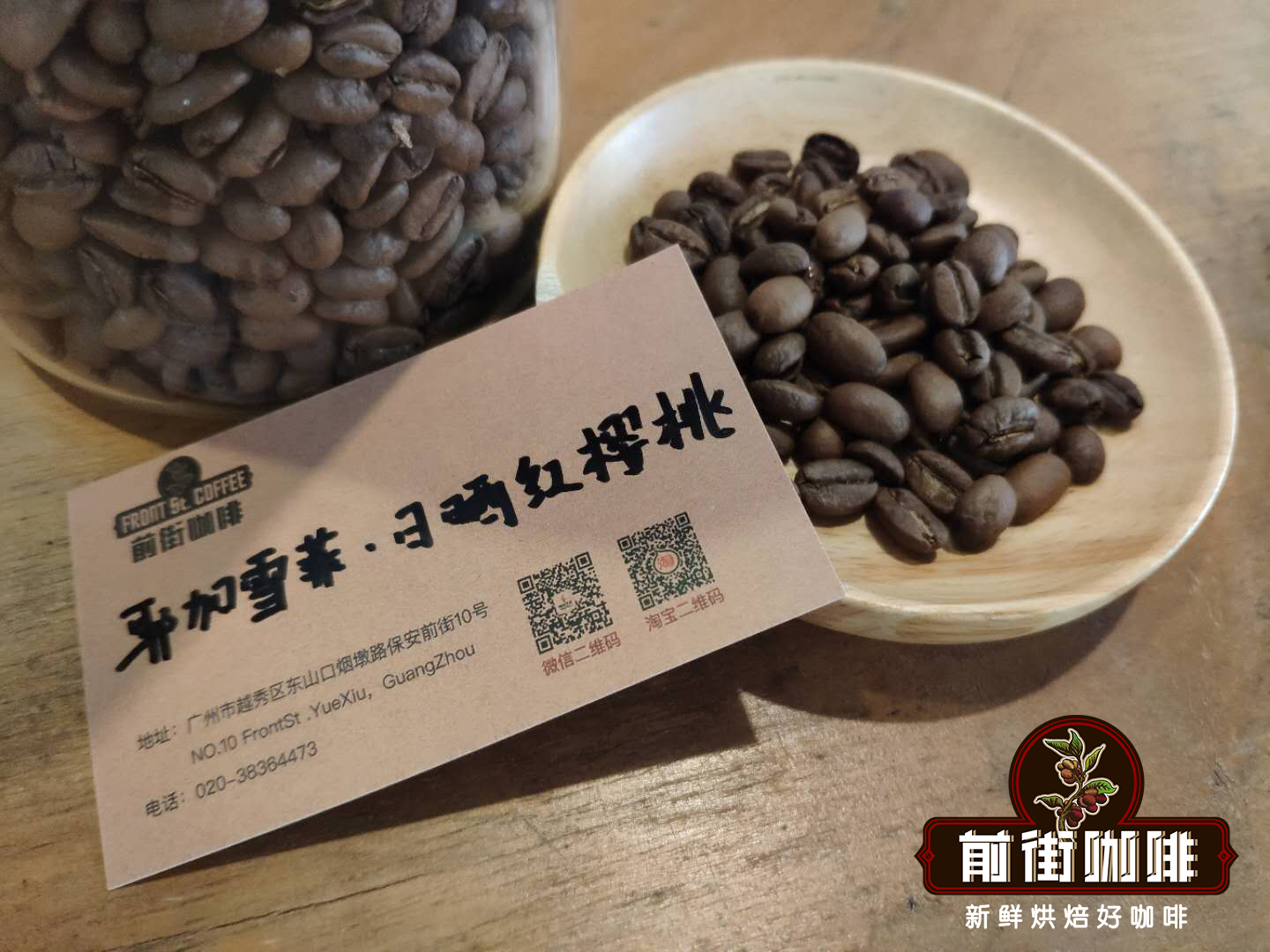
Country: Ethiopia
Region: Yirgacheffe
Altitude: 2300m
Variety: Local Landrace
Processing: Natural
Flavor: Berries, lemon, strawberry, fermented wine aroma
The Natural Red Cherry on our menu is made from 100% ripe cherries processed as naturals, yielding intensely aromatic flavors, rich sweetness, and fermented notes. The lot traces to the "Red Cherry Project," a program launched jointly by Ethiopian smallholder farmers and the Dutch trader Trabocca to raise quality—and farmer incomes—at small farms. Picking fully red, mature cherries by hand is only the baseline; the processing itself must meet strict standards too.
FrontStreet Coffee · Ethiopia Gedeb Cooperative Coffee Beans
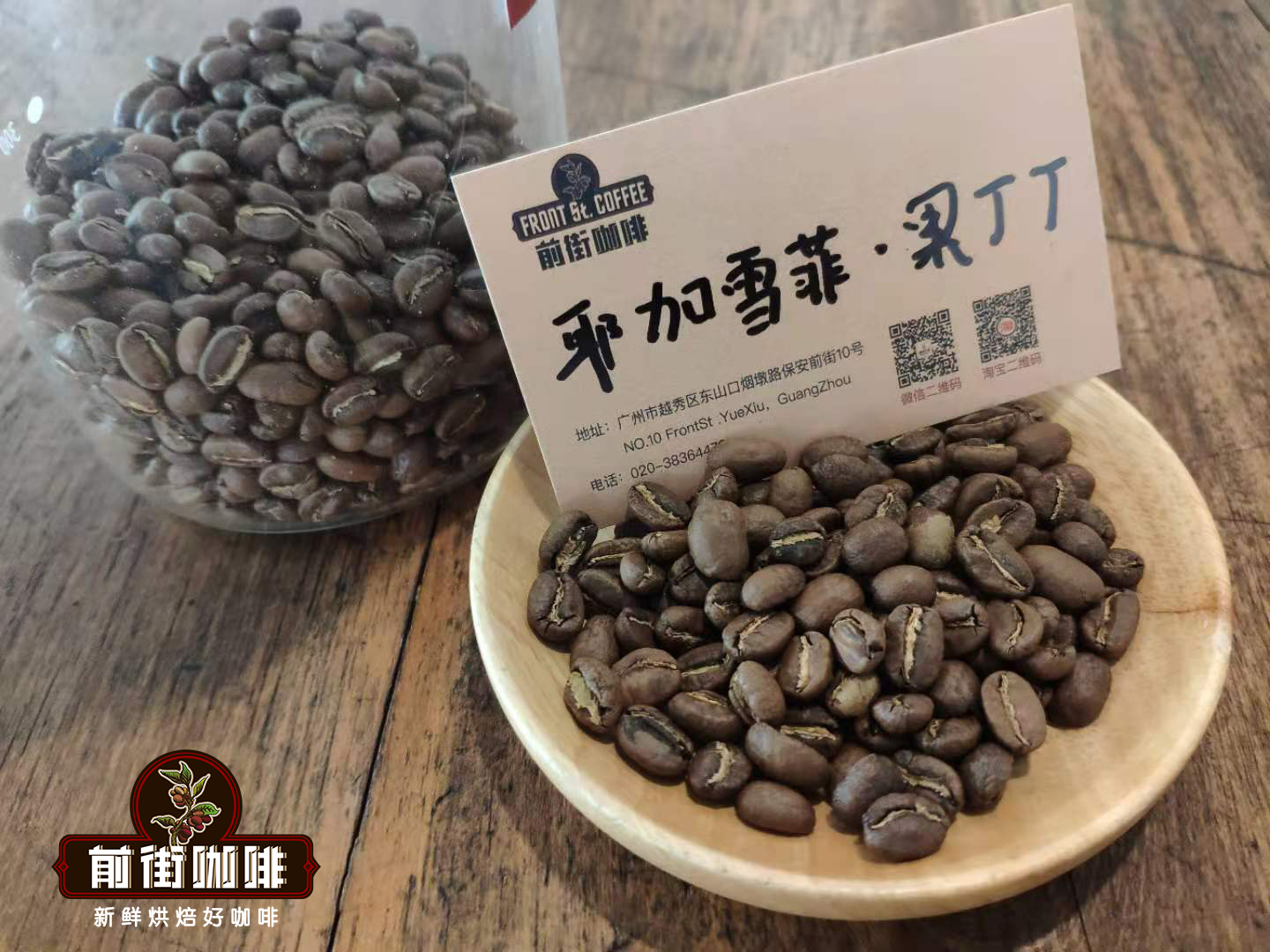
Country: Ethiopia
Region: Yirgacheffe
Altitude: 1900-2300m
Variety: Local Landrace
Processing: Washed
Flavor: Tropical fruits, cream, honey, berries, citrus
As FrontStreet Coffee understands it, Gedeb Cooperative was originally part of the Woka Cooperative under the Yirgacheffe Union (YCFCU) and became independent as Gedeb Cooperative in 2012. It now counts about 300 smallholder members. Because Gedeb village was among the first to break away, many of its farmers came up through the Woka Cooperative and bring superb production skills—so the coffee they grow is naturally excellent.
FrontStreet Coffee · Ethiopia Sidamo Buku 4.0 Coffee Beans
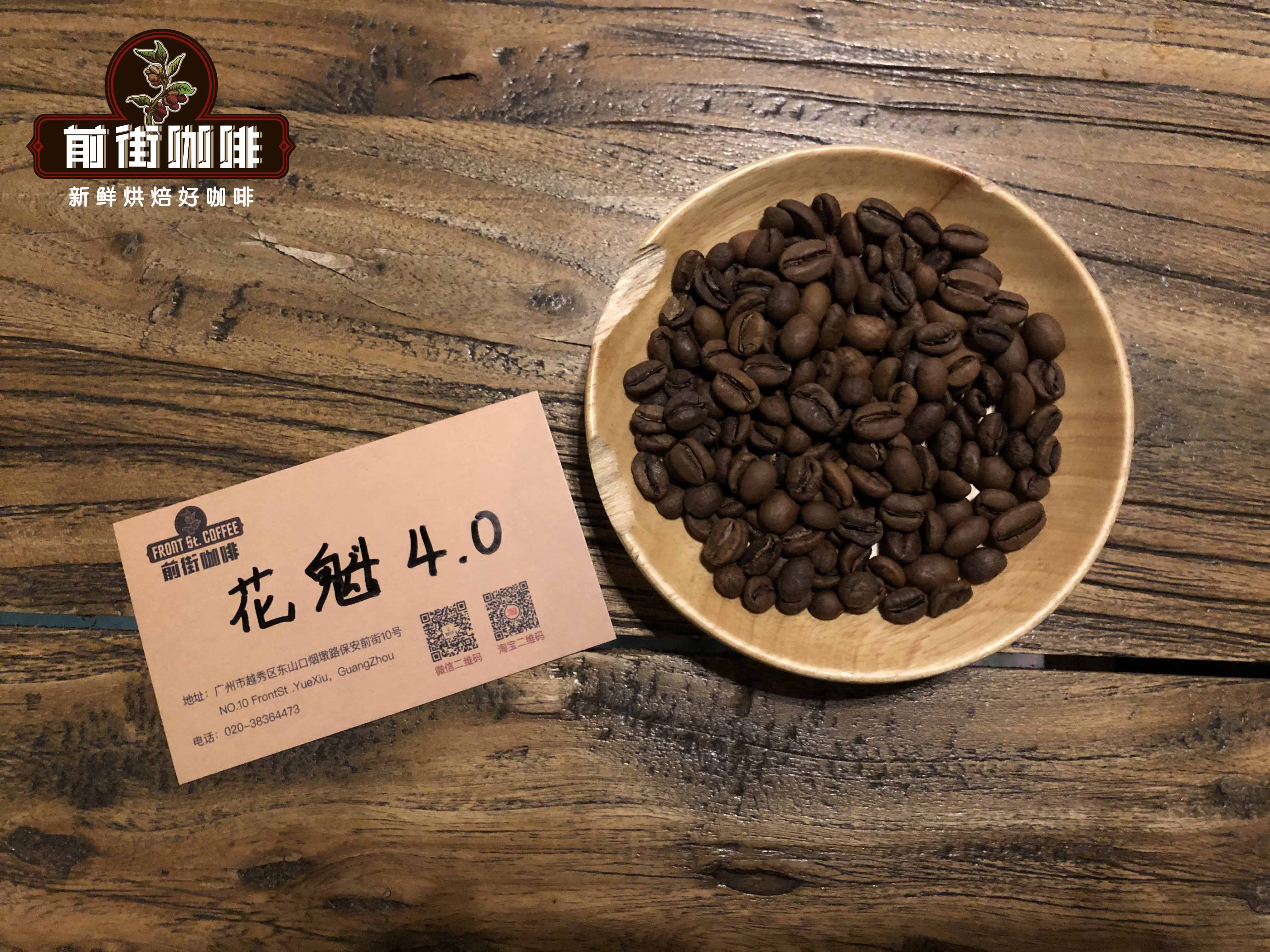
Country: Ethiopia
Region: Sidamo
Altitude: 2250-2350m
Variety: Local Landrace
Processing: Natural
Flavor: Berries, floral tea, honey, lemon, black tea
This bean began as an anonymous smallholder lot. In 2017, the Ethiopian green coffee exporter DW company entered it in the TOH (Taste of Harvest) competition run by the African Coffee Association, where a natural lot from the "Buku Abel" washing station won the Ethiopia TOH championship on the strength of its strawberry-and-cream aroma. The name is the literal English rendering of "Hanbeila."
It became known in China as "Hua Kui" (Flower Champion) because the winning lot was imported by a Beijing green coffee trader who crowned it with that title in honor of its championship.
Kenya Coffee Growing Region
That covers the famous Yirgacheffe region. Next, FrontStreet Coffee turns to the cherry-tomato flavors of Kenya.
FrontStreet Coffee · Kenya Asalia Coffee Beans
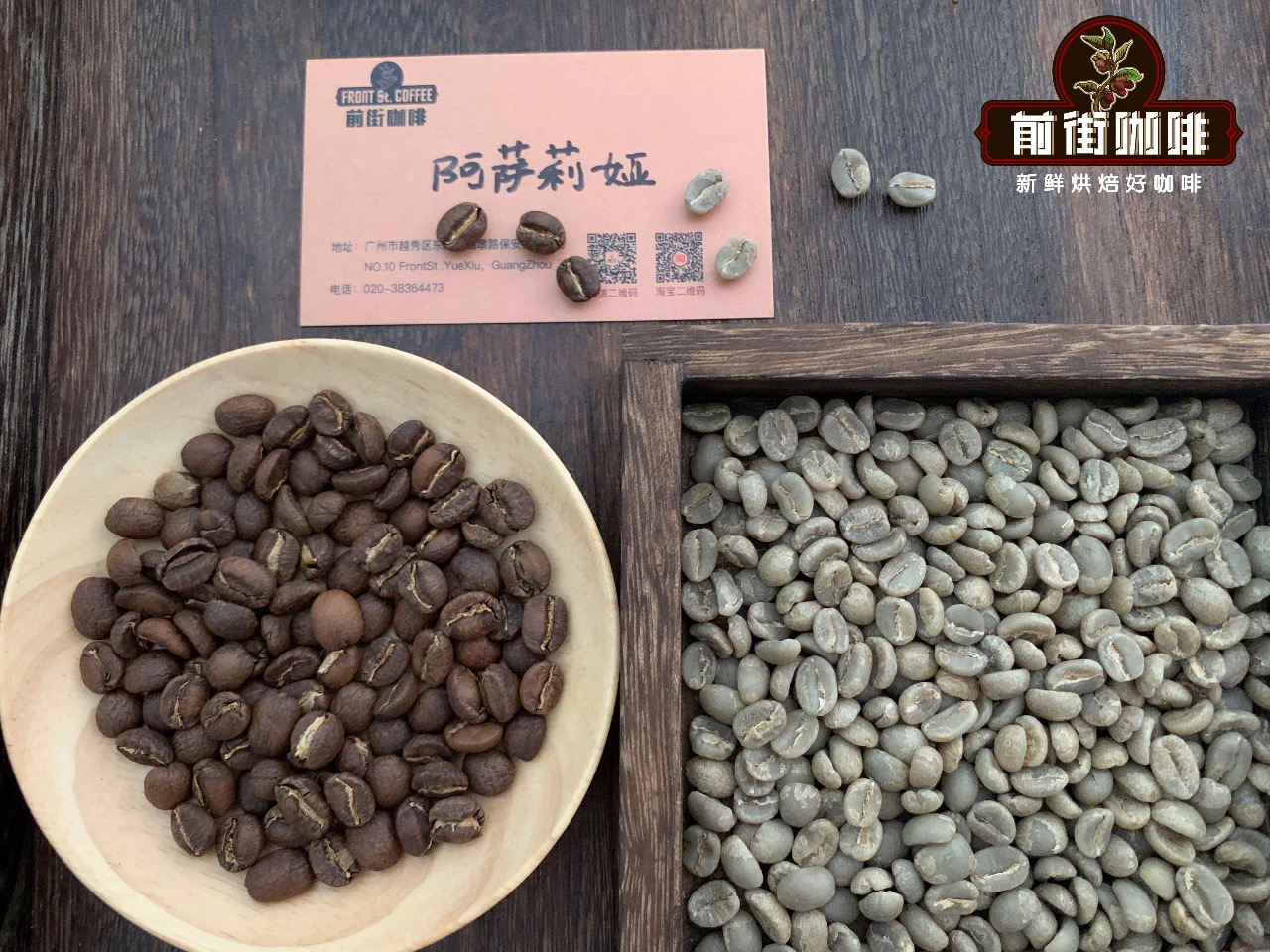
Country: Kenya
Region: Asali (honey processing station)
Altitude: 1550-1750m
Variety: SL28, SL34
Processing: 72-Hour Washed
Flavor: Snow pear, preserved plum, brown sugar, cherry tomato, plum
The Kenya Asalia on our menu uses the 72-hour washed process developed in Kenya, in which the beans ferment at low temperatures for extended periods and are finished with air-drying and dehydration. Coffees processed this way come out brighter and cleaner yet still full-bodied—and it is precisely this method that made Kenyan coffee legendary for its supreme acidity.
Latin American Growing Region Pour-Over Coffee Recommendations
Latin America means the American regions south of the United States: the continent stretching from about 32°42" north latitude to 56°54" south latitude, including Mexico (North America), Central America, the West Indies, and South America.
FrontStreet Coffee notes that Latin America's fertile volcanic soils, rainy humid climate, and high altitudes make it superb coffee country. Latin American beans are prized for balance, with rich cocoa and dark chocolate flavors. Representative origins include Brazil, Colombia, and Costa Rica—FrontStreet Coffee introduces a bean from each.
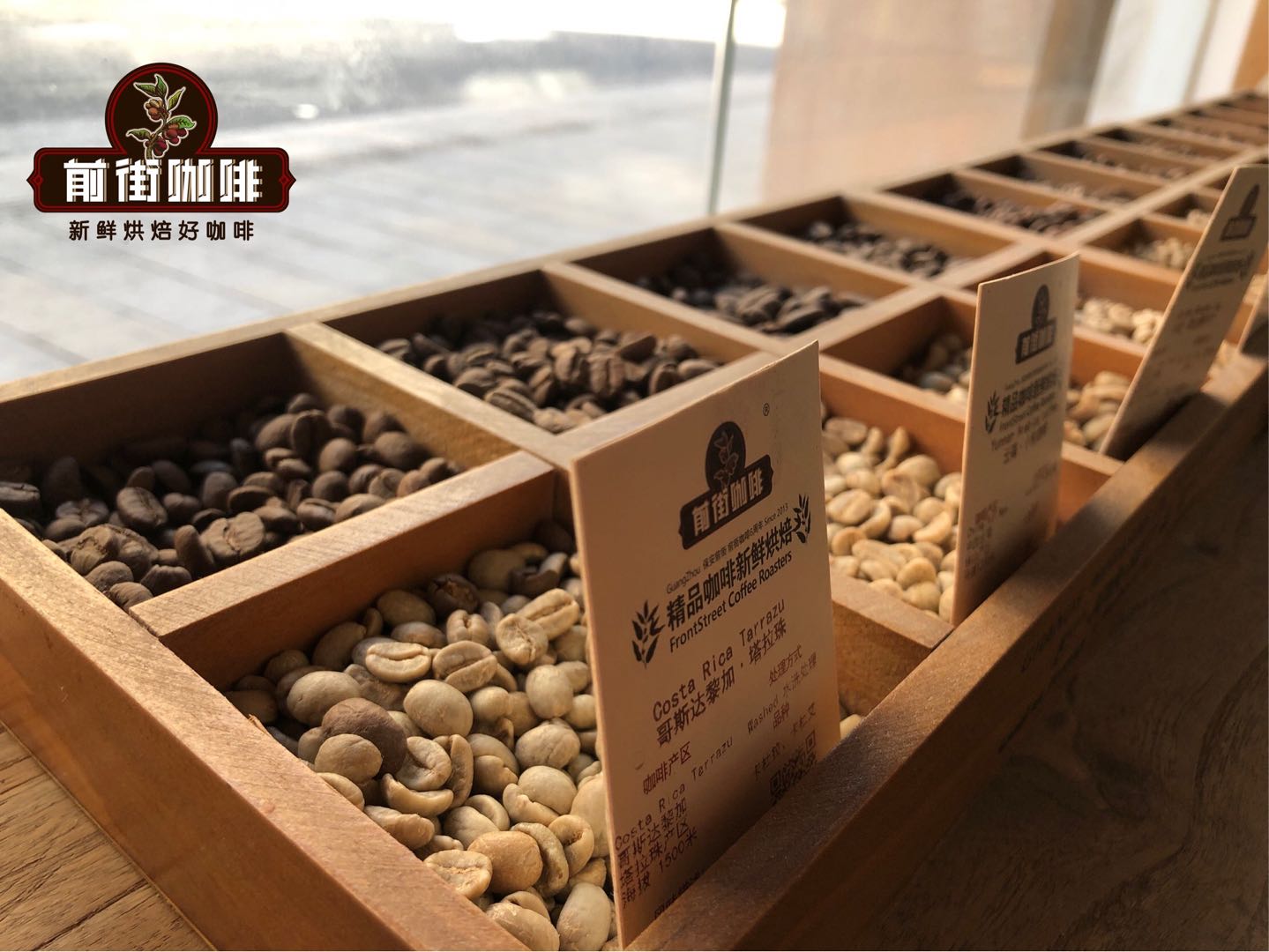
Brazil Coffee Growing Region
Brazil's growing regions cultivate mainly Bourbon varieties, and the coffees show excellent sweetness. The bean below is, in FrontStreet Coffee's view, the best expression of Brazilian flavor.
FrontStreet Coffee · Brazil Queen Estate Yellow Bourbon
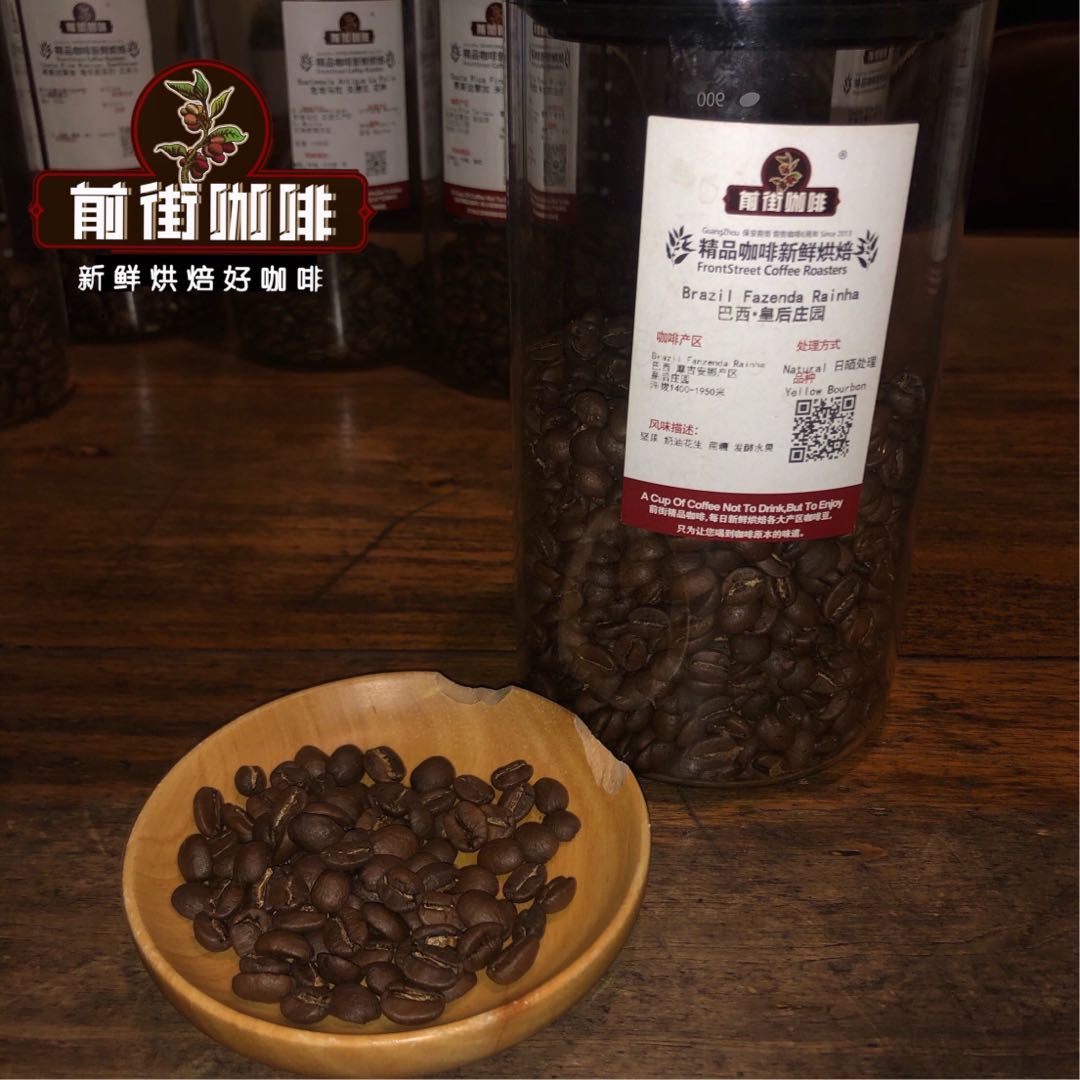
Country: Brazil
Region: Mogiana
Altitude: 1400-1950m
Variety: Yellow Bourbon
Processing: Pulped Natural
Flavor: Nuts, cream peanuts, fermented fruit, cane sugar
Queen Estate exports primarily Bourbon specialty coffee with strong environmental commitments. Because the terrain is elevated and uneven, mechanical harvesting is impossible—every cherry is picked by hand. The low-yield, high-quality Bourbon grown there represents the essence of Brazil's premium coffee, which is why FrontStreet Coffee regards Queen Estate Pulped Natural Yellow Bourbon as the definitive Brazilian specialty coffee.
Costa Rica Coffee Growing Region
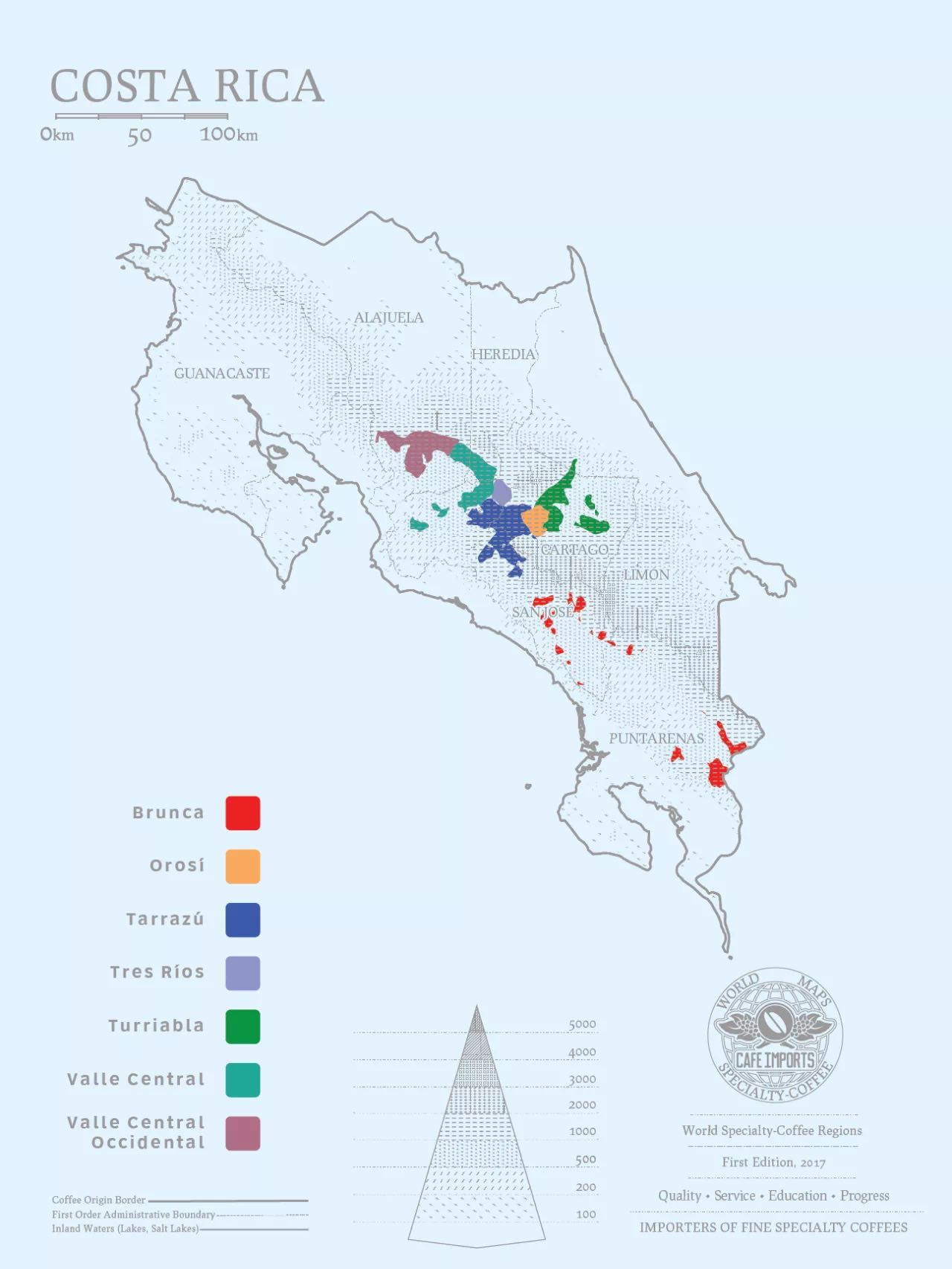
Costa Rican farms favor honey processing largely out of geography: farms sit high on mountainsides, hauling cherry down to distant mills was inconvenient and damaged the fruit, and middlemen squeezed farmers on price. So growers developed distinctive honey-processed beans to produce and sell themselves, boosting their income. As Costa Rican technique has advanced, specialty honeys have proliferated—among them the FrontStreet Coffee Costa Rica Canet Estate Musician Series, a great favorite of our customers.
FrontStreet Coffee · Costa Rica Musician Series Mozart Coffee Beans
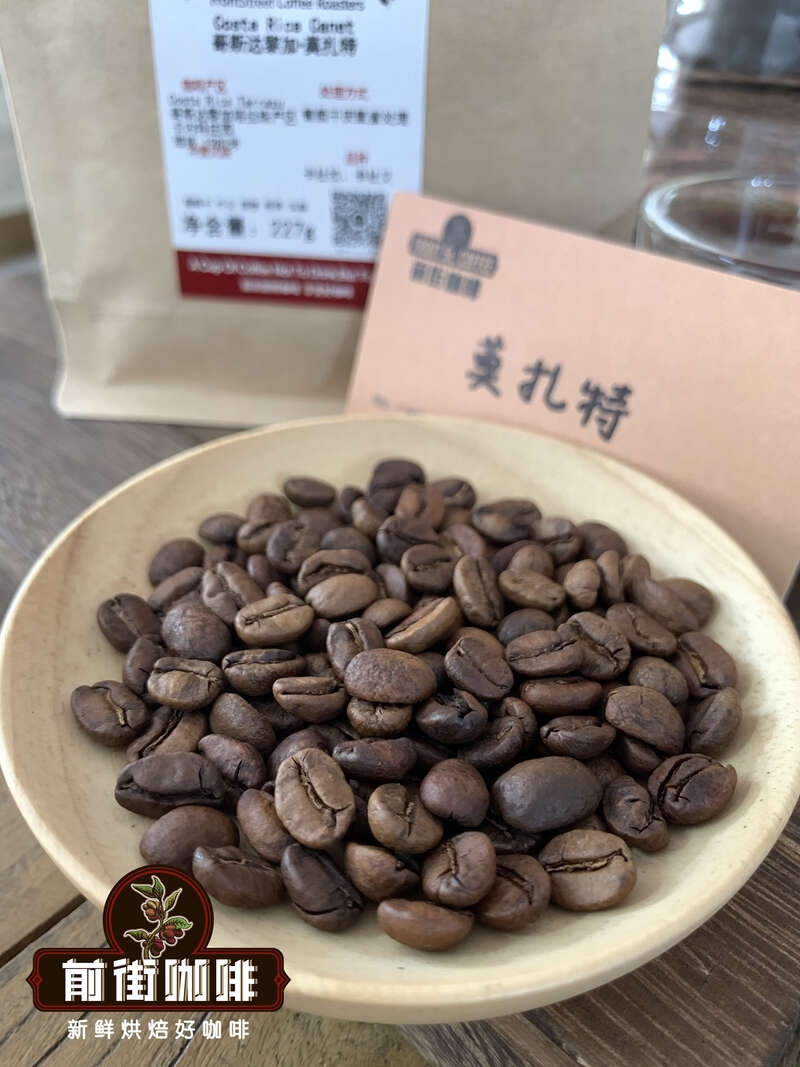
Country: Costa Rica
Region: Tarrazú
Altitude: 1800m
Variety: Caturra, Catuai
Processing: Raisin Honey
Flavor: Raisin acidity, berries, floral fragrance, fermented wine aroma
Mozart was the prodigy of classical music, famous for his magnificent compositions. The "magnificent aroma" of this coffee refers to the elegant floral character—white flowers like orange blossom—that FrontStreet Coffee finds in the brew. The "magnificent taste" is a profusion of dark berries, raisins, and traces of red berry, with plum-like acidity and a gummy-bear sweetness through the middle and late palate; the florals and sweetness persist even as the cup cools.
FrontStreet Coffee · Costa Rica Musician Series Bach Coffee Beans
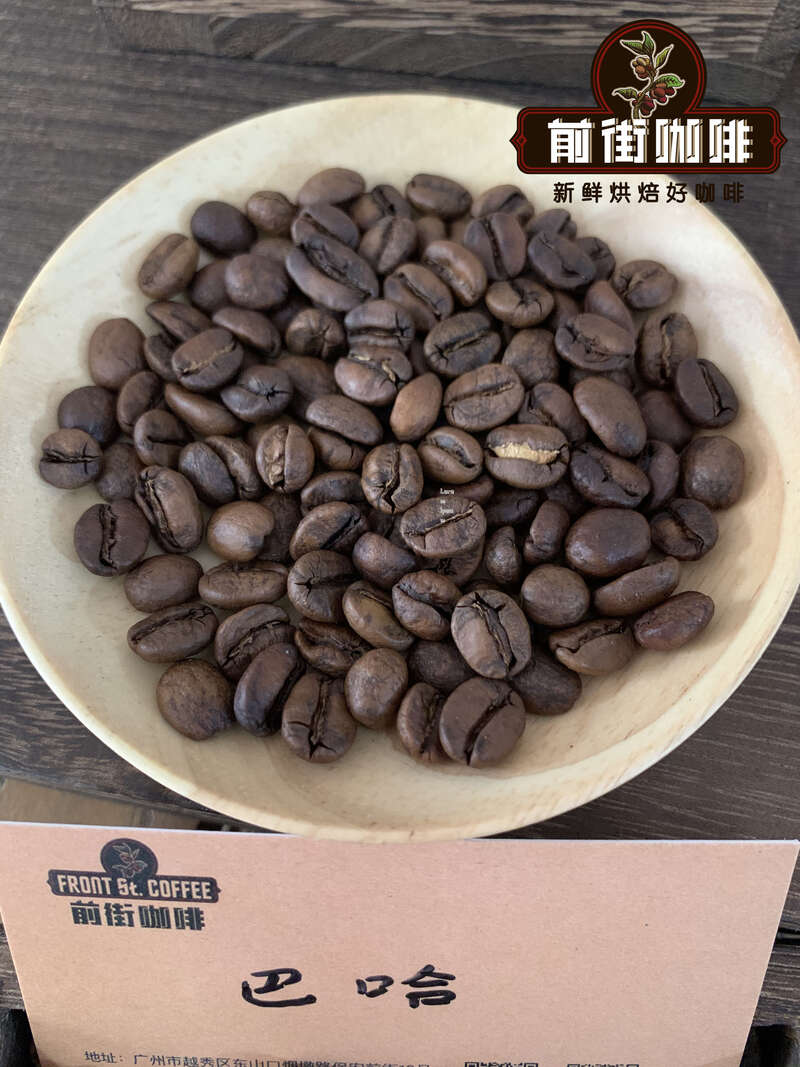
Country: Costa Rica
Region: Tarrazú
Altitude: 1950m
Variety: Caturra
Processing: Raisin Honey
Flavor: Fermented wine aroma, berries, fruit tea notes
When FrontStreet Coffee first brewed this Bach, obvious floral and fruit aromas rose from the cup; on tasting we found rich fruit sweetness and acidity, with a gentle wine-like note through the middle and finish, reminiscent of red wine. Cooled, it turns to candied-fruit sweetness and the wine aroma deepens—we could even pick out plum wine.
Colombia Coffee Growing Region
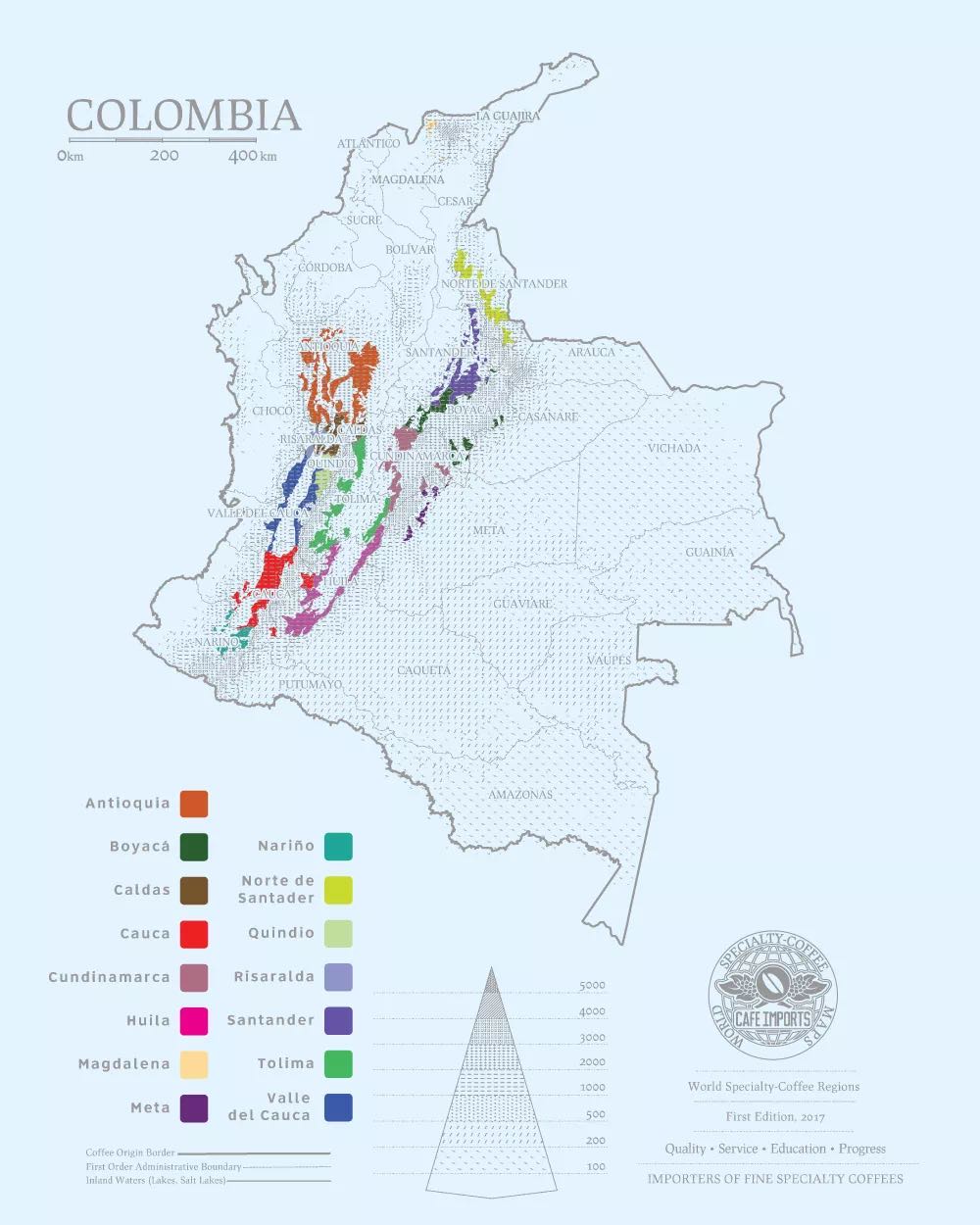
Colombia is the world's second-largest coffee exporter and the largest exporter of arabica. The country also produces many innovatively processed coffees with stunning flavor expressions. Here are two of FrontStreet Coffee's favorites.
FrontStreet Coffee · Colombia San Jose Estate Coffee Beans
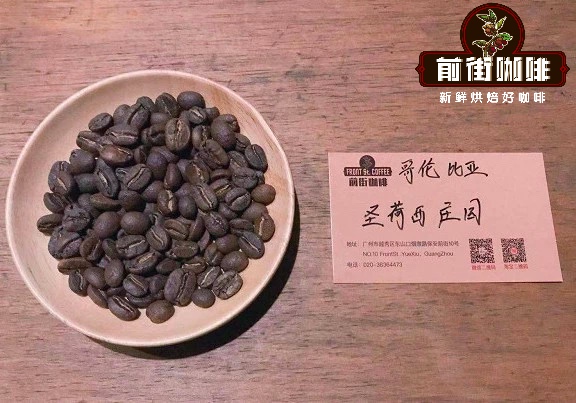
Country: Colombia
Region: Caldas
Altitude: 1750m
Variety: Castillo
Processing: Premium Washed Rum Barrel Fermentation
Flavor: Rum, chocolate liqueur, tropical fruits, maple syrup
San Jose Estate's owner can fairly be called the founder of barrel-fermented coffee. She is the estate's third-generation female owner and, committed to promoting Colombian coffee, set out to forge a path between traditional production and the modern specialty wave. The idea struck while helping her husband make rum: what if green coffee went into the oak barrels—wouldn't it absorb the barrel's character the way the wine did, achieving a barrel-aged effect?
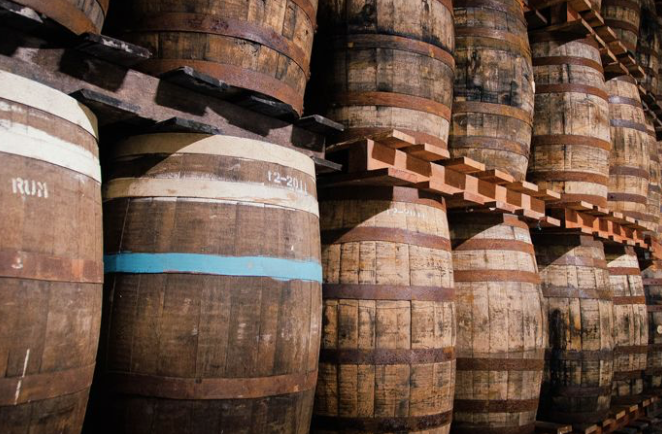
Pursuing that idea, owner Monsalve Botero began in 2013 resting green beans in rum barrels of different ages for wine-style low-temperature fermentation, comparing the flavors that developed across different durations. Through these experiments she identified the ideal barrels and fermentation time, arriving at a combination that delivers distinctive, deeply satisfying flavors—and a rum-barrel-fermented coffee unlike any traditional washed lot.
FrontStreet Coffee · Colombia Rose Valley Coffee Beans
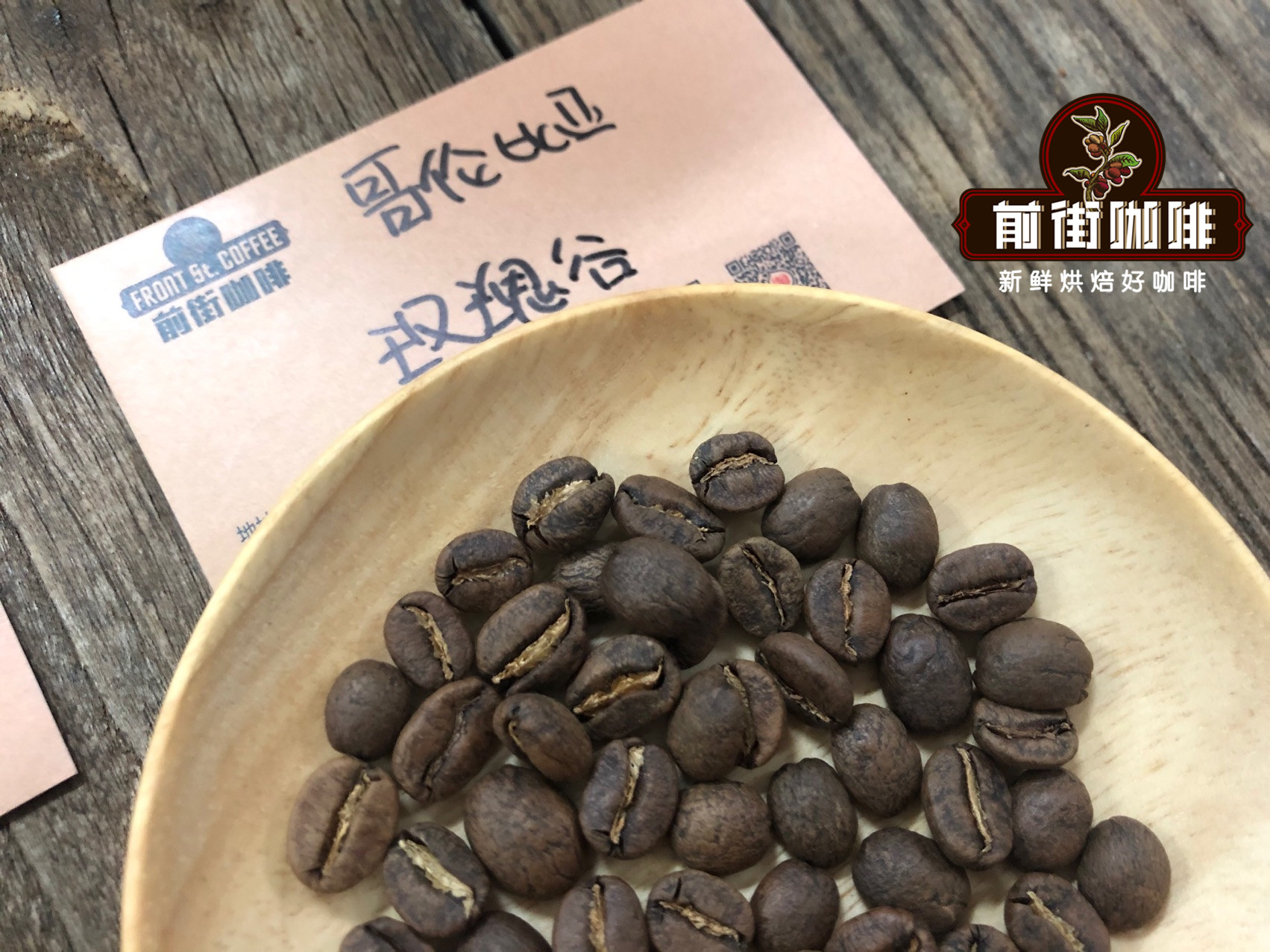
Country: Colombia
Region: Santander (Big Tree Estate)
Altitude: 1700m
Variety: Caturra
Processing: Anaerobic Double Enzyme Washed
Flavor: Honey, juice sensation, strawberry
FrontStreet Coffee Rose Valley comes from Big Tree Estate in Colombia's Santander region, where owner Vargas has grown coffee for 20 years. Only fully ripe, bright-red cherries are picked; defective floaters are removed in washing; and the lot then undergoes two rounds of anaerobic fermentation with special enzyme groups. Vargas is equally careful with drying, avoiding high temperatures in favor of slow drying—the "double enzyme anaerobic" process FrontStreet Coffee describes here.

The process works like this: after floaters are washed away, the coffee goes into a sealed container flushed with carbon dioxide to displace oxygen. In the oxygen-free environment the sugars in the cherry's pectin break down more slowly and pH falls more gradually, stretching fermentation time and building greater sweetness and a more balanced flavor in the finished coffee.
Those are FrontStreet Coffee's standout pour-over recommendations. We hope this guide helps you find beans you'll love—ones that match your own taste.
FrontStreet Coffee Recommendation
If you're new to pour-over, two of the floral-fruity stars above deserve first place on your shopping list. FrontStreet Coffee Ethiopia Yirgacheffe Guodingding is many lovers' first stop into specialty coffee: vivid citrus, berry, and floral notes with a green-tea-like sweet finish. Unlike the "sour coffee" you might fear, a quality Yirgacheffe's acidity is soft and bright—more like the natural sweetness-tartness of fruit than any harsh sharpness—making it one of the easiest beans for a beginner to love.
For a bolder fruit experience, go for FrontStreet Coffee Ethiopia Huakui (Flower Champion), one of the most successful stars of the recent specialty market. Its tropical fruit aromatics are extraordinary—strawberry, passion fruit, jackfruit, even lychee—with pronounced sweetness, almost no bitterness, and a smooth, juicy mouthfeel; drinkers often call it "the coffee that tastes least like coffee." If traditional coffee bitterness has kept you away, Huakui is the bean most likely to change your mind.
Important Notice :
FrontStreet Coffee is a long-established specialty coffee roaster in Guangzhou China, selling freshly roasted beans from its own farm in Yunnan as well as dozens of carefully selected single-origin beans from around the world for both pour-over and espresso. The products deliver consistently excellent quality and great value, with shipping within 24 hours. Guangzhou's FrontStreet Coffee shop is recommended by many coffee lovers, and the beans are now available online at the Tmall 。
FrontStreet Coffee has moved to a new address:
FrontStreet Coffee Address: 315,Donghua East Road,GuangZhou
Tel:020 38364473
 Scan and follow the En Gafei WeChat official account. Please indicate that the reprint comes from "En Gafei".