Introduction to Uganda's Elgon Coffee Growing Region and Uganda Coffee Name Grading System
Mount Elgon is Uganda's specialty coffee region and the country's best-quality coffee area. Today FrontStreet Coffee introduces a specialty coffee from that region: Mount Elgon Anaerobic Natural Grape. When the coffee reached the shop, FrontStreet Coffee immediately planned its roast profile, comparing and selecting among three traditional curves before optimizing and settling on the final one. In the cup it offers ripe-fruit aromas, with grape and citrus sweet-sour notes on entry, then a nutty, creamy smoothness and sweetness later on. The overall impression is juicy, with a rich, solid body.
Uganda: The Pearl of Africa
Uganda is a landlocked country in eastern Africa. Water-rich Uganda holds countless lakes, wetlands and rivers, and it is also the source of the great Nile. Mist-shrouded volcanoes, glaciers, hot springs, deserts and rolling fertile hills dot the landscape, and the country has established more than 500 protected areas and several national parks. Those environments let many primate species and over 1,000 rare bird species live safely, and Uganda is steadily becoming a nature-tourism destination.
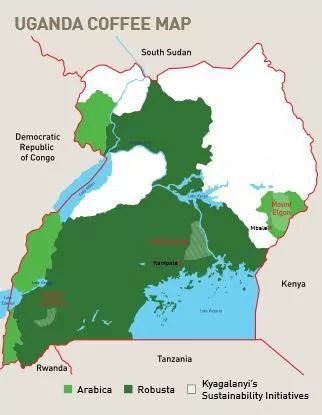
Coffee provides a stable income for farmers of the Bakonzo tribe, letting them support their families and build up their homesteads alongside other farms. The region has many small towns on predominantly lowland terrain and a good road network. These towns are ideal for coffee processing, home to farmer groups and equipped with processing facilities, including the Kisinga processing station, which focuses on specialty Arabica. The average farm is 2 acres, worked by families as a unit; they do the manual work first, then collaborate with other community groups for processing and sales — a practice known as shared agriculture.
Uganda's most famous coffee is Bugisu, grown on the western slopes of Mount Elgon. Produced on the steep slopes at the border with Kenya, the coffee is almost entirely transported by donkey. It is rich and viscous, and some compare its character to Indonesia's Mandheling.
Name/Grade classifications include: 1. Bugisu AA 2. Wugar A 3. Drugar Uganda 4. Bugisu AA 5. Uganda Bugisu AA
Processing Method
These beans are anaerobically fermented naturals. Drying begins on ventilated single-layer raised beds for 5 days, then continues in a mechanical dryer for 15 hours at 30°C.
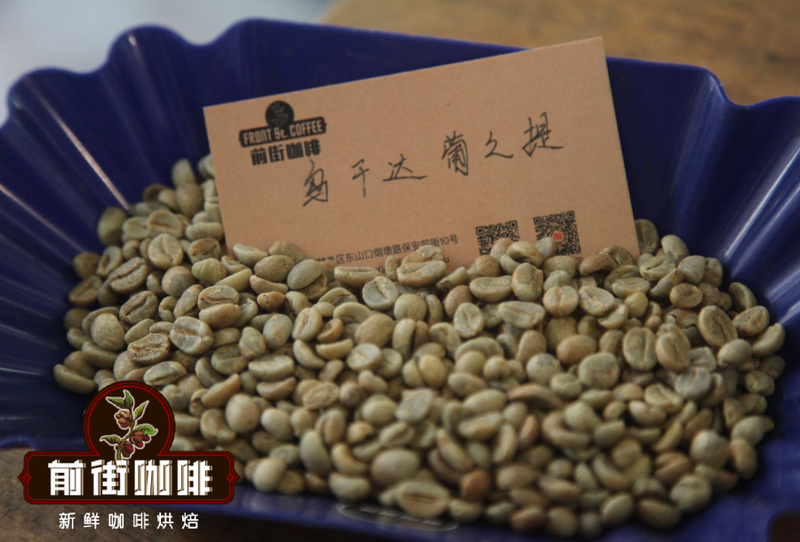
FrontStreet Coffee Green Bean Analysis
These beans are composed of SL14 and SL28, both common varieties in Uganda. The SL varieties come from research and selection at Scott Laboratories. Kenyan coffee became world-famous thanks to SL28 and SL34, so the Ugandan government promoted them heavily, distributing SL seeds to farmers. SL14 not only has excellent flavor but also resists drought, and can be harvested just two years after planting, which suits farmers well. The green beans are yellow-green and smell of orange and grass.
FrontStreet Coffee Roasting Analysis
Roaster: Yangjia 800N (batch size: 300g)
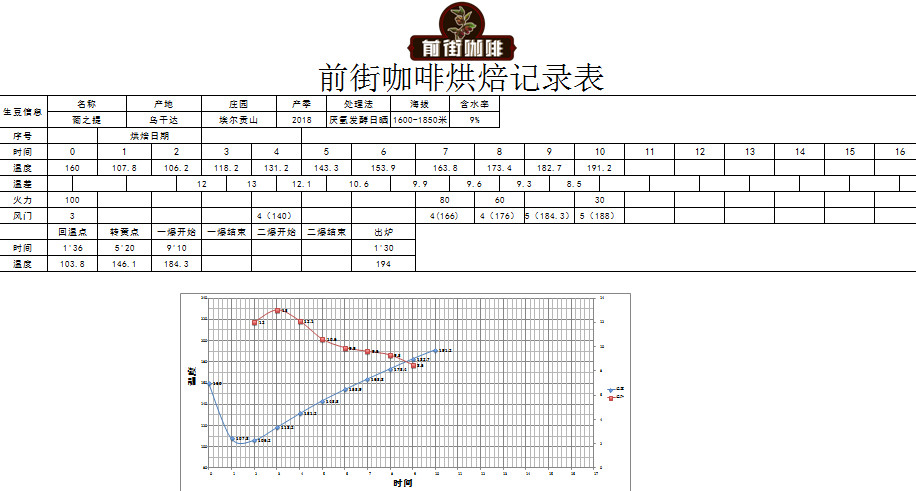
Charge at 160°C with heat power at 100 and the air damper at 3; turning point at 1'36". When the temperature reaches 140°C, open the air damper to 4 with heat unchanged. When the temperature reaches 146.1°C the bean surface turns yellow, the grass aroma disappears completely, and the bean enters the dehydration phase. At 166°C, adjust heat to 80°C with the air damper unchanged. At 8'27", the bean surface shows wrinkles and dark spots, and the toast aroma clearly shifts to coffee aroma — the prelude to first crack. Listen carefully for the sound. First crack begins at 9'10"; open the air damper to 5. Develop for 1'30 after first crack and discharge at 194°C.

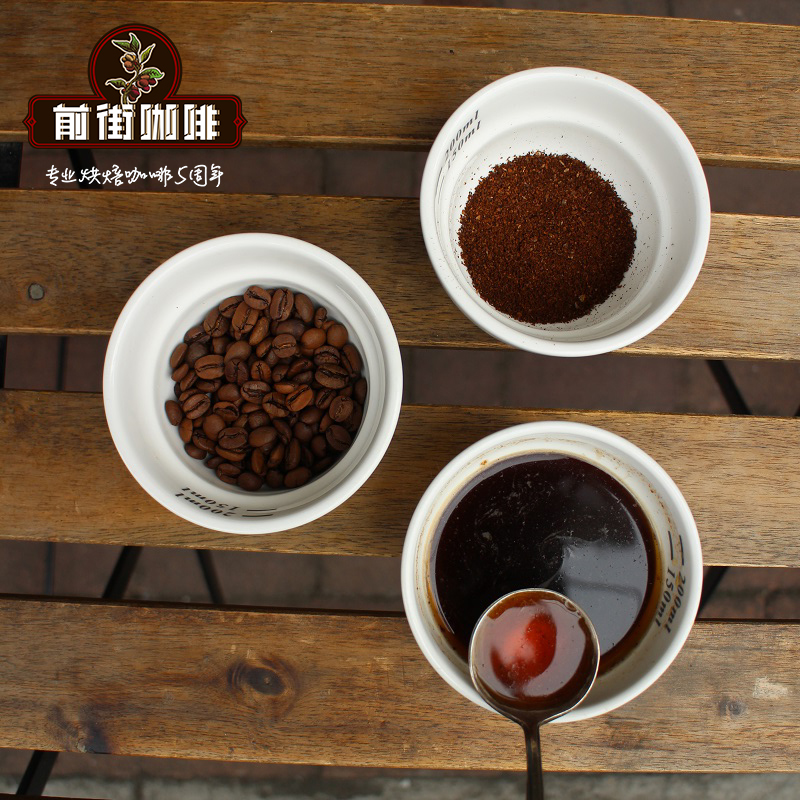
Agtron bean color value is 72.4 (left image), Agtron ground color value is 80.4 (right image), and the Roast Delta value is 8.
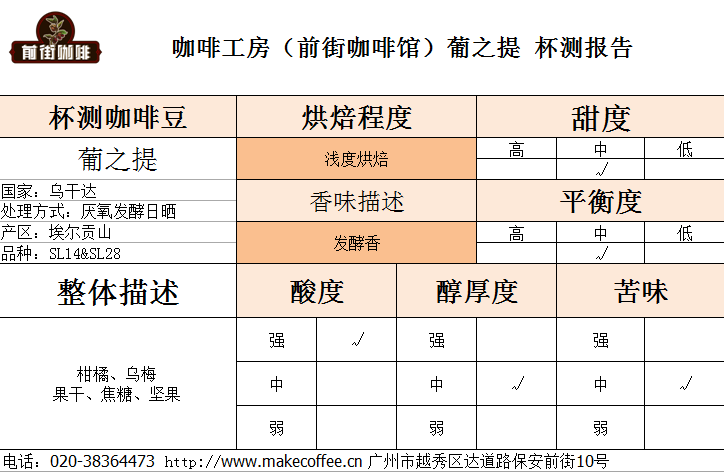
FrontStreet Coffee Cupping Notes
The aroma shows fermented notes, with citrus, plum, dried fruit, caramel and nut flavors on the palate.
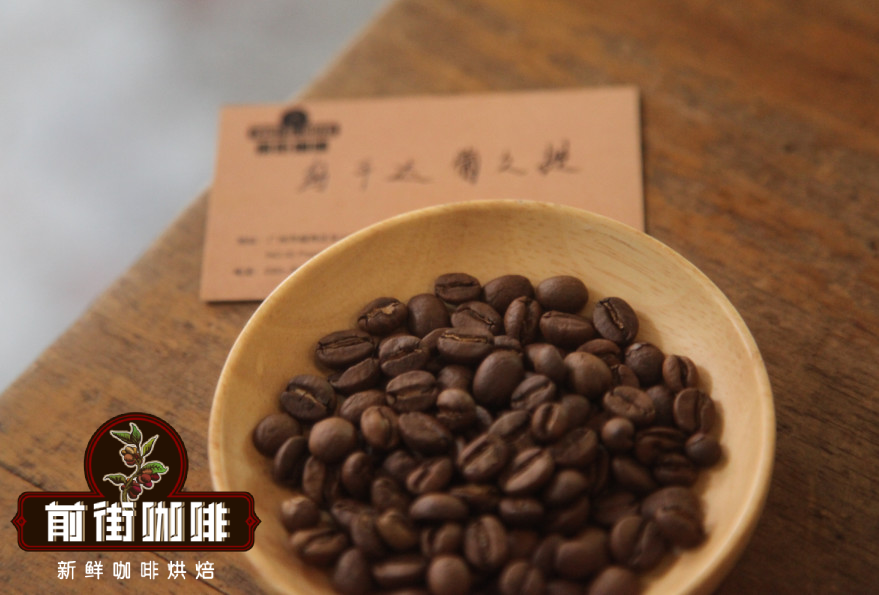
Uganda Grape Anaerobic Natural
Region: Mount Elgon, Uganda
Altitude: 1600-1850 meters
Processing Method: Anaerobic fermentation natural
Varieties: SL14 & SL28
FrontStreet Coffee Brewing Analysis
Dripper: V60 Water Temperature: 90°C Ratio: 1:15 Grind: Medium-fine, similar to raw sugar (VARIO 5O: 57% pass-through on China standard #20 sieve)
FrontStreet Coffee Brewing Method
Segmented extraction. Bloom with 34g of water for 25 seconds. Pour in circles to 130g, then pause. When the water level drops and is about to expose the coffee bed, continue pouring to 226g and stop. When the level drops and is about to expose the bed again, remove the dripper. (Timing starts from the bloom.) Extraction time: 1'45".
Flavor: The aroma shows fermented notes with a light green grape sourness. On entry there is grape, citrus, lime and berry acidity; the middle carries a creamy aroma, while the finish offers caramel sweetness and a cocoa aftertaste with a juicy sensation. Drunk hot, the coffee feels richer and more solid in texture; as it cools, it delivers a sweet-sour impression.
FrontStreet Coffee Recommendation
For a balanced, everyday cup, medium roast is the natural place to start. Three factors govern the final flavor during roasting — acidity, sweetness and bitterness. The darker the roast, the bitterer and heavier the cup; the lighter the roast, the more acidic and delicate. Medium roast sits between the two, which is why it suits drinkers who dislike either extreme.
The FrontStreet Brazil Queen's Manor is a good example: a distinctive yellow Bourbon from Brazil, the world's largest coffee producer, clean and sweet, which a medium roast turns into creamy peanut, chocolate, toast and sugar-cane notes. It brews as pour-over and also works in a moka pot or on an espresso machine. For something sweeter, the FrontStreet Strawberry Candy blend is a fruit-forward coffee that pairs a honey-processed Costa Rican bean with a washed Panama Geisha; roasted medium, it delivers both orange-blossom honey and a rounded sweetness, and suits cold brew, pour-over and espresso.
Elsewhere, the FrontStreet 2013 Natural Typica is a flagship Chinese specialty bean with an authentic Yunnan small-bean character, kept balanced at medium roast with nut, brown sugar, black tea and dried apricot notes. And the FrontStreet Jamaica Blue Mountain No.1 brings its Typica varietal and exceptional geography together at medium roast, fusing acidity, bitterness, sweetness and body into a smooth, elegant cup of chocolate, roasted nuts, cream and caramel.
Important Notice :
FrontStreet Coffee is a long-established specialty coffee roaster in Guangzhou China, selling freshly roasted beans from its own farm in Yunnan as well as dozens of carefully selected single-origin beans from around the world for both pour-over and espresso. The products deliver consistently excellent quality and great value, with shipping within 24 hours. Guangzhou's FrontStreet Coffee shop is recommended by many coffee lovers, and the beans are now available online at the Tmall 。
FrontStreet Coffee has moved to a new address:
FrontStreet Coffee Address: 315,Donghua East Road,GuangZhou
Tel:020 38364473
 Scan and follow the En Gafei WeChat official account. Please indicate that the reprint comes from "En Gafei".