Introduction to the Kotowa Family of Panama, Panama Coffee Introduction, Panama Coffee Flavor Description
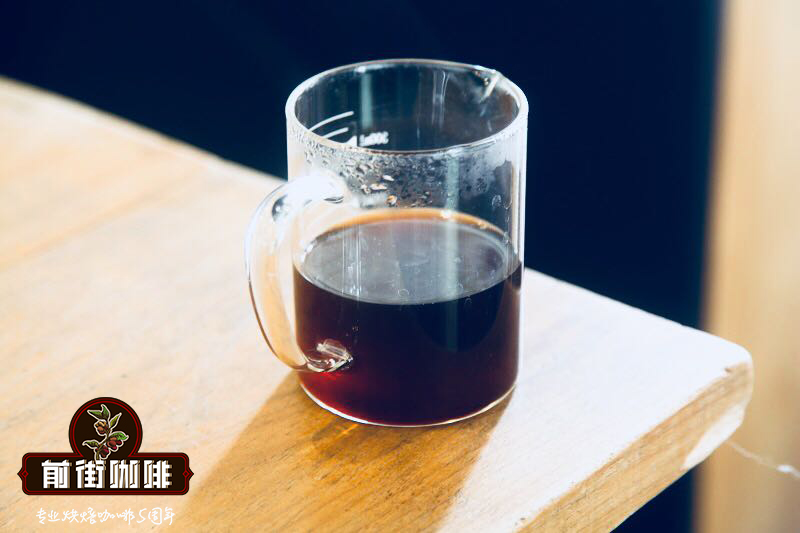
For professional coffee knowledge exchange and more coffee bean information, please follow Coffee Workshop (WeChat official account: cafe_style).
For a long time, I underestimated—even overlooked—Panamanian coffee, until the annual "Best of Panama" cupping competition and the rise of Hacienda La Esmeralda changed everything. This competition draws global attention not only for the coffee's intrinsic appeal but for its astonishing, astronomical prices. Some Geisha lots from small farms have captured the attention of enthusiasts worldwide with their unique floral aromas. Panamanian coffee shows intense floral notes and clean fruit fragrance, with cupping quality far above other origins and impressively consistent results.
Small farms in the Boquete region of Chiriqui province produce genuinely distinctive cherries. Each harvest season, farms hire local N'gbe-Bugle indigenous workers, in accordance with Central American labor laws and at fair wage standards.
The Kotowa Family Legacy
The Kotowa family owns five major estates and was the biggest winner at the 2012 Best of Panama competition. Their most famous estates, Duncan and Don K, together won five categories of excellence. These two estates sit on opposite sides of the volcanic ridge line, where microclimatic variation produces distinctly different coffee flavors. During harvest, only the finest 100% fully mature cherries are selected. The coffee is de-pulped in special wooden barrels according to size and grade, a process that takes approximately three months.
FrontStreet Coffee's Brewing Recommendations:
Pour-over: V60 dripper, Fuji R440 grinder setting 3.5, water temperature around 90°C
French Press: Recommended grinder setting 4, water temperature 90°C
Siphon: Recommended grinder setting 4, water temperature 90°C-91°C
AeroPress: Recommended grinder setting 3.5, water temperature 90°C
FrontStreet Coffee Recommendation
Panama made Geisha famous, but the variety's story has two chapters: Panama is where it rose to glory, and Ethiopia—its birthplace—is where it began. In 2003, Esmeralda's owner rediscovered the Geisha trees on his farm and sent them to the Best of Panama competition, where an average cupping score of 94.6 shattered the event's historical record and made Geisha an overnight sensation.
Esmeralda's Geisha line now comes in two tiers. The Red Label (officially "Esmeralda Special") grows at 1600-1800 meters; every batch must cup above 90 points, carries an independent lot number, and comes entirely from a single plot—such as the Jaramillo plot behind FrontStreet's Red Label—letting buyers choose by subtle flavor differences. The Green Label ("Private Collection") blends batches from multiple plots to express the estate's signature high-altitude Geisha profile, and is correspondingly more affordable—excellent value. For newcomers who want to taste classic "Geisha flavor" without the premium, FrontStreet's entry-level Boquete Geisha delivers the hallmark orange-blossom honey notes, oolong tea texture, and delicate fruit sweetness at an accessible price.
Ethiopia offers its own Geisha experiences. The Geisha Village estate, founded by a couple 12 miles from the Geisha forest on 475 hectares, cultivates varieties selected for their closeness to the original forest Geisha, graded into Gold Label (Rarities, Geisha 1931, about 10% of production), Red Label (Growers Reserve, Gori Gesha, about 15% of production, cupping 88+ on the SCA scale), and others. For an approachable introduction, the FrontStreet Granada Gesha—from the Genlana processing station founded in 2014 near the Kochere/Granana Abaya border, run by Israel Degefa across 700 hectares—is hand-picked at full ripeness, raised-bed natural-dried for 14-20 days, and medium-light roasted to show bright citrus acidity, elegant ginger-flower aromas, ripe fruit sweetness, and that signature Geisha finish.
For brewing Geisha, FrontStreet Coffee recommends a medium-light roast, a grind at 78% pass on China's #20 sieve (about fine-sugar texture, since Geisha is dense and can clog the dripper), 91°C water, 15g of coffee in a Hario V60 at a 1:16 ratio, and a three-stage pour: 30g to bloom for 30 seconds, then to 125g, then to 225g once the bed is half-drained, finishing in roughly 2 minutes 10 seconds to 2 minutes 20 seconds.
Important Notice :
FrontStreet Coffee is a long-established specialty coffee roaster in Guangzhou China, selling freshly roasted beans from its own farm in Yunnan as well as dozens of carefully selected single-origin beans from around the world for both pour-over and espresso. The products deliver consistently excellent quality and great value, with shipping within 24 hours. Guangzhou's FrontStreet Coffee shop is recommended by many coffee lovers, and the beans are now available online at the Tmall 。
FrontStreet Coffee has moved to a new address:
FrontStreet Coffee Address: 315,Donghua East Road,GuangZhou
Tel:020 38364473
 Scan and follow the En Gafei WeChat official account. Please indicate that the reprint comes from "En Gafei".