Hacienda Mallorca Estate Introduction Colombia Coffee Information
Hacienda Mallorca Estate
Hacienda Mallorca is managed by Santiago Londono, whose father and uncle own the estate. Coffee has been cultivated here since 1932. The farm sits in Valle del Cauca, near the border town of Caicedonia, where the family has grown green coffee for generations and owns several estates. After finishing his MBA, Santiago Londono returned to Hacienda Mallorca to implement sustainability plans, including replanting shade trees.
The estate grows mostly Caturra. Four years ago, the family decided to plant Geisha and Yellow Bourbon—two varieties rarely grown in Colombia—under the shade of banana trees, which also allowed them to observe how shade affects growth and yields. The banana trees do double duty: they keep soil moisture up and slow the ripening of the coffee cherries, producing more ideal and outstanding flavors.
To run the estate, Santiago adopted newer green bean processing methods such as natural and honey, letting him experiment with special flavors while diversifying his products for the market. His management approach centers on meticulous documentation of every production batch to improve quality and traceability. He built temperature-controlled warehouses where each batch of green beans matures at 19°C, and every matured batch is sent to the nearby quality-cupping company Cafe Y Procesos for cupping and grading. That company also helps grade and blend three specialty blends for market.
Colombian Coffee Regions
Colombia's main coffee-producing regions include: Huila (San Augustin), Narino, Tolima, Popayan (Cauca), Valle de Cauca, Meta, Antioquia (Medellin), Magdelena (Sierra Nevada), Boyaca, and Santander (Bucaramanga).
Colombia has documented 700 million coffee trees, with 66% grown under modern plantation methods and the rest on traditionally managed small farms. Main varieties include Caturra, Colombia, Tipica, Bourbon, Maragogype, and Tabi. Farms and cooperatives of every size are run by more than 500,000 farmers across 590 municipalities and 14 major growing regions. Two million Colombians depend on coffee for their livelihoods, and the crop contributes 12.5% of national GDP.
In the early 1960s, yields ran about 600 kg per hectare; today they are around 900 kg, with some farms reaching 2,500 kg. Colombia established its National Coffee Management Association in 1927 to supervise quality. Though a private institution, it acts on behalf of the government: organizing the industry, controlling prices, and even funding healthcare, education, road construction, agricultural technicians, research, quality supervision, direct management of 50% of total export business, and marketing staff. Like Kenya's coffee board, it serves as a management model for coffee organizations worldwide.
Brewing Recommendations
FrontStreet Coffee suggests brewing parameters:
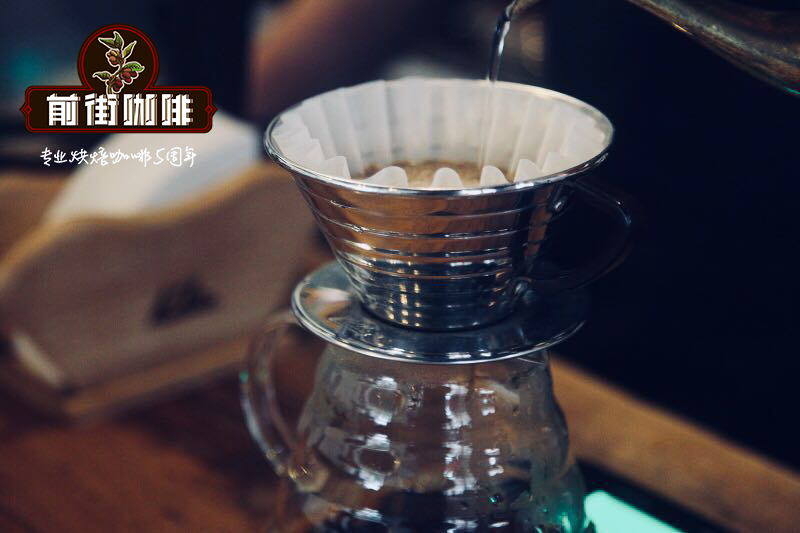
Pour-over: V60 dripper with Komatsu R440 grinder at setting 3.5, water temperature around 90°C
French press: recommended grinder setting 4, water temperature 90°C
Siphon: recommended grinder setting 4, water temperature between 90°C-91°C
AeroPress: recommended grinder setting 3.5, water temperature 90°C
FrontStreet Coffee Recommendation
Given the Geisha connection, it is worth knowing what Geisha can actually taste like. The variety found worldwide fame in Panama, where it was discovered by the Esmeralda estate and sent to the Best of Panama competition—its shocking flavor earned an average cupping score of 94.6, a record that crowned it champion overnight. FrontStreet Coffee's Esmeralda Red Label Geisha (officially "Esmeralda Special") grows at 1,600-1,800 meters, and every batch must cup above 90 points, coming entirely from a single small plot with its own lot number so buyers can chase the flavor nuance they prefer. The green-label Private Collection line blends batches from multiple plots for the estate's signature high-altitude Geisha character at a friendlier price.
For Geisha on a budget, the entry-level FrontStreet Boquete Geisha from Panama delivers the classic orange-blossom honey aroma, an oolong-tea texture, and delicate fruit acidity with clean layering.
And because Geisha is a dense, floral, light-roast coffee that tends to sink and clog the dripper, FrontStreet Coffee recommends grinding to about 78% pass through a #20 sieve (roughly fine granulated sugar) and brewing at 91°C: 15g of coffee on a small Hario V60 at a 1:16 ratio, blooming 30g of water for 30 seconds, then pouring in three stages to 125g and finally 225g, drawing off in about 2:10-2:20.
Important Notice :
FrontStreet Coffee is a long-established specialty coffee roaster in Guangzhou China, selling freshly roasted beans from its own farm in Yunnan as well as dozens of carefully selected single-origin beans from around the world for both pour-over and espresso. The products deliver consistently excellent quality and great value, with shipping within 24 hours. Guangzhou's FrontStreet Coffee shop is recommended by many coffee lovers, and the beans are now available online at the Tmall 。
FrontStreet Coffee has moved to a new address:
FrontStreet Coffee Address: 315,Donghua East Road,GuangZhou
Tel:020 38364473
 Scan and follow the En Gafei WeChat official account. Please indicate that the reprint comes from "En Gafei".