Flavor Characteristics and Taste Description of Colombian Coffee Beans - Colombian Coffee Varieties Introduction
Colombia: Country of the "Four Treasures"
A few years ago, everyone was streaming Netflix's hit series "Narcos," set in 1980s Colombia. Times have changed, and Colombia's coca cultivation area has shrunk year by year since. The country still has plenty of genuinely good things, though — it is famous for its "Four Treasures": emeralds, coffee, gold, and flowers.
Colombia is one of the few countries whose name alone sells single-origin coffee worldwide. Colombia and Brazil are both among the top three coffee exporters, together accounting for about 15% of global production. But they could hardly be more different: Brazil's terrain is monotonous, its climate dry, its altitude low and its soil poor, so it leans on technology. Colombia enjoys rich topography, clusters of volcanoes, fertile soil and abundant rainfall, relying on nothing more than good mountains and water. The result — for FrontStreet Coffee's Colombia — is a clean cup, rich aroma, layered fruit notes, striking acidity and a follow-through of sweetness.
Colombian Coffee Regions
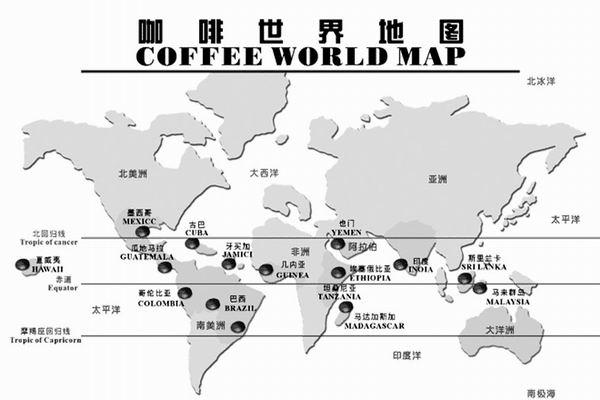
Colombia sits in northern South America, bordering Venezuela and Brazil to the east, Ecuador and Peru to the south, the Pacific to the west, Panama to the northwest, and the Caribbean to the north. Most of the mainland lies between 4° and 12° north latitude — squarely within the coffee belt.
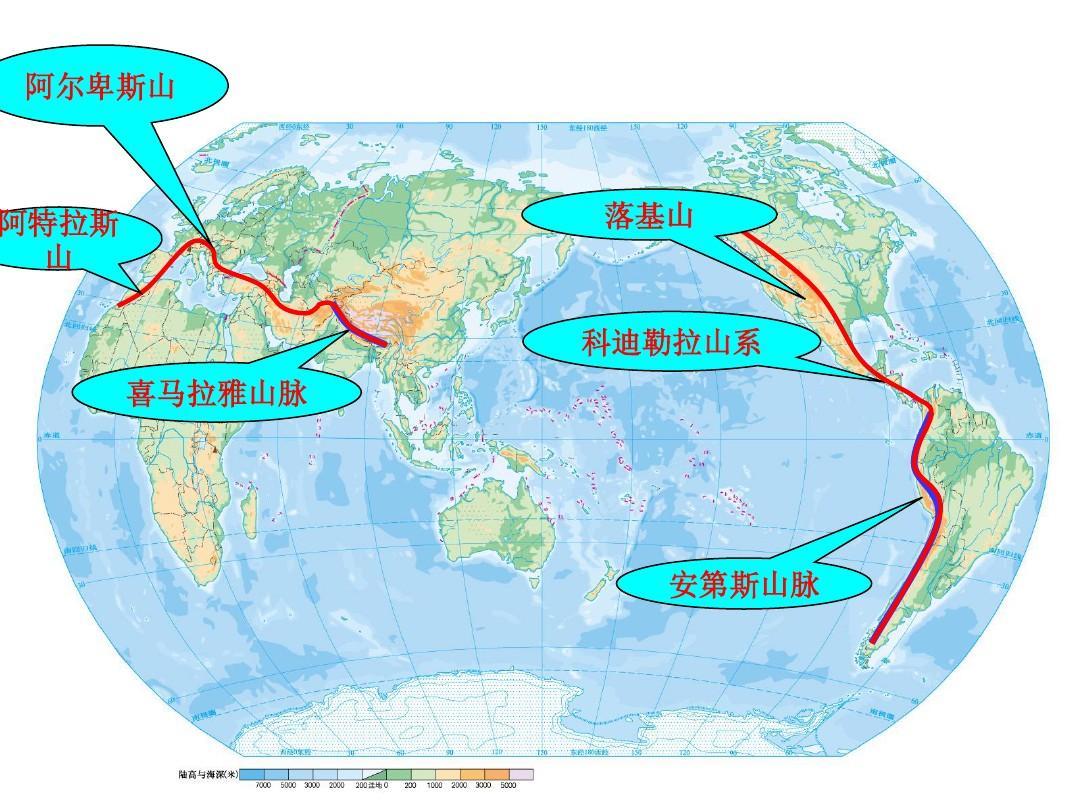
FrontStreet Coffee's Colombian growing regions concentrate along the southern section of the Cordillera — the Andes, the longest continental mountain system on earth. The Andes offer a mild climate, humid air and well-measured rainfall: an excellent home for coffee trees.
Northern Region
Colombia is famed for altitude, but Bucaramanga in the north sits lower, at around 1,000 meters. Its coffee is low in acidity, mellow and pleasantly sweet — closer in character to a Mandheling.
Central Region
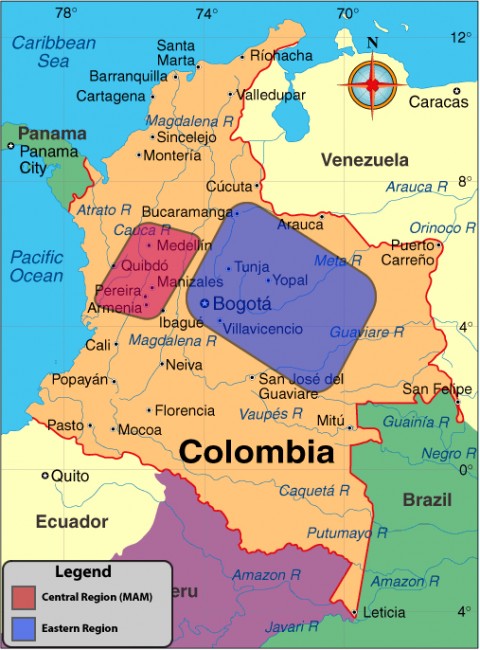
The most famous Colombian growing region is "MAM": Medellín, Armenia and Manizales. This is the country's major commercial coffee zone and its largest producing area, with relatively average growing conditions and bean quality.
Southern Region
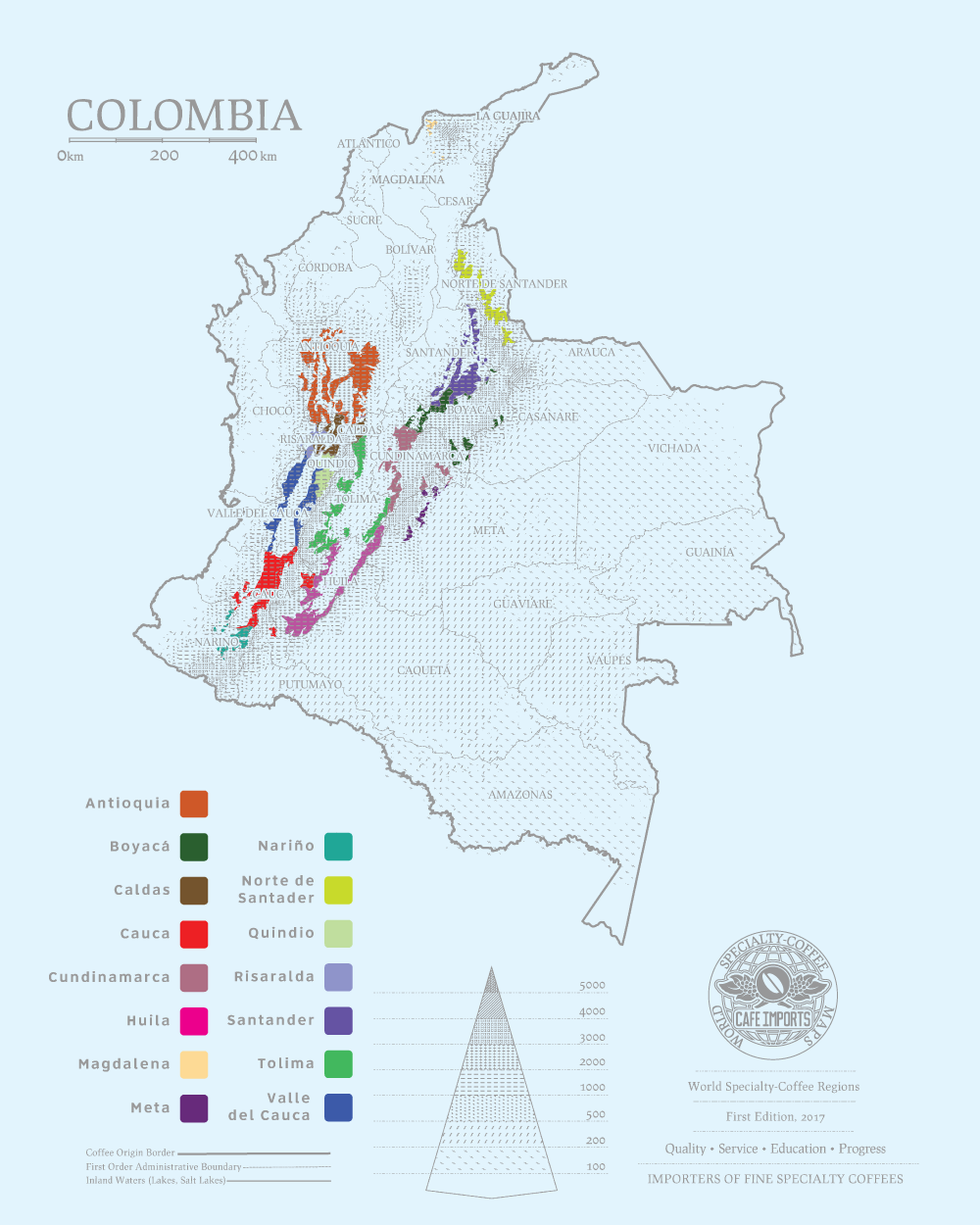
FrontStreet Coffee's specialty Colombian beans come mainly from the south, at average altitudes above 1,500 meters, including Santander, Antioquia, Tolima, Huila, Cauca and Nariño. Coffee from these regions shows delicate acidity, berry notes, caramel aroma and full sweetness.
Santander: in northern Colombia, bordering the Magdalena River to the west, with planting altitudes of about 1,400–1,600 meters across 30,537 square kilometers. Its beans are known for intense flavor, a long aftertaste and a unique fresh herbal note. FrontStreet Coffee's Colombia Rose Valley on the bean list comes from Santander.
FrontStreet Coffee Colombia Rose Valley
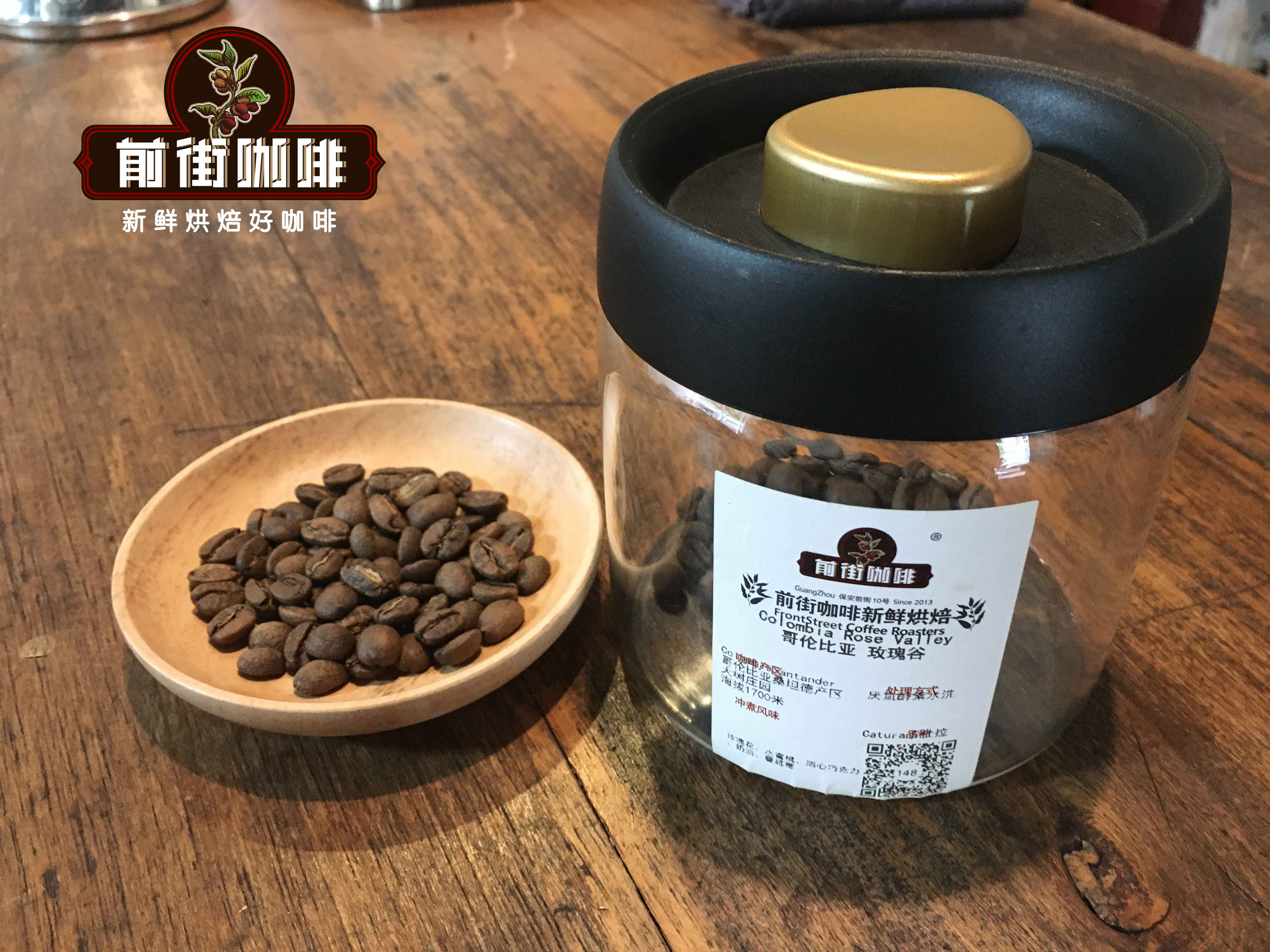
Region: Santander, Colombia
Farm: Big Tree Estate
Altitude: 1,700m
Variety: Caturra
Process: anaerobic enzyme washed
Antioquia: in north-central Colombia, producing 18% of the country's coffee. Much of the region is Andean high mountain terrain, softened by warm Caribbean sea breezes.
Tolima: the name comes from the region's indigenous Pijao people and means "snow-covered" in their ancient language. Farms here are slightly larger than elsewhere in southern Colombia, around 10–15 hectares. Cooperatives are popular: farmers send small batches of fresh cherries to cooperative processing plants, while others process themselves, running cherries picked the same day through their own small facilities.
Huila: in southwestern Colombia, one of the country's principal growing regions, producing 12% of its coffee. FrontStreet Coffee has found through cupping that Huila coffee carries strong nutty, chocolate and caramel flavors. The bean list includes two FrontStreet coffees from Huila.
FrontStreet Coffee Colombia Flower Moon Night
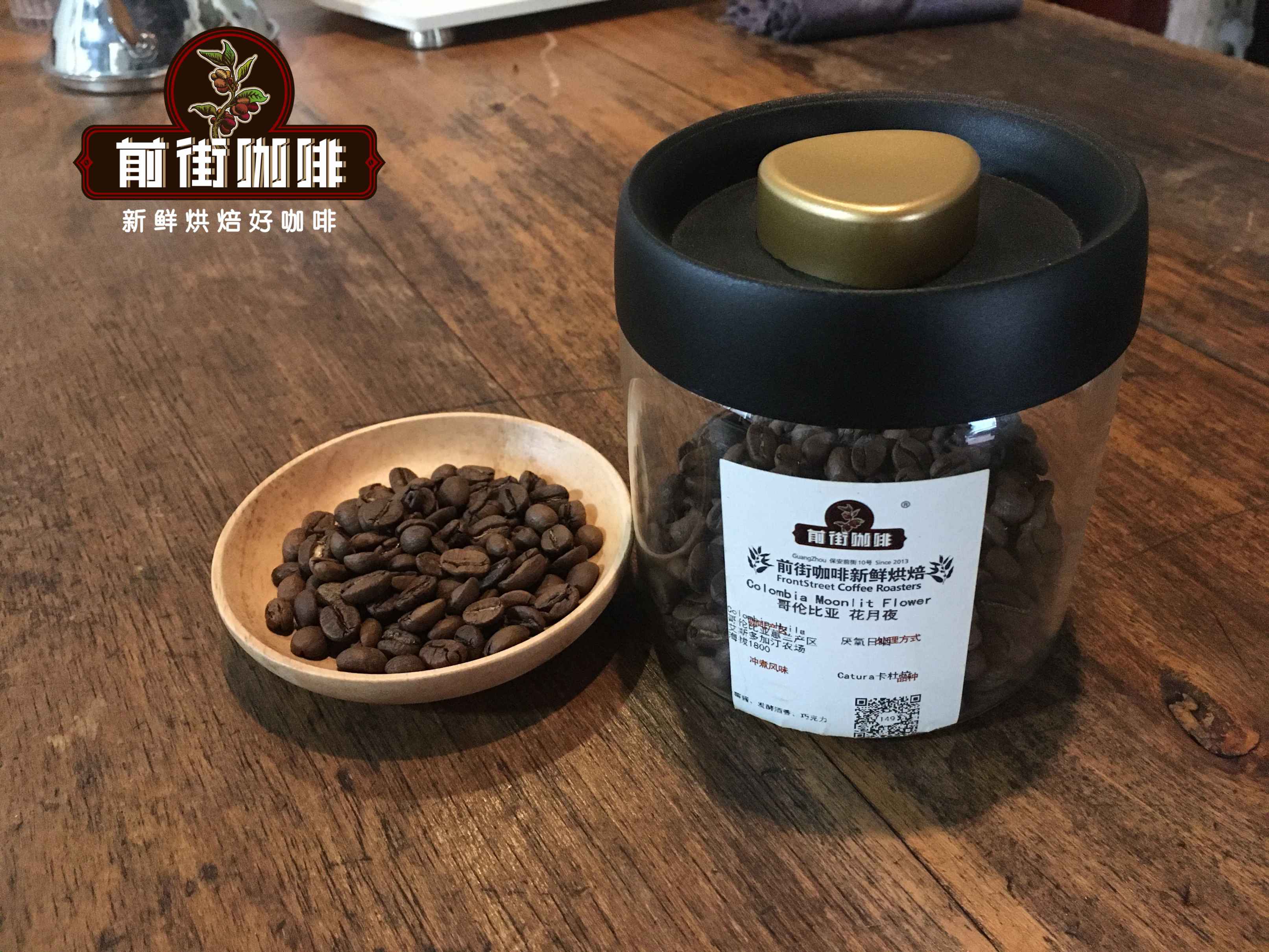
Region: Huila, Colombia
Farm: El Toledo Farm
Altitude: 1,800m
Variety: Caturra
Process: anaerobic natural
FrontStreet Coffee Colombia Huila
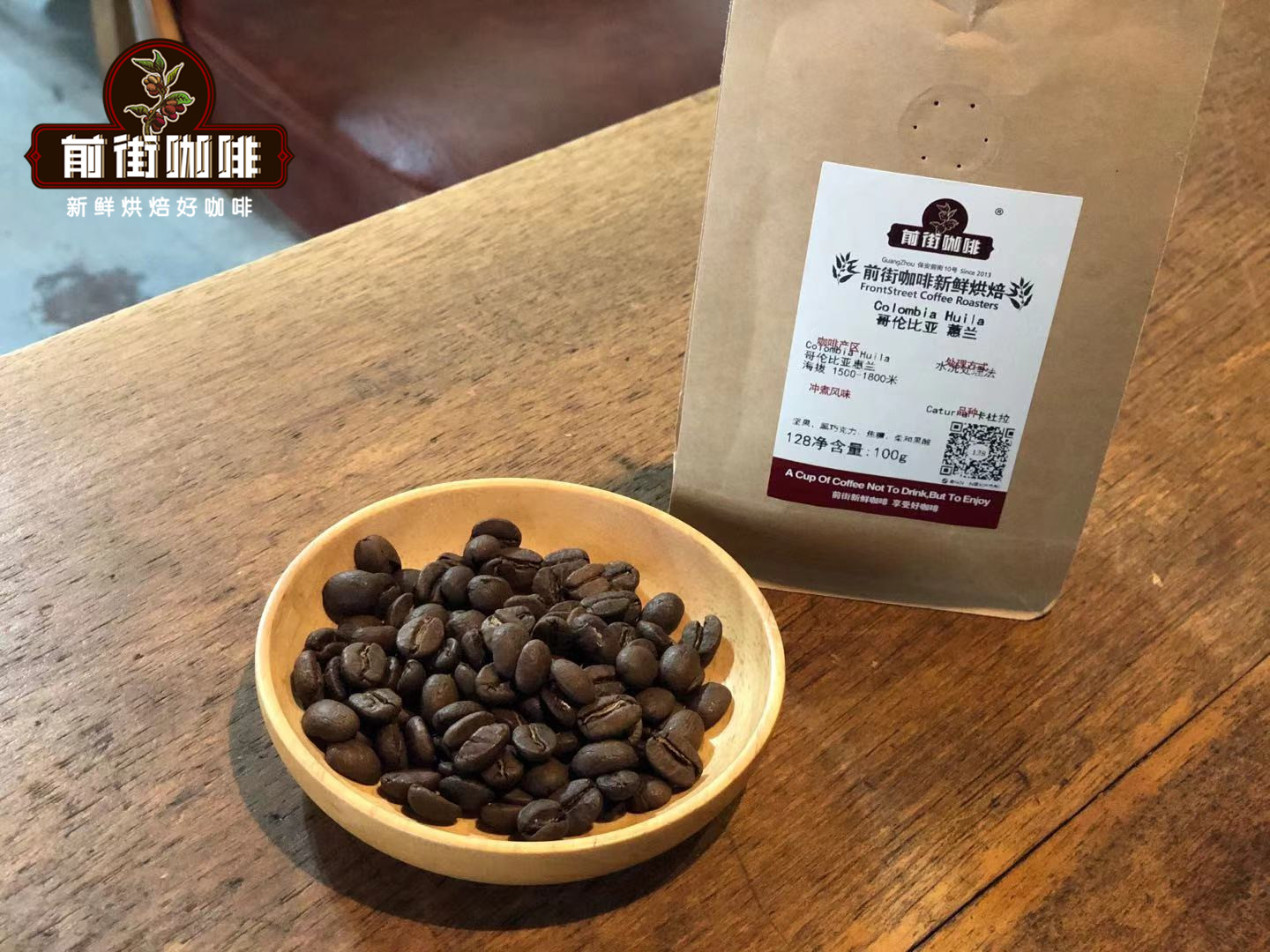
Region: Huila, Colombia
Altitude: 1,500–1,800m
Variety: Caturra
Process: washed
Cauca: in southwestern Colombia, producing about 8% of national coffee. The average altitude is 1,758 meters, with the highest zones reaching 2,100 meters. A large day-night temperature swing, cold nights and high altitude slow the coffee's growth rhythm, letting the beans absorb nutrients from the cherry more completely.
FrontStreet Coffee's Colombia Sakura is produced in Cauca using a double anaerobic washed process. "Double anaerobic" is similar to anaerobic fermentation, but split into two phases whose durations shape the final flavor: first, fresh cherries ferment in sealed tanks; then the cherries are de-pulped and the beans enter new sealed tanks for a second anaerobic fermentation before drying.
FrontStreet Coffee Colombia Sakura
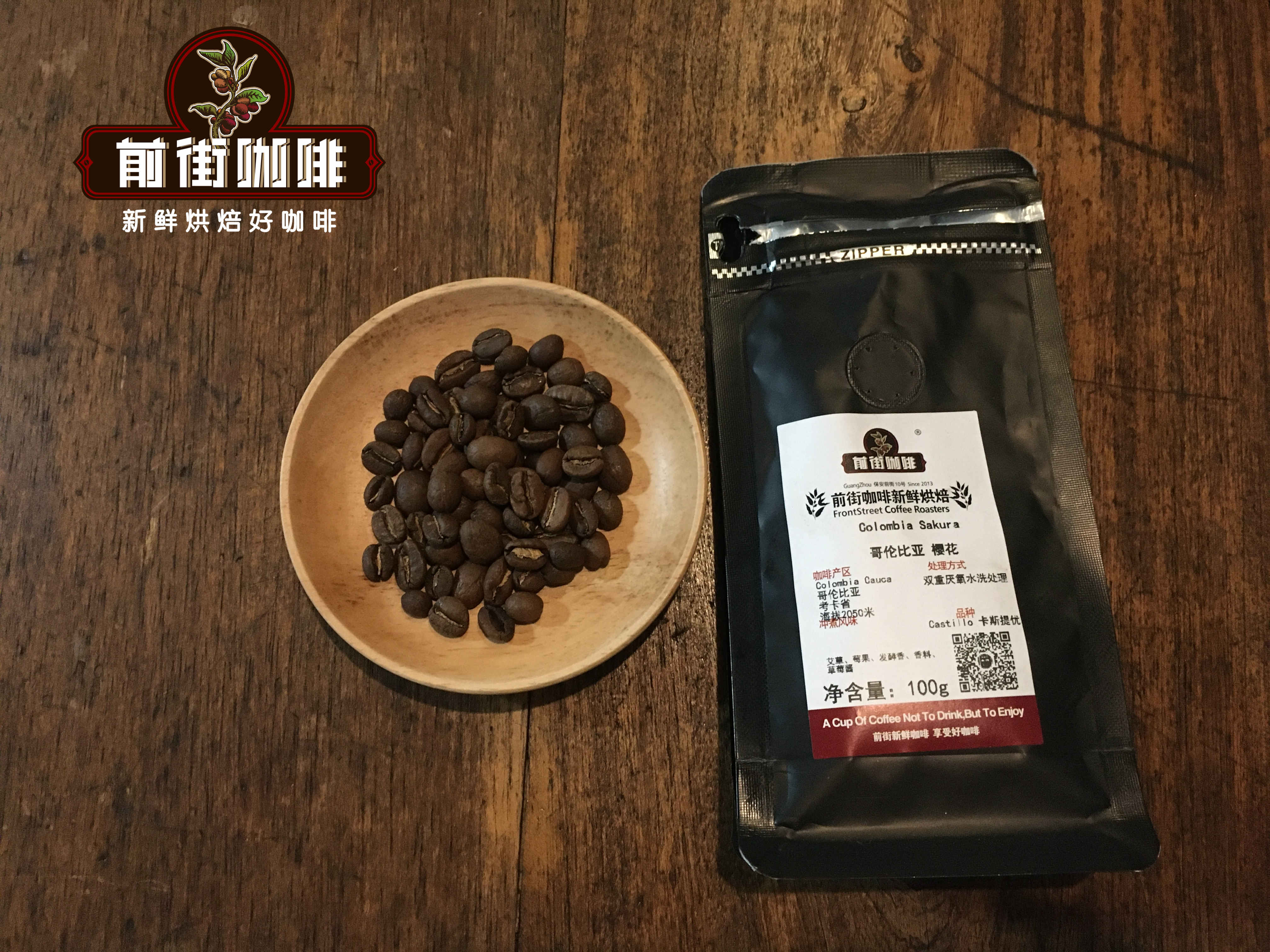
Region: Cauca, Colombia
Estate: Paradise Estate
Altitude: 2,050m
Variety: Castillo
Process: double anaerobic washed
Nariño: at Colombia's southwesternmost tip, at 1° north latitude, close to the equator, with abundant sunlight year-round. Altitudes mostly hover around 1,600 meters, and volcanic soil feeds the coffee generously. The cup is round and delicate, with sweetness, cocoa, rich aroma and a walnut fragrance.
Coffee Varieties
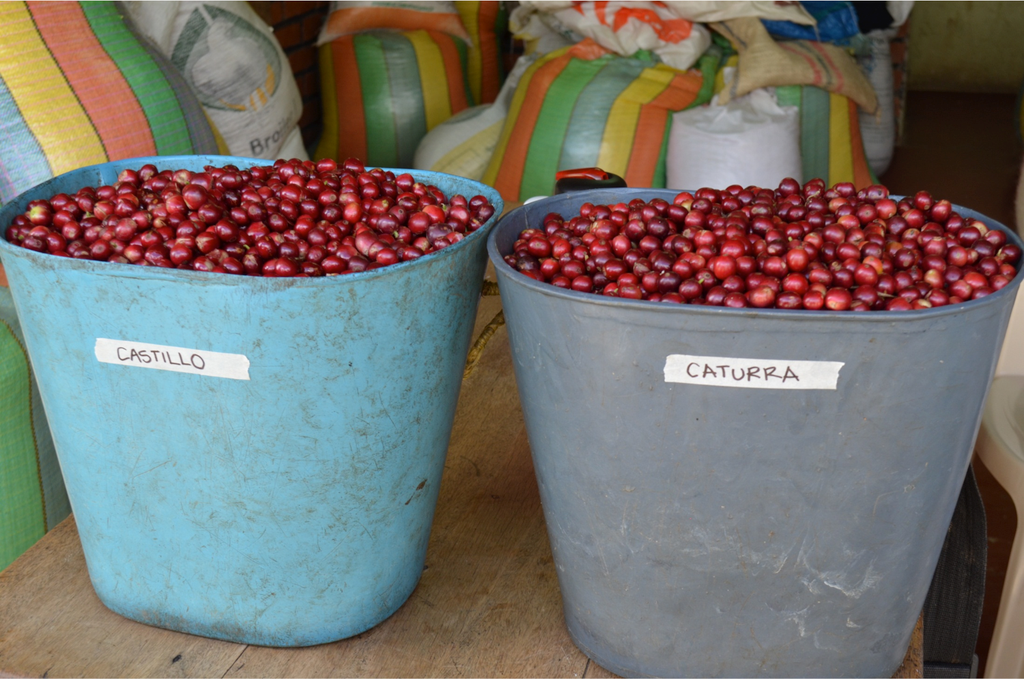
Colombia grows a remarkable range of varieties: Typica, Bourbon, Caturra, Maragogipe, Pacamara, Catimor, Geisha, Mocha, Laurina and more. But one must be singled out: Castillo. In 1982, Colombia released a variety bred through multi-generation backcrosses of Catimor and Caturra to wash away Catimor's harsh taste; in recent years the authorities introduced an improved version — Castillo — obtained through further multi-generation backcross purification with Arabica.
FrontStreet Coffee Colombia Brewing Parameters
Water temperature: 90°C
Coffee: 15 grams
Coffee-to-water ratio: 1:15
Grind size: fine-sugar coarseness (80% pass-through on a #20 sieve)
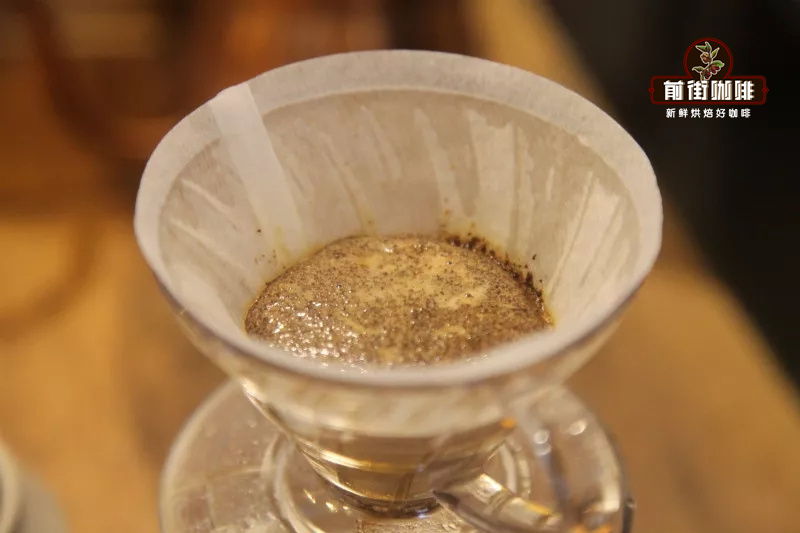
FrontStreet Coffee's brewing method: pour 30 grams of water for a 30-second bloom, then pour 95 grams (scale reads about 125 grams), finishing the pour in about 1 minute. When the water level drops to two-thirds of the coffee bed, pour the remaining 100 grams (scale reads about 225 grams), finishing at about 1 minute 35 seconds. Dripping completes at 2'04"; remove the dripper to finish extraction.
Flavor Descriptions
[FrontStreet Coffee Rose Valley] Peach sweetness accompanied by rose aroma, with the fine sweet-tart character of black grapes and a silky cream-toffee texture, finishing like chocolate liqueur.
[FrontStreet Coffee Flower Moon Night] An overwhelming strawberry-jam sweetness with fermented ripe-berry notes. On entry, cranberry acidity and berry juiciness spread to every corner of the mouth, followed by a chocolate-liqueur aftertaste rising through the nose.
[FrontStreet Coffee Sakura] The wet aroma shows strawberry-jam sweetness and chamomile fragrance. The entry is sweet-tart like strawberry, with jammy fermentation notes, then basil and rosemary aromatics, finishing with a mint-tea coolness.
[FrontStreet Coffee Colombia Huila] Balanced overall with obvious sweetness: dark chocolate, nuts and caramel on entry, with soft fruit acidity emerging as the cup cools.
FrontStreet Coffee Recommendation
If you enjoy Colombia's balance, its great southern neighbor offers a complementary take. As the world's largest coffee producer, Brazil grows beans with moderate acidity and an excellent balance of sweetness, bitterness and body — ideal for medium roasts, where nutty aromas bloom and the cup turns mellow with a gentle tart edge, equally at home in single origin or blends.
FrontStreet's Brazil Cerrado Red Bourbon is the classic starting point: a medium roast brings cream-and-peanut, toasted bread, caramel and hazelnut aromas with a round, non-acidic body and a light bitter trace — brewable by hand, moka pot, espresso SOE, siphon or French press. The Queen Estate lot from Mogiana, a rare Yellow Bourbon on fertile red volcanic soil, adds a sugarcane sweetness, fruit aroma and chocolate that no other origin quite matches.
And for espresso drinkers, note that Brazil's low acidity and stability make it the backbone of many great blends: FrontStreet's Classic Blend (rich crema), Premium Blend (nut-forward) and Black Cocoa Blend (balanced, café favorite) all include Brazilian beans for chocolate, cream and a soft, stable extraction.
Important Notice :
FrontStreet Coffee is a long-established specialty coffee roaster in Guangzhou China, selling freshly roasted beans from its own farm in Yunnan as well as dozens of carefully selected single-origin beans from around the world for both pour-over and espresso. The products deliver consistently excellent quality and great value, with shipping within 24 hours. Guangzhou's FrontStreet Coffee shop is recommended by many coffee lovers, and the beans are now available online at the Tmall 。
FrontStreet Coffee has moved to a new address:
FrontStreet Coffee Address: 315,Donghua East Road,GuangZhou
Tel:020 38364473
 Scan and follow the En Gafei WeChat official account. Please indicate that the reprint comes from "En Gafei".