Differences Between Single Origin and Coffee Blends How to Distinguish Single Origin Coffee Beans from Blended Beans Flavor Characteristics of Coffee Blends

Today, FrontStreet Coffee would like to share the two main categories of coffee beans: single-origin beans and blended beans.
Blended coffee, also called a house blend, is the art of combining single-origin coffees so that each one's strengths show. Blends mix beans from different origins to reach a more balanced flavor. FrontStreet Coffee offers four different styles of espresso blends. If one bean is smooth but lacks aroma, for example, we can add another with plenty of fragrance, letting the beans cover each other's weaknesses and create a new, richer taste. Sometimes beans are mixed before roasting (green blending) and sometimes after roasting (roasted blending).

Whether you blend pre-mixed green beans or individually roasted beans, the approach has to follow the coffee's role in the formula. Either way works. Blending after roasting allows a different roast degree for each bean, so every component performs at its best.
FrontStreet Coffee generally studies the flavor profiles of coffee varieties from around the world before building a blend, because beans differ by origin. Different varieties and origins give different personalities, with subtle differences in acidity, bitterness, sweetness, aroma, and body. Single-origin beans tend to emphasize the character of one particular coffee; blended beans are used mostly for espresso drinks such as Espresso, Americano, Latte, or Cappuccino, where a more balanced, smooth, and stable flavor reaches a broader audience.
Why Coffee Is Blended

1. A Stable Flavor Profile
Coffee is an agricultural product, so even the same type of bean can taste different from one year to the next. Mixing several coffees into a blend solves this, keeping the taste broadly consistent year after year.
2. A Balanced Mouthfeel
Espresso machines amplify whatever flavor is most prominent in a bean, which is why we rarely pull a single-variety coffee as espresso. A particularly bitter bean gives a particularly bitter shot; an acidic one gives a very acidic shot. Blending is how we balance those flavors.

FrontStreet Coffee believes blending is not simple addition but the blender's own understanding of coffee flavor, letting different beans complement one another to create an outstanding blend.
3. Consistent Flavor
Because coffee is agricultural, even beans of the same variety from the same region can taste different each year. Mixing several coffees together solves this, keeping the flavor broadly consistent year after year.
The Rise of Single-Origin Espresso (SOE)
SOE (Single-Origin Espresso) has become popular recently. It is not automatically specialty coffee, but if you choose single-origin beans with easily recognizable flavors, you can pull an espresso with a unique, typical character - Yirgacheffe's citrus, say, or Kenya's fruitiness. Because espresso amplifies flavor, those specific traits stand out more than they do in a pour-over. FrontStreet Coffee's view, though, is that while SOE shows off a bean's strengths, coming from a single origin also makes its weaknesses easy to amplify. Roasting and grind size both affect the flavor, so SOE is not necessarily better than a blend.
How FrontStreet Coffee Baristas Build Blends
(1) FrontStreet Coffee Specialty Blend:
Colombia : Brazil, ratio 3:7

Colombia Huila Region
Huila lies in southwestern Colombia and is one of the country's main coffee-growing areas. Colombian coffee generally grows at 1500-1800 meters, mostly Bourbon and Caturra, washed. The beans are dense, uniform in size, and full-bodied, thick from the bean's core to its surface. Because famous growing areas are scattered across Huila, the names of its small sub-regions have become brand names in the market. Cultivation conditions here are excellent, but the farms' infrastructure and surroundings are not well developed: green-bean drying equipment and washing facilities are still incomplete, which is a shame. FrontStreet Coffee has cupped many Huila coffees and finds them strong in flavor and heavy in texture.
The nutty, chocolate, and caramel aromas of Huila coffee, with its suitable acidity, make it high-quality specialty coffee.

Flavor characteristics: A rich, solid taste with pleasant acidity; a fragrant aroma, moderate acidity, and a rich sweetness that keeps you interested. Its affordable price and smaller bean size make it suitable for blending. The flavor is strong and the texture heavy. Nutty, chocolate, and caramel aromas with suitable acidity make it high-quality specialty coffee, good either as a single origin or as an espresso blend base.
Brazil Cerrado Region
Brazilian coffee generally grows at 1000-1300 meters, so its density is relatively low. It is mostly Bourbon, processed as a natural pulped coffee. Moisture content is moderate, the bean texture softer, and the thickness from surface to core thinner, so it is not suited to high-temperature roasting - the inner wall of the drum can scorch the bean surface and create a burnt bitterness.

To bring out the nut, milk chocolate, and good body, and to serve as a blend base, FrontStreet Coffee uses medium heat input, holding the fire through the dehydration stage and making fine adjustments as the temperature rises after first crack begins, encouraging a more complete caramelization reaction, then dropping the beans as the temperature approaches second crack.
Flavor characteristics: A comfortable bittersweet taste and an extremely smooth entry, with a light grassy fragrance, a fresh aroma, and slight bitterness; sweet, smooth, and pleasant, with a comforting aftertaste.
Blended flavor: Sweet. Roasted medium-dark, it makes an espresso with soft, slight acidity, clear sweetness, and a nutty aftertaste - not too stimulating overall, balanced, with medium crema.
(2) FrontStreet Coffee Commercial Espresso Blend:

Colombia : Brazil : Robusta; ratio 3:6:1, green blend;
[Robusta] beans resist disease and pests well and yield heavily. They are usually less acidic than Arabica and often carry a slight woody aroma. Caffeine content is 2.2%, higher than Arabica's 1.2%, and chlorogenic acid content is higher too, which makes them fairly bitter. Usually sold as commercial beans, they are cheaper than Arabica.

Judged bean by bean, commercial coffee tastes far below specialty coffee. Commercial beans are generally chosen for blending, and a good blend can still produce excellent coffee for espresso drinks like lattes and cappuccinos. FrontStreet Coffee's Commercial Blend for Espresso, because it contains Robusta, has richer crema and a classic flavor of caramel sweetness, nuts, cocoa, and dark chocolate, balanced sweet and sour, with a slight bittersweet note and a persistent aftertaste.
(3) FrontStreet Coffee Basic Espresso Blend:

Yunnan AA : Brazil; ratio 3:7, roasted blend;
FrontStreet Coffee's Yunnan AA is [Typica], the oldest native variety from Ethiopia, originating in southeastern Ethiopia and Sudan. All Arabica varieties descend from Typica. Its top leaves are copper-colored, which is why it is called red-tipped coffee, and it has an elegant flavor but a weak constitution: poor disease resistance, susceptible to leaf rust, and low yield. Typica has slender branches that spread at 50-70 degree angles. The opposite leaves are long ovals with smooth surfaces, the terminal branches are long with few side branches, and the flowers are white, blooming at the base where the petiole meets the branch. Ripe cherries look like cherries and are bright red.
It needs more shade during cultivation and can be harvested only about once every two years. Yunnan's excellent geography and climate suit coffee well. Planting areas include Lincang, Baoshan, Simao, Xishuangbanna, and Dehong. Yunnan's natural conditions closely resemble Colombia's, with high altitude and a large day-night temperature difference. The flavor is mellow and aromatic, with moderate acidity, a rich mellow body, uniform particles, high oil content, and fruity notes; its quality and taste are close to Colombian coffee.

Blended flavor: Soft fruit acidity, caramel sweetness, nut and dark chocolate flavors, smooth and viscous, though the taste is relatively light.
FrontStreet Coffee believes a good blend needs primary and secondary components so that it tastes more interesting than a single origin. Before drafting a blend plan, FrontStreet first envisions suitable combinations, then roasts appropriately before blending, settling on the best plan through cupping and later adjustments. We hope this helps.
Choose beans that name their origin and processing clearly, and taste as widely as you can - that is still the fastest way to learn what you like. For more specialty coffee beans, FrontStreet Coffee's private WeChat is kaixinguoguo0925.
FrontStreet Coffee Recommendation
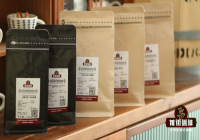
Blending is where FrontStreet Coffee does its most visible work, and the four house espresso blends are a good way to see the theory in practice. The Classic Blend is designed for espresso and moka pots and is prized above all for its crema: even a beginner on a non-professional home machine can pull a dense, fine-textured shot. It follows the traditional Mamba formula - Mandheling plus Brazil - for a full, warm body that suits a latte, a cappuccino, or a Dirty, and it is forgiving for newcomers and cafes alike.
The Dark Cocoa Basic Blend takes the value route: 100% Arabica, ample crema, a full body, and a friendly price, which is what makes it a favorite for shops that need to watch costs without giving up taste. The Specialty Blend is the house stalwart - nearly ten years on the counter, covering Americano and latte - and pairs Brazil Cerrado with Colombia Huila for the most familiar espresso profile there is. FrontStreet Coffee's Commercial Blend predates the Dark Cocoa and has long been a workhorse for cafes, cheaper than the Specialty Blend but optimized for body and cost.
To push a blend in a sweeter, more fruit-driven direction, try FrontStreet Coffee's Strawberry Candy Espresso Blend. It combines coffees from Colombia, Costa Rica, and Ethiopia using washed, natural, and honey processing, and the medium roast keeps it sweet with a rose note, low bitterness, and mild acidity; as an Americano or a latte it shows grape, dried blueberry, sweet orange, and fruit candy, with an almond aroma on the finish. For a true single origin by contrast, the Ethiopia Huakui SOE - a natural Sidamo from Hambella, processed at the Buku Abel station - brings cream strawberry, guava, dried mango, black tea, and citrus.
Important Notice :
FrontStreet Coffee is a long-established specialty coffee roaster in Guangzhou China, selling freshly roasted beans from its own farm in Yunnan as well as dozens of carefully selected single-origin beans from around the world for both pour-over and espresso. The products deliver consistently excellent quality and great value, with shipping within 24 hours. Guangzhou's FrontStreet Coffee shop is recommended by many coffee lovers, and the beans are now available online at the Tmall 。
FrontStreet Coffee has moved to a new address:
FrontStreet Coffee Address: 315,Donghua East Road,GuangZhou
Tel:020 38364473
 Scan and follow the En Gafei WeChat official account. Please indicate that the reprint comes from "En Gafei".