Beginner's Guide to Coffee Bean Brands: World Coffee Growing Regions Flavor Characteristics and Taste Profiles

What Are Coffee Daily Beans?
FrontStreet Coffee explains it in detail below.
Why Do "Daily Beans" Exist?
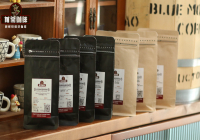
The reason is that newcomers to coffee often struggle to choose beans that suit their own taste. Buying blind risks disappointment and waste, so FrontStreet Coffee introduced "Daily Beans." These beans are also FrontStreet Coffee's signature offering, because they carry highly recognizable regional flavor profiles. FrontStreet carefully selects the most representative locally flavored beans from the major coffee-producing regions and packs them into 100g tasting portions. Examples include Ethiopia's most representative and renowned Yirgacheffe with its lemon acidity, Indonesian Mandheling with its herbal notes, and Costa Rican Tarrazú with its chocolate and nutty aromas. FrontStreet Coffee currently offers seven different varieties from various countries and regions.

Most of FrontStreet Coffee's daily beans also use the washed processing method, because it preserves more of the original, fundamental flavor of the cherry and serves as an introduction to understanding regional flavor.
FrontStreet Coffee Explains the Washed Process
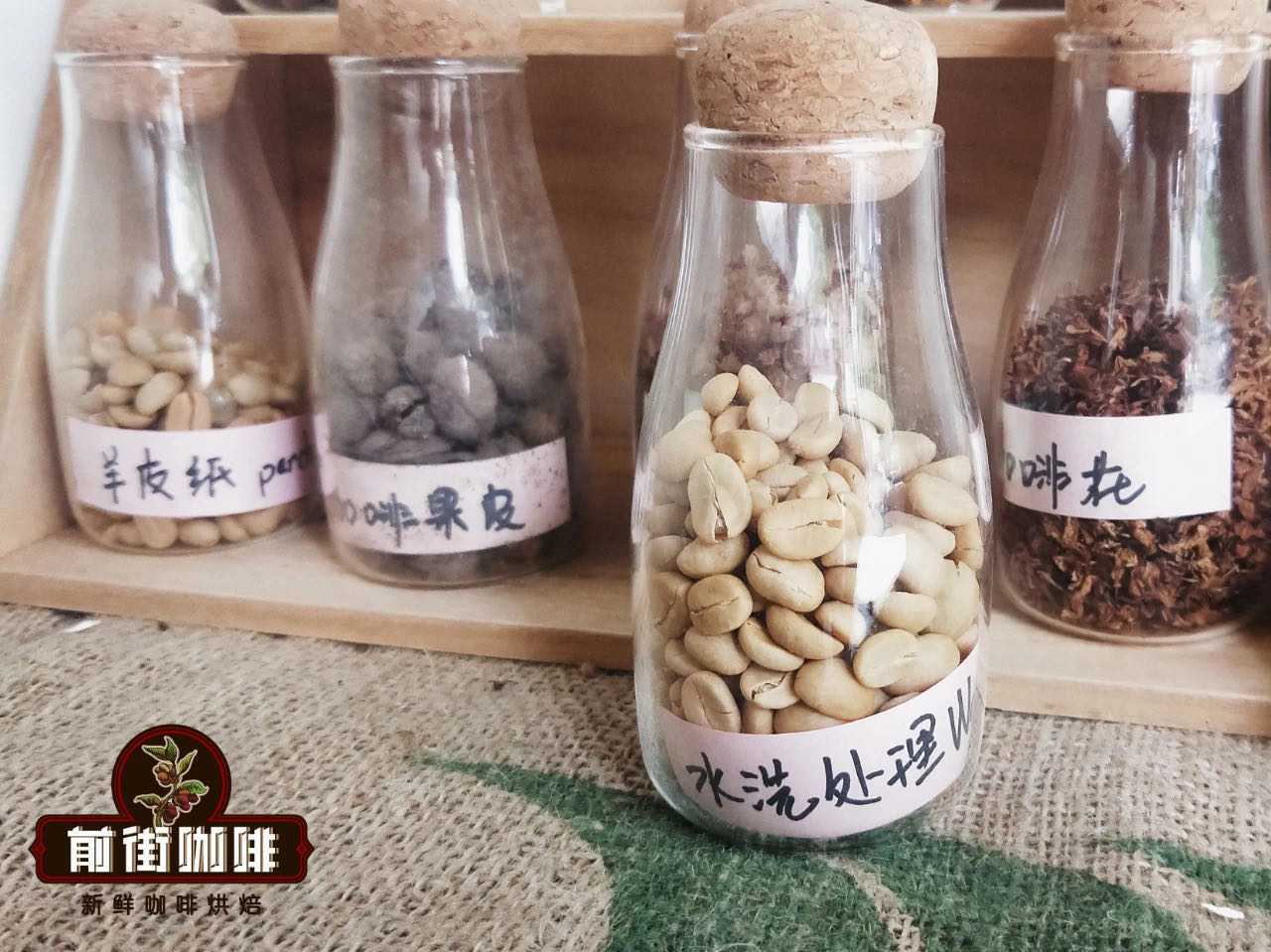
- Bean Selection: Harvested fruit is placed in large water tanks. Ripe fruit sinks, while unripe or overripe fruit floats on the surface.
- Pulp Removal: Machines remove the skin and pulp, leaving only the beans covered in mucilage. The washing process is designed to clean off this layer.
- Fermentation: Mucilage sticks firmly and is not easily removed. The beans must sit in tanks for about 18-36 hours while microorganisms ferment and break the mucilage down.
- Washing: The fermented beans go into water pools and are washed back and forth, using the friction between beans and the flow of water to clean them.
- Drying: After washing, the beans hold about 50% moisture. They must be dried down to 12%, otherwise they will mold and spoil. The best method is sun drying, which takes 1-3 weeks but delivers excellent flavor. Some places use machine drying, which cuts the time considerably but gives a flavor inferior to sun-dried beans.
- Hulling: Once drying is complete, the beans rest in a warehouse for a week to stabilize their moisture content, then go to the mill where the parchment layer is removed.
- Sorting and Grading: Defective beans are removed to ensure the best quality, after which the coffee is sent to exporters for sale worldwide.

Seven Coffee Beans with Distinct Regional Flavors
FrontStreet Coffee Washed Yirgacheffe Daily Beans

Country: Ethiopia
Region: Yirgacheffe
Altitude: 1800-2000m
Variety: Local Heirloom
Processing: Washed
Bean Appearance: Small round beans, very small in size
Flavor: Jasmine, Lemon, Citrus, Berries
Yirgacheffe coffee is the most representative coffee from Ethiopia and is held in high regard by coffee connoisseurs worldwide. With such an excellent variety to work with, FrontStreet Coffee naturally wants to share it.
Yirgacheffe lies on the eastern side of the East African Rift Valley and is a small town in the Sidamo province of Ethiopia. It was designated separately because of its unique coffee flavor, with altitudes ranging from 1700-2100 meters, making it one of the highest coffee-growing regions in the world and a synonym for Ethiopian specialty coffee.

Yirgacheffe coffee trees were originally planted by European monks and later managed by farmers or cooperatives, mostly in farmers' backyards or intercropped with other crops in the fields. Each household produces only a small amount, which makes it typical pastoral coffee. The mountain villages that produce the cherries are shrouded in mist, spring-like all year, with cool summers and gentle breezes, rainy but not humid, and winters free of cold damage. As a result, Yirgacheffe coffee fruit shows clear floral notes and citrus or lemon acidity. Washed beans taste refreshing, with bright fruit acidity and noticeable tea-like notes. FrontStreet Coffee believes only this geographic climate could cultivate such a distinctive regional flavor of citrus and florals.
At the same time, Yirgacheffe is also the representative choice for anyone seeking a coffee with a floral and fruity profile.
In traditional processing, Yirgacheffe originally used the oldest natural method. Early natural-processed beans, however, were mostly dried spread on the ground, inevitably picking up earthy and dusty flavors, and because of inadequate screening the quality was generally average. It was only in 1972, when Ethiopia introduced washed processing technology from Central and South America to improve quality, that Yirgacheffe's jasmine fragrance and citrus-lemon freshness became clearer and brighter, lifting it into the ranks of the world's representative specialty coffees.

FrontStreet Coffee also holds that washed processing better reflects the clean taste and pure expression of coffee. So when analyzing the specific flavors of a producing region, we use washed beans from that region as the reference. If a customer has never tried Yirgacheffe, FrontStreet Coffee also prioritizes recommending the washed version to help build an understanding of regional flavor. Later, when trying natural, honey-processed, and other versions of Yirgacheffe, they have a basis for comparison.
FrontStreet Coffee Colombian Huila Daily Beans

Country: Colombia
Region: Huila
Altitude: 1500-1800m
Variety: Caturra
Processing: Washed
Bean Appearance: Uniform bean size, relatively full-bodied
Flavor: Nuts, Dark Chocolate, Caramel, Gentle Fruit Acidity
Colombia lies in the northwestern part of the South American continent, bordering Panama in Central America. In 1808, a priest first introduced coffee to Colombia from the French Antilles by way of Venezuela. Today, Colombia is the world's third-largest coffee exporter, primarily producing Arabica beans, and it exports more Arabica coffee than any other country. Colombia is rich in natural resources, with coffee, flowers, gold, and emeralds known as its "four treasures."

In Colombia, the most important cultivation area is the southwestern Huila region. Huila features mountainous terrain, with coffee grown on mountain valley slopes. The climate on those slopes keeps cold winds out while providing constant mountain breezes that keep temperatures cool without excessive heat, and rainfall is relatively abundant. These are exceptionally favorable conditions for coffee cultivation. Colombian Huila beans are hand-picked by workers who climb the mountains, allowing careful selection of the most mature, full fruit.
According to FrontStreet Coffee's research, the early coffee varieties planted in Colombia were Typica and Bourbon. Caturra is a natural mutation of the Arabica Bourbon variety, discovered in Brazil in 1937. Its plant is not as tall as Bourbon and is more compact. Because it inherits Bourbon's lineage, it has relatively weak disease resistance but higher yields than Bourbon. Although discovered in Brazil, Caturra does not grow well there, so it was not cultivated on a large scale. Instead it became popular across Central and South America, with large-scale cultivation in Colombia, Costa Rica, and Nicaragua. In 1970, Colombian Typica and Bourbon gradually began to be replaced by Caturra, because Caturra not only yields more per plant but is also more compact, allowing more trees per unit of land. The beans used by FrontStreet Coffee are precisely of the Caturra variety.

FrontStreet Coffee Costa Rican Tarrazú

Country: Costa Rica
Region: Tarrazú
Altitude: 1500m
Variety: Caturra, Catuai
Processing: Washed
Bean Appearance: Variable sizes
Flavor: Sweet Orange, Honey, Toffee, Nuts
Costa Rica sits on the Central American isthmus. It borders Panama to the south, Nicaragua to the north, the Caribbean Sea to the northeast, and the Pacific Ocean to the south. Influenced by Pacific currents and monsoons, Costa Rica has formed distinctive microclimates.

Costa Rica has large day-night temperature differences and abundant rainfall, combined with the weakly acidic, fertile soil nurtured by its volcanoes, all of which provides excellent conditions for coffee. So although the country is small, it is genuinely one of the most species-rich places in the world. FrontStreet Coffee believes Costa Rica truly lives up to its Spanish name, which means "rich coast." Its representative coffee regions include West Valley, Central Valley, Tarrazú, Tres Rios, Orosi, Brunca, and Turrialba.
Tarrazú is the most representative of them. It lies south of the capital, San José, and is the most valued coffee-producing region in Costa Rica. Most of the country's finest coffee comes from here. In the 2020 Costa Rica Cup of Excellence, 9 of the top 26 coffees came from Tarrazú, and it took the top three positions. That shows the region is a seasoned producer of high-quality coffee. Costa Rican coffee has long been known for its balanced flavor, rich chocolate notes, and smooth mouthfeel.

The connection between Caturra and Catuai begins with Caturra's origin as a natural mutation of Arabica Bourbon, discovered in Brazil in 1937. Catuai is a hybrid of Mundo Novo and Caturra, essentially a second-generation cross. It inherits Caturra's advantage of a low plant height while making up for Caturra's weakness of fruit that falls easily in strong winds; its fruit sets firmly and does not drop easily when blown. The biggest regret is that its overall flavor is slightly more monotonous than Caturra's. Catuai also comes in red and yellow fruit types, with the red fruit having better flavor than the yellow. Catuai, Caturra, Mundo Novo, and Bourbon rank as Brazil's four main coffee varieties.
FrontStreet Coffee Guatemalan Huehuetenango

Country: Guatemala
Region: Huehuetenango
Altitude: 1500-2000m
Variety: Bourbon, Caturra, Catuai
Processing: Washed
Bean Appearance: Relatively uniform beans
Flavor: Nuts, Lemon Peel, Berries, Citrus

Coffee from Guatemala belongs to the world's top tier, consisting mainly of Bourbon, Typica, Caturra, and Catuai varieties. The coffee belt sits mostly above 1500 meters, and tropical rainforests, volcanic geology, and varied microclimates give the beans of this region unique flavors.
Guatemalan beans have rich fruit aromas and are known for elegant, lively acidity, a clean taste without impurities, and distinct layers. The country was rated the largest coffee producer in Central America for most of the 20th and 21st centuries. It has eight major coffee-producing regions, which are typically used to describe the highest-grade S.H.B. (Strictly Hard Bean) coffee. Five of the regions are volcanic and three are not, and all produce very distinctive coffees with a strong international reputation.
Among Guatemala's three non-volcanic coffee regions, the Huehuetenango highlands are the driest and highest. Although Guatemala has many highlands, only Huehuetenango is called the Huehuetenango Highlands in coffee-region terms. The coffee here is a typical S.H.B. bean, worthy of being called the champion of Guatemalan coffee.

FrontStreet Coffee must also mention that the name Huehuetenango is interesting in itself. It comes from Nahuatl and means "land of the ancients," or ancestors. The region contains Central America's highest non-volcanic mountain range, making it very suitable for coffee, and it depends heavily on coffee exports, producing many impressive coffees.
FrontStreet Coffee Yunnan Small Bean

Country: China
Region: Yunnan, Baoshan
Altitude: 1200m
Variety: Catimor
Processing: Washed
Bean Appearance: Round and full
Flavor: Melon Sweetness, Muskmelon, Brown Sugar, Plum Acidity, Black Tea Sensation
In 1892, a French missionary brought coffee seeds from Vietnam to Yunnan and planted them successfully in a valley in Binchuan County, Yunnan Province. That marked the beginning of Yunnan coffee, generally called small bean coffee and known domestically as Yunnan small bean coffee.

In 1959, the Portuguese took Brazil's Bourbon mutation, Caturra, to East Timor and hybridized it with Timor, which carries Robusta blood, successfully creating Catimor with very strong disease resistance and productivity. Since leaf rust disease affected coffee-producing countries worldwide, producing nations, with the help of international organizations, vigorously promoted Catimor to resist the disease and raise productivity. Catimor therefore contains Robusta blood, and compared with pure Arabica Typica it can be distinguished by flavor. In Yunnan's green bean competitions, Catimor has consistently occupied the top ten, while pure, high-quality Arabica varieties are rarely seen because too few people grow them. That gave people the impression that Yunnan Catimor should not be underestimated. Catimor was later widely promoted and planted across Yunnan's coffee areas, including Dehong, Baoshan, Pu'er, Xishuangbanna, Lincang, Wenshan, and Yuxi.
FrontStreet Coffee has also planted Typica and a small amount of Bourbon in Yunnan. Catimor and Typica do not conflict: one represents mass production and the other specialty production. The point of specialty coffee is to improve quality, while mass production aims to raise yield. Yunnan's choice to focus on Catimor reveals that underlying purpose.

FrontStreet Coffee Indonesian Mandheling

Country: Indonesia
Region: Sumatra, Lintong
Altitude: 750-1500m
Variety: Typica, Caturra
Processing: Wet-Hulled
Bean Appearance: Many surface cracks
Flavor: Toasted Bread, Nuts, Caramel, Pine, Herbs
Most specialty coffees are named after their producing region, area, or port, but Mandheling is named after an ethnic group. It is a phonetic mistranslation of Indonesia's Mandailing people, and the origin of the name makes a good story. Legend has it that during World War II, when Japan occupied Indonesia, a Japanese soldier drank an incredibly fragrant cup of coffee in an Indonesian cafe. When he asked the owner its name, the owner thought he was asking "Where are you from?" and answered "Mandailing." After the war, the soldier remembered the unforgettable "Mandheling" he had drunk and commissioned an Indonesian coffee merchant to ship 15 tons to Japan. It became hugely popular in the Japanese market, and the name spread that way. The merchant was the renowned Pwani Coffee Company.

FrontStreet Coffee's research shows that Mandheling is also known as "Sumatra coffee." Most coffee produced in North Sumatra is Gayo, primarily of the Ateng variety. The Lake Tawar area in the north can be called Aceh coffee or Lake Tawar coffee. South Sumatra's Lintong and Lake Toba areas can be called Mandheling, and the Lintong area is the true Mandheling-producing region. The best Mandheling varieties include four types: Sidikalang, Bergendar, Siborong Borong, and Telok Sanggul.
Mandheling is a premium bean grown on plateau mountain land at 750-1500 meters. In a country that mainly produces Robusta, it is a rare Arabica variety. Because of altitude, climate, and various environmental factors, the beans have a rich aroma, a full body, intense flavor, and, in some lots, a hint of chocolate and syrup.
In Indonesia, because of the climate in Sumatra's Lintong region, local farming levels, and scarce water resources, Mandheling was initially processed using natural methods, but the quality was unstable, so it shifted to a method similar to Brazil's pulped natural. However, Indonesia's humid climate does not allow sticky coffee pods to be dried outdoors for 2-3 days the way Brazil does; doing so would cause the pods to mold. So after drying for several hours to a day, when moisture content falls to 20-30% and the mucilage has not yet solidified, the beans are bought by merchants and taken to simple facilities where machines remove the mucilage to prevent over-fermentation and sour odors.

That is the wet-hulled process. First the mucilage layer is scraped off while the pods are still wet, which is the main reason Mandheling has lower fruit acidity and a heavier body. After slight drying, the moisture content of the coffee inside the pods reaches about 18%. Finally, exporters from Medan buy the unwet pods and place them in large drying fields, or use machine drying, until moisture reaches 12% for storage. Mandheling's drying is therefore very complicated, because farmers lack adequate equipment and instead use a three-stage division of labor among farmers, bean buyers, and exporters. That is why Mandheling develops its distinctive herbal and woody flavors, caused by high humidity and the three-stage drying of the mucilage layer. This world-rare wet-hulled method accidentally created Mandheling's low-acidity, thick, mellow flavor. Among these seven daily beans, the specially wet-hulled Mandheling is one everyone should try; once tasted, it is hard to forget.
FrontStreet Coffee Brazilian Red Cherry

Country: Brazil
Region: South Minas
Altitude: 1000m
Variety: Red Bourbon
Processing: Pulped Natural
Bean Appearance: Oval
Flavor: Nuts, Chocolate, Cream, Peanuts, Caramel
Brazilian coffee was introduced in 1720 from French Guiana. Brazil was then a Portuguese colony, while many other South American countries were Spanish colonies, which is why most of the continent speaks Spanish while Brazil speaks Portuguese. The Portuguese officer stationed in Brazil wanted to bring Guiana's coffee to Brazil, where exporting coffee was then strictly prohibited, so he won the affection of the Guiana governor's wife and succeeded in bringing seeds into the country. From then on coffee spread rapidly, moving from the north to the southeastern state of São Paulo. By 1845, Brazilian coffee already accounted for 45% of the world's total.

Today, Brazil is the world's number one coffee exporter. Its terrain divides mainly into two parts: the Brazilian Plateau above 500 meters, distributed across central and southern Brazil, and the plains below 200 meters, mainly in the northern and western Amazon basin.
Brazil grows both Arabica and Robusta beans, with specialty Arabica mainly planted in São Paulo and Minas Gerais states. Robusta is mainly found in Espírito Santo, Bahia, Rondônia, and other states.
This FrontStreet Coffee Brazil daily bean comes from Minas Gerais state. Its representative coffee regions include Cerrado and South Minas. Both are high-altitude areas with rich topography, distinct wet and dry seasons, wide day-night temperature differences, and abundant microclimates, all suitable for cultivating flavorful Red Bourbon and Yellow Bourbon varieties. Since 1999, the estates winning Brazil's Cup of Excellence have been most numerous in South Minas, so the region naturally became the country's main specialty coffee-producing area.

Before 1990, Brazil used almost exclusively crude natural processing. That was the main culprit behind Brazilian beans easily picking up earthy and woody flavors, because during the 2-3 week sun drying of the fruit, rain could cause moisture reabsorption or damage the fruit, leading to mold and off-flavors. The problem drew criticism for years and badly damaged Brazilian coffee's image. So after 1990, Brazilian research institutions developed pulped natural processing, suited to the country's drier climate, to shorten processing time. The process involves selecting suitable fruit, removing the skin, pulp, and some mucilage, then sun-drying with a small amount of mucilage for 1-3 days, followed by machine drying to 12% moisture and storage in containers to age. This method reduces the inferior off-flavors of the past while enhancing fruit aromas and sweetness. FrontStreet Coffee's Brazilian coffee is processed this way as well.
These are the seven daily beans currently offered by FrontStreet Coffee. We believe that after reading this, coffee lovers have a clearer sense of which flavored daily beans suit their taste, and that the content above helps newcomers understand coffee cherries to some degree.
FrontStreet Coffee Recommendation
If the washed Yirgacheffe daily bean is the one that caught your eye, FrontStreet Washed Yirgacheffe is the same coffee in a larger format. It comes from Yirgacheffe in southern Ethiopia, where coffee is planted above 1800 meters, and it is known for white jasmine, bright citrus and lemon acidity, and a tea-like finish. Its accessible price has made it the first specialty bean for many drinkers and the clearest reference for what a washed Ethiopian coffee should taste like.
FrontStreet Gotiti Cooperative is a more specific expression of the same region. The coffee comes from the Gotiti village in southeastern Yirgacheffe, produced by a small cooperative with mature processing skills using the traditional washed method. It has none of the usual bitterness, bringing clean, bright citrus and lemon acidity along with a jasmine fragrance, which is why it is often called one of the last pristine corners of Yirgacheffe.
To see what Yirgacheffe tastes like without the washed method, try FrontStreet Ethiopia Yirgacheffe Natural Red Cherry. It is made only from fully ripe red cherries dried whole on raised beds for three to five weeks, and it is roasted medium-light. The cup keeps the elegant floral aroma and bright acidity of the region while adding a warm tropical fruit note, a full fermented sweetness, and a rounded body, showing exactly how much processing can change the same origin.
Important Notice :
FrontStreet Coffee is a long-established specialty coffee roaster in Guangzhou China, selling freshly roasted beans from its own farm in Yunnan as well as dozens of carefully selected single-origin beans from around the world for both pour-over and espresso. The products deliver consistently excellent quality and great value, with shipping within 24 hours. Guangzhou's FrontStreet Coffee shop is recommended by many coffee lovers, and the beans are now available online at the Tmall 。
FrontStreet Coffee has moved to a new address:
FrontStreet Coffee Address: 315,Donghua East Road,GuangZhou
Tel:020 38364473
 Scan and follow the En Gafei WeChat official account. Please indicate that the reprint comes from "En Gafei".