Does Cold Brew Coffee Have Less Caffeine? How to Drink Cold Brew Coffee? Cold Brew Coffee Making Methods

Coffee has become part of daily life, and in a fast, high-pressure working week a cup in the morning is often what gets things moving. That is awkward for anyone sensitive to caffeine, who may spend the night counting stars instead of sleeping. Decaffeinated coffee is one answer, but cold brew and ice drip are another worth understanding properly.
Ice drip coffee, as the name suggests, is never hot. Where pour-over uses hot water, ice drip brews with cold or room-temperature water. Water temperature changes what a coffee tastes like, and the same principle applies here.

What Exactly Is Ice Drip Coffee?
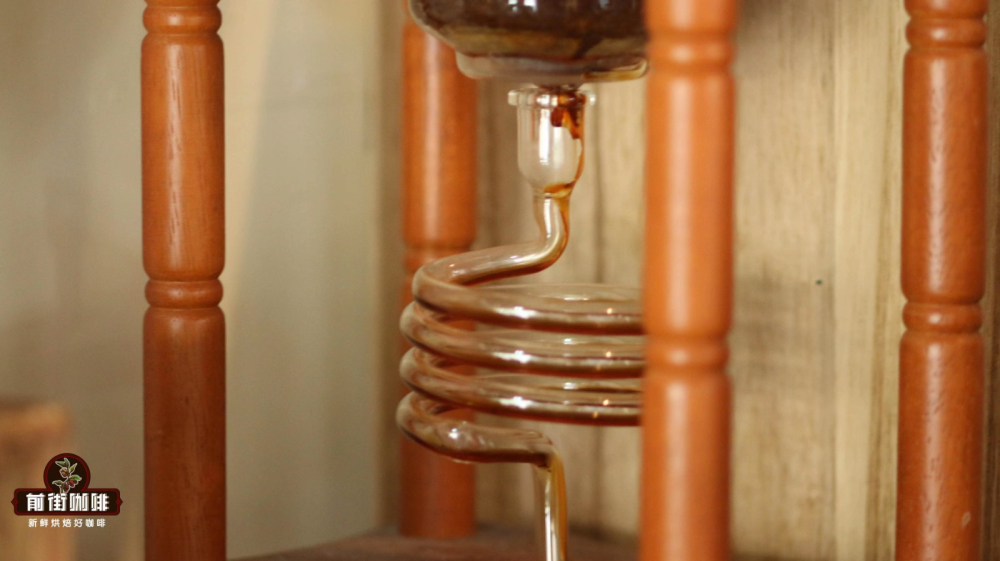
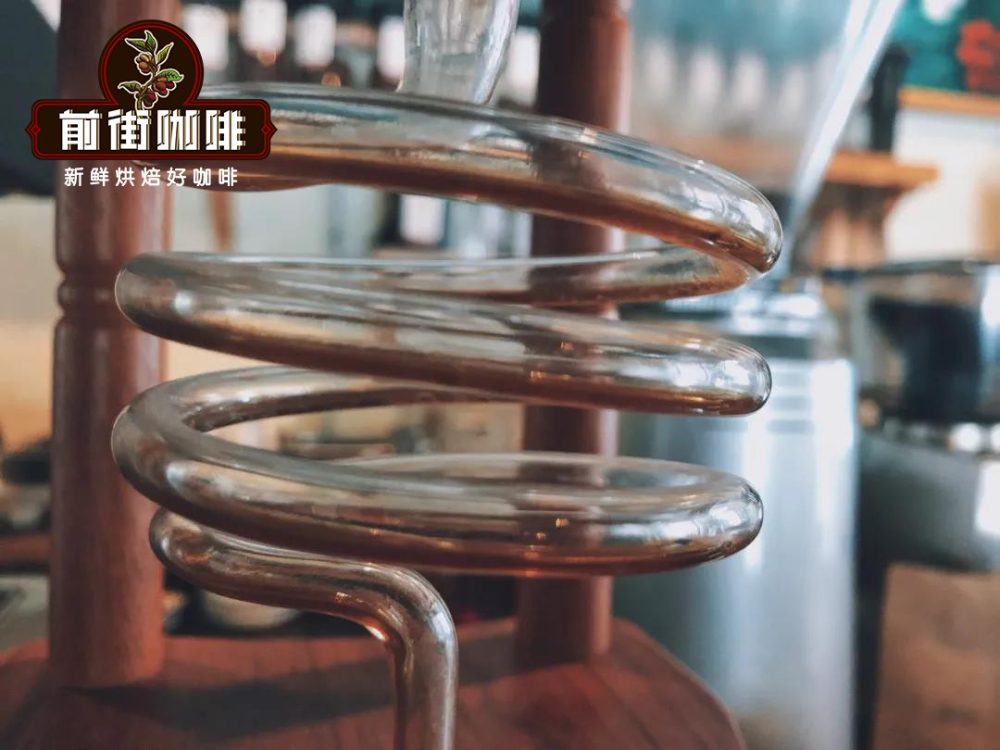
Ice drip coffee originated in Europe, and because the coffee distiller was a Dutch invention it is sometimes called Dutch coffee, distilled coffee or water-drip coffee. It relies on gravity and the natural permeability of the coffee bed rather than pressure, and it takes a long time to make. The usual setup is a three-part tower: an upper vessel for ice water, a middle vessel holding the grounds, and a lower vessel for the finished coffee. Ice water drips drop by drop onto the grounds and slowly extracts coffee that collects below. The whole process generally runs 6 to 8 hours.
Because it is extracted drop by drop, it is a coffee brewed with time. Different water temperatures produce different cups, and at low temperatures the astringent compounds in coffee are far less likely to dissolve. After the long cold extraction the liquid is refrigerated to rest. Slightly rested ice drip coffee takes on a faint fermented aroma and a richer texture.
How to Enjoy Ice Drip Coffee
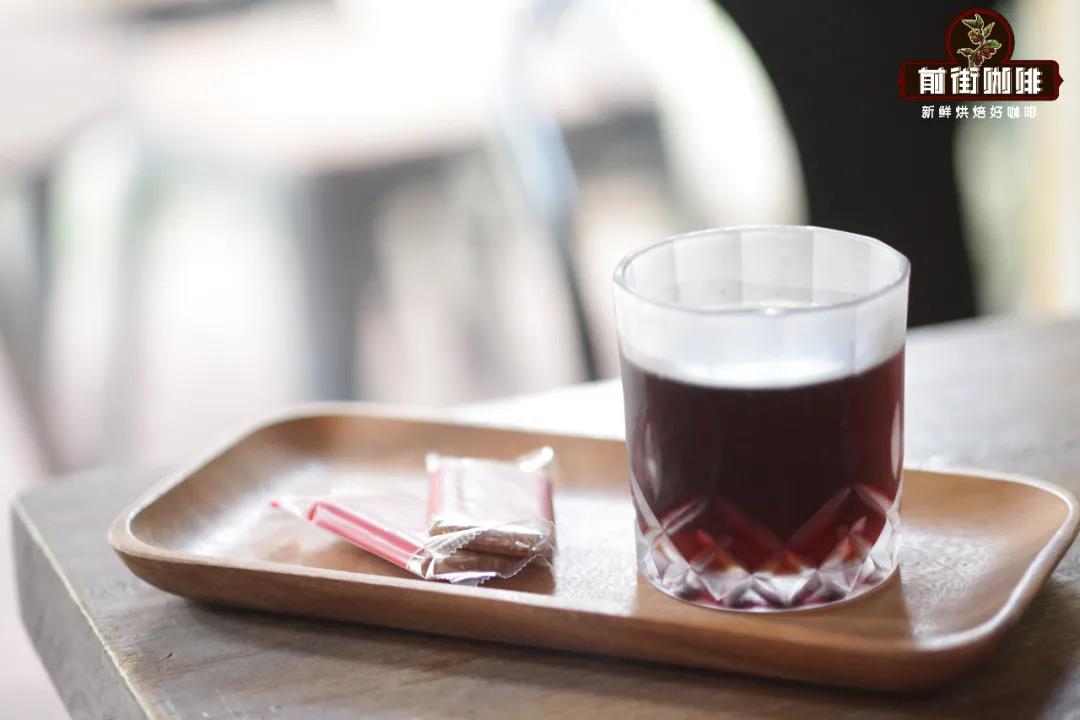
Pour-over can be drunk the moment it is brewed, but ice drip should not be. Because it never goes through a heating stage, and because extraction is so slow, many flavour molecules are pulled out but not fully released. Once extraction is complete, transfer the coffee to a sealed bottle and refrigerate it for 12 to 24 hours. Carbon dioxide builds pressure inside the bottle and helps those flavour molecules open up, which is why ice drip generally tastes richer the longer it rests.
It cannot rest indefinitely, though. FrontStreet Coffee does not recommend keeping ice drip for a week, because bacteria in the air or in the bottle make the coffee hard to vouch for after extended storage. The recommended window is within 5 days. Ice drip older than 5 days is not worth drinking just to avoid waste; at that point it offers nothing.

Is Ice Drip Coffee High in Caffeine?
Many people assume that because ice drip uses cold water the caffeine must be low, while others reason that because it steeps so long it cannot be low. FrontStreet Coffee would say both arguments have something to them. Cold water does dissolve caffeine poorly, since caffeine is extracted most readily above 80°C. But the small amount that cold water does pull out accumulates over a very long extraction, so the total is not to be dismissed.

Caffeine content also depends heavily on the beans themselves, whether Robusta or Arabica, and on the specific beans a cafe uses, the drip interval and the total extraction time, all of which shift the final figure considerably. For anyone genuinely sensitive to caffeine, decaffeinated coffee is the safer route, and FrontStreet Coffee carries a Colombian Swiss Water Process decaf.
FrontStreet Coffee's Ice Drip Method
1. FrontStreet Coffee brews ice drip at a 1:10 ratio, meaning 60 grams of ground coffee extracting 600 milliliters of coffee.
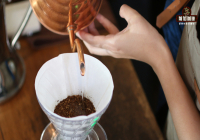
2. Place a circular filter paper in the bottom of the grounds cup and wet it so it adheres to the wall, then add 60 grams of coarsely ground coffee, about the texture of coarse sugar, and level the surface. You can also let the weight of a tamper lightly settle the bed for an even surface.
3. Remember to place a filter paper on top of the grounds as well. Its tension spreads the water evenly; without it, dripping water will bore a hole through the bed over several hours.
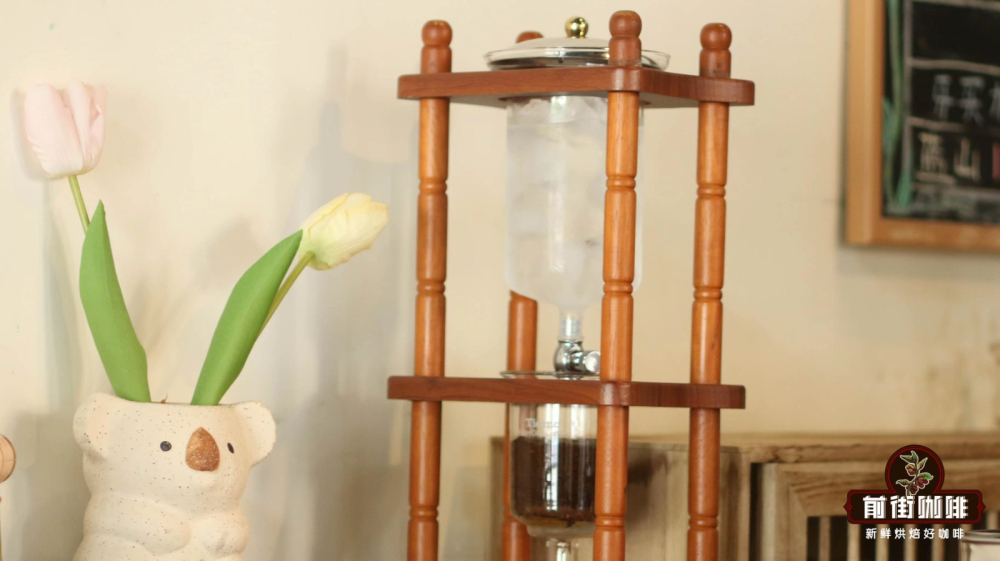
4. Pre-soak with ice water. This is much like the bloom in pour-over and improves extraction efficiency and consistency. Starting the drip on dry grounds can wet the bed unevenly, over-extracting part of the coffee while other parts never take part at all.
5. Fill the water container with a 1:1 ice-and-water mixture and set the regulator valve to roughly 7 drops per 10 seconds.
6. When brewing is complete, pour the coffee into a sealed glass bottle and refrigerate it to rest overnight, so the flavours meld and the coffee is easier to drink.

Tasting FrontStreet Coffee's Ice Drip Blend
20 grams of FrontStreet Coffee Honduras Lychee Lan plus 40 grams of FrontStreet Coffee Gesha Village Red Label.
The barrel-processed Lychee Lan combined with natural-processed Gesha Village Red Label produces a faint brandy aroma, plum-like acidity and maple sweetness. The brandy barrel-aged Lychee Lan brings a rich brandy character, a chocolate finish and a honeyed close.

FrontStreet Coffee's natural-processed Gesha Village Red Label offers plum and citrus fruit acidity, carrying maple sweetness and a creamy, smooth mouthfeel.

Brewed as ice drip, the combination gives a faint brandy aroma, rich fruit acidity leading into honeyed sweetness and a creamy smoothness.
FrontStreet Coffee Brewing Notes
Whatever you brew, fresh beans matter. FrontStreet Coffee has always treated freshness as a core part of the process, which is why everything it ships is roasted within 5 days. The resting period is roughly 4 to 7 days, so beans arrive at the customer close to their peak.

Some customers ask FrontStreet Coffee to grind the beans, which is fine, with one caveat: once coffee is ground in advance it no longer needs to rest, because the carbon dioxide building up in the packaging during transit also helps round off the flavours, so you can brew a cup the day it arrives. Ground coffee does need to be used promptly, though, since it oxidises quickly in air and the flavours fade. Buying whole beans and grinding just before brewing is the better route to the full flavour. Today coffee is no longer confined to cafes, and FrontStreet Coffee carries more than fifty single-origin beans from different regions, each with its own flavour, for people brewing at home.
FrontStreet Coffee Recommendation
FrontStreet Coffee's Yirgacheffe Gutingding is one of the most reliable single origins for cold brew. As the most representative African coffee, washed Yirgacheffe brings generous florals and fruit with a clean, bright sweet-tart structure, and its everyday price and versatility mean it works in a pour-over, siphon, French press or cold brew without complaint. Cold-brewed, it shows a distinctly sweet berry character, layers and honey.
FrontStreet Coffee's Ethiopia Huakui is the pick for anyone who wants the florals turned all the way up. Cold extraction intensifies floral and fruit notes while muting woody and roasty ones, and this light-to-medium roast thrives on it. Because it is sun-dried in Ethiopia, the beans absorb a great deal of sweetness from the fruit, so the cold brew shows magnolia, creamy strawberry, dried mango, guava and black tea.
If you want a cold brew that drinks like juice, FrontStreet Coffee's Kenya Cherry Tomato is hard to beat. Grown in Sika, Kenya, from SL28 and SL34, it is processed with the country's distinctive 72-hour double washed method, and a light-to-medium roast turns the precursors into complex aromatics. Low in bitterness and full of acidity, it layers cherry tomato, snow pear, black plum and sour plum, and only gets more refreshing over ice.
Cold brew also consumes more coffee than pour-over, so FrontStreet Coffee suggests keeping an eye on value. One popular approach is to blend an expensive lot down: take FrontStreet Coffee's Colombia Sidra, for its complex passion fruit, grape, apricot and dried-fruit sweetness, and add Costa Rica Tarrazu at a 1:2 ratio, which keeps the Sidra's fruit and floral lift alongside Tarrazu's clean citrus acidity while improving the cost per cup.
Important Notice :
FrontStreet Coffee is a long-established specialty coffee roaster in Guangzhou China, selling freshly roasted beans from its own farm in Yunnan as well as dozens of carefully selected single-origin beans from around the world for both pour-over and espresso. The products deliver consistently excellent quality and great value, with shipping within 24 hours. Guangzhou's FrontStreet Coffee shop is recommended by many coffee lovers, and the beans are now available online at the Tmall 。
FrontStreet Coffee has moved to a new address:
FrontStreet Coffee Address: 315,Donghua East Road,GuangZhou
Tel:020 38364473
 Scan and follow the En Gafei WeChat official account. Please indicate that the reprint comes from "En Gafei".