Introduction to Golden Cup Extraction Rate Theory for Pour-Over Coffee | How to Calculate Pour-Over Coffee Extraction Rate Tutorial
Let's get practical and start with how to calculate extraction rate for pour-over coffee.
You might wonder why extraction rates need to be discussed separately for different brewing methods.
In the world of coffee, standards matter enormously. They act as a measuring stick, giving newcomers a reliable reference point.
Every experiment and preparation at FrontStreet Coffee is grounded in Golden Cup theory.
That said, it is only a reference—not an absolute truth.
FrontStreet's view is this: if a coffee technically lands within the "Golden Cup" range but doesn't taste particularly good, there's no reason to cling to the theory. A degree of flexibility is what lets customers at FrontStreet Coffee drink coffee they genuinely love.
Whether we are preparing coffee for the shop or for a competition, the goal should always be to develop brewing methods that let each coffee show off what makes it unique.
That means understanding how different coffees taste, and what changes occur at each stage of extraction. How will concentration and flavor shift? These are all essential questions.
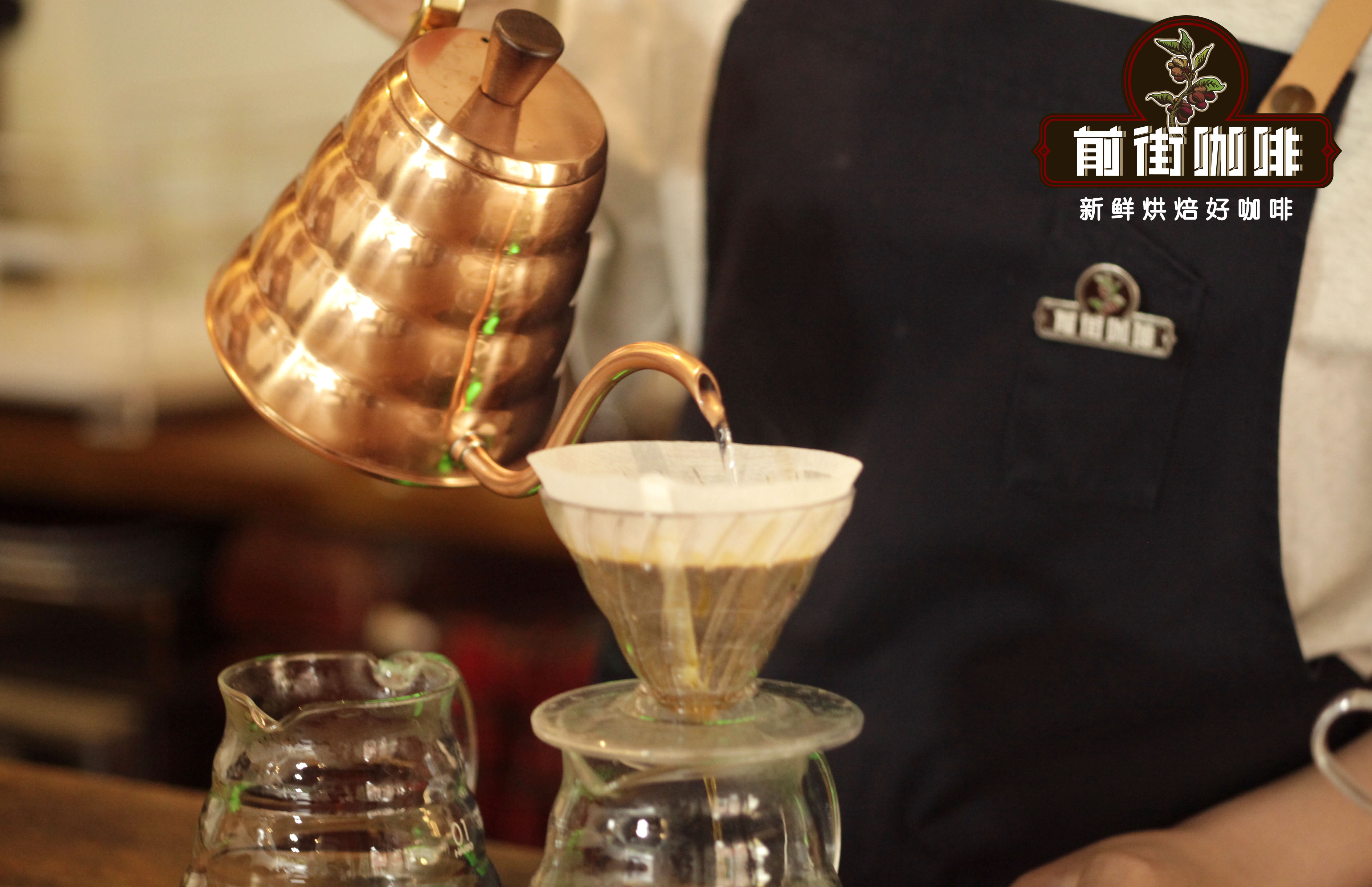
/ Coffee Extraction Fundamentals /
Coffee beans are not fully water-soluble. Of everything in a coffee bean, only about 30% can dissolve in water; the remaining 70% is insoluble material such as woody fiber.
So the maximum possible extraction rate is 30%. And of those water-soluble substances, some are ones we'd rather not have in the finished cup. (A real dilemma!)
Extraction rate refers to the proportion of coffee substances dissolved in the water relative to the total dry coffee used:
In other words: weight of dissolved coffee substances ÷ weight of the original coffee beans (grounds) = extraction rate
(Make sense? Good—let's keep going!)
For example:
Suppose you brew with 15 grams of grounds, then dry the spent grounds completely and weigh them at 12.3 grams. The weight of dissolved substances is therefore 2.7 grams.
The extraction rate of this coffee is 2.7 ÷ 15 = 0.18 (18%).
The extraction rate calculation we use day to day is tied to coffee concentration.
For that calculation, you first need a concentration measuring instrument (a TDS meter).
/ Concentration vs. Extraction Rate /
Concentration is the proportion of dissolved coffee substances relative to the total coffee liquid in the cup.
Extraction rate is the proportion of dissolved coffee substances relative to the total weight of the coffee beans.
(One refers to the coffee liquid, the other to the beans or grounds.)
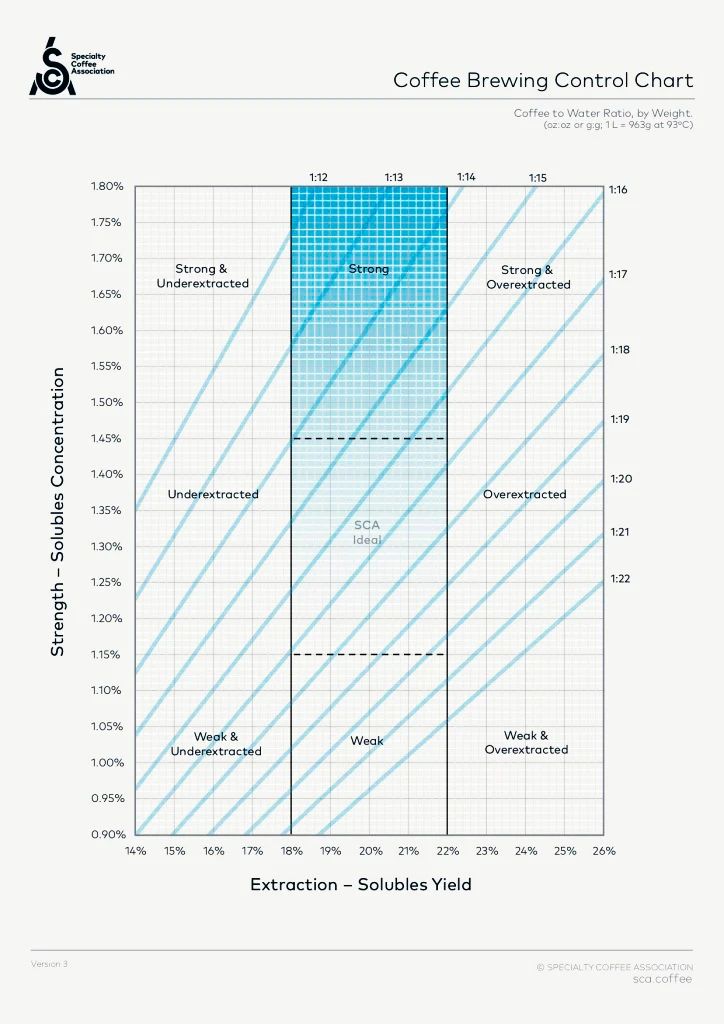
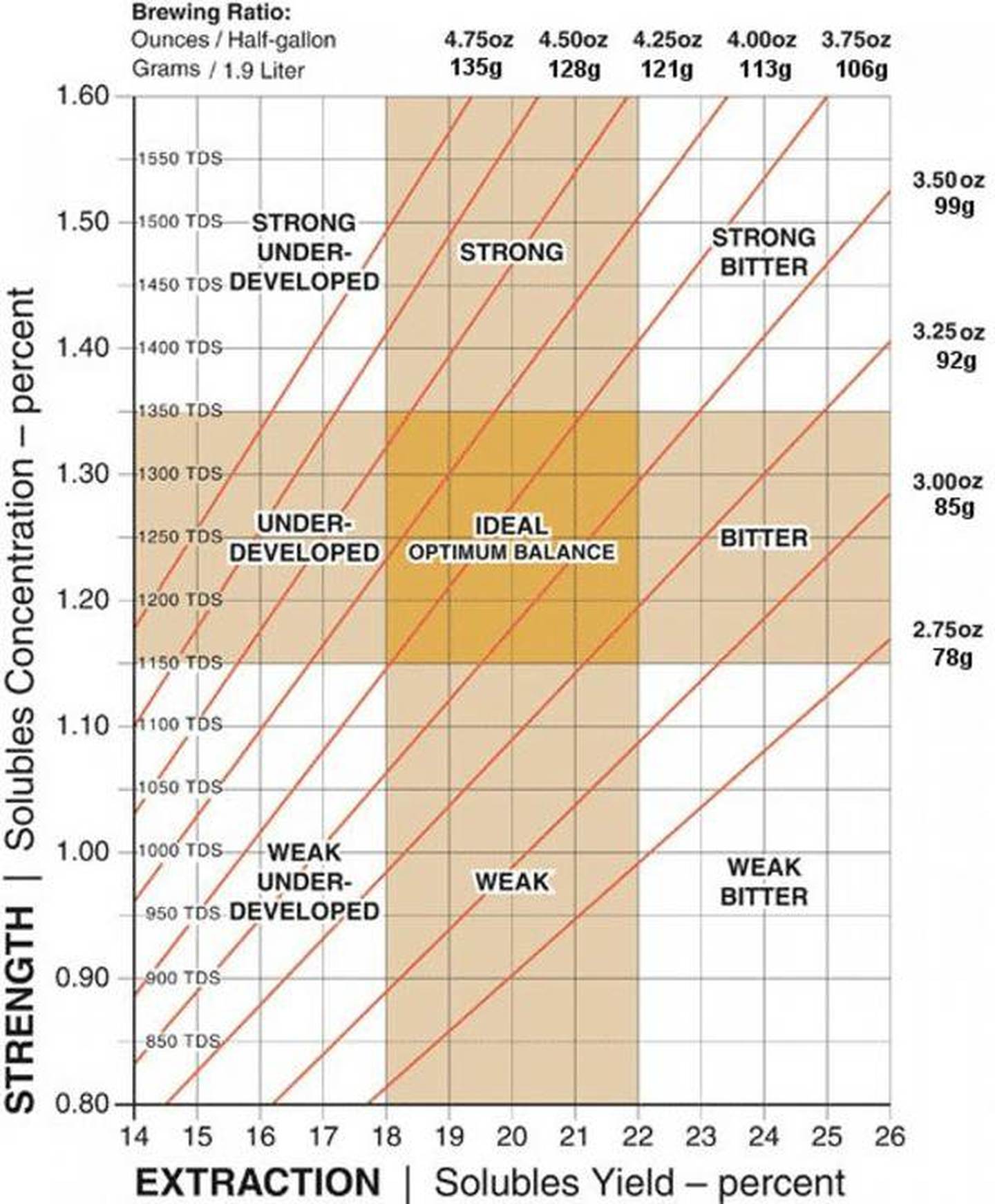
The most famous expression of the Golden Cup standards is the Golden Cup extraction chart: the horizontal axis plots the extraction rate of the grounds, the vertical axis the concentration of the coffee liquid, and the diagonal lines represent the coffee-to-water ratio.
From these relationships we get:
Coffee liquid concentration = weight of dissolved coffee substances ÷ weight of coffee liquid
Coffee extraction rate = weight of dissolved coffee substances ÷ weight of coffee beans (grounds)
Combining the two formulas gives us the working formula for extraction rate:
Coffee extraction rate = coffee liquid concentration × coffee liquid weight ÷ coffee bean (ground) weight
One important caveat: in drip brewing, the grounds absorb roughly twice their own weight in water, so:
Coffee liquid weight = water poured − 2 × coffee bean (ground) weight
For example:
Brew with 15 grams of grounds at a 1:16 ratio and measure the concentration at 1.37%. The extraction rate is then 1.37% × (240 − 2 × 15) ÷ 15 = 19.18%
FrontStreet Coffee uses this framework to standardize its brewing parameters.
Every newly released lot goes through adjustments in roasting, cupping, and pour-over brewing. The direction of the pour-over adjustments is guided by TDS readings. If you're simply enjoying coffee at home, there's no need to buy specialized instruments—you can judge concentration by taste alone.
FrontStreet Coffee · Further Reading
Different countries define Golden Cup extraction standards differently. Here is FrontStreet Coffee's compilation of the various national standards:
Specialty Coffee Association of America (SCAA)
Extraction rate (18%-22%) Concentration (1.15%-1.35%)
Specialty Coffee Association of Europe (SCAE):
Extraction rate (18%-22%) Concentration (1.2%-1.45%)
Norwegian Coffee Association (NCA):
Extraction rate (18%-22%) Concentration (1.3%-1.55%)
Brazilian Coffee Association (ABIC):
Extraction rate (18%-22%) Concentration (2%-2.4%)
As you can see, the definitions differ slightly from country to country. Requirements for concentration vary, but one thing is universally agreed: an extraction rate between 18%-22% is currently held to produce the most delicious coffee.

/ What Counts as Over-Extraction? /
Everyone has been there: you sip a cup, wince, and declare, "That's bitter—it's over-extracted!"
FrontStreet Coffee's position is that bitterness does not necessarily mean over-extraction.
Setting aside individual differences in bitterness sensitivity, even when an unusual burnt or bitter note shows up, we shouldn't pin everything on "over-extraction."
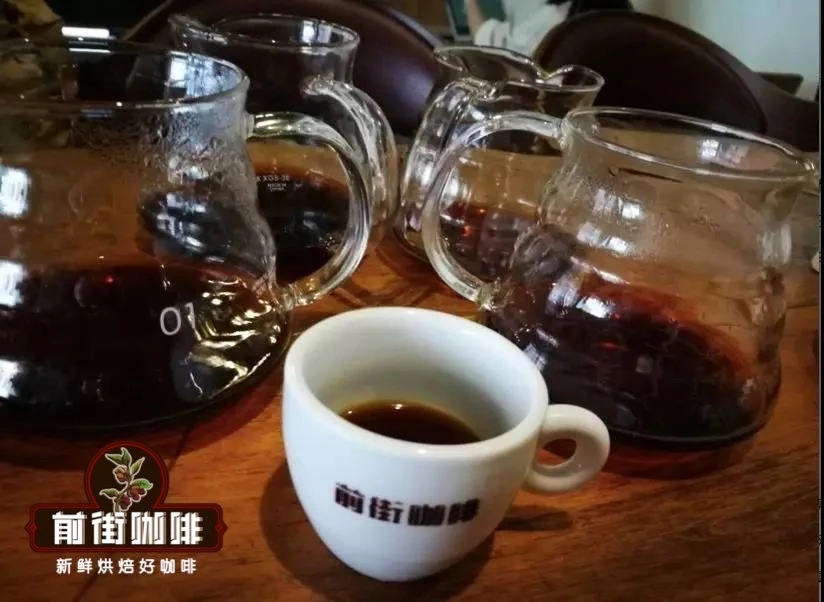
Strictly speaking, "over-extraction" is a term defined against the Golden Cup standard—it means exceeding the extraction range the guidelines specify.
Under the Golden Cup standard, coffee extracted within the 18-22% range tastes comparatively good.
Above 22%, unpleasant bitter compounds may start to come out.
So over-extraction, properly understood, describes coffee whose extraction rate exceeds 22%.
Coffees extracted well past 22% do tend to show burnt, bitter flavors, and over time "bitter" and "over-extracted" became shorthand for each other.
/ A Practical Demonstration with Ethiopian Coffee /
Everything above applies directly to pour-over coffee. Next, FrontStreet Coffee demonstrates with its Ethiopia Guji 4.0. You'll need:
Standard pour-over equipment, a coffee concentration meter (ExtractMojo), a titration tube, and clean water.
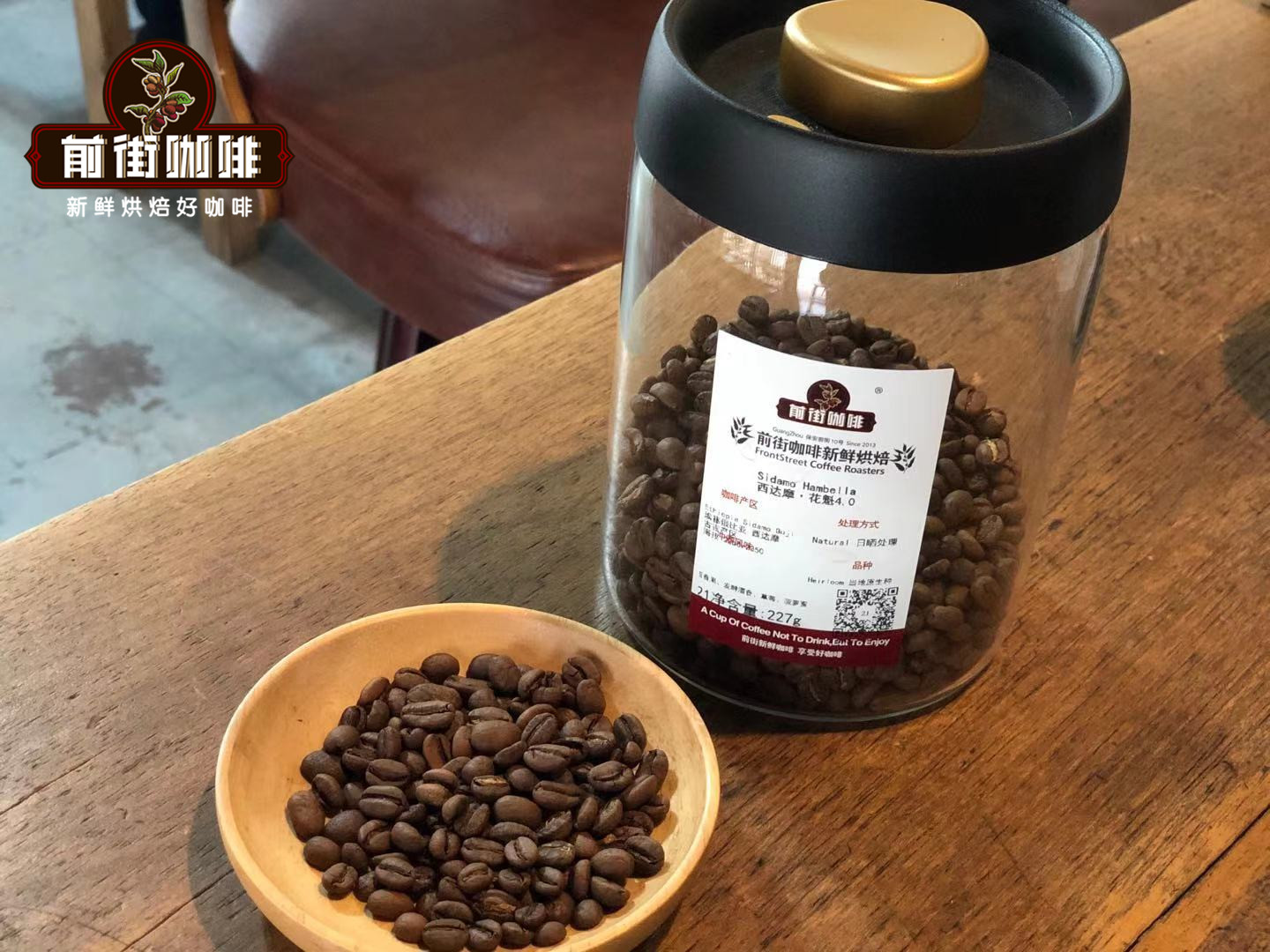
FrontStreet Coffee · Ethiopia Sidamo Guji 4.0 Coffee Beans
Country: Ethiopia | Region: Sidamo | Altitude: 2250-2350m
Variety: Local indigenous varieties | Process: Natural
Flavor: Rose, creamy strawberry, citrus, passion fruit, oolong tea
FrontStreet Coffee · Brewing Recipe
Coffee dose: 15g
Ratio: 1:15
Grind size: Fine (80% pass-through on a #20 standard sieve)
Water temperature: 90°C
Dripper: V60
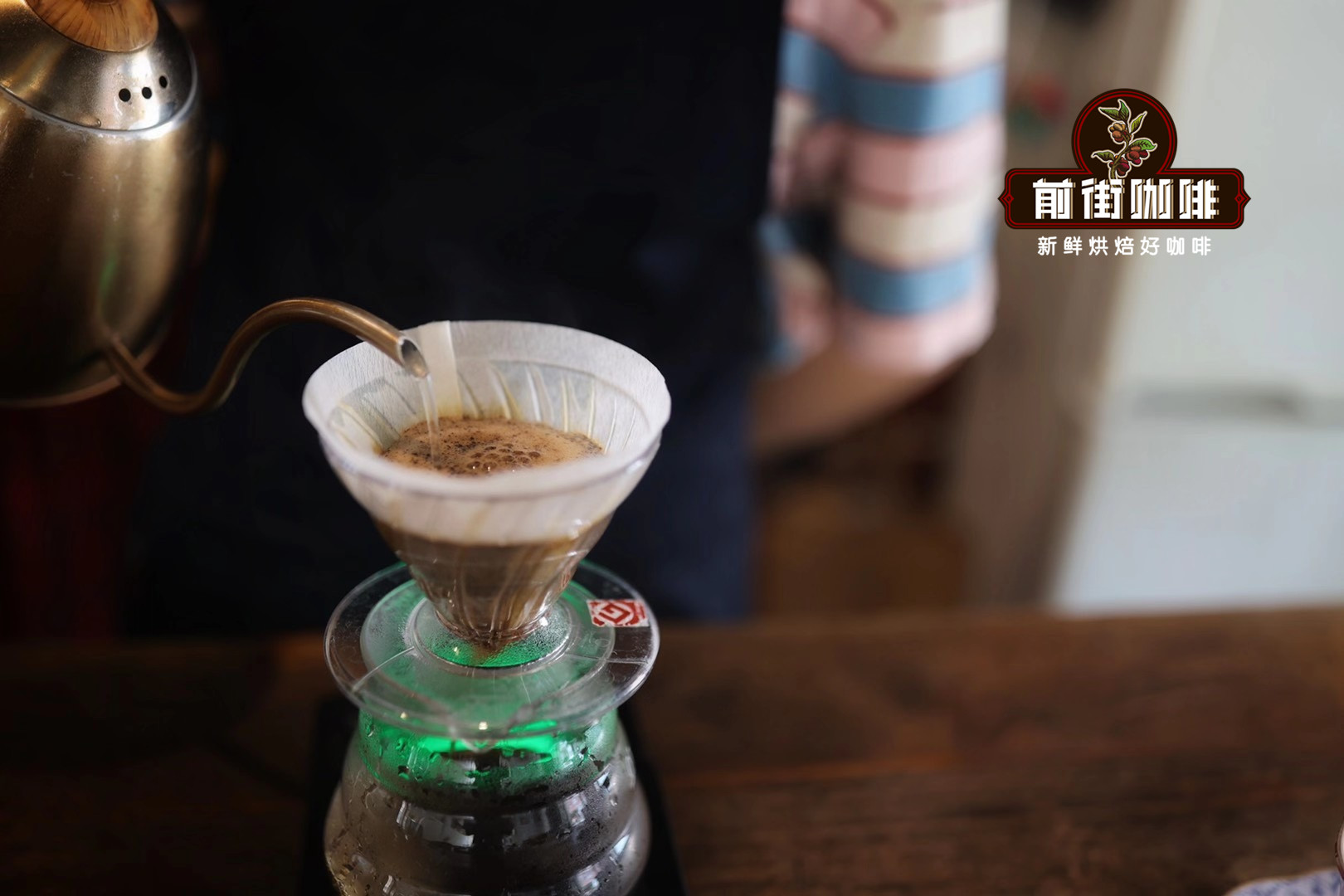
FrontStreet Coffee · Brewing Notes
First pour: 30g of water for a 30-second bloom.
Second pour: 95g (scale reads about 125g), finishing around the 1-minute mark, followed by a 10-second pause.
Third pour: the remaining 100g (scale reads about 225g), finishing around 1 minute 40 seconds.
The drawdown completes at about 2 minutes; remove the dripper and the extraction is done.
/ How to Measure Coffee Concentration /
• First calibrate the concentration meter, zeroing it with pure water;
• Stir the freshly brewed coffee and let it cool, draw a sample with the titration tube, and place it in the meter. The sample must be at room temperature;
• Press the measure button and take several readings until the value stabilizes.
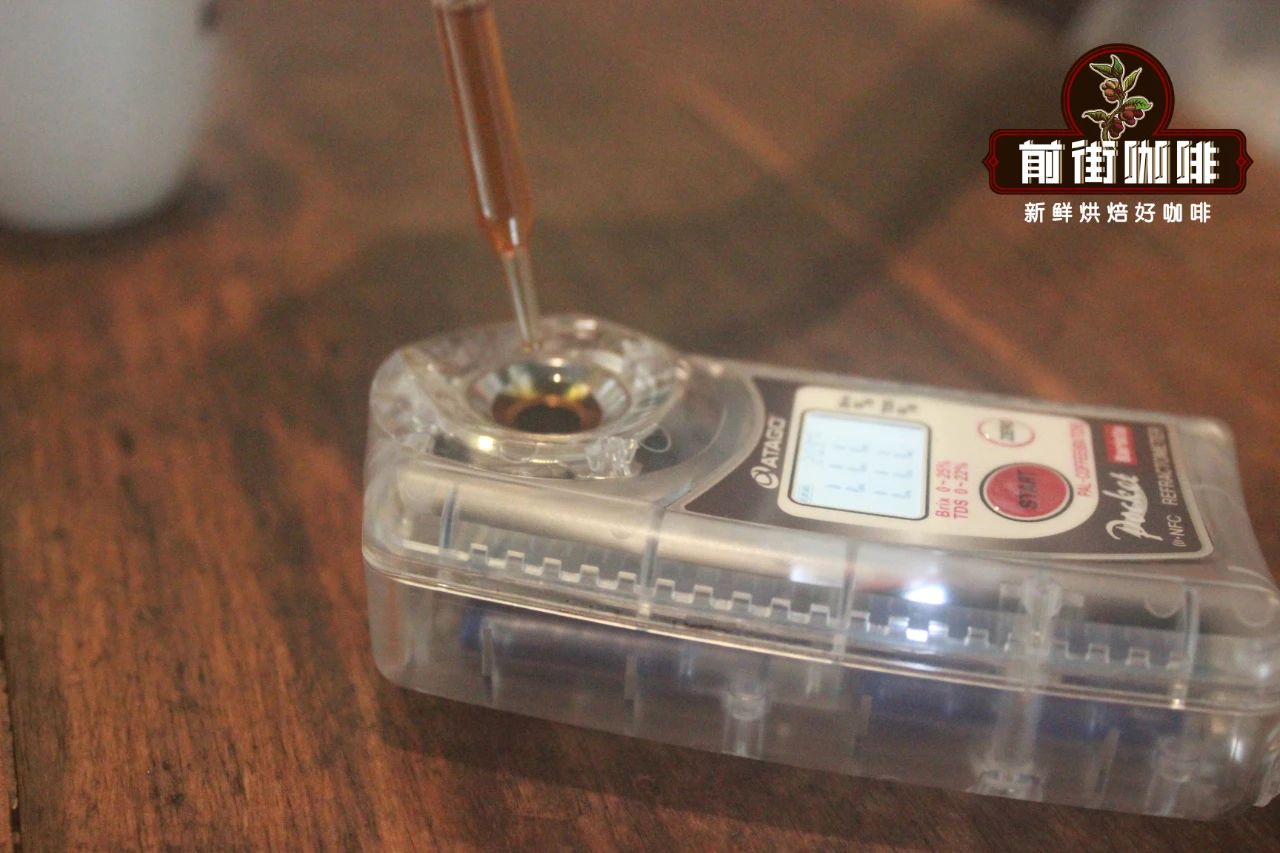
Here FrontStreet Coffee assumes the grounds absorb water at a 1:2 ratio.
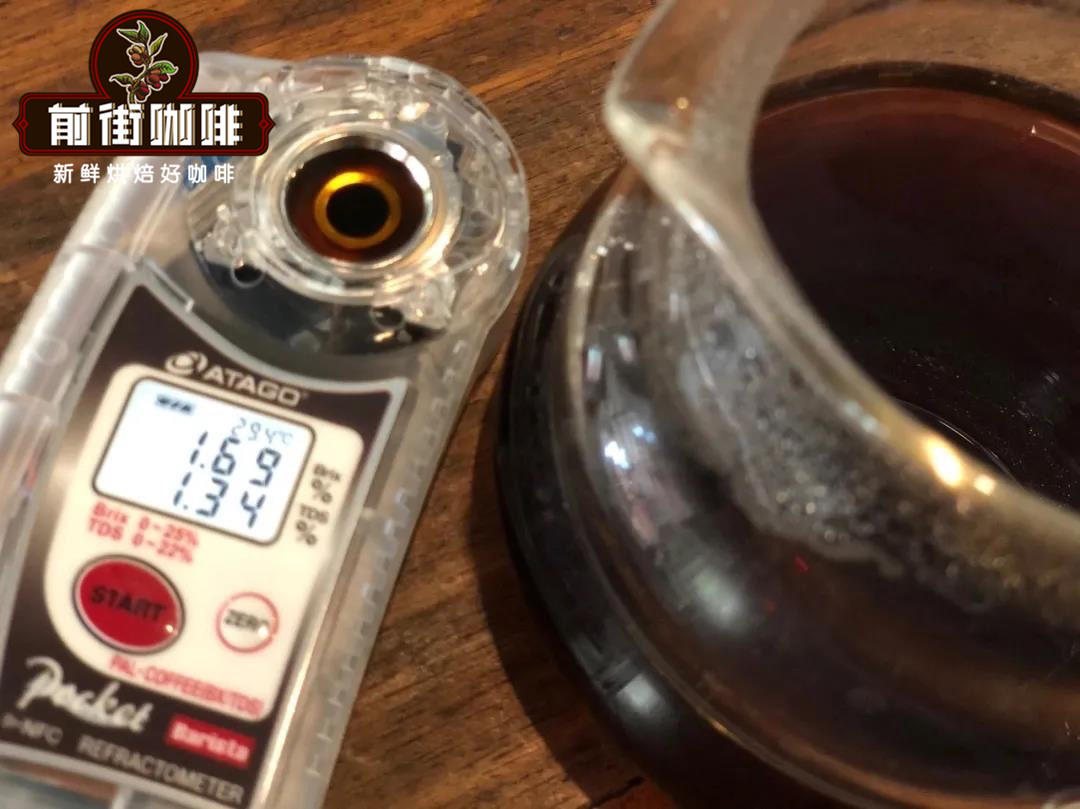
So we estimate the coffee liquid at 225 − (15 × 2) = 195g, and measure a concentration of 1.45%.
The extraction rate is therefore 1.45% × 195 ÷ 15 = 18.85%
From this, we can describe the brew as a pour-over coffee at 1.45% concentration and an 18.85% extraction rate.
In other words: slightly high concentration, moderate extraction. That data, along with the ratio and other variables, tells us how to adjust the brew.
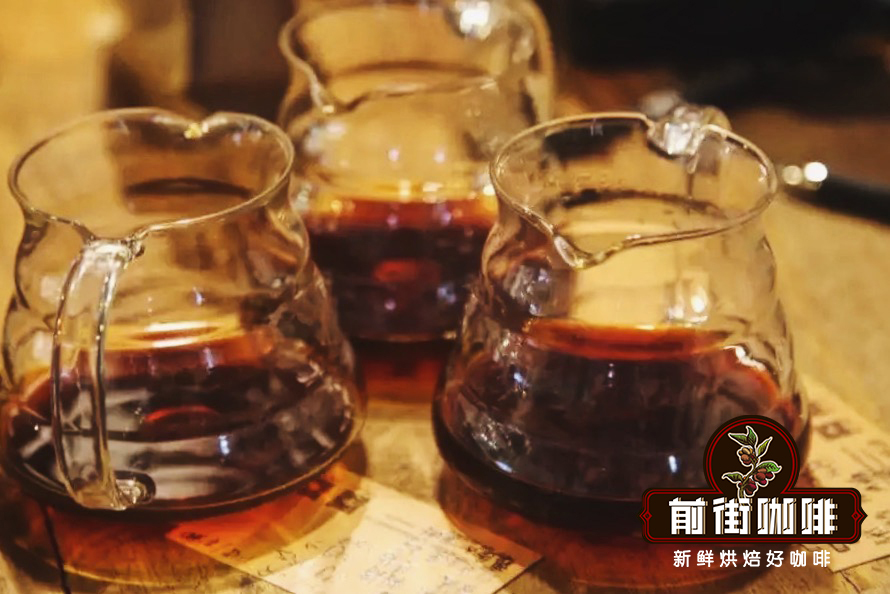
Of course, Golden Cup is only a reference system—everyone's palate is different.
A pour-over that matches the Golden Cup numbers isn't automatically a delicious pour-over.
So FrontStreet Coffee's real advice is simply this: brew more, taste more, and trust your own judgment.
One more thing: the coffee-to-water ratio has an outsized effect on concentration. Too much water and the brew comes out thin and characterless;
too little water pushes you into over-extraction, leaving the coffee bitter and hard to drink. FrontStreet Coffee has settled on its own pour-over ratios through repeated testing, which we share below.
/ Pour-Over Coffee · Coffee-to-Water Ratios /
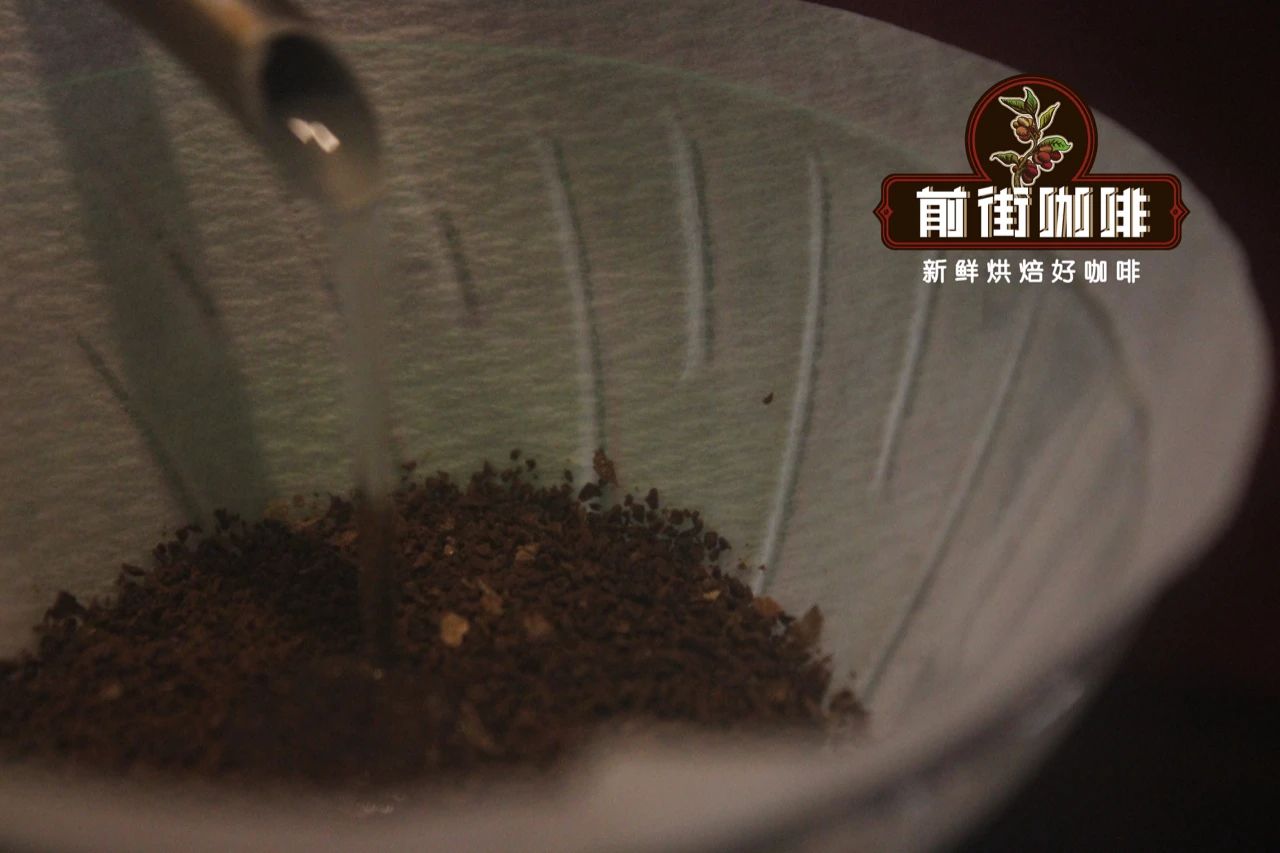
Based on the SCA Golden Cup extraction theory, the taste differences across pour-over ratios work out as follows:
Rich flavor 1:10-1:11 (equivalent to a Golden Cup ratio of 1:12.5-1:13.5)
Balanced flavor 1:12-1:13 (equivalent to a Golden Cup ratio of 1:14.5-1:15.5)
Light & refreshing 1:14-1:16 (equivalent to a Golden Cup ratio of 1:16.5-1:18.5)
A coffee-to-water ratio of 1:14.5-1:15.5;
easily lands you in the golden zone of an 18%-22% extraction rate and 1.15%-1.35% concentration.
That is why FrontStreet Coffee always recommends brewing at 1:15.
We arrived at this parameter through repeated verification. Although 1:12-1:15 is merely a suggested range, FrontStreet Coffee also tested parameters well outside it.
Drip coffee brewed at 1:20 tastes very thin, while 1:10 is very intense;
through adjustment experiments we found 1:15 to be the ratio that best suits most coffee beans.
Once the ratio is settled, decide on the dose.
FrontStreet Coffee's single serving is 15g of grounds with 225g of water—just right for one person.
That's FrontStreet Coffee's rundown of Golden Cup extraction standards and pour-over ratios.
Of course, some people prefer 1:14 or 1:17, and that's perfectly fine. What matters is whether the cup works for you.
What FrontStreet Coffee offers is simply a widely acceptable parameter to use as a starting point.
We hope this helps coffee lovers make sense of the topic.
FrontStreet Coffee Recommendation
Good extraction starts with a good dripper, and for newcomers the V60 remains the default recommendation. Designed by Japan's Hario—founded in Tokyo in 1921 as a maker of heatproof laboratory glassware—the V60 was redesigned in 2004 into the form we know today and named for its distinctive 60° cone. The cone and single large outlet force the water toward the center before it drips through, extending contact between water and grounds so aromatics and flavor extract fully; the fast flow rewards good pour control with remarkably three-dimensional aromatics and lively acidity. That is why floral-and-fruit coffees suit it so well: FrontStreet's Gelana cooperative lot from Yirgacheffe with its classic citrus and white florals, the tropical-fruit-forward natural Huakui, and raisin-toned lots like Mozart all shine through a V60.
As for the beans, FrontStreet's Ethiopia Guji 4.0 used in the demonstration above—natural process, grown at 2,250-2,350 meters in Sidamo, with rose, creamy strawberry, citrus, passion fruit, and oolong tea notes—is an excellent place to practice. Brew it at 90°C, 15g of coffee at 1:15, with a 30-second bloom and three pours, and you'll have a cup that's both delicious and measurable.
Important Notice :
FrontStreet Coffee is a long-established specialty coffee roaster in Guangzhou China, selling freshly roasted beans from its own farm in Yunnan as well as dozens of carefully selected single-origin beans from around the world for both pour-over and espresso. The products deliver consistently excellent quality and great value, with shipping within 24 hours. Guangzhou's FrontStreet Coffee shop is recommended by many coffee lovers, and the beans are now available online at the Tmall 。
FrontStreet Coffee has moved to a new address:
FrontStreet Coffee Address: 315,Donghua East Road,GuangZhou
Tel:020 38364473
 Scan and follow the En Gafei WeChat official account. Please indicate that the reprint comes from "En Gafei".