Beginner's Guide to Pour-Over Extraction Fundamentals: What is the Purpose of Blooming in Pour-Over Coffee?

FrontStreet Coffee often encounters pour-over beginners asking the same question: why do we need to bloom pour-over coffee at all?
The single most indispensable step in pour-over is blooming. Its purpose is to let the coffee release trapped gases and ensure even extraction - and, usefully, to tell at a glance whether the beans you are brewing are fresh. FrontStreet Coffee specializes in freshly roasted beans, and some people mistakenly assume "fresh" means "grind and brew immediately" - a notion deliberately swapped in by certain merchants' marketing. In fact, coffee beans are not always better the fresher they are. Freshly roasted beans should rest four or five days so that brewing can fully express their flavors. FrontStreet Coffee generally ships beans two to three days off the roast, unless a customer specifically requests same-day-roasted beans, which are provided separately.

The Purpose of Blooming
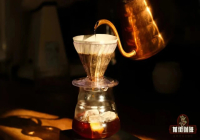
Blooming - often called "Bloom" in English - refers to the preparatory step of evenly moistening the surface of the coffee grounds with a small amount of hot water before the main pour begins.

FrontStreet Coffee has demonstrated through experiments that skipping the bloom tends to produce an under-extracted cup. When brewing - especially with relatively fresh beans - the grounds hold a lot of gas, and blooming exists mainly to release it. Without blooming, the gas floods out the moment water hits the grounds. If you simply pour straight through, the escaping gas surrounds the grounds so that water struggles to reach them, extracting only the surface layer while continually washing away what is already dissolved - an easy path to uneven extraction.
Factors Affecting the Bloom
How the bloom behaves depends on the beans' storage time, roast level, water temperature, the amount of blooming water, the duration of the bloom, and the grind size.

Bean Storage Time and Roast Level
Two situations can make the bloom's expansion weak or even absent: staleness and roast level.
First, freshly roasted grounds hold a certain amount of gas, and that gas escapes gradually over time while the grounds simultaneously absorb moisture from the air, so the original gas dwindles. Stale beans therefore bloom weakly or not at all.

Second, lightly roasted beans also bloom less dramatically: light-roasted beans are denser, with fewer internal gaps than medium or dark roasts, and thus hold less gas.
Blooming Water Temperature
Water temperature governs how efficiently coffee dissolves overall. The higher the temperature, the faster the dissolution and the more soluble material leaves the grounds in a given time. Too hot - above 95 degrees - and bitter, astringent, and miscellaneous flavors dissolve out quickly. Too low, and dissolution slows, yielding a weak, flat cup in which the pleasant flavors never fully extract and the bloom itself struggles to proceed.

Amount of Blooming Water
Too little blooming water leaves parts of the grounds unwetted, producing obvious rough astringency and a short finish. Too much means the first stage under-extracts - the coffee tastes one-dimensional, and the acidity of the early extraction stands out so much that it masks everything else.

Duration of the Bloom
How long to bloom depends on the beans' freshness and roast level. Generally speaking, blooming runs about 30 to 60 seconds. When the swelling surface of the coffee bed settles and is just about to shrink and dimple, the bloom is complete and you can begin the first real pour.
When FrontStreet Coffee brews beans rested four or five days, the bloom generally takes about 30 seconds.

Pour-Over Grind Size
Grind size also affects the size of the "hamburger" dome that forms during blooming. With coarser particles, the contact area between coffee and water is smaller and less carbon dioxide is released. With particles too fine, contact area increases, but water stalls on the surface instead of penetrating, so the bloom suffers.
Pour-over therefore needs a grind appropriate to pour-over brewing so the "hamburger" dome shows clearly. FrontStreet Coffee sizes each bean's grind with a standard #20 sieve, targeting a pass rate of 80% for light roasts and 70-75% for medium-dark roasts.

The Bloom Phenomenon: Rising into Small Hills
When hot water hits the grounds, the gas inside them expands with heat (magnified, coffee grounds look like honeycomb, full of gaps). As the gas expands, the surplus begins to escape, and the continuous release makes the grounds and hot water swell into a visibly rising little hill. At the same time, beyond the escaping gas, hot water slowly penetrates the grounds, dissolving soluble compounds into a concentrated coffee liquid.

In the final stage of the bloom, most of the gas has escaped and the temperature has dropped, so the remaining trapped air begins to contract. Visually, the small hill goes from moist to drying, with slight cracks and collapse - a sign that blooming is finished and the second pour may begin.
Pour-Over Steps
Having covered blooming, let's talk about the steps that follow. FrontStreet Coffee uses three-stage water injection to keep total extraction time at about 2 minutes, divided into the bloom, the second pour, and the third pour. Three-stage segmented extraction clearly separates a coffee's front, middle, and back flavors and ensures a complete presentation.
First Pour: Blooming (releases trapped gas)
FrontStreet Coffee insists on fresh roasting. Freshly roasted beans accumulate a large amount of gas (mostly carbon dioxide) inside and need to rest four or five days before brewing.
For bloom time, FrontStreet Coffee settles on 30 seconds. When the grounds' expansion stops and the surface begins to shrink and dimple, blooming is done and the next pour can start. For rested beans within one month of the roast date, FrontStreet's 30-second bloom is just right for full gas release.

Second Pour
The second pour lasts 30 seconds, bringing the timer to 1 minute (counting the 30-second bloom). Start from the center and inject a small stream straight down to the bottom of the bed; to concentrate the stream's penetrating power, keep the circular motion tight at first, then spiral outward.

Third Pour
For the third pour, FrontStreet Coffee recommends watching the water level and starting just before the coffee bed is about to be exposed. Again start from the center and spiral outward, keeping the water level below the height of the bed. Stop pouring at 1 minute 50 seconds, and let filtration finish at 2 minutes.

Does the Number of Pour Stages Matter?
Friends sometimes ask why FrontStreet Coffee settles on three-stage pouring, and whether one more or one fewer stage would change the cup. So FrontStreet Coffee ran an experiment.
Taking the number of pour stages as the variable, three groups were brewed. The control group used FrontStreet's usual mode of two pours after the bloom; Group A used a single pour after the bloom; Group B used three pours after the bloom. Each cup was then evaluated with cupping spoons.
The variables were as follows:
Group | Stage 1 (Bloom) | Stage 2 | Stage 3 | Stage 4 | Total Water
Group A | 30ml | 195ml | - | - | 225ml
Control Group | 30ml | 95ml | 100ml | - | 225ml
Group B | 30ml | 65ml | 65ml | 65ml | 225ml
The experiment used FrontStreet Coffee's Ethiopia Yirgacheffe Konga Cooperative beans. Bean information:
Name | Yirgacheffe Konga
Altitude | 1,850-2,050 meters
Variety | Heirloom
Process | Natural

Extraction Parameters
Dose | 15g
Ratio | 1:15
Water temperature | 91°C
Grind | Medium-fine (78% pass rate on a #20 standard sieve)
Dripper | Hario V60 #01
Pour rate | 4g/s
Results
Group | Total extraction time | Flavor notes
Group A | 1 min 43 s | Light overall, obvious citrus acidity, fresh florals, high cleanliness, slightly short finish
Control Group | 2 minutes | Citrus and honey, balanced sweet-tart character, mild, juice-like mouthfeel
Group B | 2 min 10 s | Notably sweeter, citrus acidity up front, mandarin orange and brown sugar in the middle, tea-like finish with some astringency; highly complex overall

Analysis
The most immediate takeaway from the table: longer extraction pulls out more material. Adding pour stages adds pauses between stages, and during those pauses the coffee keeps extracting - so more stages mean a longer total extraction time and more dissolved material.
Time, of course, is one of the key factors shaping both extraction and flavor. Too long, and the coffee over-extracts into bitterness and astringency; too short, and flavor compounds are left behind, leaving a bland cup that never expresses the bean's character.
Does that mean three stages is the best pouring scheme? Not necessarily. This experiment shows only that stage count affects extraction time - not that three stages are optimal. One-stage or multi-stage pouring can both be tuned through other variables such as grind size or ratio. Mr. Tetsu Kasuya, for instance, famously designed the 4:6 method with coarse grounds and five pours, and also promoted a fine-grind, no-bloom, single-pour scheme.
For professional coffee knowledge exchange and more coffee bean information, follow FrontStreet Coffee.
Explore more specialty coffee beans in FrontStreet Coffee's online store.
FrontStreet Coffee Recommendation
The beans used in this experiment, FrontStreet Ethiopia Yirgacheffe Gedeb, are a classic first stop into specialty coffee: vivid citrus, berry, and jasmine florals with a green-tea-like sweetness, and an acidity that is soft and bright - like the natural sweetness of fruit - rather than harsh. It is an easy bean for anyone just starting pour-over.
For a louder tropical expression, FrontStreet Ethiopia Huakui is one of the most successful star beans of recent years: strawberry, passion fruit, jackfruit, and lychee aromas, pronounced sweetness, minimal bitterness, and a silky, juice-filled body that wins over even confirmed haters of "sour coffee."
As this experiment shows, the same bean sings differently with different pour structures: a single-pour, 1:15 brew at 91°C with a #20-sieve medium-fine grind (78% pass-through) gives the cleanest, brightest cup, while three-stage pouring adds sweetness and body - try both with a V60 and see which profile suits your palate.
Important Notice :
FrontStreet Coffee is a long-established specialty coffee roaster in Guangzhou China, selling freshly roasted beans from its own farm in Yunnan as well as dozens of carefully selected single-origin beans from around the world for both pour-over and espresso. The products deliver consistently excellent quality and great value, with shipping within 24 hours. Guangzhou's FrontStreet Coffee shop is recommended by many coffee lovers, and the beans are now available online at the Tmall 。
FrontStreet Coffee has moved to a new address:
FrontStreet Coffee Address: 315,Donghua East Road,GuangZhou
Tel:020 38364473
 Scan and follow the En Gafei WeChat official account. Please indicate that the reprint comes from "En Gafei".