How Much Water for 15g Pour-Over Coffee - Single-Serve Pour-Over Brewing Guide and Three-Stage Pouring Techniques
Why Does FrontStreet Coffee Insist on a 1:15 Coffee-to-Water Ratio for Pour-Over?
Is this ratio the result of a random discovery, or was it determined through many brewing experiments with different data? In this article, FrontStreet Coffee explains why the 1:15 coffee-to-water ratio suits pour-over brewing.
What's the Difference Between Coffee-to-Water Ratio and Water-to-Coffee Ratio?
FrontStreet Coffee uses 15g of coffee grounds brewed with 225ml of water, which means brewing 15g of coffee with 15 times its weight in water. If we described that as a water-to-coffee ratio of 1:15, it would mean using 1ml of water to brew 15g of grounds, which would be "quite absurd." So when describing brewing ratios, FrontStreet Coffee refers to a water-to-coffee ratio of 15:1, or a coffee-to-water ratio of 1:15.

When Brewing with a 1:15 Coffee-to-Water Ratio, Is the Final Coffee Also at a 1:15 Ratio?
As FrontStreet Coffee just mentioned, we use 15g of grounds brewed with 225ml of water. Many people assume 225ml is the amount of coffee liquid after extraction. In reality, 225ml is the total amount of water poured. Only 1:13 of the water actually passes through the grounds, and after extraction we have just 195ml of coffee liquid.

Why? Generally, grounds absorb about twice their weight in water during blooming (this isn't true for every bean, but it is generally around 2 times). So the coffee liquid we get does not equal the total water we pour. Still not clear? Let FrontStreet Coffee use the 1:15 coffee-to-water ratio as an example: the grounds absorb 30ml of water, so 225-30=195, and 195÷15=13. We therefore end up with 195ml of extracted coffee liquid, at a ratio of 1:13.
Why Does FrontStreet Coffee Insist on a 1:15 Coffee-to-Water Ratio?
According to the range of the SCA Golden Cup — extraction yield 18%-22%, concentration 1.15%-1.45% — coffee inside that range is considered Golden Cup extraction, which we can simply call the "delicious zone." Based on the description in the diagram, FrontStreet Coffee observed that the 1:17 ratio passes through the largest area of the Golden Cup zone, meaning it is most likely to land in the Golden Cup range, followed by the 1:16 and 1:18 coffee-to-water ratios. By contrast, 1:15 is actually very difficult to bring into Golden Cup extraction. By that logic, is FrontStreet Coffee's recommendation wrong?

After a long period of operation and experimentation, FrontStreet Coffee found that when baristas use a larger coffee-to-water ratio, brewing at 1:18, the extraction yield and concentration do fall inside the Golden Cup range, but it easily extracts unpleasant flavors (concentration is maintained, yet the extraction yield is hard to guarantee).
Brewing at 1:16 secures both extraction yield and concentration, but the flavor always feels somewhat thin. With medium-dark roasted beans it fails to deliver a rich, full-bodied sensation. The 1:16 ratio suits coffees that need to express clear layers, such as FrontStreet Coffee's washed Green Label Geisha from Esmeralda Estate. Geisha beans are inherently very extraction-resistant and concentrated, so during extraction we can appropriately increase the coffee-to-water ratio to clearly express the rich florals and bright acidity of the Green Label Geisha.
Back to the main point: FrontStreet Coffee ran multiple brewing experiments with light-roast coffee and found that the 1:15 concentration is approximately 1.35-1.42%, with corresponding extraction yields of 17.79%-18.73%. Although that only sits at the edge of meeting Golden Cup standards, sensory testing showed the flavors are very appropriate, without the sharp acidity or astringency of under-extraction. It is a brewing ratio suited to the vast majority of beans. Compared to larger coffee-to-water ratios that tend to over-extract or turn bitter, 1:15 is a conservative, stable ratio that can brew over 80% of coffee beans well.
Are the Golden Cup Extraction Parameters Wrong?
No! The Golden Cup range is a parameter SCA derived using immersion extraction (such as cupping), while our daily pour-over is drip coffee, which uses water flow to agitate the grounds and thereby raises extraction efficiency. FrontStreet Coffee therefore slightly reduces the coffee-to-water ratio during brewing. It is not that 1:15 is necessarily right, nor that 1:16-1:18 are necessarily wrong. In the end it depends on bean freshness, grind size, brewing water temperature, brewing equipment, and the brewer's personal taste. Parameters vary from person to person, and there is no right or wrong — as long as the coffee you brew is one you enjoy, that is the best result.
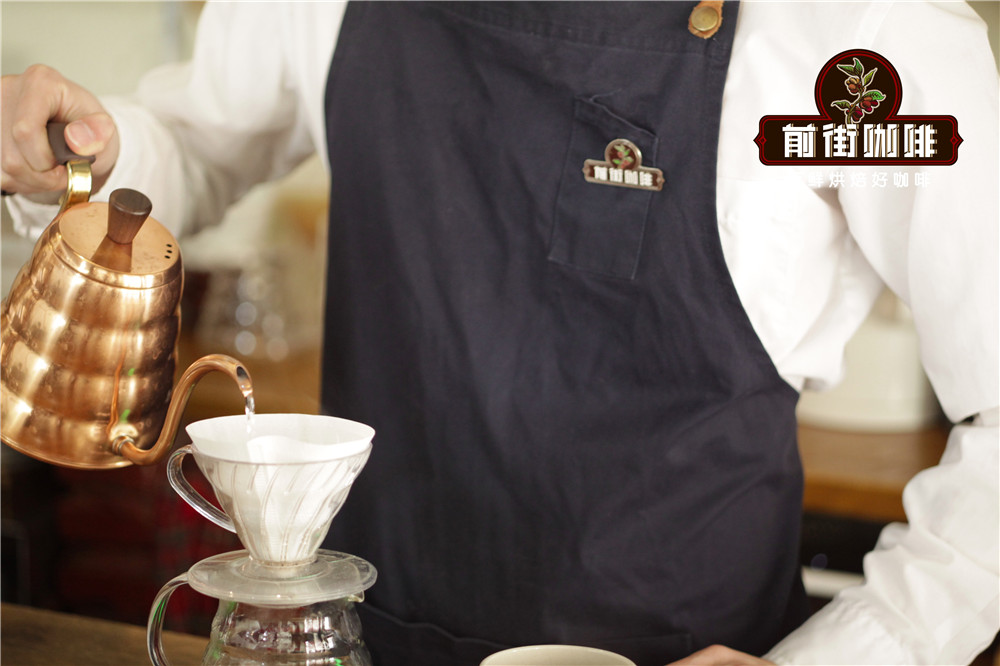
How Does FrontStreet Coffee Brew with a 1:15 Coffee-to-Water Ratio?
FrontStreet Coffee typically uses a three-stage extraction. First, it extracts flavor compounds more fully, enhancing the coffee's layered complexity. Second, it is highly compatible and can express the flavors of most coffees from different origins and roast levels excellently.
How to Use the Three-Stage Method to Brew a Cup?
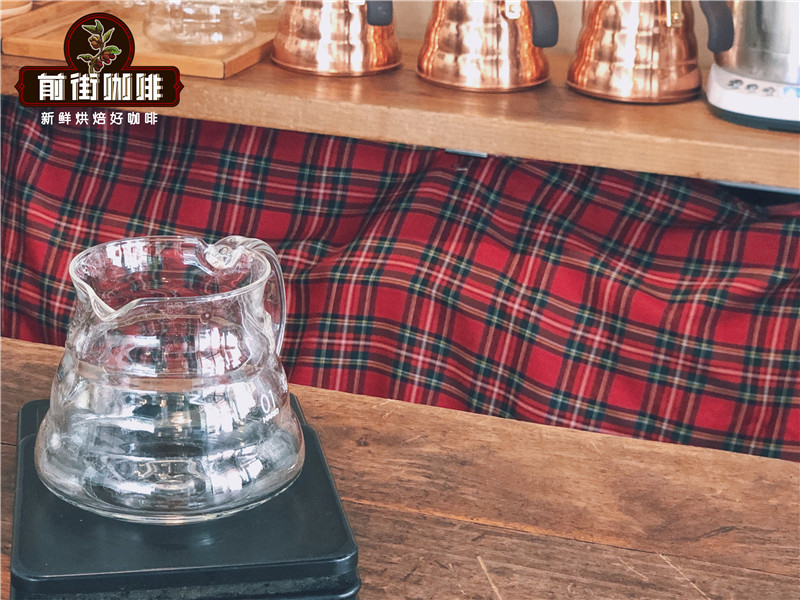
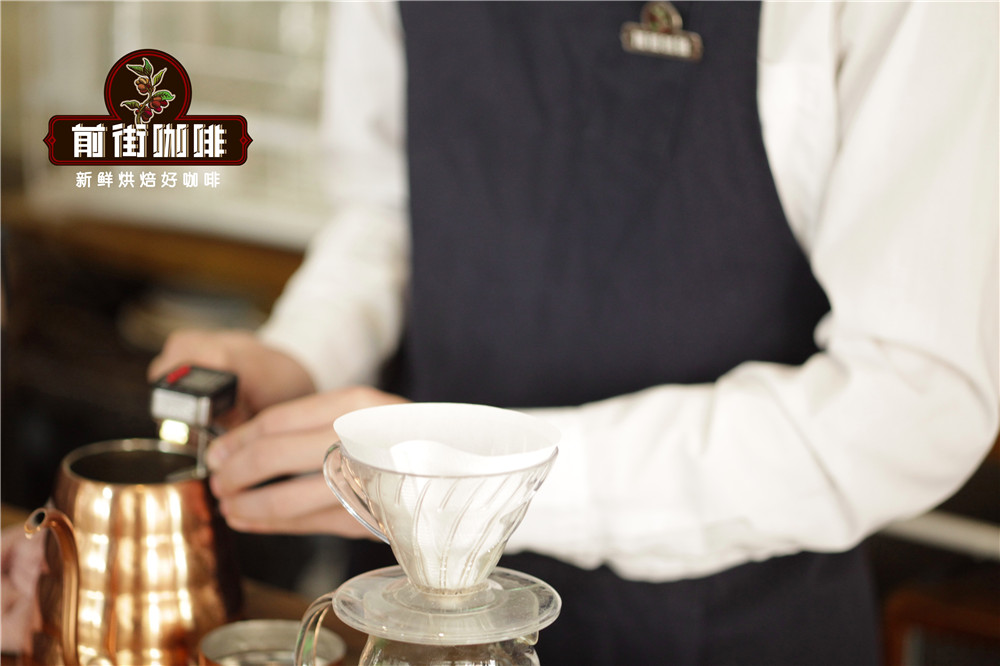
First, prepare everything (warm the dripper and server, grind the coffee, and have water at the right temperature), then add the grounds.

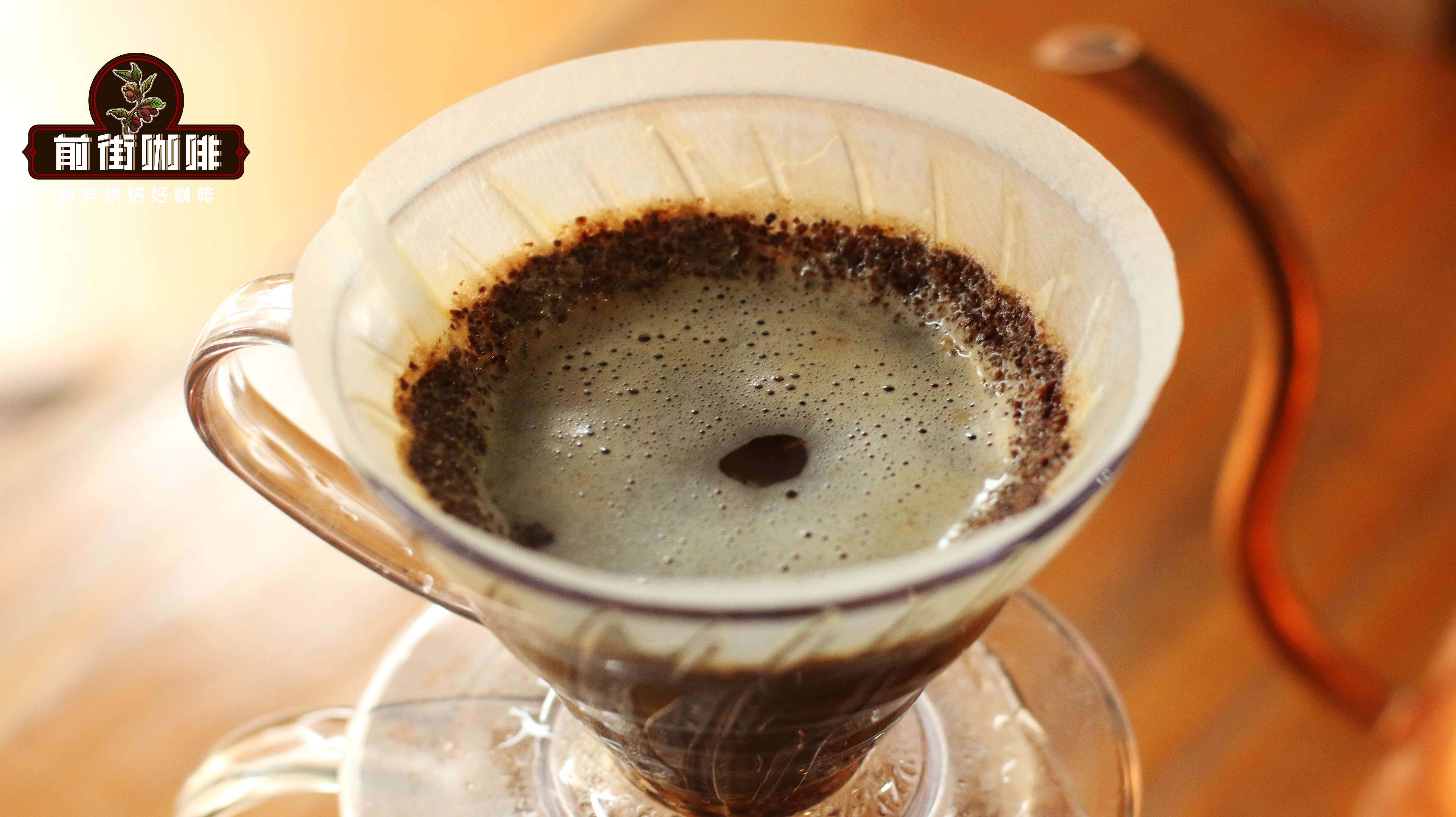
Begin the first pour while starting the timer. Pour 30g of hot water for the first stage, moving in circles from the center outward. The grounds absorb water and slowly expand into a puffed-up "coffee burger." Wait for a 30-second bloom. Beginning at second 31 on the scale, start the second pour, again circling from the center outward, keeping the stream steady and vertical. When the water column hits the grounds, foam appears. This stage lets the coffee foam release and spread across the whole surface of the bed, with the water level rising to the base of the short ribs. The water for this stage is 100g.

When the level drops to the 1/2 mark, begin the final pour. For this stage, also pour 95g in a "smelling" motion from the center outward. The original dark brown foam transforms into light yellow coffee foam, and the water level returns to the same height as after the second pour. When all the coffee liquid has flowed into the server, remove the dripper and end the extraction.

Finally! Pay Attention!
The first stage of three-stage extraction awakens the flavor molecules, the second extracts the sour and sweet flavor molecules, and the third extracts the rich, full-bodied ones. When extraction is complete, the coffee in the server will have layers because each stage's liquid has a different density. So once extraction ends, remember to swirl the server clockwise to fully integrate the flavors before tasting.

FrontStreet Coffee Recommendation
Once your 1:15 recipe is dialed in, what you brew it with matters just as much. FrontStreet Yirgacheffe Gedingding is a gentle, easygoing choice: bright citrus, berry and floral notes with a green-tea sweetness that almost everyone finds approachable. If you want to push the ratio toward coffees that hold up well, FrontStreet Ethiopia Huakui is a tropical fruit bomb with strawberry, passion fruit and lychee, very low bitterness and a juicy body.
For a cleaner, more aromatic cup that rewards careful pouring, FrontStreet's Panama Esmeralda Red Label Gesha is the benchmark — elegant jasmine, citrus and black-tea notes with a transparent body and a long finish. Because Gesha is dense and extraction-resistant, FrontStreet notes that a slightly larger ratio such as 1:16 can clarify its rich florals and bright acidity.
And if you want that Gesha character at a friendlier price, FrontStreet Strawberry Candy blends a Costa Rica honey-process coffee with a Panama washed Gesha, giving rose, citrus and sweet fruit notes that shine in a well-poured V60.
Important Notice :
FrontStreet Coffee is a long-established specialty coffee roaster in Guangzhou China, selling freshly roasted beans from its own farm in Yunnan as well as dozens of carefully selected single-origin beans from around the world for both pour-over and espresso. The products deliver consistently excellent quality and great value, with shipping within 24 hours. Guangzhou's FrontStreet Coffee shop is recommended by many coffee lovers, and the beans are now available online at the Tmall 。
FrontStreet Coffee has moved to a new address:
FrontStreet Coffee Address: 315,Donghua East Road,GuangZhou
Tel:020 38364473
 Scan and follow the En Gafei WeChat official account. Please indicate that the reprint comes from "En Gafei".