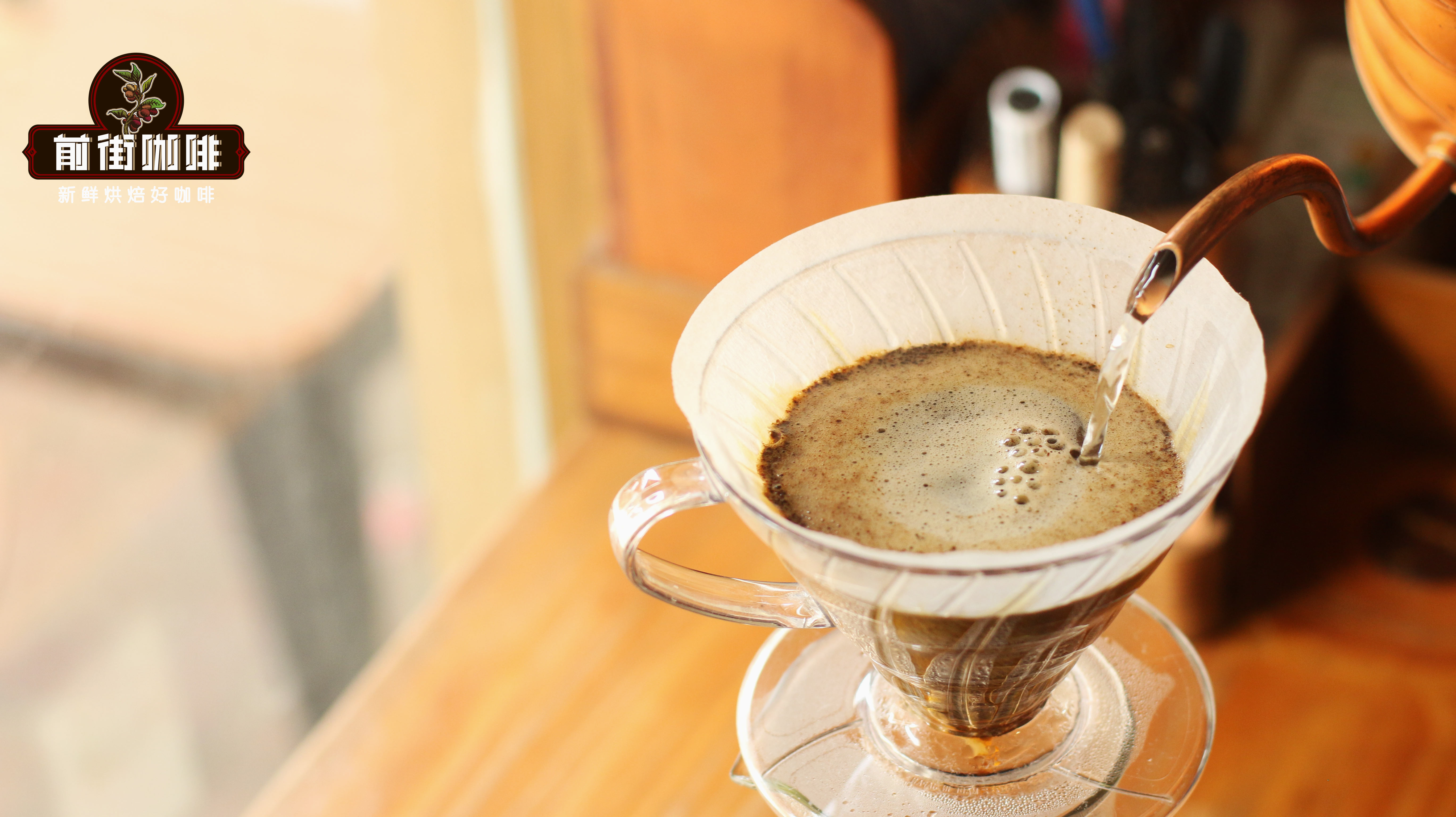
Who Should Drink Blue Mountain Coffee? The Right Way to Brew and Enjoy Authentic Blue Mountain Coffee
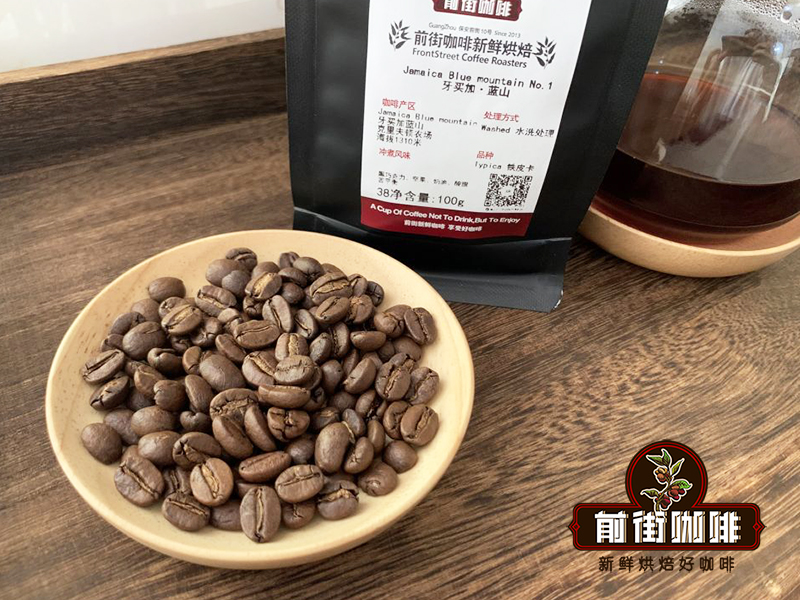
FrontStreet Coffee — Jamaica Blue Mountain No.1 Coffee Beans
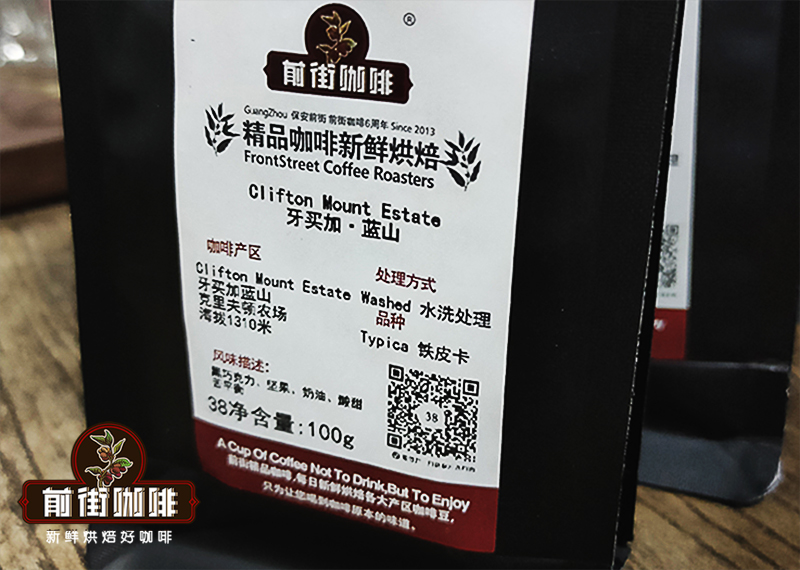
Country: Jamaica
Region: Newcastle Area
Estate: Clifton Estate
Altitude: 1,310 meters
Variety: Typica
Processing: Washed
Grade: Blue Mountain No.1
FrontStreet Coffee Blue Mountain Coffee Beans Flavor Description
Chocolate, nuts, cream, with a well-balanced sweetness, acidity, and bitterness. The flavor is rich and mellow.

FrontStreet Coffee Blue Mountain Coffee Region Introduction
Jamaica is an island in the Caribbean Sea, and its Blue Mountains form the highest range in the western Caribbean, rising to 2,256 meters. The beans' distinctive flavor traces back to that exceptional geography and climate. Sitting in the coffee belt at 25 degrees north latitude, the Blue Mountains offer fertile new volcanic soil, clean unspoiled air, rainfall year-round, high humidity, and a wide day-to-night temperature swing. The soil is rich in nitrogen and phosphorus, ideal for coffee. Fertile volcanic ground, regular rain, and the misty cloud cover that shields the trees from harsh sun all combine to create the Blue Mountain coffee we know today.

Blue Mountain beans were always washed, and their mellow, balanced flavor is what impressed drinkers most. Only in 2019 did growers begin experimenting with natural processing, and the first small lots of natural Blue Mountain were exported in 2020. Blue Mountain No.1 comes from the Clifton Farm in Jamaica's Blue Mountains. The farm's average altitude is 1,310 meters, and it first planted coffee in the mid-18th century, making it Jamaica's oldest continuously operating historic farm. Clifton is also the only Jamaican coffee farm certified by the Rainforest Alliance. The Blue Mountain region is tiny, with only 6,000 hectares under cultivation, so it is impossible for everything labeled "Blue Mountain" to actually be grown there.
Today's Clifton Estate is the largest in the region, yet by international standards it is still small-scale cultivation, and many estate owners are smallholders whose families have worked this land for two centuries. As early as the mid-18th century (around 1750), Clifton began growing and producing coffee. Its cultivation and processing areas sit at an average altitude of 4,300 feet (1,310.64 meters). Ample altitude, gentle afternoon cloud that shades the hillsides, enough sunlight, and mineral-rich soil give the trees excellent growing conditions and stretch out the cherries' ripening.

FrontStreet Coffee Blue Mountain No.1 Coffee Beans Natural/Washed Brewing Comparison
Next, FrontStreet Coffee shares a side-by-side brew of the natural and washed versions of Blue Mountain No.1.
FrontStreet Coffee Blue Mountain No.1 Coffee Beans Natural/Washed Flavor Comparison
FrontStreet Coffee brews both Blue Mountain coffees in a KONO dripper. The KONO's ribs stop at less than half the height of the dripper, a design that keeps the filter paper snug against the wall once wet, restricting airflow and lengthening the time water stays in contact with the grounds. That makes extraction more even and reinforces the mellow mouthfeel. The grooved structure at the base of the dripper is also key: it creates a siphon effect during brewing.
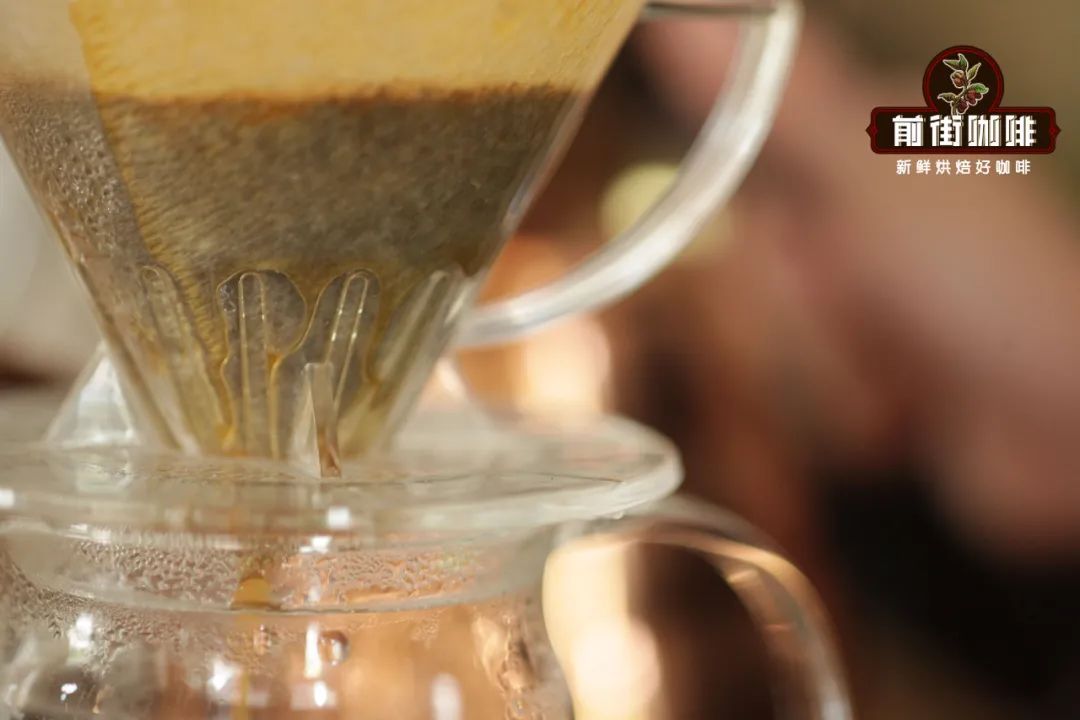
Recommended Water Temperature: 88-89°C
Grind Size: Fujiyama Oni-no-Ha 4.5 (coarse sugar size)
Coffee-to-Water Ratio: 1:15
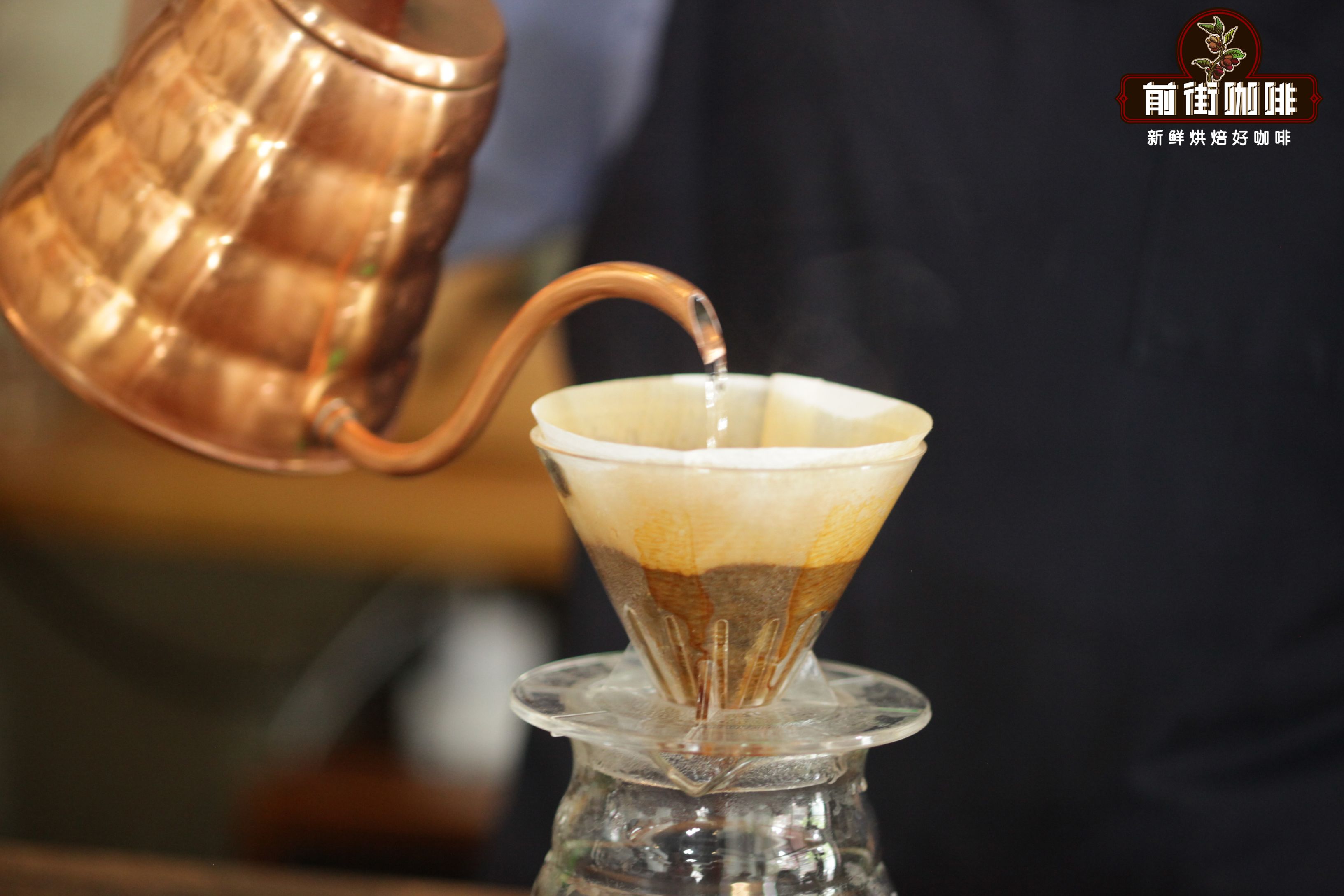
FrontStreet Coffee Blue Mountain Coffee Beans Brewing Method
Use 30 g of water for a 30-second bloom. When the water reaches 125 g, do a split pour. Continue pouring to 225 g once the level drops to just above the coffee bed. Stop, wait for the level to fall back to just above the bed, then remove the dripper. (Timing starts at the bloom.) Total extraction time is 2'00".
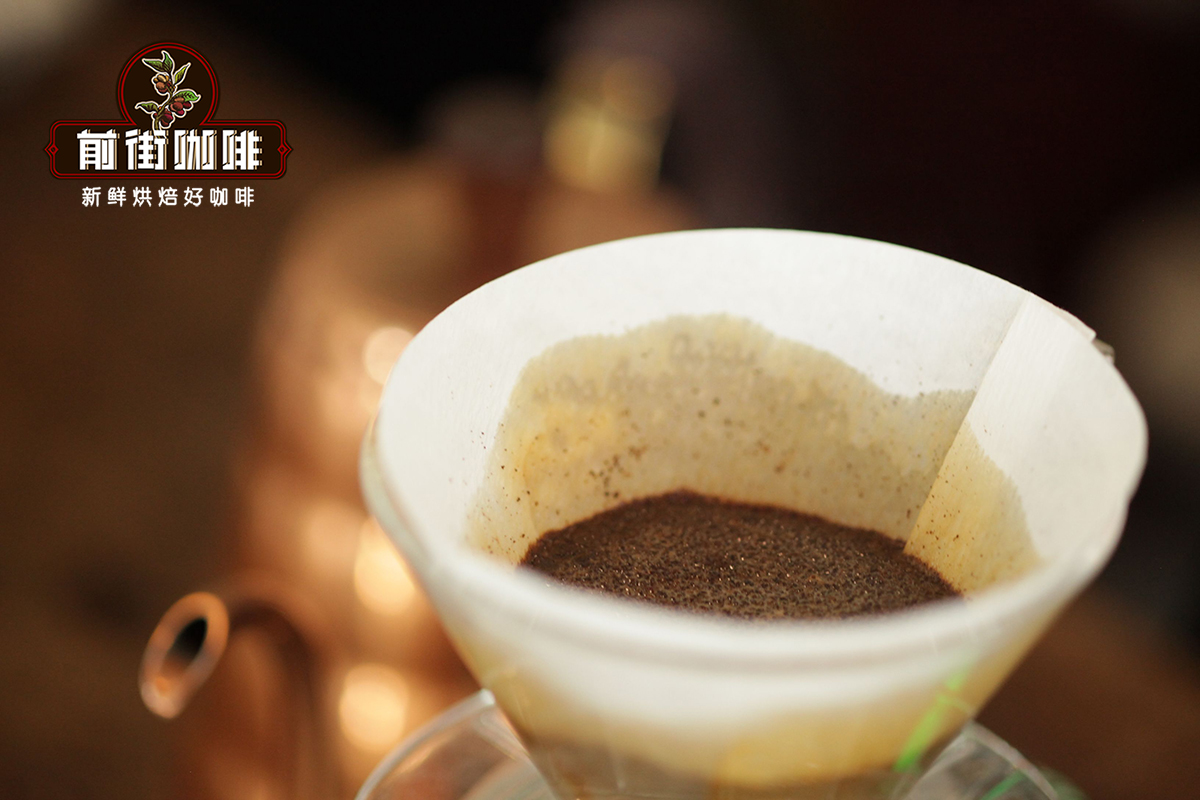
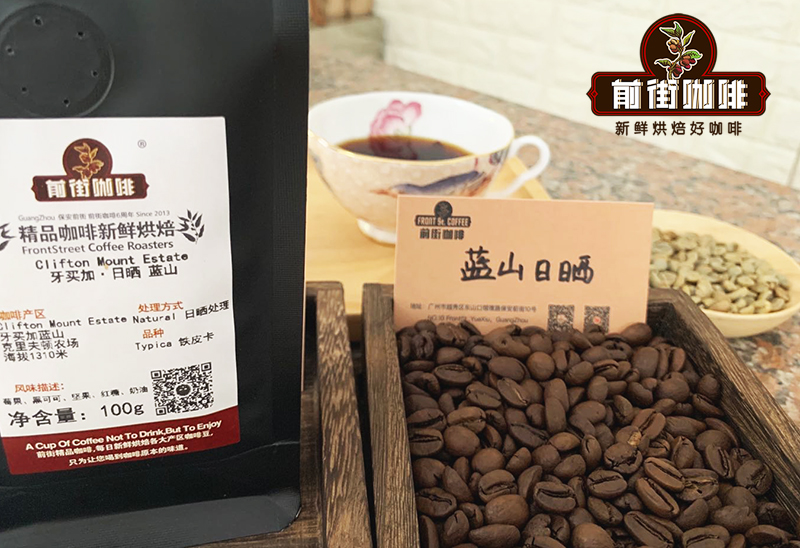
FrontStreet Coffee Blue Mountain No.1 Coffee Beans Natural Flavor Description
The first sip brings brown sugar sweetness with berry acidity. Overall the cup is balanced, with black cocoa and nut flavors, a slight fermentation note, and a smoky sensation.
FrontStreet Coffee Blue Mountain No.1 Coffee Beans Washed Flavor Description
The washed version is very clean, complex, and exceptionally mild, with chocolate sweetness and a very strong body. The cup is rich and mellow, with sweetness, acidity, and bitterness in perfect combination. There is no bitterness at all — only a moderate, well-judged acidity and a persistent fruity aftertaste. Compared side by side, the natural Blue Mountain has more layered complexity, with slight berry acidity recalling dark plums and mulberries and a mild tea-like sensation. The washed Blue Mountain keeps the classic, unmistakable Blue Mountain profile: that smooth, bright, rich quality in a single sip.
Coffee Bean Grading and Classification
Coffee bean grades are usually determined by defect rate, bean size, altitude, green bean density, processing standards, and other factors. Because of history, trade interests, climate, and terrain, no single standard — and not altitude alone — can grade coffee across countries and regions. Nor can one country's grades be compared directly with another's.
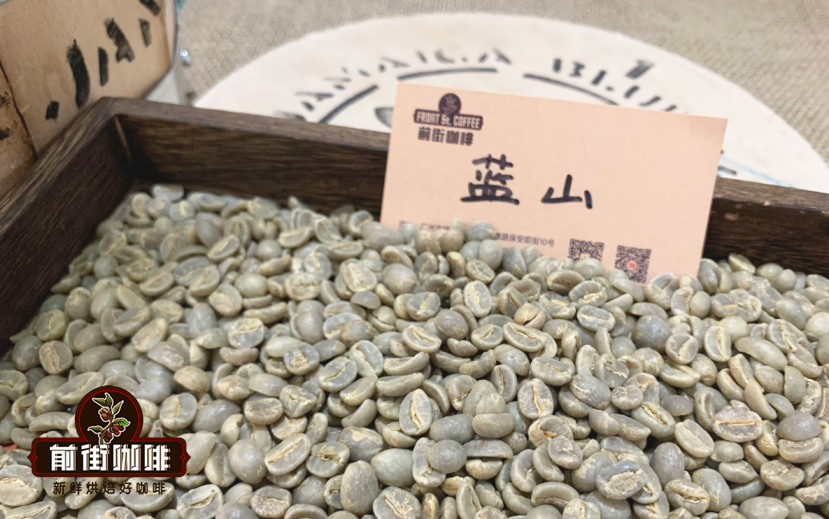
FrontStreet Coffee Jamaica Blue Mountain Coffee Bean Grades
Jamaica Blue Mountain region beans carry three main grades:
- Blue Mountain Coffee
- Jamaica High Mountain Supreme Coffee Beans
- Jamaica Prime Coffee Beans
Among these, Blue Mountain Coffee and High Mountain Coffee are each split into two grades. Ranked by quality from highest to lowest: Blue Mountain No.1, Blue Mountain No.2, High Mountain No.1, High Mountain No.2, Jamaica Prime. Under CIB standards, the basic criteria for No.1 Blue Mountain green beans include a 17 screen size or larger, a defect rate below 3%, and a moisture content around 13%. FrontStreet Coffee selects the highest grade of all: Blue Mountain No.1.

How to Identify Genuine Blue Mountain Coffee?
Three key points will help you identify genuine Blue Mountain Coffee: export by companies designated by the national coffee board, being the only region that ships green beans in wooden barrels, and Clifton's rainforest certification.
1. Genuine Blue Mountain Coffee is exported by companies designated by the National Coffee Board.
Some authentic Blue Mountain No.1 in the Chinese market is exported to China mainly through direct branches from Japan, Australia, and Europe. According to 2013 statistics from the International Coffee Organization (ICO), Japan held 85% of the allocation, while the United States, Europe, and other countries each accounted for 5%. ICO data show China accounts for 15% of Blue Mountain coffee consumption. It is worth noting that limited Blue Mountain No.1 is mostly allocated to Japan, the United States, and Europe, and because Japan invested in Jamaica's coffee industry, most Blue Mountain coffee was bought up by Japan. In 1992, Jamaica sold 688 tons of Blue Mountain coffee to Japan, 75 tons to the United States, and only 59 tons to the United Kingdom.

In 2005, Jamaica's Minister of Agriculture announced that Blue Mountain coffee should be roasted in Jamaica, so direct allocations now tend to flow straight from Jamaica to consuming countries. This allocation system is recognized by the Jamaica Coffee Board (CIB). (Note: CIB board members are estate owners who hold coffee plantations of a certain scale in Jamaica.)
In addition, the officially registered logo of the Jamaica Coffee Board is used to certify and inspect exported Jamaican Blue Mountain coffee. The BLUEMOUNTAINCOFFEE trademark is the mark on the outer packaging of authentic Jamaican Blue Mountain coffee.

Coffee Industry Board (CIB)
2. Genuine Blue Mountain Coffee is the only coffee region that uses wooden barrels for green beans.
Blue Mountain coffee remains the only coffee in the world whose green beans ship in wooden barrels. Every other coffee export uses jute bags.
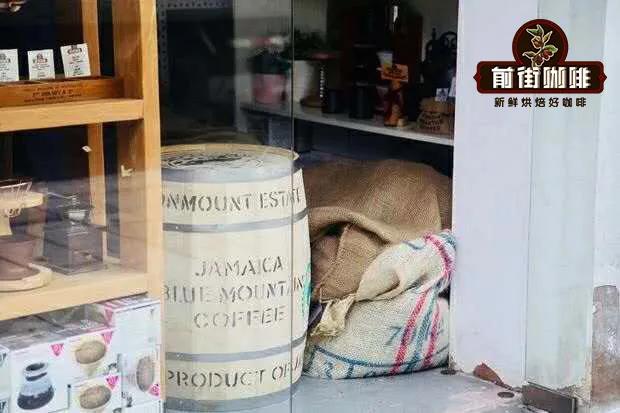
During the British colonial period in the mid-18th century, flour shipped from Britain to Jamaica left empty barrels behind, and these were reused to transport coffee and rum, sealing in the coffee's aroma to protect its quality. The barrels used today are made from wood from temperate forests in the United States.
3. The frog on Clifton barrel lids is rainforest certification.
Clifton Estate is Jamaica's oldest coffee estate, and Clifton Farm is the only farm in Jamaica carrying the (RFA) rainforest tree frog logo.

Only those that comply with the "Sustainable Agricultural System Standards" can obtain the certification, and their wooden barrels bear the rainforest certification logo.
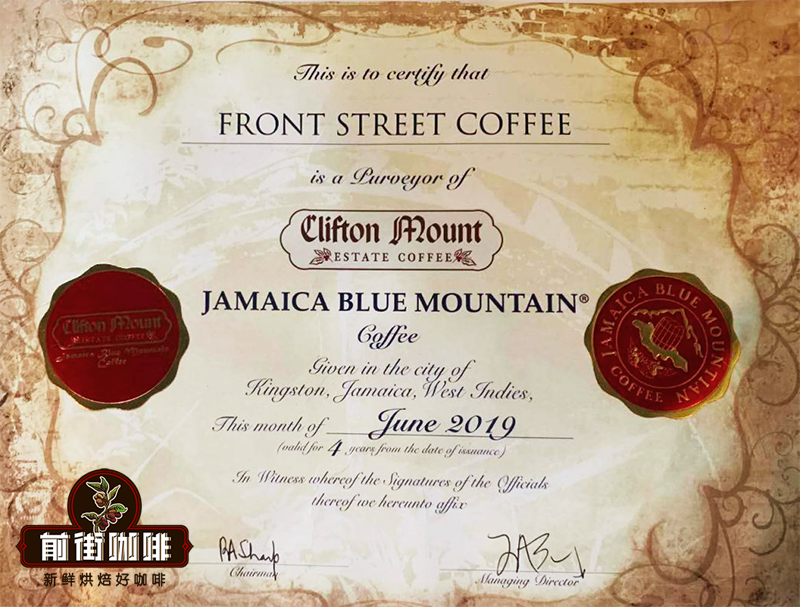
FrontStreet Coffee's Blue Mountain is Coffee Board-designated export coffee, shipped in wooden barrels for green beans, and carrying rainforest certification.
Extended Reading: Blue Mountain's Changes
2020 was a pivotal year for Blue Mountain's transformation. As is well known, until 2019 all Blue Mountain coffee sold overseas was washed-processed Typica. That single processing method and variety produced Blue Mountain's consistent quality over the past decade, and its balanced, mellow flavor won over generations of enthusiasts. In 2020 (following 2019 news), Blue Mountain launched its first natural-processed Blue Mountain No.1, ending the era when washed was the only option. Later it introduced Blue Mountain Geisha, breaking Blue Mountain's monopoly on the Typica variety, even as reports continued that Jamaica was trial-planting Bourbon.

While FrontStreet Coffee admires Blue Mountain's willingness to change, it is worth asking why a coffee that kept such single-minded consistency for a decade began to diverge and innovate in recent years. Before lightly roasted, acidic coffee became popular, the public's impression of coffee was of a mellow, rich cup, like traditional Mandheling and Colombian coffees. In that era, traditional Blue Mountain was the king of the flock, its clean, mellow, balanced flavor the model others imitated, earning it the title of "one king and one queen" alongside Hawaii Kona.
Then the times changed. First came fruit-forward Yirgacheffe, then the world-famous Panama Geisha, sparking a global wave of appreciation for coffee's pleasant acidity. Facing that, traditional Jamaican Blue Mountain growers felt their position was being shaken and gradually began to innovate. The newly added natural-processed Blue Mountain and Blue Mountain Geisha are prime examples. When news of Blue Mountain Geisha broke, FrontStreet Coffee was among the first to secure a barrel of the green beans (Geisha output is scarce) to experience its fragrance.

It is important to understand that coffee is a plant, and it is not as simple as "moving coffee from one place to another." What is involved is "the adaptability and stability of a new species in a new environment." Achieving good flavor requires excellent agronomic experience, time to adapt, a suitable growing environment, and enough processing know-how.
Clearly, Blue Mountain began planting other varieties quite early, going through years of breeding and flavor adjustment. The Geisha variety was discovered in 2004 by Panama's Hacienda La Esmeralda for its quality floral and fruit flavors, and after more than a decade of spread it has become common across coffee-growing regions — even Yunnan now plants Geisha. This year's micro-lot Blue Mountain Geisha from Jamaica shows the region's confidence in the variety.

When FrontStreet Coffee received the green beans, it found that, like traditional Blue Mountain No.1, Blue Mountain Geisha ships in wooden barrels, and the barrel bears the Rainforest Alliance logo (currently, only Clifton in Jamaica's Blue Mountain region holds this certification).
After multiple adjustments to the roast curve to settle on the optimal style and degree, FrontStreet Coffee's team found a marked difference on the cupping table. The micro-lot Blue Mountain Geisha, washed-processed, showed citrus acidity reminiscent of the sweet-sour taste of pomelo. As it cooled, a stronger jasmine fragrance emerged, with a honey-like sweet aftertaste and accompanying caramel notes.
FrontStreet Coffee Recommendation
For anyone who wants authentic Blue Mountain, FrontStreet Coffee's Jamaica Blue Mountain No.1 is the one to look for. Blue Mountain No.1 is one of the highest grades in the Jamaican system, held to strict standards for bean size, defect rate, and overall quality. This lot comes from the historic Clifton Estate, and the provenance is fully documented: complete origin certification, wooden-barrel shipping, and the Clifton Rainforest Alliance certification that no other Jamaican farm holds.
Roasted to a medium-dark level, the beans express Blue Mountain's classic balance. In the cup you get nuts, dark chocolate, and creamy caramel unfolding in layers, with a soft sweetness and an even harmony of acidity, sweetness, bitterness, and aroma. It is equally at home as an everyday specialty coffee or as a gift, capturing the enduring appeal this legendary coffee has carried for decades.
Like many enthusiasts, you may have wondered whether Blue Mountain can only be brewed as pour-over. It cannot — its balance means it performs beautifully in a moka pot or as espresso too. For pour-over, FrontStreet Coffee recommends a 1:15–1:16 ratio, water at 87–88°C, and a medium-coarse grind; for the moka pot, use a slightly finer grind than pour-over, start with hot water in the base, heat over medium-low, and pull it off the heat just as the coffee finishes flowing. FrontStreet Coffee uses a KONO dripper to lift the mellow body even further; a single serving is 15 g, and resting the beans 4–7 days after roasting (counting the roast date as day one) gives the best flavor. Go coarser than you would for a light roast — about the texture of granulated sugar — and keep the water at 87–88°C, since overly hot water is the usual cause of a scorched, bitter cup. A 1:15 ratio best brings out the coffee's overall character, and the pour follows three stages: 30 g for a 30-second bloom, then water to 120 g, then to 225 g.
Important Notice :
FrontStreet Coffee is a long-established specialty coffee roaster in Guangzhou China, selling freshly roasted beans from its own farm in Yunnan as well as dozens of carefully selected single-origin beans from around the world for both pour-over and espresso. The products deliver consistently excellent quality and great value, with shipping within 24 hours. Guangzhou's FrontStreet Coffee shop is recommended by many coffee lovers, and the beans are now available online at the Tmall 。
FrontStreet Coffee has moved to a new address:
FrontStreet Coffee Address: 315,Donghua East Road,GuangZhou
Tel:020 38364473
 Scan and follow the En Gafei WeChat official account. Please indicate that the reprint comes from "En Gafei".