Guatemala Antigua Flor del Café Coffee Bean Flavor Profile and Processing Method - Is It Suitable for Drip Bag Coffee?
Professional Coffee Knowledge Exchange & More Coffee Bean Information
When it comes to coffee with a strong acidic character, FrontStreet Coffee always recommends the Guatemala Antigua Flower Goddess. This FrontStreet Coffee Flower Goddess, just like its name, carries delicate floral notes with berry and citrus tones. Coffee lovers who enjoy bright acidity have nothing but praise for this FrontStreet Coffee Antigua Flower Goddess bean, and some have even visited FrontStreet Coffee's shop for several consecutive weeks just for this coffee. Here, FrontStreet Coffee takes a closer look at this bean.
FrontStreet Coffee · Guatemala Antigua Flower Goddess Coffee
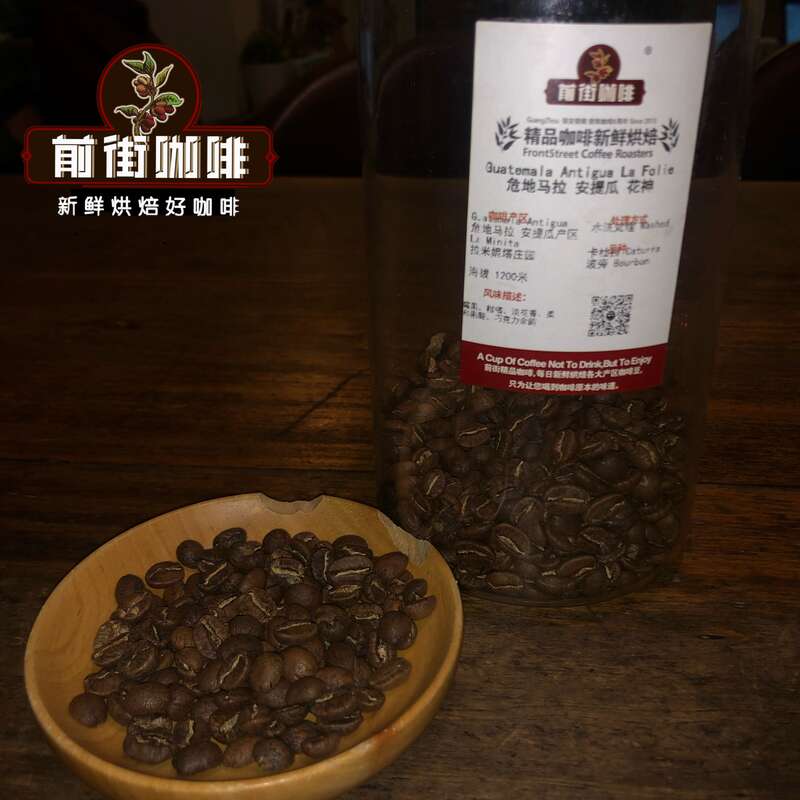
Country: Guatemala
Region: Antigua
Altitude: 1200m
Varieties: Bourbon, Caturra
Processing: Washed processing
Flavor: Berries, citrus, light floral notes, soft fruit acidity, chocolate aftertaste
Guatemala Coffee Bean Growing Environment and History
Coffee trees were introduced to Guatemala in 1750, and by 1845 coffee had become an important economic crop for the country. Guatemala's cultivation history can therefore be considered very long-standing. FrontStreet Coffee believes this is also thanks to Guatemala's extremely suitable growing environment for high-quality coffee fruit.
On top of that, the country's coffee regions combine tropical rainforests, volcanic geology, highland valleys, and proximity to both the Atlantic and Pacific Oceans, creating over 300 microclimates, which in turn give each region its own unique flavors. Among FrontStreet Coffee's daily bean series, for example, there is a Guatemala Huehuetenango coffee. Although it shares berry and citrus flavors with FrontStreet Coffee's Antigua Flower Goddess, it presents more nut and lemon peel characteristics.
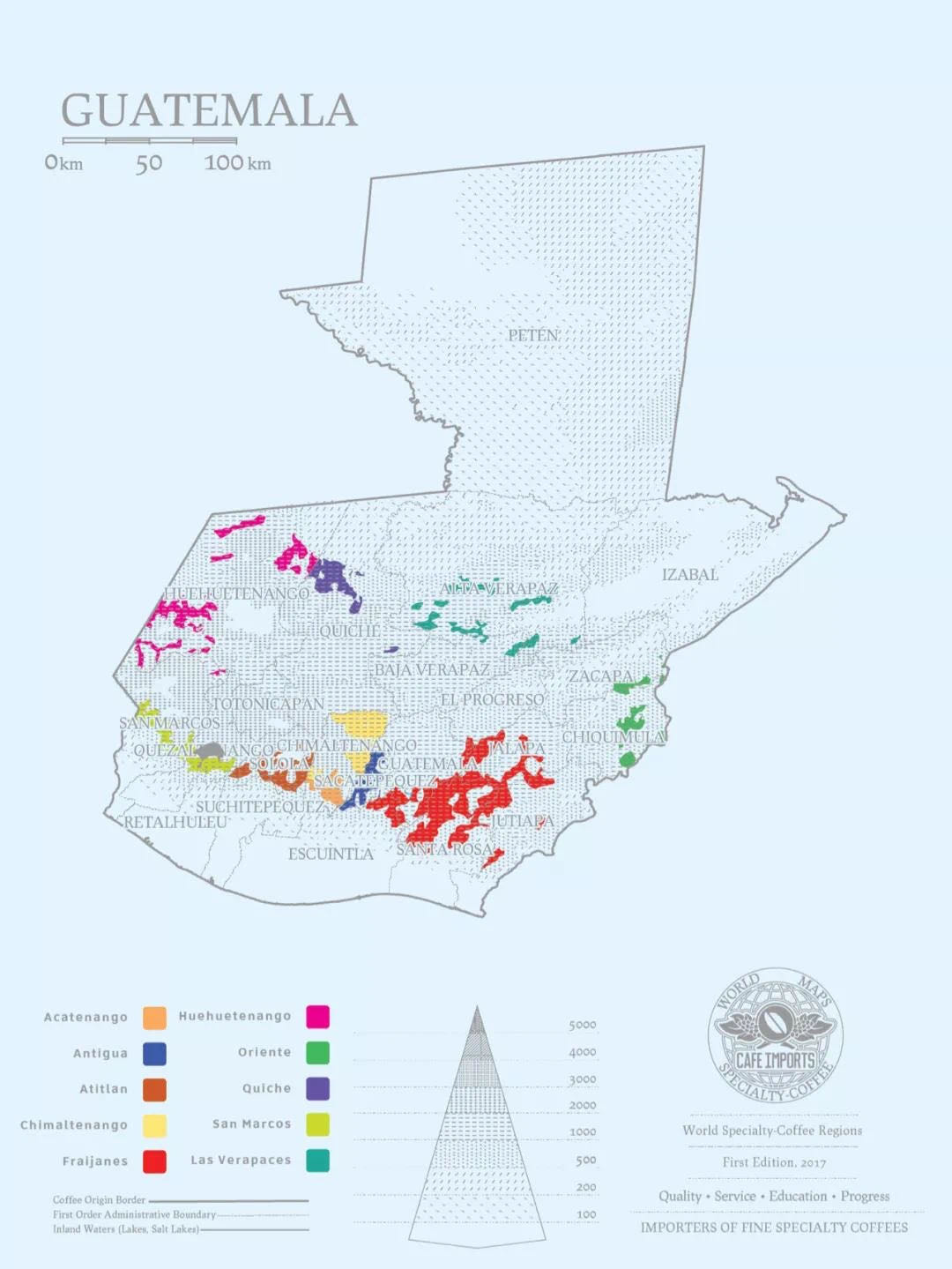
Guatemala has many mountains and plateaus formed by volcanoes, producing high-quality high-altitude hard beans. Its major coffee-producing regions include Antigua, Huehuetenango, Atitlan, Coban, Fraijanes, San Marcos, and Acatenango.
FrontStreet Coffee's Guatemala Flower Goddess comes from the Antigua region. Next, FrontStreet Coffee explains the Antigua region in detail.
Antigua Region Introduction
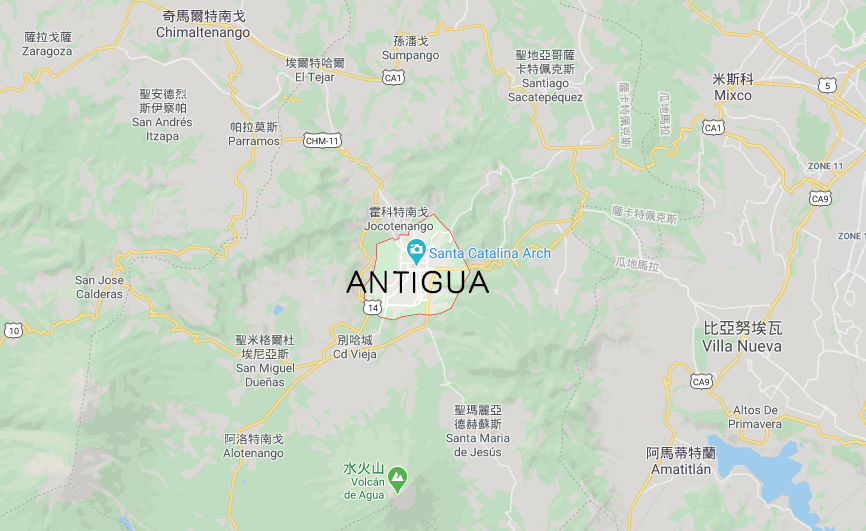
The Antigua region is said to be the birthplace of Guatemalan coffee. It sits in a valley surrounded by three volcanoes: Agua, Fuego, and Acatenango. Fuego is an active volcano that erupts irregularly, enriching the soil of the region with minerals. This is precisely what FrontStreet Coffee often refers to as volcanic soil rich in organic matter. In addition, Antigua retains large amounts of primary forest, which fills the soil with abundant potassium ions. Together, the rich organic matter and potassium ions give coffee plants in Antigua a continuous supply of nutrients for healthy growth.
The climate here is also very mild, with stable humidity. Unlike regions that experience extreme swings between the dry and rainy seasons, this allows coffee to grow slowly in valleys above 1500 meters in altitude. Because Antigua is an enclosed valley, it also prevents severe soil erosion. Such a privileged environment could hardly fail to produce high-quality Antigua coffee beans, and the quality of this FrontStreet Coffee Antigua Flower Goddess goes without saying.
La Minita Estate
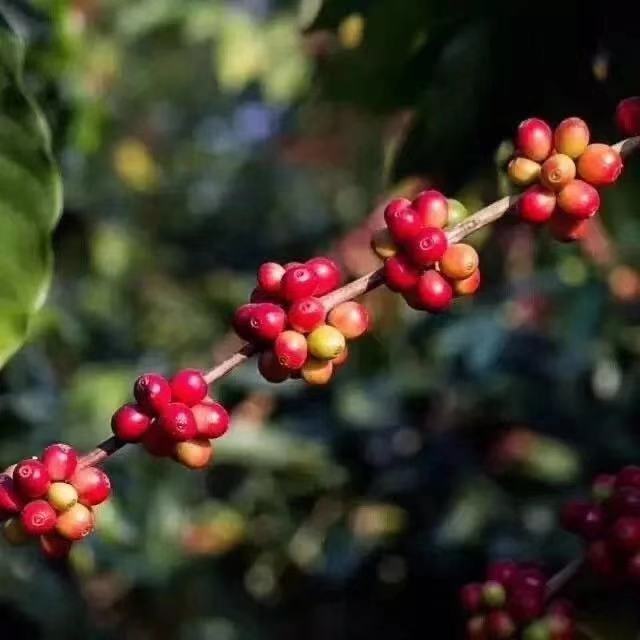
Of course, high-quality coffee beans must be processed and packaged by professional estates to avoid wasting excellent coffee fruit. This FrontStreet Coffee Antigua Flower Goddess comes from a famous coffee estate in Antigua: La Minita Estate.
La Minita Estate is known for its excellent cultivation practices and extremely strict quality management. Its processing is entrusted to Las Pastores, the largest wet processing plant in Antigua, for green bean processing. The beans are named Flower Goddess because the washed process allows them to keep their original flavor, making the coffee taste very clean and bright. When this FrontStreet Coffee Flower Goddess is ground, its dry aroma carries rich floral and tea fragrances. After brewing, the taste is not only clean and bright but also shows lime acidity and berry flavors, with a honey-sweet aftertaste. It is precisely this excellent flavor profile that led to the name Flower Goddess, which FrontStreet Coffee believes is well deserved.
In addition, La Minita never uses pesticides in cultivation. The estate's climate and altitude limit pest growth, and small numbers of pests do not cause significant damage to the coffee trees. Harvesting, however, requires careful handling, because when the rainy season ends at La Minita, the coffee fruit ripens afterward. Green fruits begin to turn red, but ripening is very slow and uneven, unlike the rapid, uniform flowering. Harvesting must therefore be handled more carefully, and to ensure excellent quality, only fully matured deep red fruit is picked on the estate.
Furthermore, La Minita Estate conducts soil testing twice a year to safeguard the soil quality for producing high-quality coffee beans, and it fertilizes about 3 times a year. It also applies micronutrient fertilizers such as zinc, boron, and copper to give the trees more nutrients and prevent disease.
So FrontStreet Coffee believes it is precisely this scientific cultivation management that has created the excellent flavor of FrontStreet Coffee's Flower Goddess coffee and maintained consistent quality for years. This is why FrontStreet Coffee decided to introduce this FrontStreet Coffee Guatemala Antigua Flower Goddess for its coffee-loving friends to taste.
Washed Processing Method
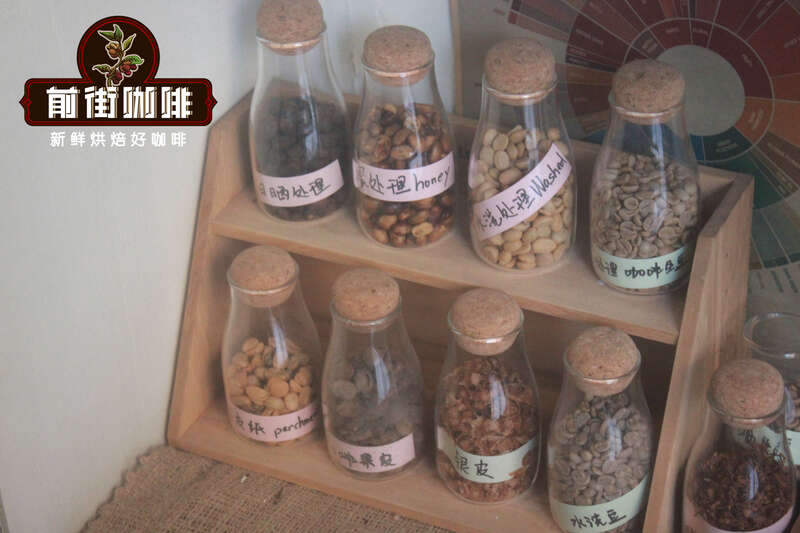
FrontStreet Coffee believes the Las Pastores wet processing plant also deserves credit for the excellent flavor of this FrontStreet Coffee Flower Goddess. The washed process is an extremely complex method that requires numerous steps and large amounts of water to achieve high-quality results. Professional handling is necessary to ensure the beans have no off-flavors and become bright and clean in taste with excellent flavor. This is why FrontStreet Coffee often says that washed processing best reflects a region's original coffee fruit flavor, while also serving as an introduction to a region's flavor profile.
Washed Processing Method Steps
1. First, coffee farmers pour all harvested coffee fruit into water. Poor-quality defective beans float to the surface, while the ones that sink are quality-approved fruit. This step significantly reduces the time otherwise wasted on individual selection.
2. The selected fruit is placed in a pulping machine to remove the outer skin and pulp. After that, a layer of mucilage still clings to the surface, so large amounts of clean water must be used to wash away the sticky substance.
3. Next, fermentation is used to remove the mucilage completely. This process takes approximately 18 hours. After fermentation, fermentation bacteria adhere to the fruit surface, so another wash with large amounts of clean water is needed. For this step, producing 1 kilogram of coffee beans requires 40 to 50 kilograms of clean water. FrontStreet Coffee considers that a very large number, which is also why drought-prone countries cannot adopt washed processing.
4. The cleaned coffee beans can then be dried. Some regions dry them outdoors in the air, while more developed regions send them to processing plants for machine drying, reducing the coffee's moisture content to around 11%.
5. Finally, the dried beans are stored and packaged for sale and export.
FrontStreet Coffee · Guatemala Antigua Flower Goddess Coffee Varieties
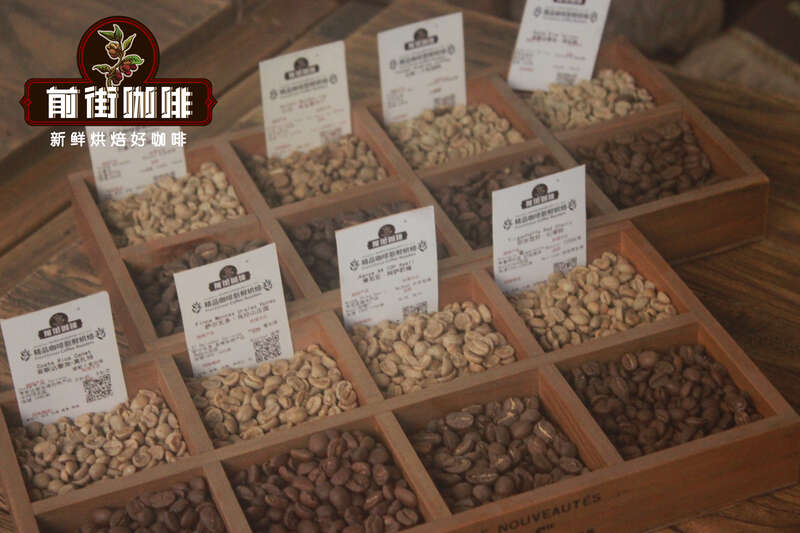
As FrontStreet Coffee's earlier articles have noted, an excellent, flavorful coffee bean depends not only on its region and processing method but also on its variety. For example, all single-origin coffees are Arabica, and under Arabica there are many varieties. This FrontStreet Coffee Antigua Flower Goddess, for instance, is made of Caturra and Bourbon variety beans. Next, FrontStreet Coffee briefly introduces these two varieties.
Bourbon
Bourbon is a subspecies produced by a Typica mutation and, along with Typica, belongs to the oldest Arabica varieties still in existence. Its green fruit turns bright red when mature. Compared with Typica, Bourbon plants have broader leaves and grow more densely. Although the yield is higher than Typica, the harvest period is still 2 years, making it a low-yield variety. Its quality, however, is excellent, with wine-like acidity and a sweet aftertaste.
Caturra
Caturra is a single-gene variant of Bourbon discovered in Brazil in 1937. Its productivity and disease resistance are both better than Bourbon, and the plant is shorter, which makes harvesting convenient. Unfortunately, like Bourbon, it also has a biennial production cycle. Its flavor is comparable to, or slightly below, Bourbon beans. More importantly, it has extremely strong adaptability, growing vigorously even in direct sunlight without shade trees, which is commonly called sun coffee. It can adapt to high-density planting but needs more fertilizer, which raises costs, so farmers were initially reluctant to accept it.
The above is the relevant information about FrontStreet Coffee's Guatemala Antigua Flower Goddess bean compiled by FrontStreet Coffee. We hope this article helps coffee lovers better understand this coffee. Whenever FrontStreet Coffee launches a new bean, extensive brewing evaluations are conducted to find the optimal flavor parameters for the coffee-loving friends who visit the shop. This FrontStreet Coffee Guatemala Antigua Flower Goddess is no exception. Next, FrontStreet Coffee shares the brewing parameters for this FrontStreet Coffee Flower Goddess.
FrontStreet Coffee Roasting Suggestions
This FrontStreet Coffee Guatemala Flower Goddess green bean is round, green with yellow tones, with relatively good uniformity and medium moisture content. FrontStreet Coffee's roaster therefore aims for medium roasting, preserving bright acidity to showcase floral and fruit aromas while enhancing richness and balance.

Roasting Machine: Yang Family 600g Semi-direct Fire
Set drum temperature to 200°C at charge, damper at 3. After 30 seconds, reduce heat to 160°C, damper unchanged. Return to temperature at 1'36". Maintain heat. At 4'50", the bean surface turns yellow, the grassy smell disappears completely, and the coffee enters the dehydration phase. Reduce heat to 140°C, adjust damper to 4.
At 4'50", dehydration is complete; reduce heat to 140°C. At 8'32", the bean surface shows wrinkles and black spots, and the toast smell clearly turns to coffee aroma, which can be defined as the prelude to first crack. Listen carefully for the first crack sound. First crack begins at 8'37"; reduce heat to 80°C and fully open the damper to 5 (adjust heat very carefully, not so low that the crack sounds stop). Develop for 1'50" after first crack, then discharge at 195.3°C.
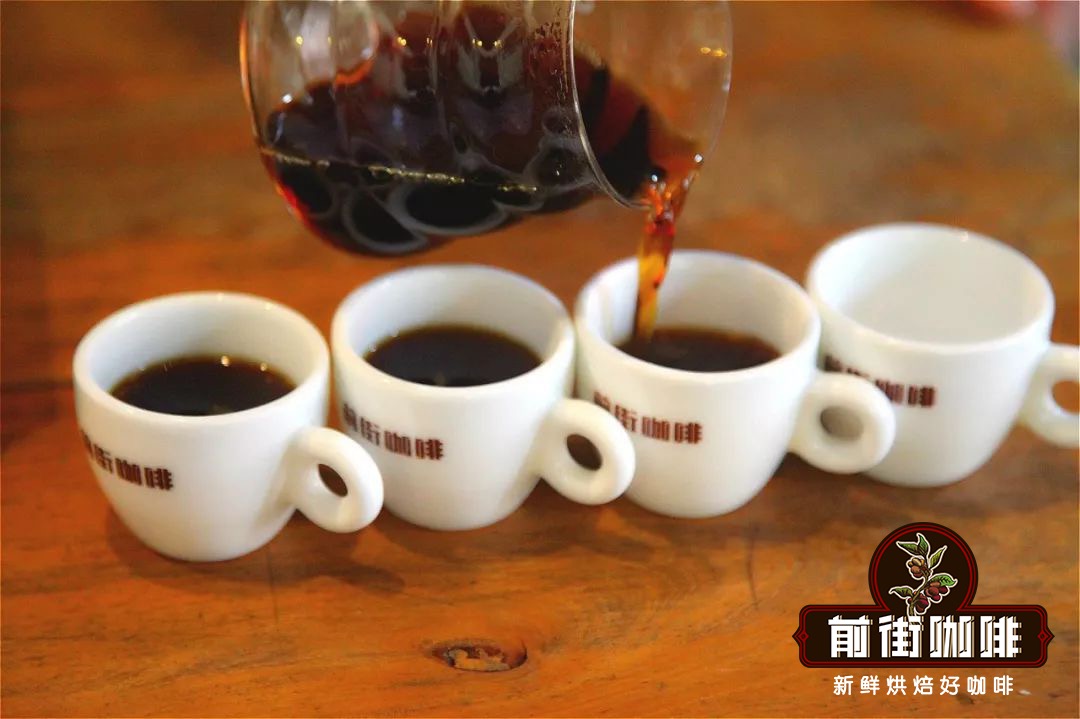
FrontStreet Coffee Cupping Report
FrontStreet Coffee Brewing Suggestions
Dripper: V60
Dose: 15 grams
Ratio: 1:15
Temperature: 90°C
Grind: BG#6S
FrontStreet Coffee Brewing Method
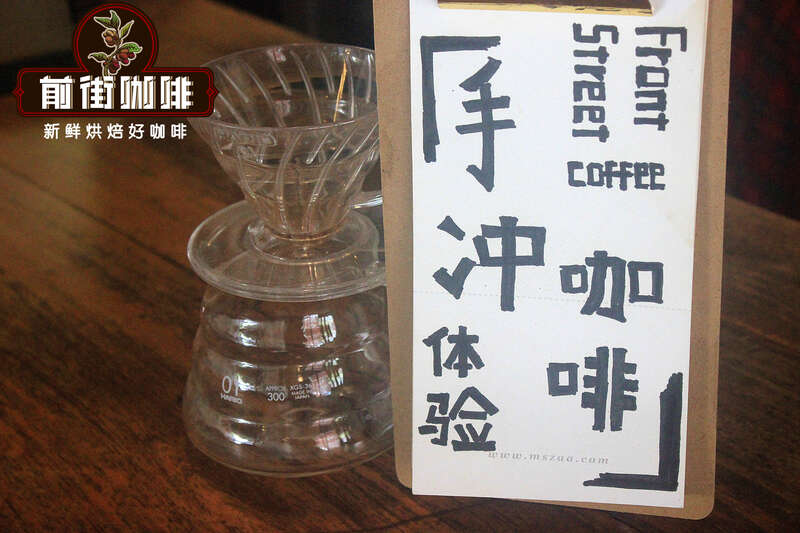
Segmented extraction.
Bloom with 30g water for 30 seconds, pour to 125g for the first segment. When the water level drops and is about to expose the coffee bed, continue pouring to 225g and stop. When the water level drops and is about to expose the bed again, remove the dripper. (Timing starts from the bloom.) Extraction time is two minutes.
Flavor Description
Floral notes, citrus acidity, caramel, and a slight smoky flavor
Because washed beans like this Antigua Flower Goddess keep such a clean, bright, and aromatic profile, they also work beautifully as drip bag coffee, which is the easiest way to carry that Guatemala Antigua character to the office or on the road. FrontStreet Coffee's drip bag range includes FrontStreet Yirgacheffe Gedeb Cooperative Drip Bag, with its clean, bright citrus acidity and jasmine-honey finish, and FrontStreet Natural Huakui Drip Bag, with prominent tropical fruit and a black tea tail that suits anyone who loves a sweeter, low-bitterness cup.
If you prefer a deeper, low-acid cup, FrontStreet Indonesia Mandheling Seasonal Drip Bag brings herbal, spice, and woody notes with rich spice, nut, chocolate, and caramel flavors from a deep roast. FrontStreet Brazil Queen Estate Drip Bag is another easy everyday option, medium-deep roasted and clear-sweet, with black chocolate, cream, peanut, sugarcane, and nutty notes.
FrontStreet Coffee Recommendation
The clean, bright, berry-and-citrus character of Guatemala Antigua Flower Goddess translates beautifully into drip bag coffee, and FrontStreet Coffee's drip bag range is the simplest way to enjoy that style anywhere. FrontStreet Yirgacheffe Gedeb Cooperative Drip Bag offers jasmine, bright citrus acidity, and a honeyed finish, while FrontStreet Natural Huakui Drip Bag brings tropical fruit and a black-tea tail with low bitterness.
For a fuller, low-acid option, FrontStreet Indonesia Mandheling Seasonal Drip Bag delivers herbal, spice, and woody notes with nut, chocolate, and caramel, and FrontStreet Brazil Queen Estate Drip Bag rounds out the lineup with a mellow, clear sweetness of black chocolate, cream, peanut, and sugarcane.
Important Notice :
FrontStreet Coffee is a long-established specialty coffee roaster in Guangzhou China, selling freshly roasted beans from its own farm in Yunnan as well as dozens of carefully selected single-origin beans from around the world for both pour-over and espresso. The products deliver consistently excellent quality and great value, with shipping within 24 hours. Guangzhou's FrontStreet Coffee shop is recommended by many coffee lovers, and the beans are now available online at the Tmall 。
FrontStreet Coffee has moved to a new address:
FrontStreet Coffee Address: 315,Donghua East Road,GuangZhou
Tel:020 38364473
 Scan and follow the En Gafei WeChat official account. Please indicate that the reprint comes from "En Gafei".