The Story of Indonesian Mandheling Coffee Beans - Specialty Grade Characteristics and How to Enhance Chocolate Flavors Through Pour-Over Brewing

Indonesia: A Major Coffee Production Hub
Indonesia is one of the world's major coffee-producing countries. Its main production areas sit near the equator, on the islands of Java, Sumatra, Kalimantan and Sulawesi. In reality, the aroma and taste of the beans from each island differ, and even the same variety can show a different profile depending on where it is grown. As FrontStreet Coffee understands it, Indonesian coffee is known for a rich, mellow aroma, low acidity and excellent body. Among all of it, the most famous is FrontStreet Coffee's Mandheling.
Indonesian Specialty Coffee
When it comes to Indonesian specialty coffee, the elegant-flavored Arabica is mainly distributed in northern Sumatra, Sulawesi and the higher elevations of Java. Although these represent only a small share of Indonesia's coffee production, varieties such as Mandheling, Golden Mandheling, Lake Tawar, Gayo Mountain, Aceh, Sulawesi, Aged Mandheling and Java have made Indonesian coffee famous in the specialty world for decades, undiminished by the presence of low-quality Robusta.
Sumatra: The Main Specialty Coffee Production Region
Sumatra is the main specialty coffee production region in Indonesia, with a very complex coffee system that can be summed up simply as four types:
(1) The well-known FrontStreet Coffee Mandheling, referring to the semi-washed or natural processed beans from Lintong, at elevations of 900-1,200 meters in the southwestern area around Lake Toba in north-central Sumatra.
(2) FrontStreet Coffee's Golden Mandheling, which undergoes four rounds of manual sorting, making it superior to regular Mandheling.
(3) Lake Tawar coffee, referring to washed, semi-washed or natural processed beans from the Gayo Mountain area near Lake Tawar in the Aceh region at the northern tip of Sumatra, at elevations of 800-1,600 meters. This area attracts heavy investment, with the renowned Costa Rican La Minita estate traveling across oceans to guide semi-washed processing techniques, while the well-known Holland Coffee Group focuses on Gayo Mountain washed beans, making the region highly competitive.
(4) Aged Mandheling and Java coffee.
FrontStreet Coffee's Mandheling Coffee
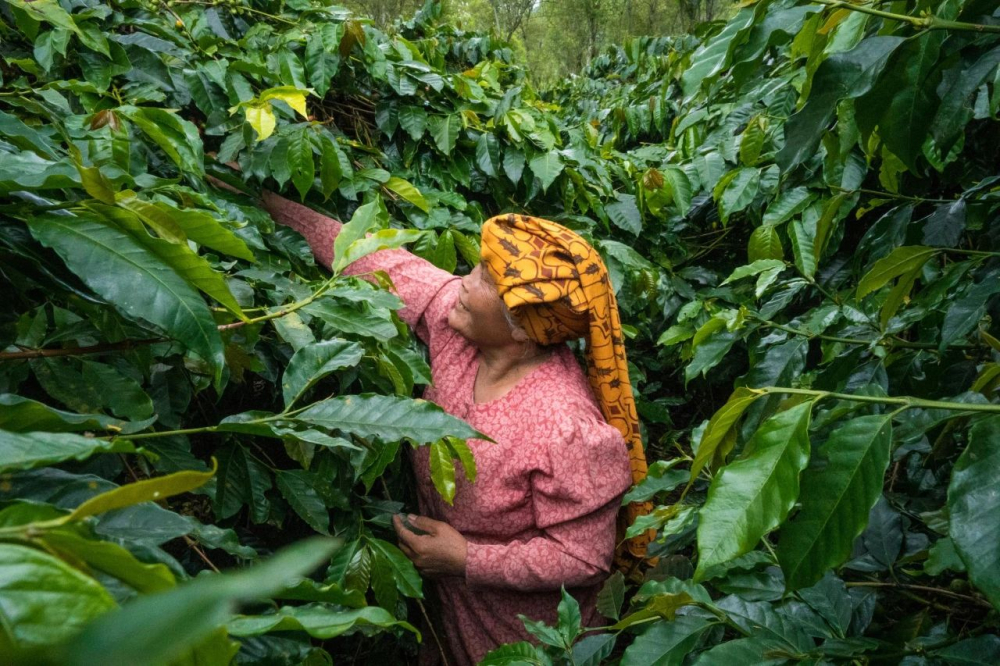
FrontStreet Coffee's Mandheling beans are produced on Sumatra Island in Indonesia, and the coffee is also known as "Sumatra coffee." Mandheling is premium coffee grown in plateau mountain regions at elevations of 750-1,500 meters. It belongs to the rare Arabica category in Indonesia, and the first-grade Mandheling from the Takengon and Sidikalang regions is the best of all. Because production is limited, coffee enthusiasts call it a "premium product," and dark-roasted Mandheling in particular (strong bitterness, slightly dark beans) has devotees captivated by its rich, mellow sweetness.
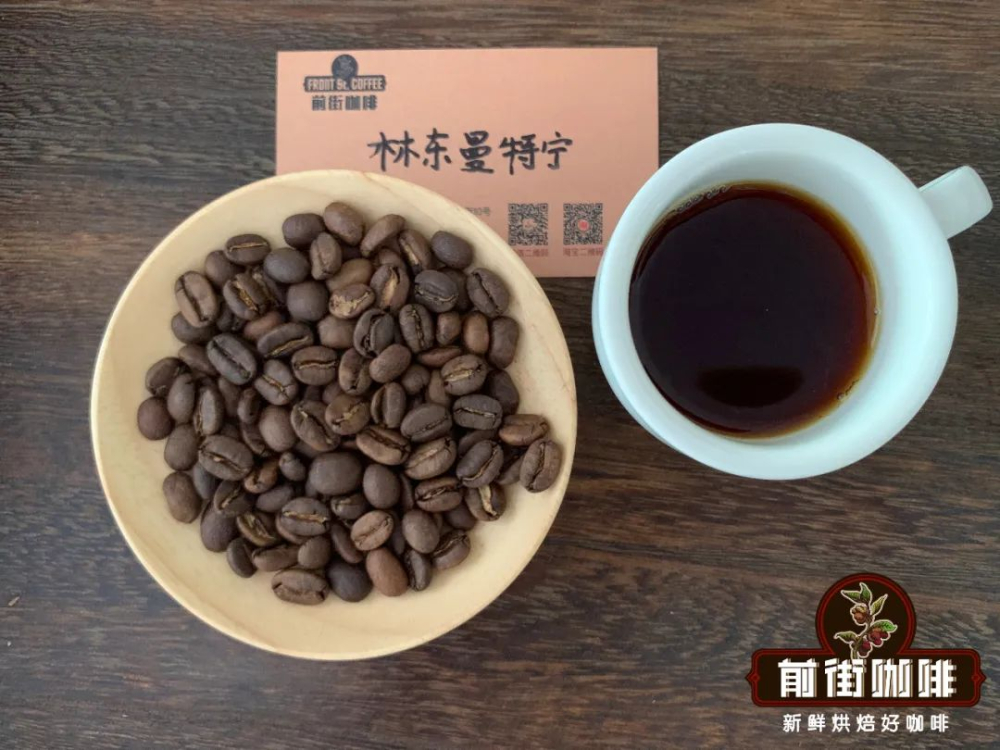
Lintong Mandheling
Speaking of Mandheling, FrontStreet Coffee's daily bean - FrontStreet Coffee's Lintong Mandheling - has won over coffee lovers with its rich aroma, full body and strong flavor. Its unique herbal spice notes are also the hallmark of Mandheling, and beyond Indonesia's growing conditions, the wet-hulling process is one of the sources of that strong flavor.
The Lintong mountainous area southwest of Lake Toba is a newer production region. In the 1990s Lintong Mandheling became extremely popular, and its Typica production increased year by year. Most of these beans are processed using the natural method.
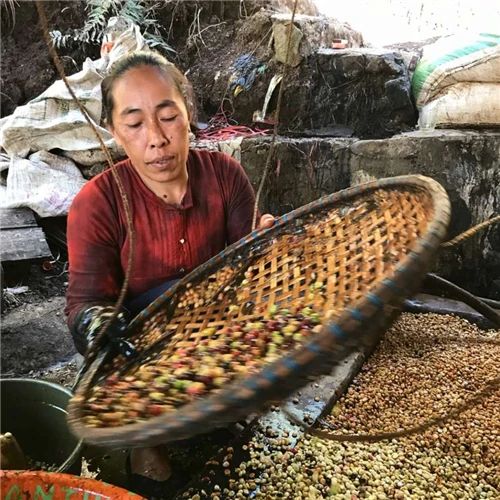
The Unique Wet-Hulling Process
FrontStreet Coffee's Mandheling mostly uses Sumatra's unique wet-hulling process. Because water is precious in Lintong, natural processing was initially the main method, but quality was unstable, so producers switched to something closer to Brazil's semi-natural process. Indonesia's humid climate, however, makes it impossible to dry the sticky parchment beans outdoors for two to three days as Brazil does - in Indonesia that would cause the parchment to mold. The beans are therefore dried for at most several hours to less than a day, until the moisture content drops to 20-35% and the mucilage layer has not yet solidified. Brokers then buy the beans and take them to simple processing plants where machines remove the mucilage layer to prevent over-fermentation and acidic odors. In other words, Lintong Mandheling has its mucilage scraped off while the parchment beans are still wet, which is the main reason for Mandheling's lower fruit acidity and higher body. After further drying, the moisture content of the coffee inside the parchment reaches about 18%, and finally exporters from Medan come to buy the wet parchment beans, placing them in large drying yards or using machines to dry them down to a moisture content of 12% for storage.
From this we can see that, because farmers lack sufficient hardware and equipment, Lintong Mandheling's drying follows a three-stage division of labor shared among farmers, brokers and exporters. The distinctive medicinal herb aroma (similar to burnt grass jelly) and woody flavor of Mandheling both come from the high humidity and the three-stage drying of the mucilage layer. It is also a rare processing method in the world that accidentally created Mandheling's special low-acidity, thick, mellow profile.
Grading System
Indonesian coffee beans use a grading system based on the proportion of defective beans. Indonesian beans are mainly divided into six grades, G1 through G6. Ethiopia uses the same approach, with the highest grades for washed beans being G1 and G2, and the highest grades for natural processed beans being G1 and G3.
Washed: Grade-1; Grade-2
Natural: Grade-1 and Grade-3 to Grade-5
Important Notes:
Regardless of washed or natural processing, both have Gr-1, and the condition is "zero" defects and a Premium Cup. Whether washed or natural, Gr-1 is a rating for the best of the best in specialty coffee or Cup of Excellence coffee. For beans of the same grade, such as Limu Gr-2, there are both good and bad lots, depending on the exporter's sorting level and investment. Under the current "zero" defect requirement, Gr-1 beans (washed and natural alike) are extremely rare, because processing costs are very high and very few suppliers are willing to do it.
How Should FrontStreet Coffee's Mandheling Coffee Be Brewed?
FrontStreet Coffee's approach to brewing Mandheling is to express a full-bodied, clean cup that highlights caramel, chocolate and its signature herbal aromatics, while avoiding any unpleasant bitterness. In fact, every bag of specialty beans from FrontStreet Coffee comes with detailed information and brewing parameter suggestions. The specific brewing recommendations are as follows:
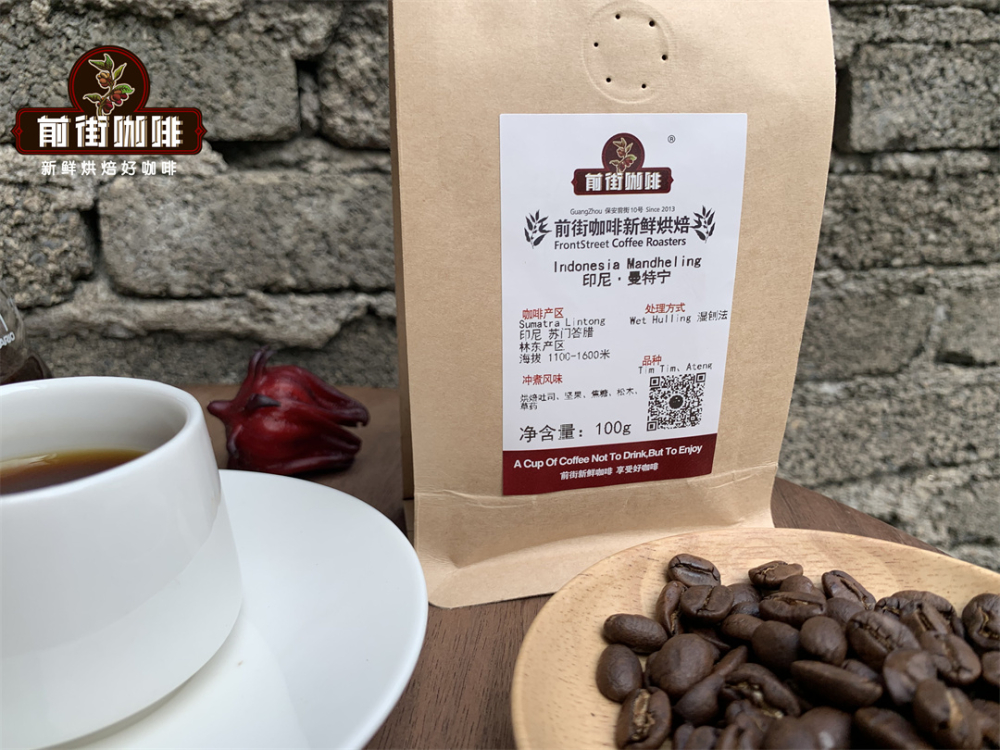
Brewing Parameters: Using a Kono Dripper
Water Temperature: 88°C
Coffee Dose: 15 grams
Coffee-to-Water Ratio: 1:15
Grind Size: medium-fine (70-75% pass-through rate with a China standard #20 sieve)
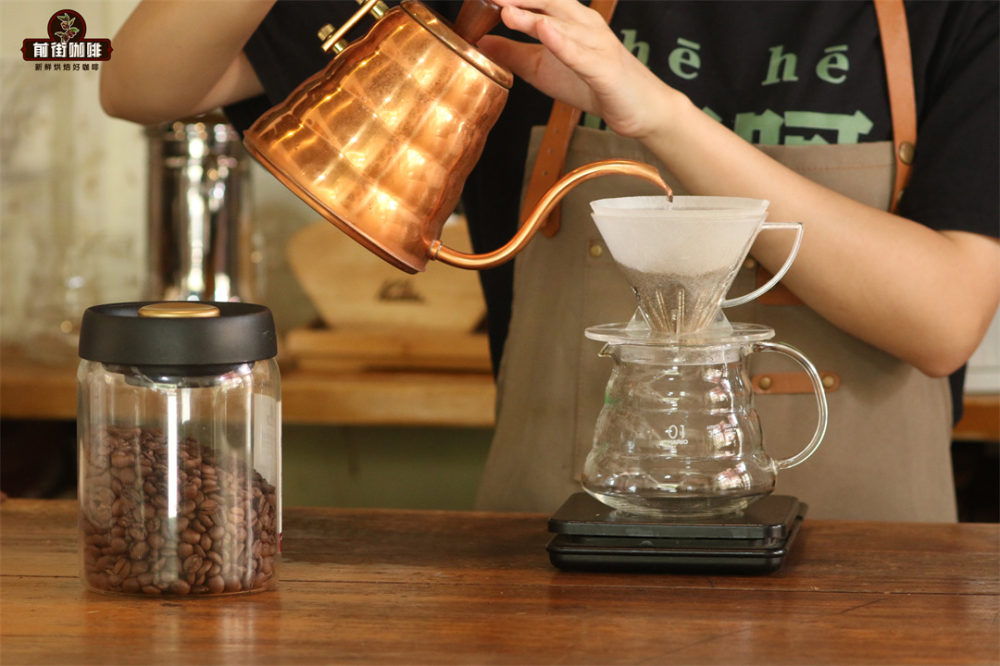
FrontStreet Coffee uses segmented extraction, also called three-stage brewing: dividing the water into three pours better expresses Mandheling's full body and its caramel sweetness. The exact water distribution is 30ml for the bloom, completely wetting the grounds for degassing so later pours extract flavor compounds more effectively; then 100ml; and a final 95ml to lift the sweetness, expressing overall a thick, full body with caramel sweetness and chocolate and nut flavors.
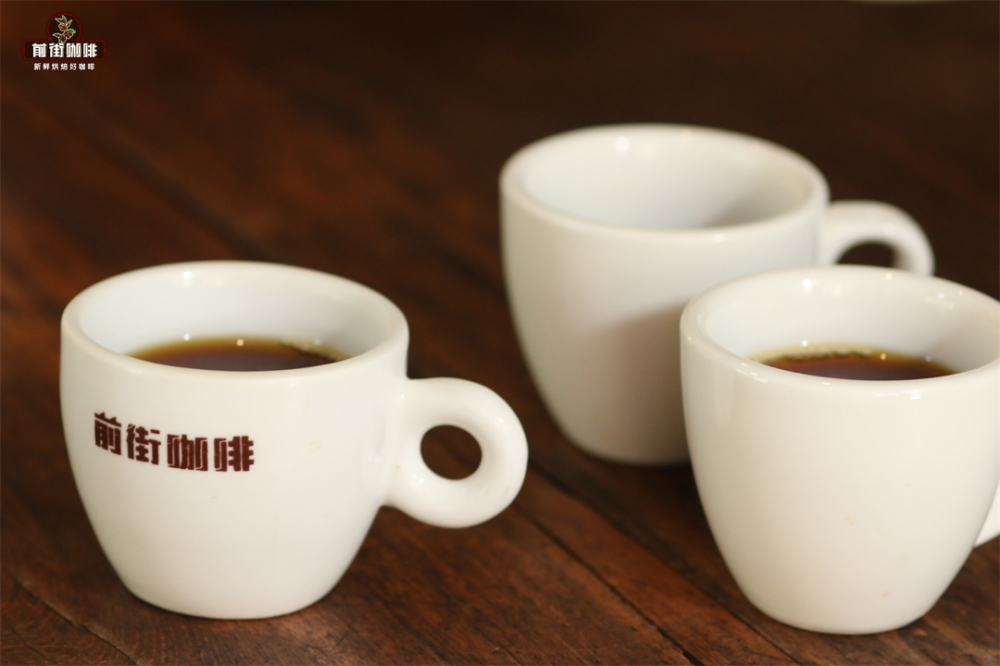
FrontStreet Coffee Recommendation
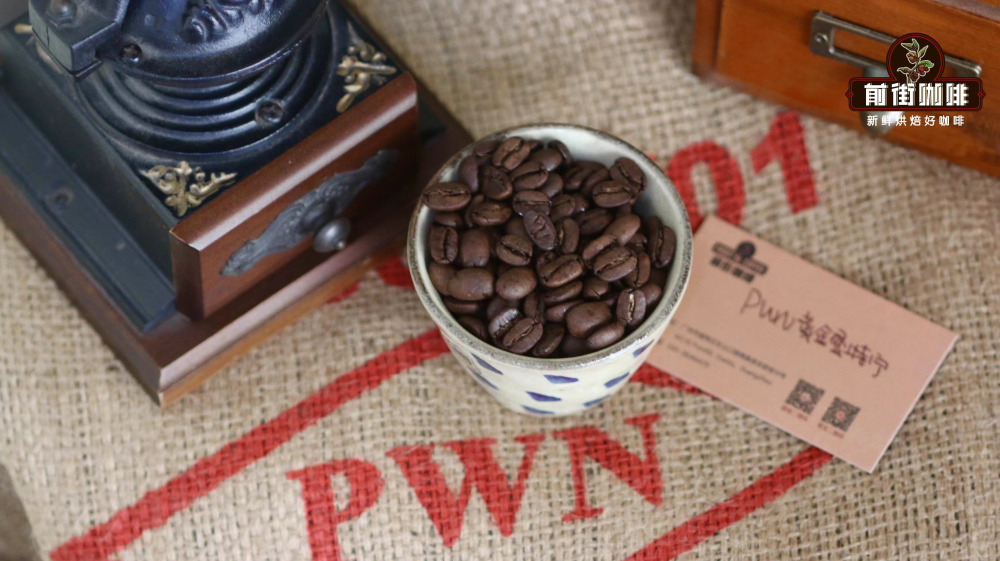
To taste the wet-hulled style at its best, FrontStreet Coffee recommends the highest grade it carries, the PWN Golden Mandheling. PWN buys up high-quality Mandheling green beans and, after purchasing, applies one machine sort plus several hand sorts to pick out plump, flawless beans, so every lot sits at specialty grade. Golden Mandheling is PWN's flagship: even, plump, bright and low in defects, and after a medium-dark roast it carries a rich roasted aroma, with a clean cup and a full, creamy body - ideal for anyone who dislikes acidic coffee.
FrontStreet Coffee's PWN Golden Mandheling shows best as a pour-over. Use 87-88°C water, 15 grams of coffee, a 1:15 ratio and a coarse-sugar grind, and pour in three stages to bring out the mellow body and caramel sweetness: a 30ml bloom to wet all the grounds and let them degas; a second 100ml pour to push out the golden foam and lift the coffee bed; and a final gentle 95ml centered pour to raise sweetness, delivering a thick body with caramel, chocolate and nut flavors.
Important Notice :
FrontStreet Coffee is a long-established specialty coffee roaster in Guangzhou China, selling freshly roasted beans from its own farm in Yunnan as well as dozens of carefully selected single-origin beans from around the world for both pour-over and espresso. The products deliver consistently excellent quality and great value, with shipping within 24 hours. Guangzhou's FrontStreet Coffee shop is recommended by many coffee lovers, and the beans are now available online at the Tmall 。
FrontStreet Coffee has moved to a new address:
FrontStreet Coffee Address: 315,Donghua East Road,GuangZhou
Tel:020 38364473
 Scan and follow the En Gafei WeChat official account. Please indicate that the reprint comes from "En Gafei".