Drip Coffee Bag Brand Recommendations Brewing Ratio Temperature Extraction Guide
An Introduction to Drip Coffee Bags

If you follow coffee trends, you have probably come across "drip coffee bags" - a product born from the demand for both quality and convenience. A good drip coffee bag bridges the gap between freshly roasted specialty coffee and the instant single-serve ritual: tear, hang, pour, and you get a genuine pour-over in about two minutes. FrontStreet Coffee's drip coffee bags are freshly roasted and nitrogen-sealed, and the value is hard to beat. At 10g per bag, one bag brews roughly 150ml of coffee, which works out to just a few yuan per cup - a fraction of the dozens of yuan a cafe will charge for the same thing.
That said, a drip coffee bag is not instant coffee. You cannot simply tear the package open, dump hot water over it, and expect a rich, aromatic cup. A little technique still matters.

How FrontStreet Coffee Produces Its Drip Coffee Bags
FrontStreet Coffee is meticulous about every step of production, so that any coffee lover can brew a proper single-origin cup anytime, anywhere.
1. Cleaning the Grinder
Before packing each type of drip coffee bag, FrontStreet Coffee thoroughly cleans the grinder to prevent flavor carryover between different beans.

2. Grind Size
The single biggest factor in how a drip coffee bag brews is flow rate - it cannot be too fast or too slow, and that comes down to grind quality. A poor grind produces excessive fines and an uneven particle distribution, which clogs the bed during brewing and drags out the extraction. Over-extracted coffee tastes muddy and flat, and no bean, however good, can show its true character that way.
3. Automated Packaging
FrontStreet Coffee packages its drip bags by machine for two reasons: first, machine sealing keeps the outer packaging airtight; second, nitrogen is flushed into each bag during packing, pushing out as much oxygen as possible. Less oxidation means the coffee's flavor stays fresh far longer.

FrontStreet Coffee Indonesia PWN Golden Mandheling Drip Coffee
Mandheling has enjoyed a surge of attention in recent years. FrontStreet Coffee's Mandheling sales were once concentrated in Shanghai, whose drinkers - like those in Taiwan - favor rich, full-bodied cups. The roastery once had a Shanghai customer insisting Mandheling should be roasted even darker than their usual deep roast. Today, more and more people recognize Mandheling's distinct character, and Mandheling orders keep climbing, with many customers now coming from Guangzhou.

This FrontStreet PWN Golden Mandheling is a different animal from ordinary Mandheling. The green beans come from PWN, the Indonesian supplier that was the first to partner with Japan on Golden Mandheling and register it as a trademark. Its defining trait is the absence of the muddled, impure flavors common in ordinary Mandheling. Three rounds of strict hand-sorting guarantee a uniform bean size, which allows even coloring in the roaster. The result is a clean, full-bodied cup with a flavor profile reminiscent of Guangdong herbal tea - which is exactly why Guangzhou locals take to it so readily. FrontStreet Coffee created the PWN Golden Mandheling drip bag precisely because acceptance of this profile keeps growing.
FrontStreet Coffee Brazil Cerrado Red Cherry Drip Coffee
Brazil's coffee arrived from French Guiana, a country in northern South America, in 1720. Brazil was then a Portuguese colony while much of the continent was Spanish - which is why most South American countries speak Spanish and Brazil speaks Portuguese.
The story goes that a Portuguese officer stationed in Brazil wanted to bring Guianese coffee seeds home at a time when exporting coffee was strictly forbidden, so he won the heart of the Guiana governor's wife and smuggled the seeds out. Coffee took to Brazil immediately, spreading from the north down to the southeastern state of Sao Paulo. By 1845, Brazilian beans already made up 45% of the world's coffee, and today Brazil remains the largest coffee exporter on earth.

FrontStreet Coffee not only includes Brazil in its drip coffee lineup but also features Brazilian beans in the FrontStreet Daily Bean series - proof of how indispensable Brazil is to the classic coffee canon. The Daily Beans showcase the most recognizable regional flavor profiles, and they deliver remarkable value for their price.
FrontStreet Coffee Yunnan Small-Bean Drip Coffee
Yunnan coffee is grown mainly from Typica and Catimor. Because the beans run small, the local product is known as "small-bean coffee." The dominant variety is Catimor, a hybrid created by Portuguese breeders by crossing Timor with Caturra to improve disease resistance and yield. Catimor is not of pure Arabica lineage - Timor is a Robusta-derived variety - so despite the Caturra cross, its cup tends toward the plain side with a pronounced bitterness.

This FrontStreet Yunnan small-bean lot from Baoshan is washed processed, which brings out tea-like and melon-fruit aromatics. In the cup it shows rounded acidity with nutty notes, clear sweetness in the finish, and a long caramel aftertaste.
Brewing Guide
How much water does one drip coffee bag need?
With FrontStreet Coffee's standard of 10g per bag, the recommended ratio is 1:15, which yields about 150ml of brewed coffee. You can adjust to taste: use around 130ml for a stronger cup, or 160-200ml for a lighter one.
Do water temperature and pour speed matter? Can a drip coffee bag be brewed twice?
If you are an office worker without a gooseneck kettle, press the water dispenser gently so the flow comes out slow and small. Start with about 30-50cc of hot water, let the grounds steep quietly for 20-30 seconds, then continue pouring until the cup holds 150-200cc in total. If you do own a gooseneck kettle with temperature control, even better: FrontStreet recommends 88-90 degrees C as the ideal brewing temperature. The gooseneck spout gives you steadier control over volume and flow, which is what makes for the most complete extraction.

Coffee is not tea - never re-brew a drip coffee bag. Once extracted, the grounds hold nothing but bitterness and astringency, and the flow rate slows to a crawl, producing an unpleasant cup. FrontStreet Coffee's drip bags are affordable, so there is no reason to feel wasteful using each one just once.
FrontStreet Coffee Drip Coffee Bag Brewing Steps
1. Open the Package
Carefully tear the outer packaging open along the tear line.

2. Hang the Bag
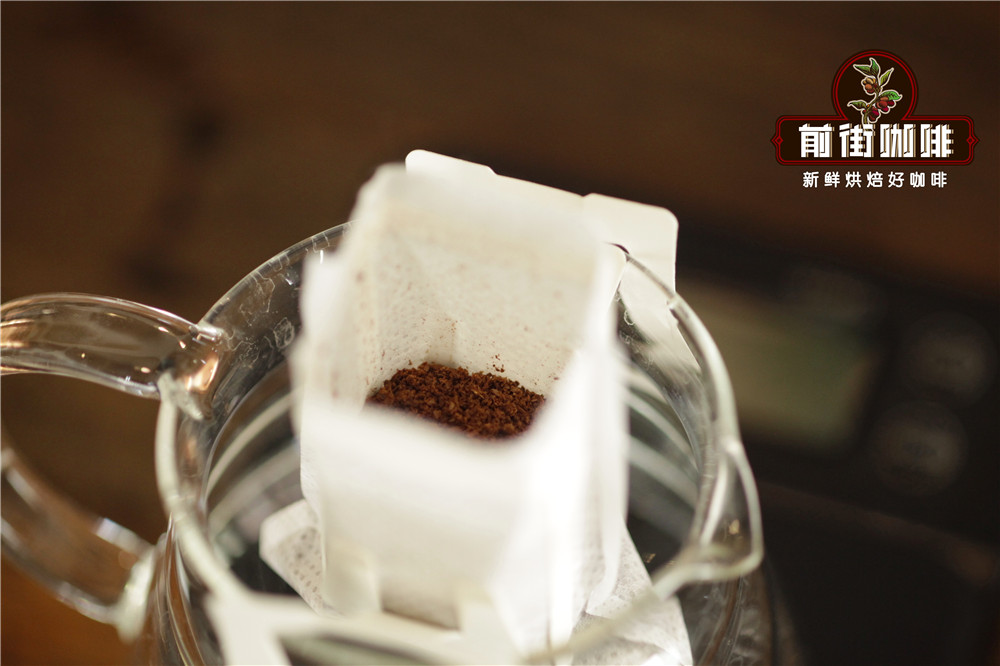
Flatten the drip bag, tear open the inner powder seal, spread the paper hangers evenly, and hook the bag onto the rim of your cup.

3. Water Amount and Temperature
Next, sort out your water. As with pour-over, aim for a 1:15 to 1:16 ratio, so the finished coffee in the cup should reach 140-150ml. Use water at about 90 degrees C. A thermometer or temperature-controlled kettle is ideal; if you don't have one, estimate instead: after the water boils, switch off the heat, take the lid off, and let it sit for 2-3 minutes - at a room temperature of 28 degrees C the water will drop to roughly 90 degrees C.

4. First Pour - Blooming
For the first pour, just wet all the grounds completely and let the coffee bloom for 30 seconds.
5. Second Pour - Full Extraction
After the bloom, pour again in small circular streams, filling the cup each time and letting the bed settle slightly between pours. Repeat until the coffee reaches about 140-150ml, then lift out the drip bag and enjoy. (For a more precise water amount, pre-measure 150-160ml into your kettle, pour it all out during brewing, and remove the bag once the liquid has fully drained into the cup. The whole brew takes about 1 minute.)

6. Finishing Touches
Once extraction is complete, remove the drip bag. If you prefer a milk coffee, add fresh milk to taste.
7. One Bag, One Cup
To get the best flavor out of every drip coffee bag, discard it after a single use.
FrontStreet Coffee Recommendation
If brewing drip bags gets you hooked on pour-over and you want to move up to freshly ground beans, FrontStreet Coffee has a few house favorites that brew beautifully at the same 1:15 ratio and around 90 degrees C described above.
- FrontStreet Yirgacheffe Natural Red Cherry - a classic naturally processed Ethiopian with high sweetness. Expect aromas of ripe fruit, a clear fermented berry sweetness on the palate, then citrus acidity and a creamy body as it cools, finishing with the juiciness of ripe grapes.
- FrontStreet Queen Estate Yellow Bourbon - a standout lot from a respected Brazilian specialty estate. Natural processing gives it excellent sweetness, and it is a true all-rounder for pour-over, French press, moka pot, or espresso machine, showing nuts, cream, cane sugar, and gentle fruit acidity at a medium roast.
Both beans are roasted medium-light to medium to keep their sweetness front and center, making them an easy next step once you have mastered the drip bag.
Important Notice :
FrontStreet Coffee is a long-established specialty coffee roaster in Guangzhou China, selling freshly roasted beans from its own farm in Yunnan as well as dozens of carefully selected single-origin beans from around the world for both pour-over and espresso. The products deliver consistently excellent quality and great value, with shipping within 24 hours. Guangzhou's FrontStreet Coffee shop is recommended by many coffee lovers, and the beans are now available online at the Tmall 。
FrontStreet Coffee has moved to a new address:
FrontStreet Coffee Address: 315,Donghua East Road,GuangZhou
Tel:020 38364473
 Scan and follow the En Gafei WeChat official account. Please indicate that the reprint comes from "En Gafei".