Why won't illy Dark Roast Coffee Grounds Bloom? How to Brew illy Dark Roast Coffee
For more professional coffee knowledge exchange and coffee bean information, follow Coffee Workshop (WeChat official account: cafe_style).
I bought illy's dark roast coffee powder and brewed it as pour-over with a V60 and filter paper. My equipment wasn't complete, so I couldn't control the water temperature, which was probably above 90 degrees, and I couldn't control the flow rate either. I did bloom the coffee, but instead of the expansion I had seen in videos, the bed just sank. Then I brewed about 8g of coffee with 150-170ml of water. On tasting, why did I only get carbon, bitterness, and sourness? The marketing claims "a taste that is sweet and intense, rich in chocolate, caramel, honey, and citrus fruit aromas."
So here are my questions:
- My coffee didn't expand during the bloom. Is that a common phenomenon with this type of coffee powder? Does only freshly ground coffee bloom properly?
- I didn't taste the expected sweetness. Was it down to water temperature and flow rate? Because the temperature was too high and the flow couldn't be controlled, did I end up with only carbon, bitterness, and sourness?
FrontStreet Coffee's Explanation of Blooming Issues
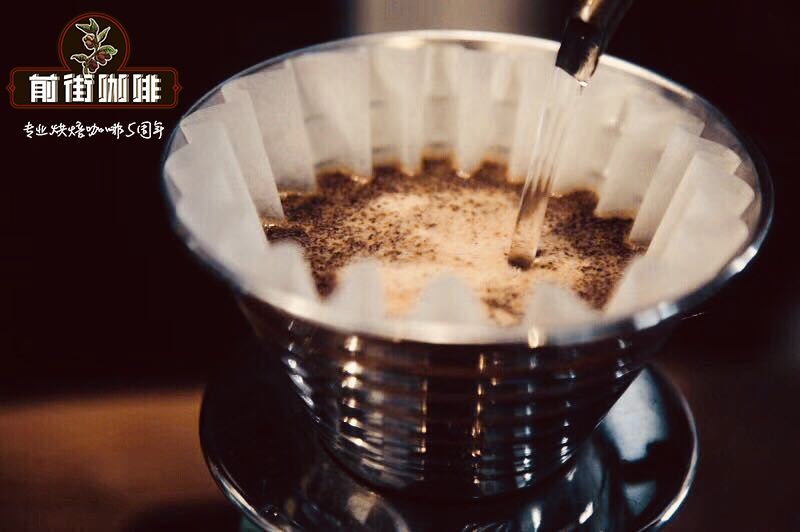
First, what is blooming? After roasting, coffee beans contain large amounts of carbon dioxide, which is why an unopened bag of coffee sometimes looks puffed up. These gases release faster when the beans meet water, so the first pour is followed by a pause that lets the grounds degas fully. If the gas is not fully expelled, it wraps around the grounds and interferes with extraction, causing under-extraction or uneven extraction.
Of course, how much the bed expands during the bloom depends directly on bean freshness, roast level, grind particle size, and water temperature.
Generally, the darker the roast, the more vigorous the gas release, so the bloom expansion is very noticeable; lighter roasts release gas more gently, so the bloom looks less dramatic.
The finer the grind, the better it holds water on the coffee bed instead of letting it drain away, so the bloom looks more pronounced. Coarser grinds let water run straight between the particles, making a proper bloom hard to form, let alone seeing the bed expand.
As mentioned, the main purpose of the bloom is to let the grounds release gas. The fresher the beans, the more gas they hold. Once beans have been stored a long time, most of that gas has already escaped, and the bloom step can be skipped entirely.
If the coffee bed sinks straight down, it is very likely that the beans are no longer fresh, though it could also mean too much water was poured during the bloom, or the flow was too forceful.
Why Does It Taste Burnt and Bitter?
FrontStreet Coffee's analysis of the possible causes:
- The coffee grind is too fine for pour-over. An overly fine grind greatly increases the likelihood of over-extraction.
- Unsuitable coffee-to-water ratio. As mentioned, 8g of coffee brewed with 150-170g of water gives a ratio of 1:18 to 1:21. FrontStreet Coffee considers this too high. In general, the ratio should be between 1:15 and 1:18, but that applies to light roast beans. For dark roast coffee, FrontStreet Coffee recommends a ratio of 1:13 to 1:14 to bring out the roast's best characteristics.
- Water temperature. The darker the roast, the more FrontStreet Coffee recommends extraction at a lower temperature, specifically 84°C-86°C. A lower temperature reduces the extraction efficiency of dark roast coffee.
FrontStreet Coffee Recommendation
If your dark roast keeps disappointing you, the more rewarding route is to start from fresh, well-roasted beans and a pour-over setup you can actually control. FrontStreet Coffee's single-origin pour-over range is a good place to begin, and the V60 is the dripper most of them are developed around.
For a bright, forgiving first cup, FrontStreet Yirgacheffe Gedeb carries the classic washed Yirgacheffe profile of jasmine, lemon acidity, and berry notes with a green-tea finish. If you prefer a juicier, more tropical cup, FrontStreet Ethiopia Huakui brings strawberry, passion fruit, jackfruit, and lychee aromas, high sweetness, and almost no bitterness.
For a fruitier, more structured profile, FrontStreet Kenya Small Tomato is a washed Kenyan from the Thika region, grown at 1,550-1,750 meters with the classic SL28 and SL34 varieties and a 72-hour double washed fermentation. Its dry aroma is full of dried cherry tomato and florals, and the cup shows bright, solid cherry tomato and smoked plum acidity, mid-palate sweetness, and a clean finish with brown-sugar and green-tea notes.
Whichever you choose, remember the lesson from the brew above: use fresh beans, a medium-fine grind at 75-80% pass-through on a #20 sieve for light to medium roasts, and a lower water temperature for darker roasts, so the cup stays sweet instead of turning to carbon and bitterness.
Important Notice :
FrontStreet Coffee is a long-established specialty coffee roaster in Guangzhou China, selling freshly roasted beans from its own farm in Yunnan as well as dozens of carefully selected single-origin beans from around the world for both pour-over and espresso. The products deliver consistently excellent quality and great value, with shipping within 24 hours. Guangzhou's FrontStreet Coffee shop is recommended by many coffee lovers, and the beans are now available online at the Tmall 。
FrontStreet Coffee has moved to a new address:
FrontStreet Coffee Address: 315,Donghua East Road,GuangZhou
Tel:020 38364473
 Scan and follow the En Gafei WeChat official account. Please indicate that the reprint comes from "En Gafei".