How Much Does Blue Mountain Coffee and Kopi Luwak Cost Per Cup? What Grade Does Mandheling Coffee Belong To?
Professional coffee knowledge exchange. For more coffee bean information, follow Coffee Workshop (WeChat public account: cafe_style).
The Origin Story of Mandheling Coffee
In 1945, Japanese soldiers stationed in Sumatra tasted the local coffee and found it exceptionally delicious. They asked the vendor what the coffee was called.
The story goes like this:
Japanese Soldier: Umai! Kore doko kara? (Delicious! Where is this from?)
(The vendor thought he was being asked where he was from.)
Vendor: Sahaja? Dari Mandailing, Tuan... (Sir, I am from Mandailing.)
Japanese Soldier: E? Nani? Mandeeringgu? (Huh? What? Mandailing?)
Vendor: Ya tuan. Mandailing tuan. (Yes sir, from Mandailing.)
Japanese Soldier: Ah, sou... (while nodding)
Because of the language barrier, the Mandailing vendor misunderstood and thought he was being asked where he came from, so he answered "Mandailing."
Several years later, a Japanese veteran traveled to Sumatra to look into exporting local "Mandheling coffee" to Japan. Pawani Company became the first firm to export 15 tons of Sumatran green coffee to Japan. Thanks to that beautiful misunderstanding, "Mandheling" became synonymous with coffee from the island of Sumatra.
Golden Mandheling Coffee
Golden Mandheling is produced by Indonesia's finest coffee company, P.W.N. -- the abbreviation of Pawani Company. Golden Mandheling from P.W.N. is packed in 30-kilogram bags, each with a certificate of guarantee.
The English name "Golden Mandheling" has now been registered by Pawani Company in Indonesia.
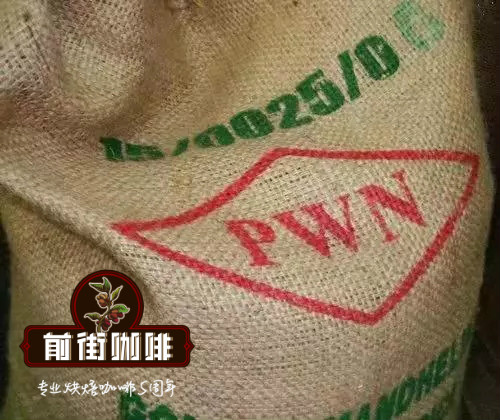
*The image above shows the burlap bags of Golden Mandheling produced by PWN Company.*
Variety Characteristics
Golden Mandheling is harvested entirely by hand, using careful agricultural processing and manual selection. Four screenings and four selections eliminate defective beans to produce a high-quality coffee. Generally, Sumatran Mandheling has an earthy flavor with a strong grassy aftertaste, and a deep roast can bring bitterness. The carefully selected Golden Mandheling beans, however, are full and uniform, with a rich aroma and a taste that is more intense, rounded, and mellow than regular Mandheling. It leaves a slightly sweet aftertaste, making it the best choice for anyone who enjoys adding milk. In the world of straight coffee, Golden Mandheling can be said to hold the undefeated title.
Origin
Sumatra is most famous for Arabica Mandheling, and the northern areas also hold many Robusta growing regions. The best traditional Arabica coffee from northern Sumatra is marketed under the names Lintong and Mandheling.
Lintong refers to coffee grown in a small area in the southwestern part of Lake Toba, in the Lintong administrative region. The small growing areas are scattered across a high, undulating clay plateau covered with ferns.
At FrontStreet Coffee there are four types of Mandheling: Lintong Mandheling, Golden Mandheling, Aged Mandheling, and Tiger Mandheling. So how do they differ? FrontStreet Coffee compares the four in its shop:
Lintong Mandheling: herbal, chocolate, caramel, well balanced overall.
Golden Mandheling: nuts, spices, herbs, licorice, chocolate, caramel, clean and gentle flavor.
Tiger Mandheling: nuts, cream, dark chocolate, caramel, traditional Chinese medicine, noticeable sweetness, relatively clean and clear flavor.
Aged Mandheling: ripe Pu-erh tea, caramel, herbal, chocolate, lower acidity.
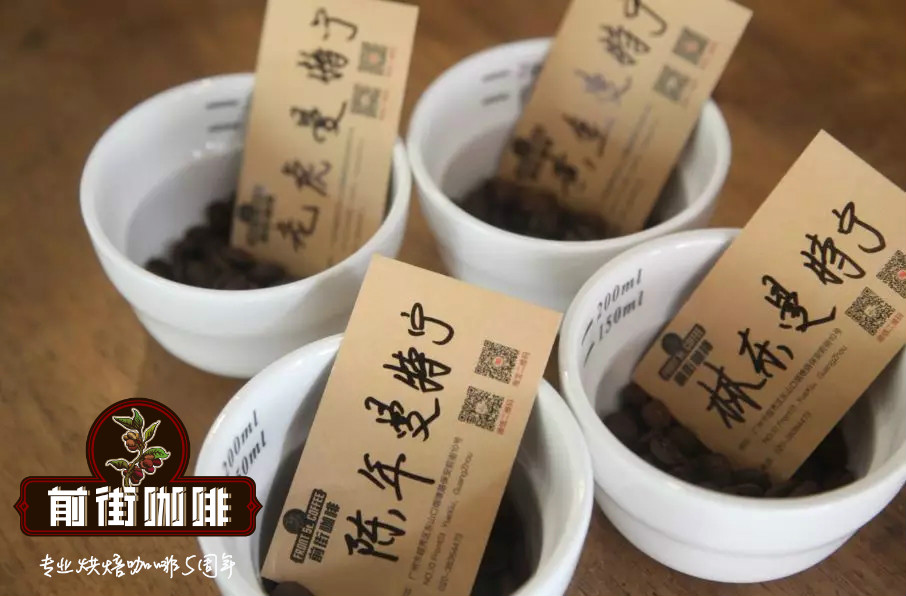
At FrontStreet Coffee, the most popular choice among customers is undoubtedly P.W.N.'s Golden Mandheling. Its unique, rich, and mellow aroma makes it the perfect pick for cappuccino and latte lovers. Golden Mandheling is the highest quality and the best of all Mandheling varieties.
Brewing Recommendations
So how does FrontStreet Coffee recommend brewing Mandheling?
FrontStreet Coffee's recommended brewing method: pour-over
Filter: KONO dripper
Water temperature: 86-88°C
Grind size: medium, similar to sugar granules
Coffee-to-water ratio: 1:13-1:14
Extraction time: about 1 minute 50 seconds
Extraction technique: segmented extraction
Use 17g of coffee grounds and bloom with twice their weight in water (34g) for about 30 seconds. When the coffee bed begins to dry, the bloom is complete. With a larger water flow, gently pour in circles to 120-130g, then pause. When the water level drops and the bed is about to be exposed, continue pouring to about 221g to finish. Remove the filter when the water level drops and the bed is about to be exposed again.
Comparison with Other Premium Coffees
So what characterizes Blue Mountain and Kopi Luwak, which are also known for rich, aromatic profiles? FrontStreet Coffee shares both.
Blue Mountain coffee is wet-processed Typica, and only coffee grown above 666 meters in Jamaica's Blue Mountains may be called Blue Mountain coffee. FrontStreet Coffee's Blue Mountain comes from Jamaica's Blue Mountain Clifton Farm No. 1. FrontStreet chooses a medium-dark roast to highlight the rich body of these beans. Blue Mountain offers balanced acidity, sweetness, and bitterness, with even a subtle floral aroma and a rich mouthfeel.
Kopi Luwak, also called civet coffee, is made when civets eat coffee fruit and excrete the digested fruit. Farmers carefully extract the beans from the shells one by one, dry them naturally in the sun, and prepare them for sale. Its quality is considered incomparable to any other coffee. It has rich flavors similar to caramel or chocolate, with a syrupy texture that is very smooth without needing milk or sugar. This coffee offers natural sweetness, unique flavor, and aroma.
Because the coffee combines with the civet's digestive enzymes, the resulting civet coffee is unique and cannot be compared to any other coffee product. Because of its special production process, rare yield, and high price, civet coffee is considered one of the world's top-tier coffees, alongside Indonesian civet coffee.
FrontStreet Coffee Recommendation
If you want to taste the Mandheling profile at its best, FrontStreet's PWN Golden Mandheling is the top of the line. It comes from PWN, also known as Pawani, whose Golden Mandheling is graded on strict terms: beans must be 18 mesh or larger, and a 300g green-bean sample may hold fewer than three defective beans to meet the top G1 standard, after which the lot passes three rounds of hand sorting. The result is a cup that is cleaner and sweeter than ordinary Mandheling. Supply is limited, and the PWN certificates and marked bags in FrontStreet's listings are what distinguish it from other Golden Mandheling.
FrontStreet roasts both its Lintong Mandheling and PWN Golden Mandheling to a medium-dark level, aiming for black chocolate and caramel while keeping the wild herbal note that wet-hulling gives Sumatran beans. If you like a bold, low-acid cup, this is the style to choose.
For hand brewing, FrontStreet suggests 87-88°C water, 15g of grounds, a 1:15 ratio, and a grind about as coarse as granulated sugar. Pour in three stages -- 30 ml to bloom, 100 ml to raise the bed and bring out the golden foam, then a soft 95 ml through the center to finish -- which highlights the thick body, caramel sweetness, and chocolate and nut flavors.
Important Notice :
FrontStreet Coffee is a long-established specialty coffee roaster in Guangzhou China, selling freshly roasted beans from its own farm in Yunnan as well as dozens of carefully selected single-origin beans from around the world for both pour-over and espresso. The products deliver consistently excellent quality and great value, with shipping within 24 hours. Guangzhou's FrontStreet Coffee shop is recommended by many coffee lovers, and the beans are now available online at the Tmall 。
FrontStreet Coffee has moved to a new address:
FrontStreet Coffee Address: 315,Donghua East Road,GuangZhou
Tel:020 38364473
 Scan and follow the En Gafei WeChat official account. Please indicate that the reprint comes from "En Gafei".