How to Choose Coffee Beans Suitable for Espresso? Must Espresso Use Dark Roast Beans?
Many coffee drinkers first fall in love with coffee through espresso-based drinks. FrontStreet Coffee's lattes and Americanos, both built on a shot of espresso, are firm favorites with our customers, and the questions we hear most often are: does espresso have to be made with dark roast beans, which beans work best for home espresso, and is an espresso machine really the only way to make it? In this article, FrontStreet Coffee takes a closer look at espresso.
What is Espresso?
Espresso is the foundation of Italian coffee culture. It was invented roughly a century ago, in the early 20th century, when Luigi Bezzera of Milan developed an entirely new steam-driven brewing system. Because the brew took so little time, it was named "espresso" — the Italian word for "express," or fast.
How to Judge Coffee Bean Freshness
Before choosing any espresso blend, how do you know whether the beans are actually fresh?
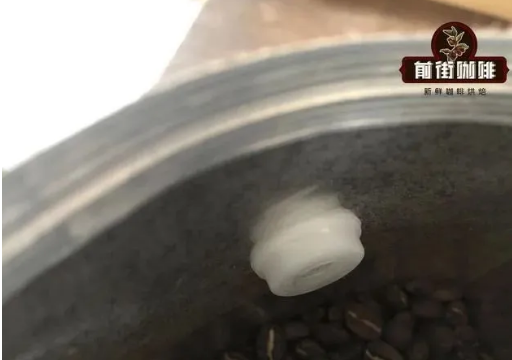
First, look for beans with a clearly printed roast date (not an expiration date or a best-before date), buy from reputable roasters who emphasize fresh roasting, and stick with brands you trust. Second, check the packaging: quality coffee bags usually feature a one-way degassing valve (the small button-like hole on the bag) that lets the beans release naturally produced carbon dioxide. Hold the valve up to your nose and gently squeeze the bag. If what you smell is a rich, inviting coffee aroma, the beans are fresh. If the aroma is faint — or worse, smells of rancid oil — the coffee has long since gone stale and should be left on the shelf. Every bag of coffee FrontStreet Coffee sells uses one-way valve packaging so that it reaches customers at peak freshness. We insist on fresh roasting because, once more than 50 days have passed since the roast, coffee has essentially lost all of its aroma. That said, fresher is not always better: in the first two days after roasting, the aroma has not yet stabilized.
Espresso beans are typically roasted to a medium-dark level, which leaves them loaded with carbon dioxide. FrontStreet Coffee recommends leaving them unopened, stored in a cool, dry place, and letting them rest for 7 days from the roast date before brewing — resting simply means giving the beans time to vent their trapped CO2.
Why Use Blended Beans for Espresso?
FrontStreet Coffee recommends espresso blends rather than single origins for pulling espresso shots. Why?
Blending means combining beans from different origins so that each one's strengths show up in the cup. If one component is silky but lacks fragrance, you can add another with an intense aroma; the beans complement or reinforce one another, creating a fuller, more rounded flavor than any single origin could deliver on its own. Sometimes the green beans are mixed before roasting, which is called blending before roasting; sometimes the beans are roasted separately and mixed afterward, which is called blending after roasting.
Both approaches are legitimate — which one to use depends on the recipe. Blending after roasting lets each component get its own roast profile, so every bean performs at its best. The key, FrontStreet Coffee would remind you, is knowing the flavors of the world's different coffee origins before you blend. Beans vary by origin and variety, with subtle differences in acidity, bitterness, sweetness, aroma, and body, and the roaster needs a clear picture of each origin's character to adjust the roast curve accordingly. Single-origin coffees, by contrast, are all about showcasing the distinctive personality of one particular bean.
FrontStreet Coffee's Espresso Blend Selection
FrontStreet Coffee currently offers four espresso blends. Here is how they differ:
1. Sunflower Warm Sunshine Espresso Blend
Honduras Sherry : Yirgacheffe Natural Red Cherry, ratio 6:4, blended after roasting.
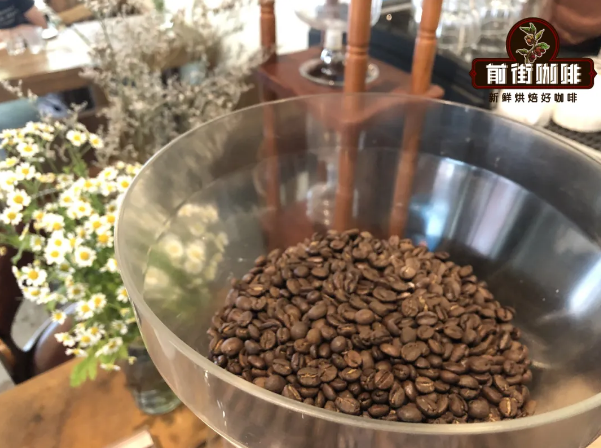
Flavor characteristics: Bright fruit acidity with a lingering berry note, rich wine and chocolate flavors, and a smooth, sweet finish.
The Sherry beans contribute a pronounced whisky aroma and a liquor-chocolate aftertaste, while the natural Yirgacheffe red cherry adds fermentation sweetness and berry fragrance plus a silky mouthfeel. Because this Warm Sunshine blend is packed in half-pound bags, it suits cafés that want a distinctive signature espresso and can pay attention to bean quality, or home espresso drinkers with modest consumption.
2. FrontStreet Coffee Premium Blend
Colombia : Brazil, ratio 3:7, blended after roasting.
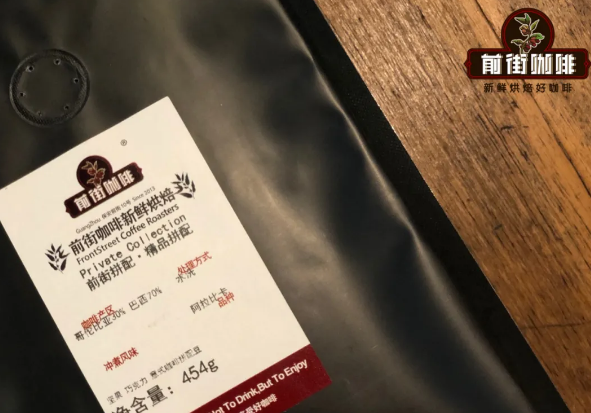
Flavor characteristics: A comfortable bittersweetness, silky-smooth entry, a light herbal fragrance, fresh aroma with just a touch of bitterness, and a sweet, lingering finish.
Beans from Colombia's Huila region bring pleasant acidity, mellow aroma, and abundant sweetness, while Brazil's Cerrado beans contribute a soft bittersweetness and an extremely smooth mouthfeel. This premium blend suits just about any specialty coffee shop.
3. FrontStreet Coffee Commercial Blend
Colombia : Brazil : Robusta, ratio 3:6:1, blended before roasting.
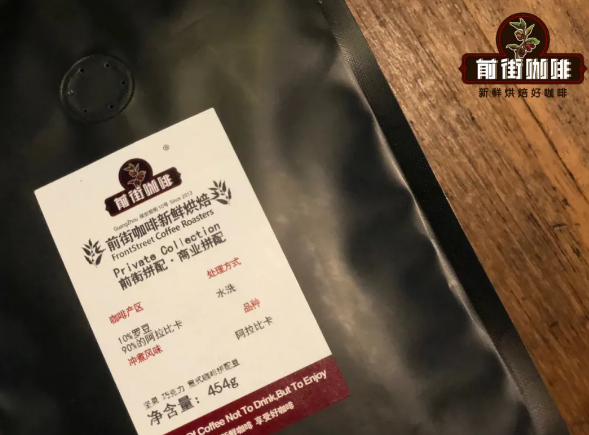
Flavor characteristics: A classic cup: caramel sweetness, nut and cocoa notes, dark chocolate, balanced sweet and sour, a gentle bittersweet edge, and a persistent aftertaste.
As with FrontStreet Coffee's Premium Blend, Huila beans supply acidity, aroma, and sweetness, and Cerrado beans supply smooth body, while a small share of Robusta boosts the crema. This commercial blend is suitable for coffee shops and beverage outlets of every size.
4. FrontStreet Coffee Basic Blend
Yunnan AA : Brazil, ratio 3:7, blended after roasting.
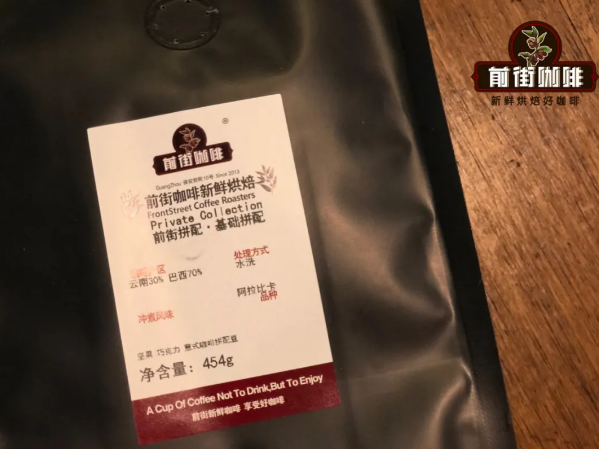
Flavor characteristics: Soft fruit acidity, caramel sweetness, nut and dark chocolate notes, a smooth and thick body, though a relatively light overall cup.
Yunnan's growing conditions are remarkably close to Colombia's — high altitude and large day-night temperature swings — giving a mellow, fragrant cup with moderate acidity, rich body, uniform beans, high oil content, and a fruity aroma. Its quality and taste are similar to Colombian coffee. Paired with smooth Brazilian Cerrado beans, this basic blend is a good fit for small cafés, bakeries, and beverage shops.
Purposes of Coffee Bean Blending
Mixing different coffee beans serves two main purposes:
1. Stable Flavor
Coffee is an agricultural product, and even the same variety tastes different from harvest to harvest. Combining several beans smooths out those year-to-year swings and keeps the flavor of the blend essentially consistent over time.
2. Balanced Taste
An espresso machine tends to amplify the most dominant characteristic of any bean. That is why we almost never pull espresso from a single variety: if the bean leans bitter, the shot will be exceptionally bitter; if it leans acidic, the shot will be sharply sour. Blending lets us balance those traits against each other.
How to Make Espresso?
1. Espresso Must Be Made with an Espresso Machine
When choosing a machine, check that there is enough clearance between the portafilter and the drip tray to fit your favorite mug. For consistent quality, the machine must deliver consistent pressure — a proper espresso machine generates 9 bar of pressure. Ideally it also lets you set different temperatures for different coffees, or at least holds a stable, consistent temperature. If you want to steam milk, you need adequate control over the steam wand. For all these reasons, avoid machines with a single on/off button and choose models with traditional knobs or dedicated controls. These are the factors you cannot afford to ignore when buying an espresso machine.
2. Grinder Selection
Espresso grinders are defined by their extremely fine grind, fast throughput, and large burrs, and grind uniformity is the single hardest benchmark for judging a grinder. Espresso grinders can achieve a fineness that other grinders simply cannot reach.
Conical burr grinders are the best choice for espresso. They pair a cone-shaped burr at the center with an outer ring burr: as beans drop in from above, they are drawn downward by the rotating cone, where the grinding happens. Because the material flows top-down rather than being forced out sideways, the particles collide far less than in a flat burr grinder, so conical burrs produce much less fines and grind far more uniformly. Conically ground particles are more granular, which lengthens the water's path through the coffee and slows the saturation of each particle's interior. As a result, fewer soluble compounds are released in the early stage, so the shot's concentration does not spike too quickly; and because the particles are chunkier, the woody, fibrous compounds dissolve more slowly even during longer extractions, making off-flavors and astringency less likely.
3. Distribution and Tamping
Distribution tools can break up clumps and level the coffee bed, but they have drawbacks too: they waste a little coffee, they take practice to operate, the downward pressure they apply can create internal cracks, and they only level the surface without guaranteeing an even density throughout the puck.
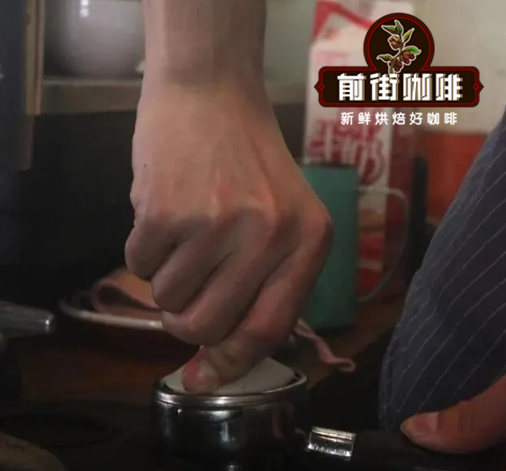
Tamping compacts the loose grounds so the puck offers real resistance against 9 bar of water pressure. Tamp too lightly and water rushes through too freely, producing a thin, watery shot; tamp with excessive force and the puck's resistance becomes so high that water struggles to penetrate, yielding a slow shot that is thick and burnt-bitter. In practice, apply firm downward pressure with your arm (roughly 15–25 kg of force) in a single press. Hold the tamper lightly, adjust your grip until it feels like a natural extension of your arm, keep your wrist straight, and rest the bottom of the tamper's handle in your palm — this posture minimizes strain on the wrist.
4. Coffee-to-Water Ratio
The golden ratio for espresso is 1:2 — 20 grams of ground coffee yielding 40 grams of brewed espresso — though in practice the ratio can range anywhere from 1:1 to 1:4 depending on personal taste and regional style. To bring out the whisky aroma and chocolate finish of FrontStreet Coffee's Warm Sunshine blend, we pull a single shot at 1:1.4 to extract 20 grams of liquid, essentially a ristretto; for a double we use 1:2 to extract 40 grams.
5. Extraction Temperature
Espresso extraction depends on water temperature, pressure, and time to dissolve the soluble solids in the grounds. Water that is too hot, or an extraction that runs too long, causes over-extraction and bitterness; water that is too cool or a shot cut too short causes under-extraction and a thin, sour cup. In general, extraction is carried out at roughly 90–96°C.
6. Extraction Time
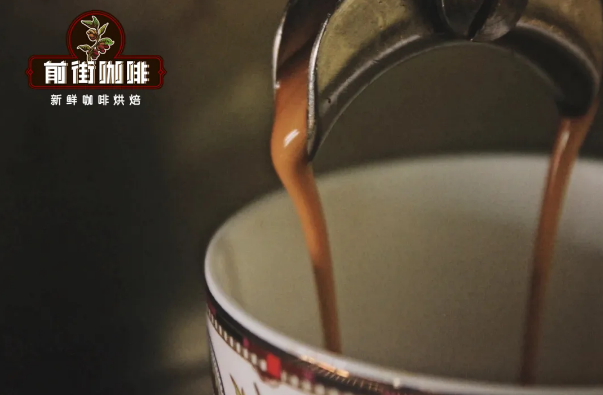
Brew time also shapes the taste of the shot, and it depends on the machine's pressure and flow design, the portafilter's diameter, depth, and basket hole pattern, and the dose and grind size. The golden extraction window is 25–28 seconds, but extraction time is really the combined result of tamping, dose, and grind size — fine-tuning it requires a barista who understands the beans.
FrontStreet Coffee currently builds its espresso on a blend of barrel-aged Sherry beans and natural-processed Yirgacheffe Red Cherry. The 60% Honduras Sherry provides flavor depth and body, while the 40% natural Yirgacheffe lifts the aroma and acidity.
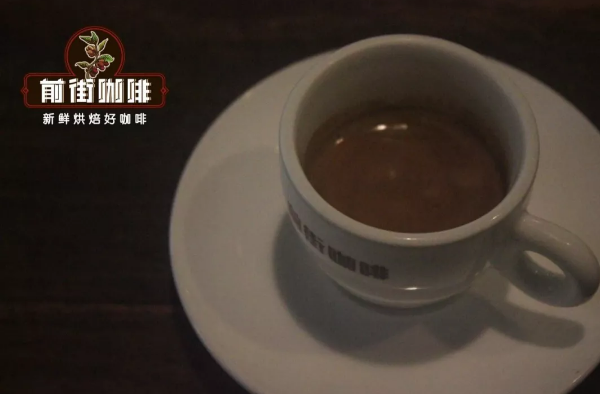
FrontStreet Coffee Espresso Extraction Parameters:
Grinder: Fiorenzato 900N
Grind size: 1.6
Pressure: 9 bar±2
Temperature: 90.5~96°C
Time: 20~30 sec
Dose: 20g (double espresso)
Yield: 40ml
Extracted espresso flavor: Smooth texture and medium body, with clear fruit acidity, a light berry aroma, whisky notes, rich chocolate, and a distinct sweet finish.
FrontStreet Coffee Recommendation
If you are after a dependable everyday espresso, the FrontStreet Coffee Premium Blend is the shop's classic choice: built on Brazil Cerrado and Colombia Huila beans, it has anchored our Americanos and lattes for nearly a decade, delivering the familiar, comforting Italian-style cup of nuts, chocolate, and caramel sweetness that works equally well straight or with milk.
For drinkers chasing thicker crema and a more traditional espresso character, the FrontStreet Coffee Classic Blend follows the time-honored Mamba formula of Brazil and Robusta, producing exceptionally rich, velvety crema that suits both home machines and professional setups, while the Dark Cocoa Blend — made entirely of Arabica beans — offers an affordable, full-bodied option for cafés watching costs without sacrificing flavor.
Important Notice :
FrontStreet Coffee is a long-established specialty coffee roaster in Guangzhou China, selling freshly roasted beans from its own farm in Yunnan as well as dozens of carefully selected single-origin beans from around the world for both pour-over and espresso. The products deliver consistently excellent quality and great value, with shipping within 24 hours. Guangzhou's FrontStreet Coffee shop is recommended by many coffee lovers, and the beans are now available online at the Tmall 。
FrontStreet Coffee has moved to a new address:
FrontStreet Coffee Address: 315,Donghua East Road,GuangZhou
Tel:020 38364473
 Scan and follow the En Gafei WeChat official account. Please indicate that the reprint comes from "En Gafei".