Guatemala Antigua Flora De Dios Coffee Bean Variety Flavor Profile Cupping Pour-Over Roasting Parameters
FrontStreet Coffee considers Antigua Guatemala's most renowned coffee region. Rich volcanic soil, low humidity, abundant sunshine, and cool nights combine to create Antigua's exceptional coffee. On the FrontStreet Coffee menu, one very famous bean from the region stands out: the Guatemala Flor de Café. This bean is a brand under La Minita Company — Flor de Café is their star product, processed by Guatemala's respected Pastores Mill. Under La Minita's strict supervision, everything from green-bean purchasing to washing and sun-drying follows La Minita's rigorous standards, and they oversee the entire journey of Flor de Café from cultivation to packaging. These meticulous procedures ensure that the coffee delivered by Pastores Mill is of the highest quality.
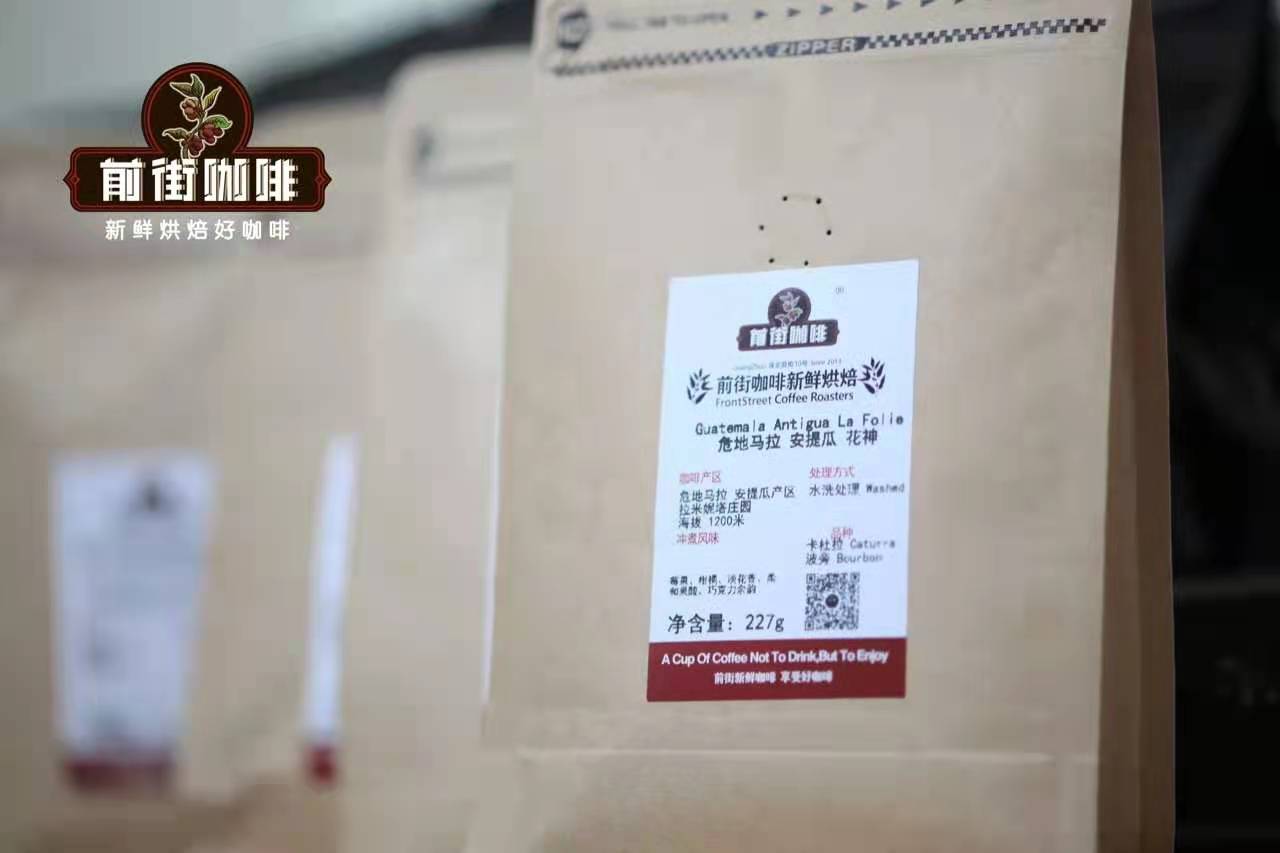
FrontStreet Coffee · Guatemala Antigua La Minita Flor de Café
Region: Antigua
Altitude: 1200-1600m
Company: La Minita
Varieties: Bourbon, Caturra
Processing Method: Washed
Grade: SHB
Introduction to Guatemala
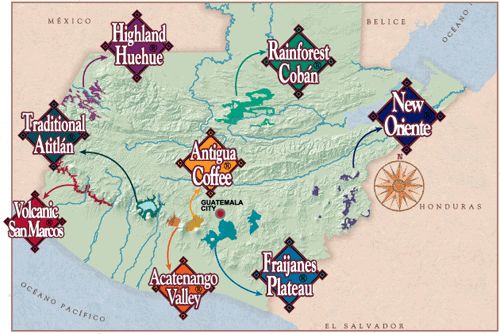
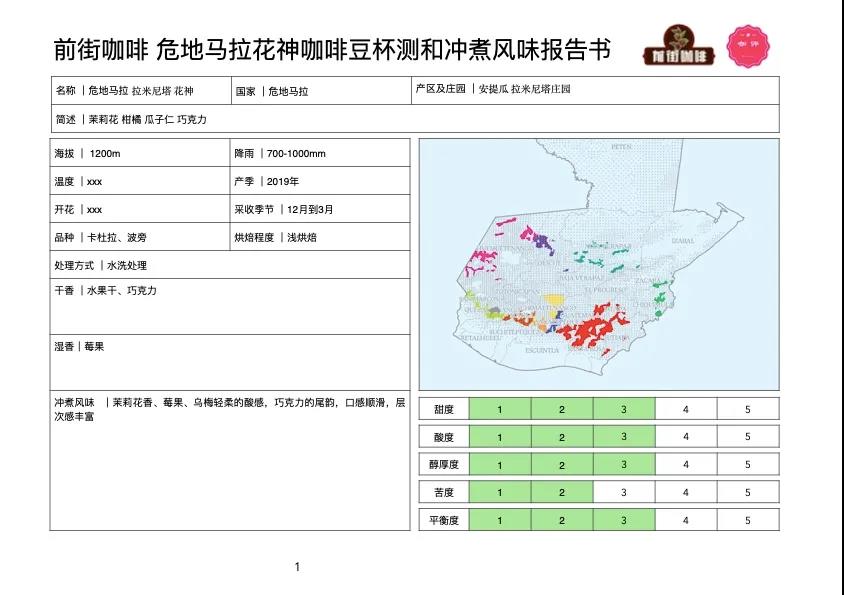
Guatemala sits on the Central American isthmus, a land of volcanic mountains and highlands that produces high-quality, high-altitude Central American strictly hard beans, ranking as the world's 9th-largest coffee producer. Its main coffee regions comprise seven producing areas: Antigua, Huehuetenango, Atitlán, Cobán, Fraijanes, San Marcos Volcano, and Acatenango. All coffee from these seven regions is Arabica, grown in highland terrain under subtropical conditions; abundant, stable rainfall and fertile volcanic-ash soil provide excellent natural conditions for cultivation across the country.
Each region has its own flavors — superior acidity and fruity smoothness — belonging among the world's top coffees and excellent as single origins. The Antigua region lies within the area dominated by the Madre plateau that crosses mountainous Guatemala. Thanks to these natural conditions, Antigua has become the country's most famous region.
The Antigua Origin
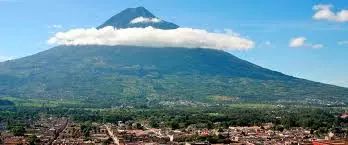
The Guatemala Flor de Café described above is a La Minita brand bean from Antigua — a highland surrounded by active volcanoes at 1,850 meters, and Guatemala's most awarded and best-known coffee region.
Antigua sees little rainfall in summer, and winter occasionally brings frost from extreme cold — conditions actually unsuited to coffee trees. Fortunately, the region sits in an active volcanic zone: after eruptions, volcanic pumice falls into the soil and cools, and its countless fine pores are excellent at retaining moisture. Estates also plant large numbers of shade trees that shield the coffee from winter cold. These factors, together with significant day-night temperature swings, create Antigua's unique microclimate — giving its beans a subtle smoky note and rich fruity aroma.
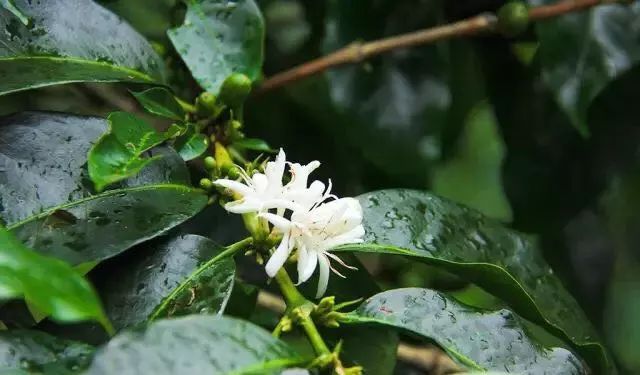
La Minita is famed for its excellent cultivation and processing techniques and extremely strict quality control, commissioning Antigua's largest washing plant, Las Pastores, to process the green beans to those standards under the Flor de Café name. While preserving the original regional character, FrontStreet Coffee's Guatemala Flor de Café shows a dry aroma rich in floral and tea notes; on tasting, lime acidity and berry flavors emerge, transitioning into a honey-like finish. Excellent clarity and layered complexity are the hallmarks of this Antigua Flor de Café.
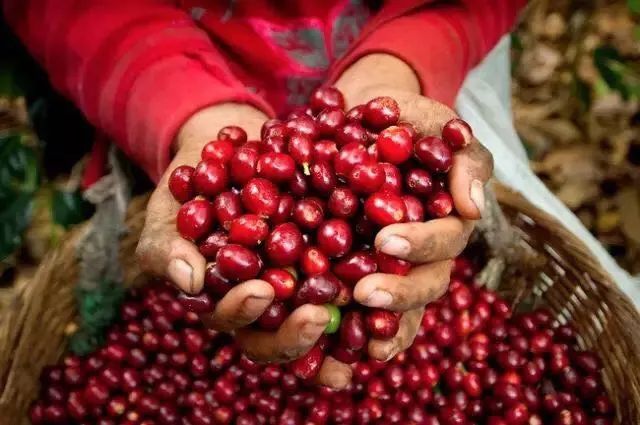
La Minita does not use pesticides — its climatic and altitudinal advantages keep pest populations low, and the few pests present cause little harm to the trees. As the rainy season ends, the fruit begins to ripen: green cherries start turning red. Ripening is slow and uneven — unlike the rapid, uniform flowering — so harvesting must be handled with great care, collecting only fully matured deep-red fruit. A single tree may require up to 5 separate passes based on ripeness. La Minita tests the soil twice a year to determine fertilization needs, is very cautious with yield-boosting products, and fertilizes roughly 3 times a year.
In addition, micronutrients such as zinc, boron, and copper are applied to nourish the trees and prevent disease. This scientific cultivation has built Flor de Café's excellent flavor and its reputation for consistent quality over the years. Following La Minita's famously strict procedures, the entire process from cultivation to packaging is supervised, and the estate's standard operating procedures are tightly controlled — ensuring the coffee delivered by Pastores is of the highest quality. Antigua itself is the most famous of Guatemala's seven regions: high altitude, unique volcanic soil, and shade cultivation give its beans a truly distinctive regional flavor.
Washed Processing Method
The lot of FrontStreet Coffee Guatemala Flor de Café uses the washed method. Here are its steps:
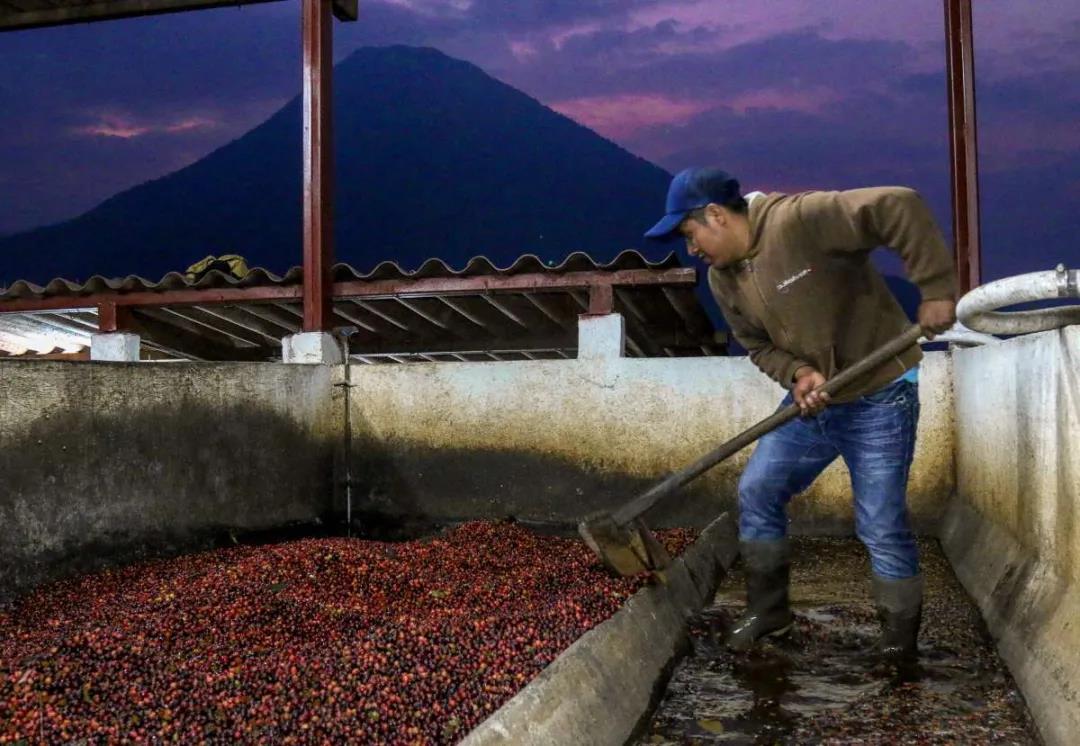
1. Removing Floaters: The cherries are poured into large water tanks. Underdeveloped inferior fruit floats to the surface, while mature, full fruit sinks. The floaters are scooped off, completing the first sort.
2. Removing Pulp and Skin: A pulping machine strips the outer skin and pulp, leaving mucilage, parchment, and silver skin.
3. Fermentation: This step removes the mucilage biologically: the pulped fruit rests in fermentation tanks for 16-36 hours while fermentation bacteria dissolve the mucilage.
4. Washing: After fermentation, bacteria and impurities may cling to the beans, so they are washed again — a step that consumes large amounts of fresh water to guarantee thorough cleaning.
5. Drying and Hulling: The beans are sun-dried to reduce moisture to 10-14%, then a hulling machine removes the remaining parchment and silver skin, completing the process.
Green Bean Analysis
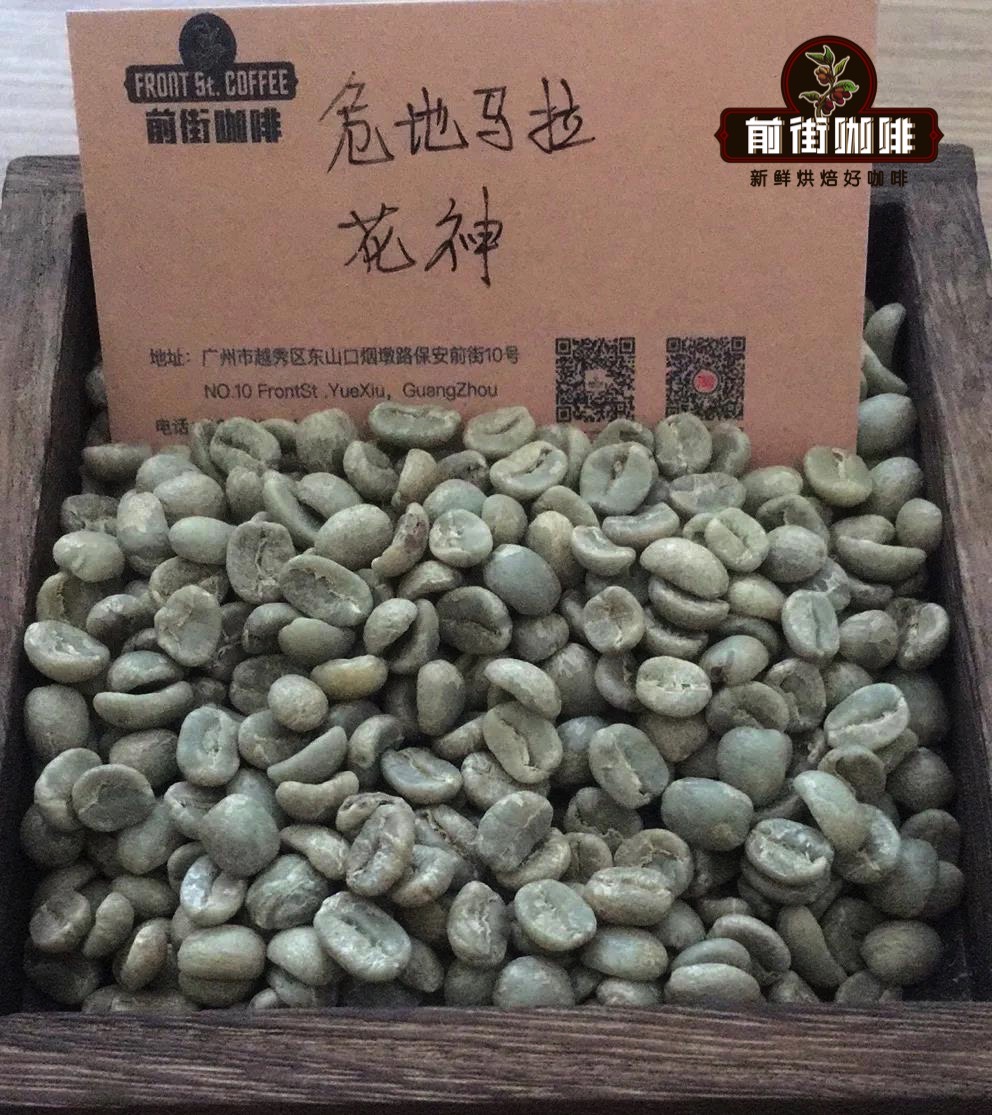
FrontStreet Coffee's Guatemala Flor de Café beans are Bourbon and Caturra. Bourbon is a natural Typica mutation, ranked alongside Typica among the ancient, high-quality varieties, with beans slightly smaller and rounder than Typica's. Caturra is a natural Bourbon mutation, with fresh lemon-citrus acidity and sweetness a touch below Typica and Bourbon.
Roasting Analysis
Cupping Notes
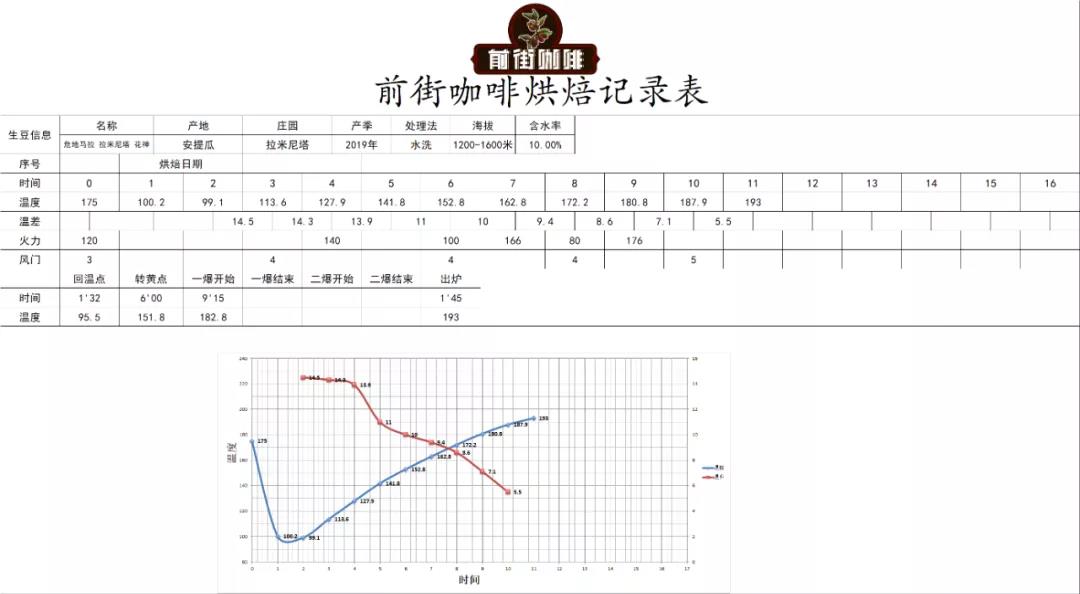
This lot of Flor de Café green beans is round, green with yellow tones, well uniform, and of medium moisture. FrontStreet Coffee's roasting target is a medium roast — preserving bright acidity to showcase the floral and fruity aromas while enhancing richness and balance.
Brewing Demonstration
Brewing Parameters:
Coffee Amount: 15 grams
Ratio: 1:15
Water Temperature: 90-91°C
Grind Size: 0.85mm screen, 80% pass rate
Dripper: Hario V60 #01
Brewing Process:
First Pour: 30 grams of water for bloom, 30 seconds
Second Pour: Add 95 grams of water (scale shows 125 grams), complete in about 1 minute
Third Pour: Add 100 grams of water (scale shows 225 grams), complete in about 1 minute 40 seconds
Extraction Time: 1 minute 54 seconds, then remove the dripper to finish
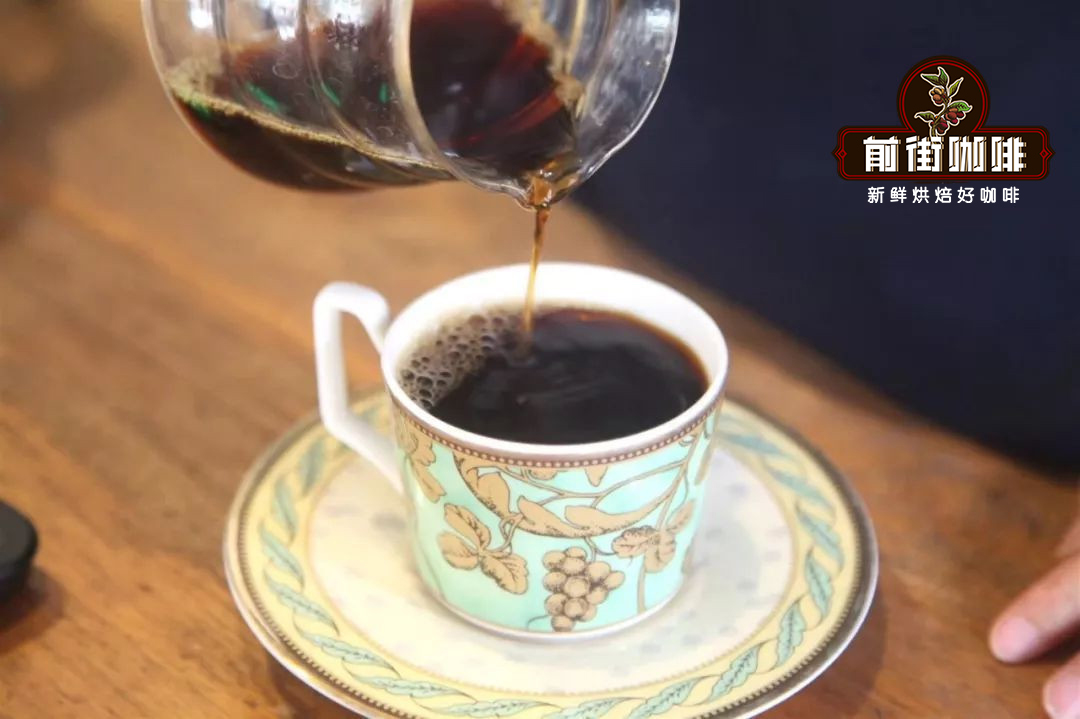
Flavor Description: Berry acidity, citrus, subtle chocolate, rich layered complexity, smooth mouthfeel
For professional coffee knowledge exchange and more coffee bean information, follow our coffee community.
FrontStreet Coffee Recommendation
If the clean, floral-citrus profile of this washed Antigua appeals to you, more washed treasures await at FrontStreet Coffee. The Yirgacheffe Gedeb Worka Cooperative lot comes from a seasoned washed-processing team whose meticulous work showcases jasmine florals and bright citrus acidity, with green tea and honey tones after a medium-light roast — at home in pour-over, cold brew, or espresso. The Kenya Cherry Tomato pushes washed processing further with Kenya's signature 72-hour double-washed fermentation, yielding a succulent, juice-packed cup of cherry tomato, dark plum, snow pear, black plum, and golden sugar. And the Jamaica Blue Mountain No.1 — born on an island whose limited sunshine gave washed processing its reason to exist — balances hazelnut, cream, chocolate, and caramel in a transparent, even-keeled cup with nothing standing out or falling short. Each one, like Flor de Café, shows what careful washing can do.
Important Notice :
FrontStreet Coffee is a long-established specialty coffee roaster in Guangzhou China, selling freshly roasted beans from its own farm in Yunnan as well as dozens of carefully selected single-origin beans from around the world for both pour-over and espresso. The products deliver consistently excellent quality and great value, with shipping within 24 hours. Guangzhou's FrontStreet Coffee shop is recommended by many coffee lovers, and the beans are now available online at the Tmall 。
FrontStreet Coffee has moved to a new address:
FrontStreet Coffee Address: 315,Donghua East Road,GuangZhou
Tel:020 38364473
 Scan and follow the En Gafei WeChat official account. Please indicate that the reprint comes from "En Gafei".