Differences Between Ethiopia Geisha Village and Panama Geisha - Flavor Story of Geisha Village Red Label Geisha Coffee Beans
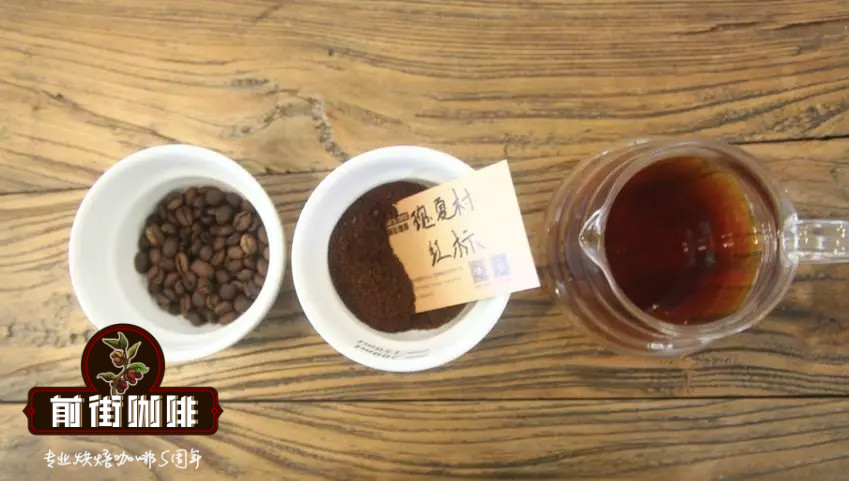
A Dream to Find Geisha's Origin
Before meeting Willem Boot, owner of Panama's La Mula estate, Adam Overton had only a vague dream: to buy a farm in Ethiopia and grow the world's most delicious Geisha coffee.
Why Ethiopia? Because Ethiopia is said to be the birthplace of Geisha. In the last century, Geisha seeds were taken from deep within the local primeval forest and eventually made their way to Panama. It was not until the early 2000s that Geisha became a coffee that astonished the world. Another factor was that Adam's wife, Rachel Samuel, is Ethiopian.

Adam had no experience in coffee cultivation at all. He was a documentary filmmaker and Rachel was a professional photographer. In 2007 they were commissioned to Ethiopia to shoot a coffee documentary. From then on they fell in love with coffee and resolved to buy a coffee plantation.
Learning from the Master
In 2009 they met Willem Boot. Three years earlier, Willem Boot had purchased Panama's La Mula estate and begun growing Geisha. To learn from the master, the couple flew from Ethiopia's capital to Panama, visiting La Mula to seek Willem Boot's guidance. At the time, no one knew that this small estate would shine brilliantly in the Best of Panama competition five years later.
Willem Boot was already known for his pursuit of Geisha's Ethiopian origins. After Geisha appeared in the Best of Panama competition in 2004, he had hoped to trace its origin back to Ethiopia's vast primeval forests. He organized several expeditions deep into unexplored territory. Results were limited, but he persevered and never gave up.
The Importance of Finding Geisha's Source
Why was it so important to return to Ethiopia to find Geisha's source?
For Willem Boot, finding coffee as good as Panama's Geisha meant hope of discovering varieties that combine disease resistance with superior flavor under the threat of global warming. That holds ineffable importance for the future survival of coffee.
Finding the Perfect Location
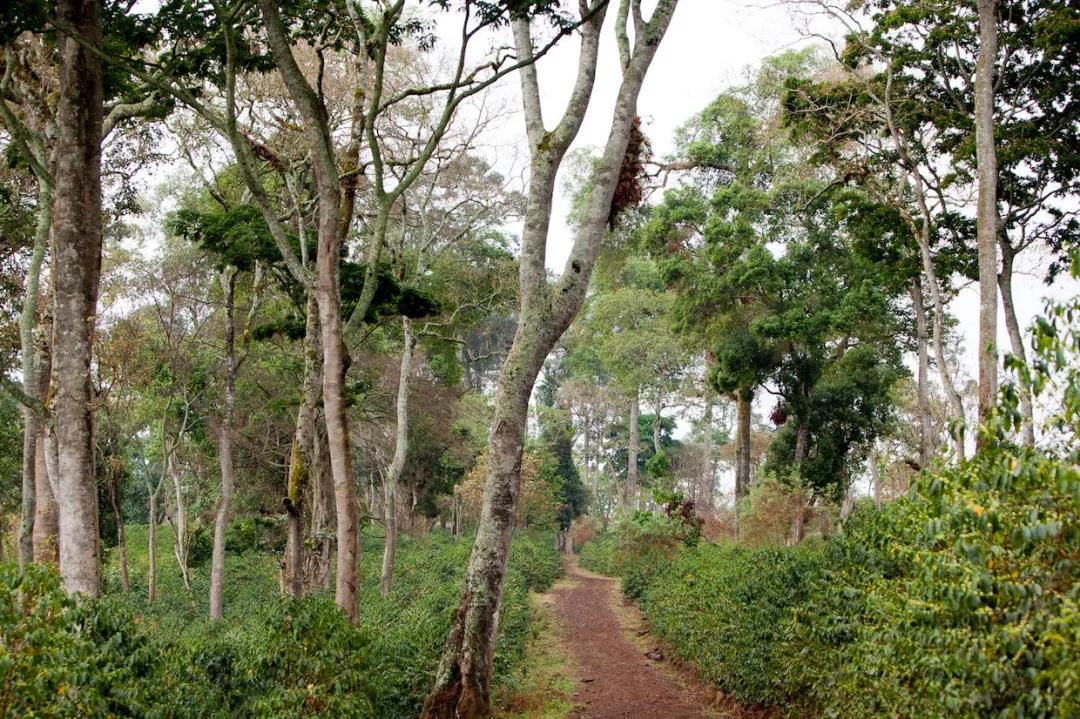
Learning from Willem Boot was a major turning point for Adam and Rachel's dream, strengthening their resolve to establish their own Geisha estate. Since they lived in Ethiopia's capital, Addis Ababa, they first wanted a location nearby for easier access to labor and transport. But to meet the conditions for growing Geisha - altitude, microclimate and all the rest - they found themselves looking farther and farther away, until they reached Ethiopia's most remote southwestern region, bordering Sudan.
This region is Bench-Maji, a two-day drive from Addis Ababa. Nearby lie several villages called "Geisha," also considered the most likely original home of Geisha in legend. Bench-Maji was isolated from the world, with few outsiders entering until roads were built a few years ago, which slightly improved the situation. The local Meanit indigenous people have their own language. To them, all outsiders are uniformly called "China"!
Establishing Gesha Village Coffee Estate
Accompanied by locals, Adam and Rachel climbed high into the mountains. The moment they saw the place, they fell in love with the land - extremely high altitude of 1,900 to 2,100 meters, abundant rainfall, suitable temperature patterns, fertile undeveloped forest soil, and a long-existing coffee-growing ecosystem with ancient coffee trees. After three years of searching, they finally found a foothold in this dreamland. They gave it a simple name: "Gesha Village Coffee Estate."
Breakthrough Discovery
In October 2011 the farm broke ground. Willem Boot served as their consultant and flew to the estate. What he saw was less a thriving farm than camping on the grasslands. To guard against lions, watchtowers were built for early warning. To explore the forest, AK-47 rifles were needed against fierce wild animals, accompanied by indigenous people carrying spears.
Almost simultaneously, though, came a breakthrough in finding suitable Geisha varieties to cultivate. Willem Boot and Adam discovered wild Geisha in a primeval forest not far from the estate that was very similar in morphology to Panama's Geisha - in cherry shape and branch growth pattern alike, they were remarkably comparable. The growing environment was deeply shaded by trees, with thousands of coffee shrubs growing densely, and the coffee flowers in full bloom, filling the air with an unbelievably strong jasmine fragrance. Willem Boot recalled feeling as if he were "in paradise."
Scientific Verification
The forest they found was called the Gori Gesha wild coffee forest, only 20 kilometers from the estate. Adam believes this forest is the same source from which the famous Panama Geisha was collected in 1930. Willem Boot likewise believed these trees were very similar to the Geisha he planted at La Mula. Geisha has two young leaf colors: green and bronze. In February 2012, Willem Boot returned to the estate again, and the estate's Geisha varieties were finally determined.
For Willem Boot, though, mere morphological similarity was not enough - he needed more precise scientific evidence: genetics. He contacted Dr. Sarada Krishnan of the Denver Botanic Gardens in the United States to run a genetic comparison between beans found in the Geisha forest and extracts from Panama's Geisha. Krishnan spent 9 months comparing the two, concluding that their genetic similarity was extremely high.
The Estate Today
Today Adam's Gesha Village Coffee Estate covers 300 hectares, with another 50 hectares to be added next year. They grow Geisha found in nearby forests and other locations, maintaining a planting density of only 2,000 trees per hectare. In the first three years of establishing the estate, they planted 30,000 shade trees, which not only help the coffee grow better but also maintain rich biodiversity, letting native Geisha grow freely among them. Processing methods include washed and natural, with the washed lots processed on environmentally friendly Penagos washing machines.
In 2015 the first harvest at Ethiopia's Gesha Village took place. With some apprehension, they brought the first batch of processed green beans to Willem Boot for cupping. The result turned out to be the best cup Willem Boot had tasted all year.
In 1931 a Geisha was taken from Ethiopia and went on to bloom and bear fruit in a foreign land, becoming famous around the world. 85 years later, a documentary filmmaker with a dream rediscovered Geisha's homeland, and now the world has the chance to know Geisha returned to Ethiopia.
Gesha Village's Internal Grading System
How should one distinguish Gesha Village's internal grades: Auction, Gold Label, Red Label, Green Label and Chaka?
Even the most top-tier estates produce coffee of differing quality. To live up to its "flavor reputation," Gesha Village applies a strict internal grading system.
Auction Lots
Accounting for only 3.7% of Gesha Village's annual production, these are the estate's most rigorously selected top-tier lots, available only through the Gesha Village Coffee Estate global auction. The 2018 auction lots scored 88.15-92.67 points in cupping and were further divided into Champion's Reserve and Farm Reserve.
For example, Gesha Village 2018 Auction Lot RSV.6 belongs to the auction lots.
Gold Label Lots
Accounting for only 5% of Gesha Village's annual production, these are the batches typically chosen by competition participants worldwide, and roasters with high quality demands also buy them. They are fully traceable, and each batch shows outstanding, complex flavors, making them the estate's second-best grade after the auction lots.
Red Label Lots
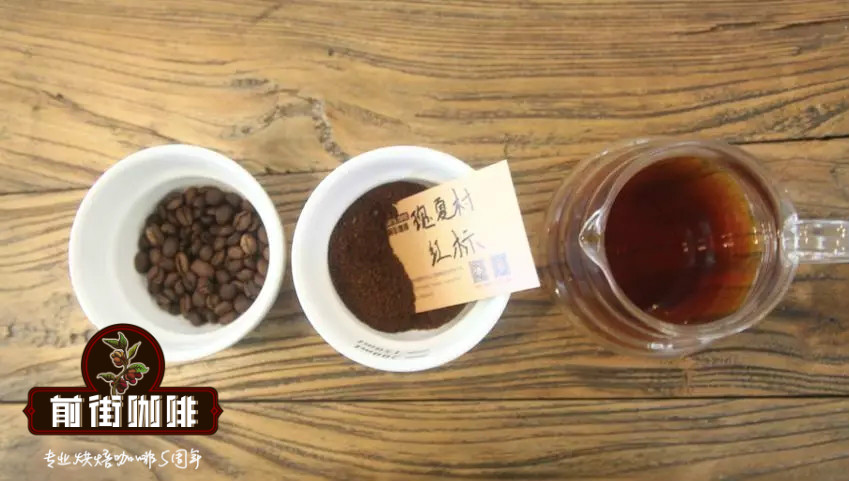
These are batches with complete traceability and typical Gesha Village flavors. Slightly less intense and complex than the Gold Label lots, they are single-origin batches with excellent value for money.
Green Label Lots
These are lots from a single plot and a single variety, showing typical Gesha Village flavors. Their intensity and complexity are slightly weaker than the Red Label lots.
Chaka Lots
These are Geisha blends produced by Gesha Village, drawing on three varieties: Gori Gesha, Gesha 1931 and Illubabor (an Ethiopian native disease-resistant variety).
Brewing Gesha Village Coffee
How should Gesha Village coffee be brewed? FrontStreet Coffee shares its Gesha Village brewing parameters.
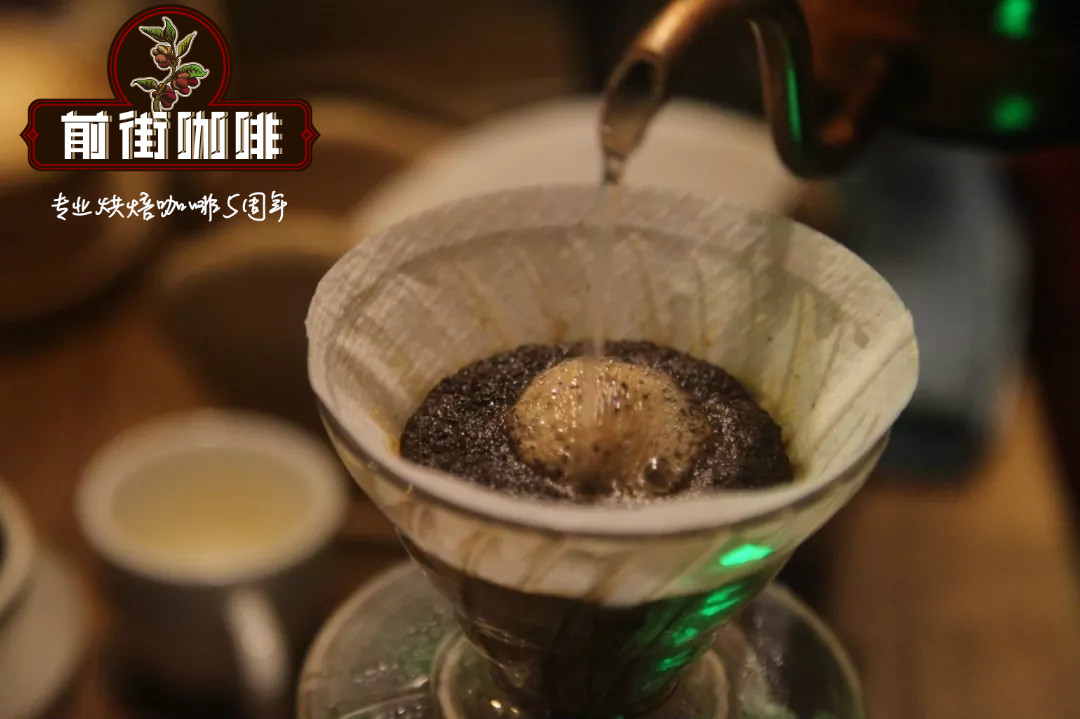
FrontStreet Coffee's suggested method: Pour-over
Filter: Hario V60
Water temperature: 88°C
Grind size: BG 5R (China standard #20 sieve pass rate 58%)
Coffee-to-water ratio: 1:15
Brewing Technique
Segmented extraction. Bloom with 27g of water for 30 seconds. Continue pouring with a small stream to 122g, then segment. When the water level drops to the point of nearly exposing the coffee bed, keep pouring to 226g to finish. When the water level again drops to nearly exposing the bed, remove the filter cup. (Timing starts from the bloom.) Extraction time: 2 minutes.
Flavor Notes
Coconut, licorice, cream, chocolate, toffee, citrus, almond and strawberry, with a fermented aroma on the nose. The overall flavor is quite balanced, with a rich mouthfeel and prominent nutty notes.

Geisha and Yirgacheffe
FrontStreet Coffee Recommendation
To taste the estate described above for yourself, FrontStreet Coffee carries two of Gesha Village's own grades. The Gesha Village Gold Label is the Gesha 1931 variety, roughly 10% of the estate's output and its top tier outside the auction, often chosen by competition baristas; it is given a refined natural process and shows complex, layered flavors. The Gesha Village Red Label is the Gori Gesha variety, about 15% of production, scoring 88 or above on the 100-point SCA scale, and comes from the estate's single-terroir series with full traceability - farm block, variety and processing date all recorded. Both reward the 88°C, 1:15 pour-over recipe listed here and put the flavors of Geisha's homeland directly in your cup.
Important Notice :
FrontStreet Coffee is a long-established specialty coffee roaster in Guangzhou China, selling freshly roasted beans from its own farm in Yunnan as well as dozens of carefully selected single-origin beans from around the world for both pour-over and espresso. The products deliver consistently excellent quality and great value, with shipping within 24 hours. Guangzhou's FrontStreet Coffee shop is recommended by many coffee lovers, and the beans are now available online at the Tmall 。
FrontStreet Coffee has moved to a new address:
FrontStreet Coffee Address: 315,Donghua East Road,GuangZhou
Tel:020 38364473
 Scan and follow the En Gafei WeChat official account. Please indicate that the reprint comes from "En Gafei".