Essential Latte Art Milk Frothing Techniques for Beginners! How to Create Silky, Dense Milk Foam

Every beginner learning to steam milk rides the same emotional rollercoaster: I should just quit. No, I have to keep going. Ugh, it is too thick again, I quit. I will not quit, let me try once more. You know exactly what someone is about to say: please take down the surveillance camera. Milk texturing is an essential part of making latte coffee, and how well you do it shapes both how the drink looks and how it feels in the mouth.
Why Can Milk Form Stable Foam, and What Is the Principle Behind It?
What governs the stability of milk foam is the casein micelles in milk protein, along with whey protein. Casein micelles create tension at the milk's surface. When steam strikes that surface, it forms countless bubbles of varying sizes. By adjusting the steam wand's position so the milk spins into a vortex that chops up the larger bubbles, you end up with fine foam and a smooth surface.
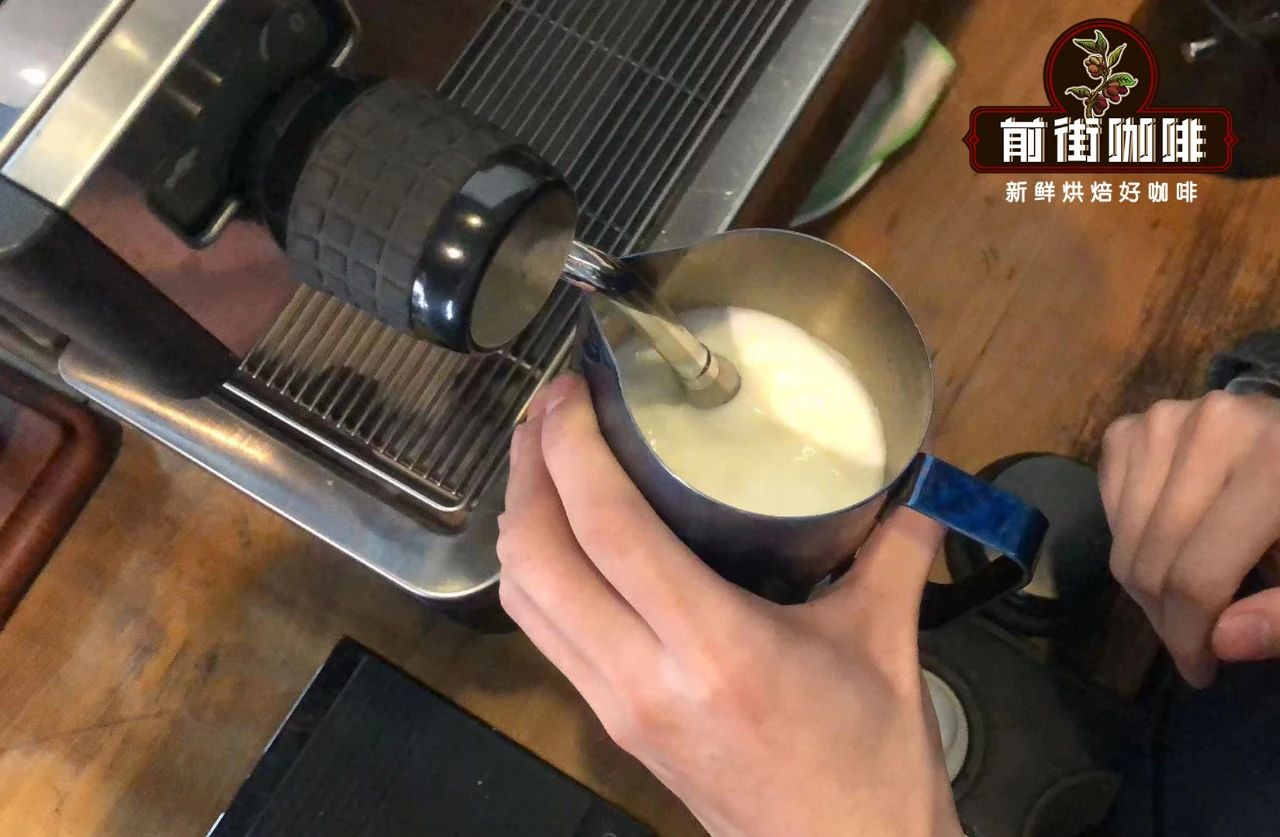
Normally, whey protein surfaces are hydrophilic. Through stirring or heating they gradually unfold, exposing their hydrophobic parts. Those parts attach to the bubbles that have formed, lowering surface tension and slowing how fast the bubbles burst, which makes the foam more stable.
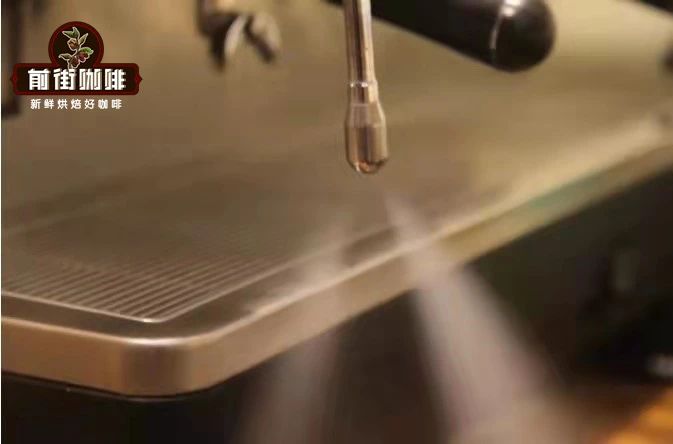
Press the steam button and you will find four air outlets (other brands and models vary, with single-hole, two-hole, or three-hole designs). Half-bury the wand at the milk's surface and open the steam, and it draws in air to froth the milk. Bury it fully and it will not froth the milk at all, only heat it with hot steam.

Milk Frothing Demonstration
1. Optimal capacity for milk frothing
Frothing milk requires a reasonable working volume. FrontStreet Coffee recommends filling 40-60% of the pitcher's total capacity. Too little or too much milk both test your technique. Beyond that, you also need to consider how much milk one cup actually uses, so you do not waste it. FrontStreet Coffee uses a 550ML pitcher with 250ML of milk, just reaching the bottom of the pitcher spout.
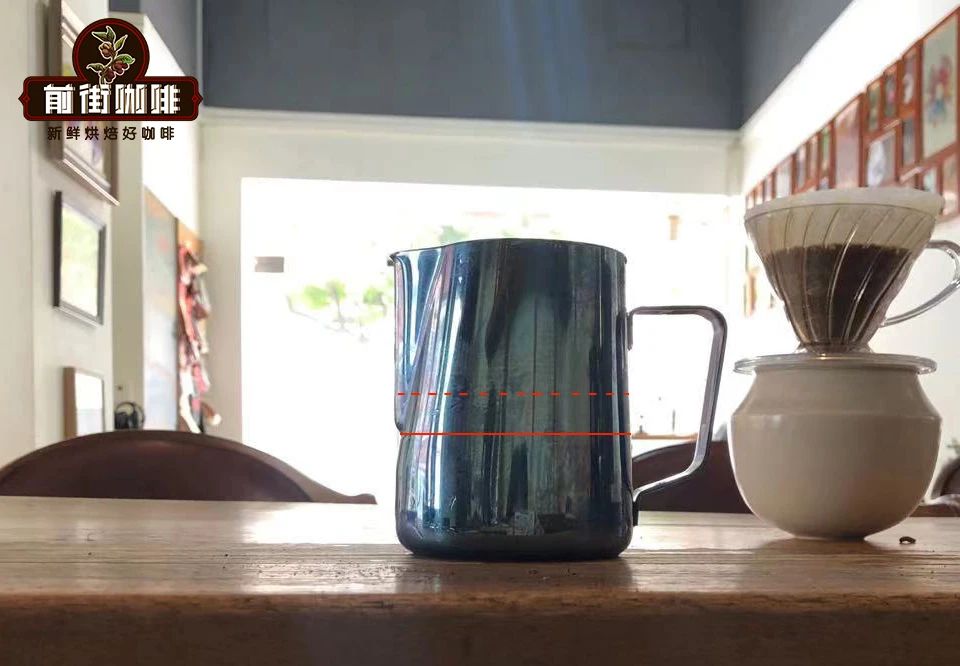
(The solid line shows the milk level; the dotted line shows the level after frothing.)
2. Frothing position
Before you start, open the steam valve to blow out condensed water, then close it. Pull the steam wand out at a 45-degree angle and rest the pitcher spout against it to hold the wand steady. The steam vortex turns counterclockwise, with the wand sitting to the right of the center of the liquid surface in a half-buried position.
3. Frothing stage
Open the steam valve and you will hear a zee-zee sound. This is the frothing stage. How long it lasts depends on how thick you want the foam, since a longer frothing time gives thicker foam. Generally, frothing milk from 50% to 60% of its volume, which is latte foam thickness, takes about 3 seconds. The milk should rotate evenly into a vortex.
4. Texturing stage
Now bury the steam holes completely, heating without adding more air. Do not push them all the way to the bottom; keep them within the foam layer instead, which helps with texturing by breaking coarse foam down into fine foam. When do you stop? It depends on the milk temperature, generally kept between 55-65°C. Too hot and the protein denatures, and protein denaturation in food generally begins around 60°C.

Common Beginner Problems, and Tips to Fix Them
Problem 1: Milk splashes during frothing
This is a genuinely dangerous situation. Beginners do not yet have steady control of the steam wand angle or of how deep the wand tip (from here on, the steam tip) sits in the milk. That makes milk splash out when the steam is first turned on, or later when an unsteady hand moves the pitcher too much and the air outlets break the milk's surface, letting the force of the steam throw milk out.
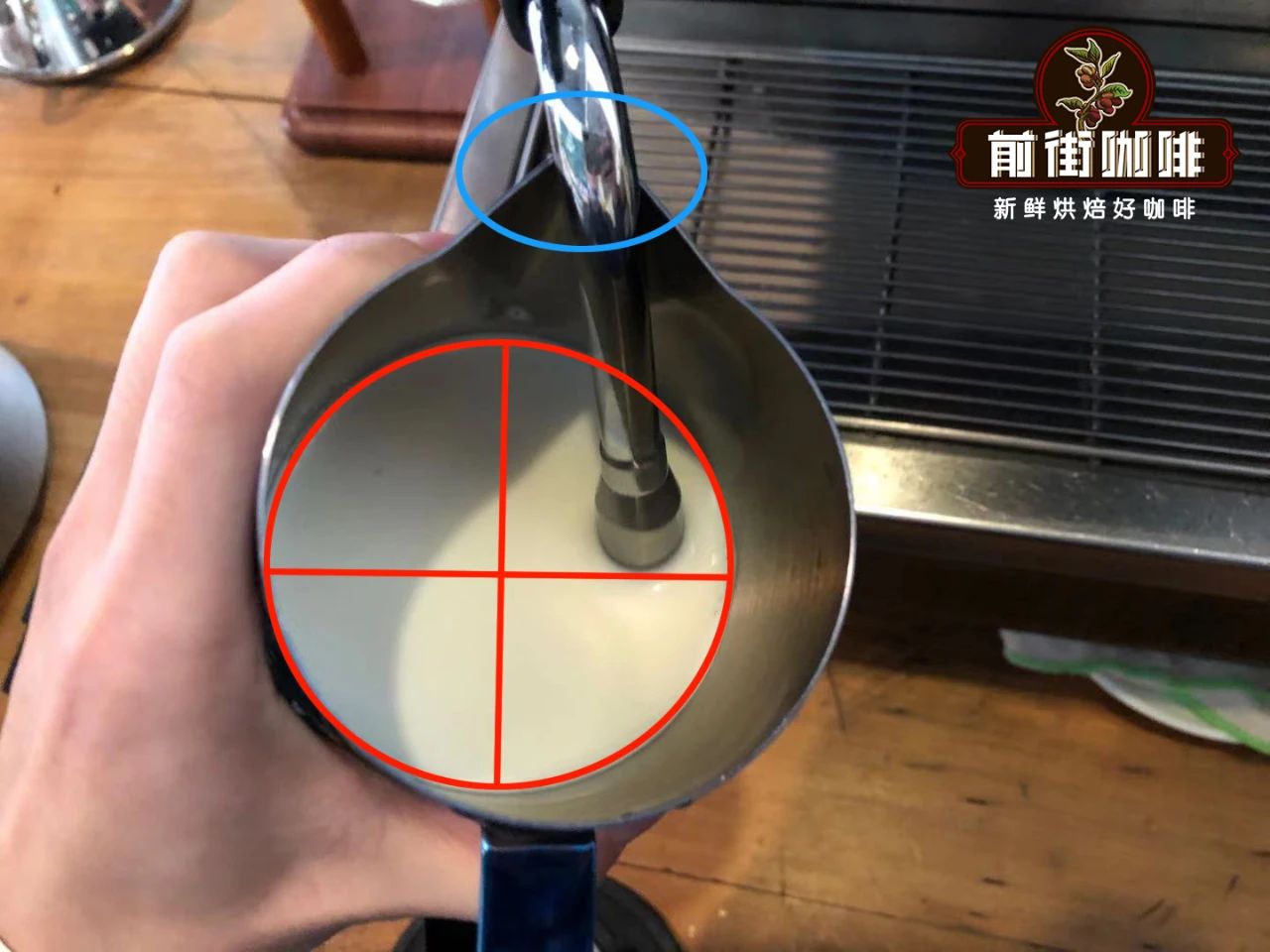
Tip 1: Keep the pitcher in contact with the steam wand at all times
When you cannot yet control the pitcher's movement steadily, FrontStreet Coffee suggests using the pitcher spout as a pivot and keeping the pitcher's edge against the steam wand. Whether you are adjusting the angle or moving it up and down, maintain that contact so the pitcher never suddenly floats away and lets steam blast out of the milk.
Problem 2: Milk foam is not fine enough
What breaks beginners is not failed latte art but foam that never gets fine enough no matter how they froth, with plenty of coarse bubbles. Once that is mixed with the coffee and drunk, the mouthfeel sends a clear message: do I look happy to you?
Tip 1: Turn on the steam briefly before frothing milk
When steam in a semi-automatic espresso machine's tube cools, it turns into water that stays inside. So before every frothing session, release some steam until no water sprays from the tube. Steam carrying water produces large bubbles when you froth milk.
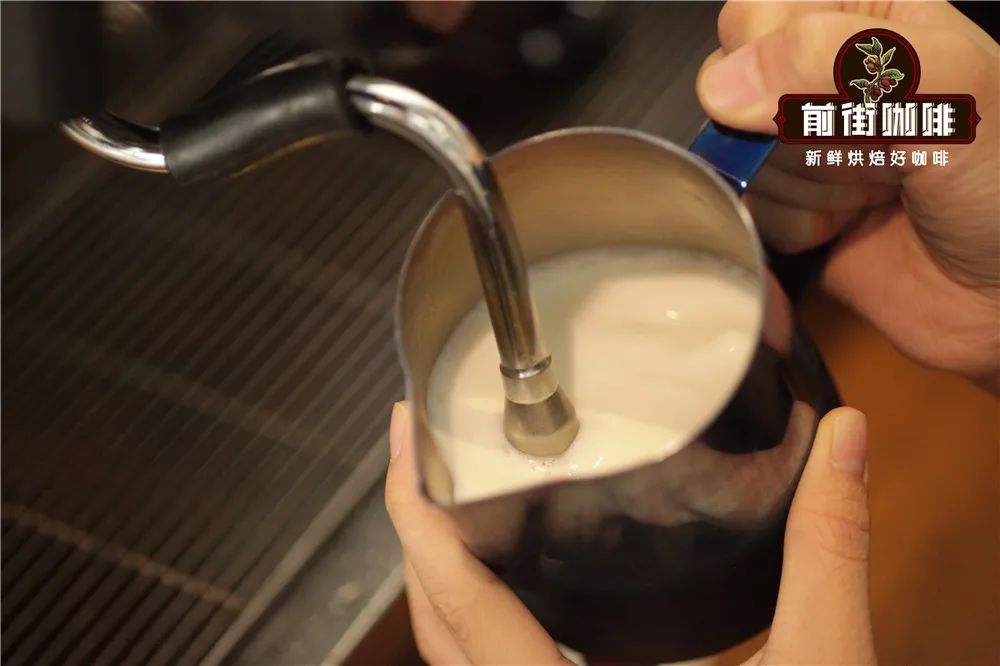
Tip 2: Hold the steam wand in the pitcher at a 45-degree angle
A 45-degree angle points toward the pitcher's 2-3 o'clock or 9-10 o'clock positions. Frothing at this angle helps the milk form a small vortex quickly, and the vortex pulls coarse foam back down into the liquid surface.
Tip 3: The steam tip should sit 0.8cm-1cm below the milk surface
The steam tip should not be buried too deep, since frothing is mainly about working air into the milk. Too deep and the steam holes cannot reach air to form a vortex. Too shallow and the steam hits the surface, creating coarse bubbles and splashing the milk.
Problem 3: Milk foam is too thick
Foam thickness depends on the foam generated when steam properly meets the liquid surface, which we call aeration. The longer the aeration, the more foam is produced and the thicker the milk foam becomes.
Tip 1: Only "zee" 4-5 times during aeration
Set the steam tip 0.3cm deep and open the steam valve, and you will hear a zee-zee sound. This is the aeration stage. For latte art the ideal foam thickness is 1cm, so there is no need for excessive aeration. After hearing the zee-zee sound 4-5 times, return the wand to 0.8-1cm depth and hold the 45-degree angle to create a vortex that removes coarse bubbles, then heat to the right temperature.
Problem 4: Milk frothing temperature, how do you judge it?
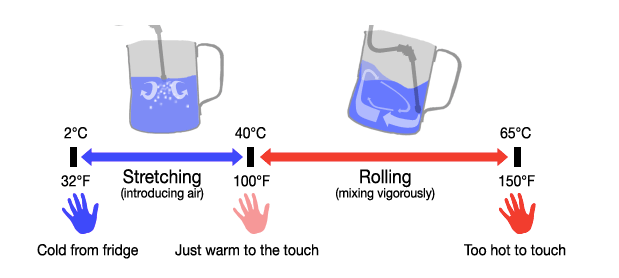
Does milk temperature really matter that much? Yes. The ideal frothing temperature is between 55-65°C, and at most it should not exceed 70°C. Within that range, lactose and other sugars are at their most active. Froth the milk into that window and combine it with coffee, and you will find that the drink delivers sweetness in both aroma and taste even without added sugar.
Tip 1: Use a thermometer instead of practicing the "iron palm technique" from day one
Insert a digital thermometer into the pitcher before you start frothing, and gradually feel the pitcher's temperature changes with your palm. One thing to note: if you need to froth milk to 55°C, you can stop heating when the thermometer reads 53°C, since the milk will continue to rise by 1-2°C after you stop.
FrontStreet Coffee Recommendation
For anyone learning latte art at home, FrontStreet Classic Blend is the natural starting point. It is a medium-dark espresso recipe built from three origins, inspired by the old-school "Mamba" combination of Mandheling and Brazil, with a small amount of Robusta added for aroma and crema. The shot gives off obvious butter, toasted bread, and caramel cookie aromas: strong flavor, a solid body, and fine crema that pours very steadily. It is the essential home coffee for a beginner.
If you prefer a rich, nutty espresso, go with FrontStreet Specialty Blend, also a medium-dark Italian-style bean. It pairs washed Colombian coffee with pulped natural Brazilian coffee, a classic combination that shows nuts, dark chocolate, and caramel in espresso and brings out cream, almond, and cocoa in Americanos, lattes, and flat whites. Its crema is every bit the equal of a cafe's, and it is more than good enough for practicing latte art, which makes it ideal for anyone planning to open a shop or simply learning at home.
Think of FrontStreet Specialty Blend and FrontStreet Classic Blend as designed for newcomers, and FrontStreet Commercial Blend as tailored for the soon-to-be shop owner. Built on the Specialty Blend with a small amount of Robusta added to a traditional Italian recipe, it pours more fine dark-brown crema and a heavier body, so Americanos, lattes, and mochas all carry nut, cocoa, and caramel notes, and the pour for latte art becomes genuinely easy.
Important Notice :
FrontStreet Coffee is a long-established specialty coffee roaster in Guangzhou China, selling freshly roasted beans from its own farm in Yunnan as well as dozens of carefully selected single-origin beans from around the world for both pour-over and espresso. The products deliver consistently excellent quality and great value, with shipping within 24 hours. Guangzhou's FrontStreet Coffee shop is recommended by many coffee lovers, and the beans are now available online at the Tmall 。
FrontStreet Coffee has moved to a new address:
FrontStreet Coffee Address: 315,Donghua East Road,GuangZhou
Tel:020 38364473
 Scan and follow the En Gafei WeChat official account. Please indicate that the reprint comes from "En Gafei".