What is Pour-Over Coffee? Can You Add Milk to Pour-Over Coffee? Beginner's Tutorial and Guide
What is Pour-Over Coffee?
FrontStreet Coffee's menu is built on house-roasted specialty coffee, prepared as pour-over.
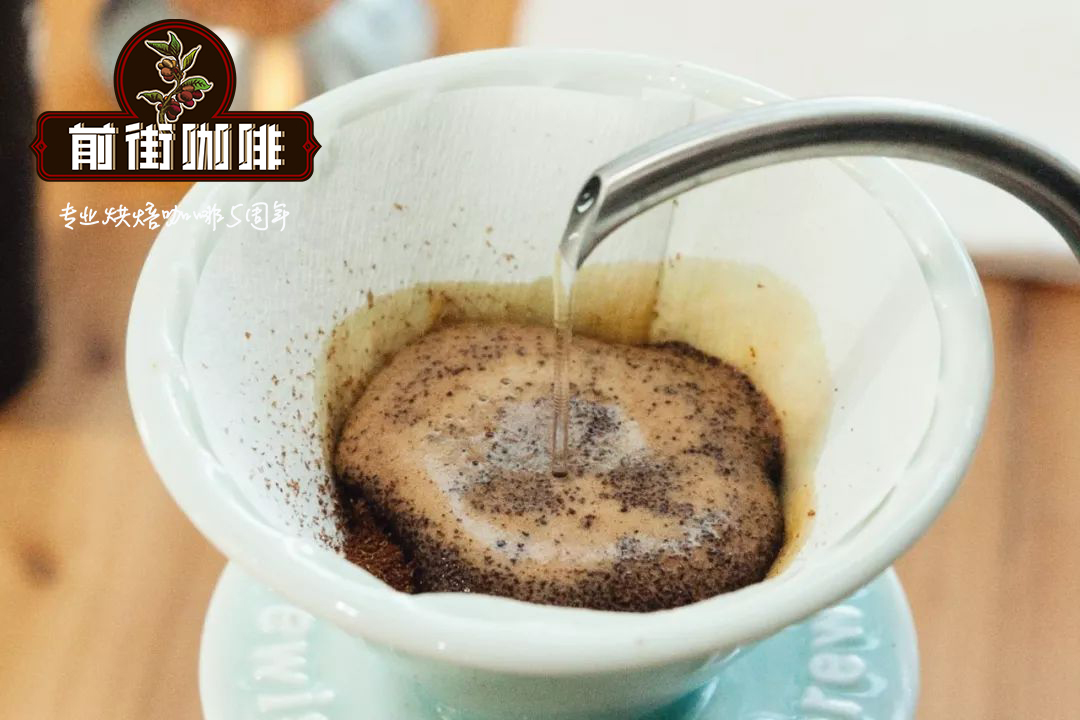
As the name suggests, pour-over coffee extracts coffee by filtering hot water through a paper filter cone. The barista controls the flow rate, direction, and temperature of the water, which is why every barista's pour-over carries its own signature.
Unlike machine or siphon brewing, pour-over presents a softer body with distinct layers, making black coffee much easier to accept.
All pour-over coffees at our shop use 15 grams of coffee to extract 225cc. If the strength isn't right for you on the first sip, talk to the barista, or simply add hot water to dilute it. Moderate dilution can actually reveal new layers of clarity!
Compared with a moka pot, I prefer the mouthfeel of pour-over because it is cleaner. But after trying many beans, I've found that some suit pour-over while others shine with other extraction methods.
Essential Pour-Over Equipment for Beginners
To enjoy the pleasure of brewing your own coffee, beginners can start with a few basic pieces:
Hario Manual Hand Grinder
Besides costing less than an electric grinder, hand grinding has a DIY charm, though my hands ache after each session, and there are no scale markings, so dialing in the coarseness takes experience over several uses. If you brew more than two cups at a time, I'd recommend an electric grinder like the small Flying Horse.
Hario V60 Narrow-Spout Kettle 1000ml
I avoided kettles under 1 liter, worried they'd be too light and unstable for pouring. This V60 kettle's capacity, price, and material fit my budget well, and it's genuinely easy to use. The stream is thicker than the Kalita Magic Lamp-style kettles it imitates, but continuous pouring is more stable and the water capacity is ample, letting the coffee's aroma fully develop. It can also be heated directly on a flame, and the water doesn't splash much when boiling.
Sanyo Arita-Yaki Single-Hole Ceramic Trapezoid Dripper
The dripper's grooves run from rim to bottom, numerous and dense, so as long as the beans aren't ground too fine, the coffee drains smoothly. The ceramic also holds water temperature steady during extraction instead of letting it drop quickly.
Pocket-Sized Electronic Scale
This lets you weigh beans precisely, and combined with the markings on a heatproof server you can control exactly how much coffee you extract, avoiding the too-strong or too-weak cups caused by sloppy water doses.
For pour-over, 15g of beans extracting 200ml of coffee is my ideal.
Trapezoid Filter Paper Usage
Compared with flannel filters and metal drippers, filter paper has smaller pores, so far fewer grounds slip through.
Both sides carry printed dotted lines, fold along them in opposite directions and it's ready to use.
These are the pieces of pour-over equipment I use most often.
Pour-Over Coffee Learning Experience
"Pour-over coffee is easy to learn but hard to master..."
"Pour-over has become very popular lately. That seemingly simple circling-and-pouring motion is actually quite a challenge when you want a cup that is both fragrant and rich!"
Choosing a Narrow-Spout Kettle
- The handle must be long enough with enough clearance from the body to keep your hand away from the heat.
- The bottom of the kettle body should be wide.
- The spout should have a "crane-beak" shape so the stream doesn't easily split.
- The joint between spout root and body should sit low.
- The curve from spout opening to root shouldn't be too large, or the stream will hit too hard when pouring.
Brewing pour-over requires extracting with circular motions, but how do you draw those circles? There's a method:
First circle: The water volume must be sufficient, because the first circle's water temperature and volume determine the coffee's richness. Draw the stream from inside outward, densely and evenly, without retracing your path, and no, more circles is not better.
Second circle: Can be drawn more loosely than the first.
Third circle: Pour from the outermost edge, in the direction opposite the first two circles. This one's job is to catch the water.
Whether you brew with siphon or pour-over, water temperature and timing matter enormously. The water should sit between 92-94°C for best results: too low and you can't pull out the aromas; too high and you lose the coffee's colloids. A thermometer can handle temperature, but timing each step only comes with practice."
Below is a video of my first time using a flannel filter. I hadn't practiced pour-over in over half a year, so besides circling too slowly, my circles were somewhat random (perhaps that says something about my personality...). The brand-new flannel gave the coffee a slight cloth taste, but fortunately the bean quality was good enough that the cup was still perfectly drinkable, and compared with paper, the coffee-oil mouthfeel was noticeably smoother.
Brewing a cup of pour-over looks easy, but making one that's both fragrant and rich is genuinely hard. My recent realization is that technique and heat control matter enormously, hence teachers' constant emphasis on keeping the stream thickness consistent and the pouring stable. Still, compared with siphon, the reason pour-over has become so popular is, I think, that beyond simple and inexpensive equipment, no matter how clumsily you brew, as long as the beans and roast are decent it's hard to make a truly terrible cup. In the end, bean quality is what matters most.
FrontStreet Coffee Recommendation
Whatever brewer you settle on, the beans decide most of the cup. If you'd rather use a moka pot, the article's other point of comparison, blends are usually the safe choice:
FrontStreet Classic Blend: Designed specifically for espresso and moka pot use, its biggest strength is outstanding crema, even a beginner on a non-professional home machine can pull dense, fine crema, the foundation of lattes, cappuccinos, and Dirty. Built on the traditional Mamba (Mandheling-Brazil) formula with a mellow, rounded palate, it's easy for veterans and newcomers alike, at home or in a shop.
FrontStreet Dark Cocoa Blend: Not everyone chases maximum crema; for beginners and cost-conscious cafe owners, "good cup, good price" is what counts. This blend uses 100% arabica beans, ample crema, a mellow body, and a friendly price that balances quality and value.
FrontStreet Commercial Blend: Before Dark Cocoa launched, this was the workhorse for cafe owners. Priced below FrontStreet Coffee's Premium Blend, its formula is optimized for a solid cup at controlled cost, which has kept it a popular choice for all kinds of commercial settings.
FrontStreet Premium Blend: The longest-serving espresso blend at FrontStreet's own stores, nearly a decade of duty behind the counter's Americanos and lattes. It pairs Brazil Cerrado with Colombia Huila for a classic flavor: the espresso taste you remember, equally suited to home or commercial use.
Single-origin options work too:
FrontStreet PWN Indonesia Golden Mandheling: Dark roasted, very low acidity, long and mellow on the palate with layers of herb and dark chocolate and a faint earthiness, for those who like their coffee heavy and not sour.
FrontStreet Brazil Fazenda Rainha (Queen's Estate): Very low acidity, very balanced, with rich nut and cocoa aromas and clear caramel sweetness, smooth, never astringent, and equally good as pour-over, espresso, or moka pot coffee.
FrontStreet Papua New Guinea Paradise Bird: A specialty single origin from Paradise Bird Estate in PNG's Sigri region, so close to Jamaica Blue Mountain in character that enthusiasts call it "Little Blue Mountain." Grown from the same Typica lineage at 1,600-1,800 meters in volcanic soils, graded AA with plump beans and an extremely low defect rate, and triple washed and fermented, it produces a clean, pure cup with prominent sweetness, another excellent choice for a non-sour coffee.
If you want something floral and fruity:
FrontStreet Colombia Pink Bourbon: From Colombia's Finca La Divisa, a competition-champion lot grown at 1,650-1,800 meters. Double anaerobic natural processing and a medium-light roast preserve the original fruit character: jasmine and citrus on the dry aroma, then a dense rush of passion fruit, blueberry, grape, and apricot juice with bright but gentle acidity, a touch of spice mid-palate, and a long cocoa finish. Works as pour-over, single-origin espresso, or cold drip, iced pour-over especially highlights its crisp, grape-juice smoothness.
FrontStreet Strawberry Candy: A popular fruity espresso blend that recreates the sweet aroma of strawberry gummy candy by marrying arabica beans from different origins. Great for daily home brewing or cafe service, ideal for fruit-forward drinkers who fear bitterness, or shops wanting a distinctive milk-coffee offering. One bag covers many brewing styles: a truly versatile daily driver.
Important Notice :
FrontStreet Coffee is a long-established specialty coffee roaster in Guangzhou China, selling freshly roasted beans from its own farm in Yunnan as well as dozens of carefully selected single-origin beans from around the world for both pour-over and espresso. The products deliver consistently excellent quality and great value, with shipping within 24 hours. Guangzhou's FrontStreet Coffee shop is recommended by many coffee lovers, and the beans are now available online at the Tmall 。
FrontStreet Coffee has moved to a new address:
FrontStreet Coffee Address: 315,Donghua East Road,GuangZhou
Tel:020 38364473
 Scan and follow the En Gafei WeChat official account. Please indicate that the reprint comes from "En Gafei".