How to Choose Black Coffee? Which Black Coffee Brand is Best? Latest American Black Coffee Bean Ranking

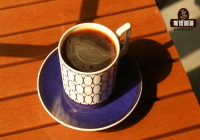
Let's start with some coffee vocabulary. Black coffee is coffee with nothing added — the bean's most unadorned expression. Americano, pour-over, and cold drip all fall under the black coffee umbrella.
Americano is one of the most popular black coffee styles. A barista pulls a shot of espresso and dilutes it with hot water to a set ratio for a hot Americano; swap the hot water for an ice-water mix and you get a refreshing iced Americano that quenches thirst and beats the heat. Because an Americano contains no dairy and no sugar — just espresso and water — nothing masks the flavor, which raises the bar for both bean quality and barista technique.

Differences Between Americano and Latte
Talking Americano means talking espresso first. In an espresso machine, finely and evenly ground coffee goes into the portafilter and is extracted quickly with high-temperature water at roughly 9 atmospheres of pressure. The resulting liquid, crowned with crema and aromatic oils, is espresso. Most drinks on a café menu are built on it — the Americano above, plus latte, mocha, flat white, and so on.
The blackboard menu at FrontStreet Coffee lists few milk coffees, yet plenty of regulars love the lattes. Fresh milk folds into the espresso, softening its bitterness while preserving the coffee's aromatics and the milk's sweetness. Compared with seasoned black-coffee drinkers, newcomers take far more readily to a latte's smooth texture.

FrontStreet Coffee uses a single house-roasted bean for all its espresso drinks — the FrontStreet Coffee Sunny Blend, a combination of FrontStreet's Ethiopia Natural Red Cherry and FrontStreet's Honduras Sherry. When the baristas build a drink, they dose about 20 grams of coffee to extract about 40 grams of liquid, then add it to roughly 240g of hot water — a 1:6 ratio. For an iced Americano they take a pre-chilled cup, add 180g of ice and 100g of room-temperature water, then pour in the espresso — a 1:7 ratio that lands even more refreshing than the hot version. Expect whiskey notes, vanilla aromatics, and sweet-tart berry flavors.
For milk drinks FrontStreet Coffee keeps the same 1:6 ratio: 40g of espresso into 240g of milk.

For a hot latte, the 40 grams of espresso go into a pre-warmed cup. The steam wand then froths the milk — ideally held between 55-65°C — creating fine, moderately thick microfoam that blends evenly with the coffee. The result is a rich, smooth chocolate character. The iced latte simply replaces the water in the iced Americano with milk.
An Americano is nothing more than diluted espresso, so nothing gets in the way of the coffee itself — what you taste is the bean in its pure form. If bitterness isn't your thing, start with beans that aren't roasted too dark.

The lighter the roast, though, the higher the demands on bean quality. With no long roasting to build cover-alls of roast flavor, every flaw stands exposed. That is exactly why dark roasts dominated the last century: most beans back then simply weren't very good, and the burnt bitterness of a dark roast provided the camouflage.
So the selection logic falls into place. For a hot Americano with modest bitterness and restrained acidity, choose medium-dark roasted beans, such as those from Brazil — low acidity, affordable (prices permitting), and versatile enough for milk coffee as well.

Or opt for a specialty blend like FrontStreet Coffee's Sunflower Sunny Espresso Blend, which achieves its balance through blending. Medium roasted, it layers sweetness, acidity, and bitterness evenly — and it handles milk beautifully too.

If you'd rather trade bitterness for fuller sweetness and acidity, reach for medium-light to medium roasts from Ethiopia, Panama, or Colombia. Beans from these origins come with vivid floral and fruit aromatics — at a correspondingly higher price.
FrontStreet Coffee Recommendation
For iced and black coffee with serious flavor depth, FrontStreet Coffee's Costa Rica Mozart is a dark-berry showpiece: an anaerobic honey-processed lot from a country famous for honey process, carrying a distinctive raisin aroma. Run through cold drip it delivers pronounced blueberry, black grape, and vinous fermented notes with a refreshingly clean finish. The Kenya Cherry Tomato is the crisp, clean option — 72 hours of washing give it 48 extra hours of rinsing and soaking, so its acidity stays lively and juice-like, with cherry tomato and grapefruit freshness that suits summer perfectly.
Prefer sweetness over sparkle? The FrontStreet PWN Golden Mandheling, a classic medium-dark roast, builds extra caramelization into notes of dark chocolate, cocoa, and toasted bread; chilled for 24 hours after cold dripping and poured over ice, it tastes sweet and transparent with just a thread of chocolate bitterness and a comfortable fermented depth. And for black tea sweetness with floral lift, the Ethiopia Huakui from Guji Hambela — grown above 2,200 meters and naturally processed — offers creamy strawberry and guava over dried mango and delicate florals, finishing with the layered sweetness of black tea.
Important Notice :
FrontStreet Coffee is a long-established specialty coffee roaster in Guangzhou China, selling freshly roasted beans from its own farm in Yunnan as well as dozens of carefully selected single-origin beans from around the world for both pour-over and espresso. The products deliver consistently excellent quality and great value, with shipping within 24 hours. Guangzhou's FrontStreet Coffee shop is recommended by many coffee lovers, and the beans are now available online at the Tmall 。
FrontStreet Coffee has moved to a new address:
FrontStreet Coffee Address: 315,Donghua East Road,GuangZhou
Tel:020 38364473
 Scan and follow the En Gafei WeChat official account. Please indicate that the reprint comes from "En Gafei".