What's the difference between Charcoal Coffee and Charcoal-Roasted Coffee? How to brew delicious Japanese-style Charcoal Coffee
For professional coffee knowledge exchange and more coffee bean information, follow Coffee Workshop (WeChat official account: cafe_style).
The Origins and Evolution of Charcoal Roasted Coffee
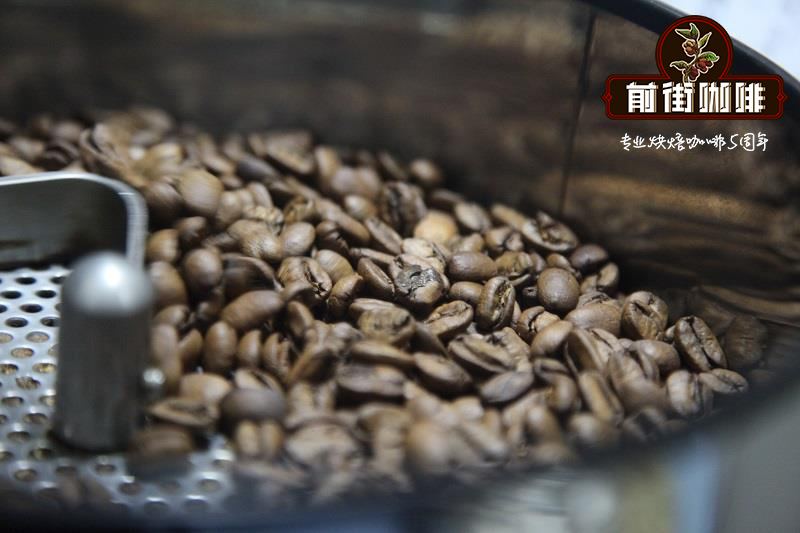
Charcoal roasted coffee began in Japan and grew popular there. In the past, the term almost always meant beans roasted long and hard over a charcoal fire. Such deep roasting quickly drew a thin film of oil to the surface of the beans, and the name "charcoal roasted" was likely meant to capture that deep black, oily look.
Today, with more advanced roasters and a wider range of heat sources, most charcoal roasted coffee is a blend, made by combining several varieties according to a set formula and then roasting them dark. So modern charcoal roasted coffee refers mainly to a flavor and a mouthfeel: a strong, smoky aroma and a heavy body, with the fruity acidity gone.
FrontStreet Coffee's Approach to Charcoal Roasted Coffee
You might assume charcoal roasted coffee is available everywhere, and it is. As a flavor description, every producer has a recipe of their own. FrontStreet Coffee has its own blend formula too. We deliberately chose this popular style as our first flagship release to satisfy our caffeine lovers. ;-)
Kopi Joss: Yogyakarta's Unique Charcoal Coffee
Yogyakarta, in south-central Java, Indonesia, is the cradle of Javanese culture and art, with a rich tradition of literature and dance, countless reliefs and statues, and the world-famous thousand-year-old Buddhist monument, Borobudur.
Today's purpose, though, is not tourism but to present a local specialty with some pride: freshly brewed, roasted, purely handmade.
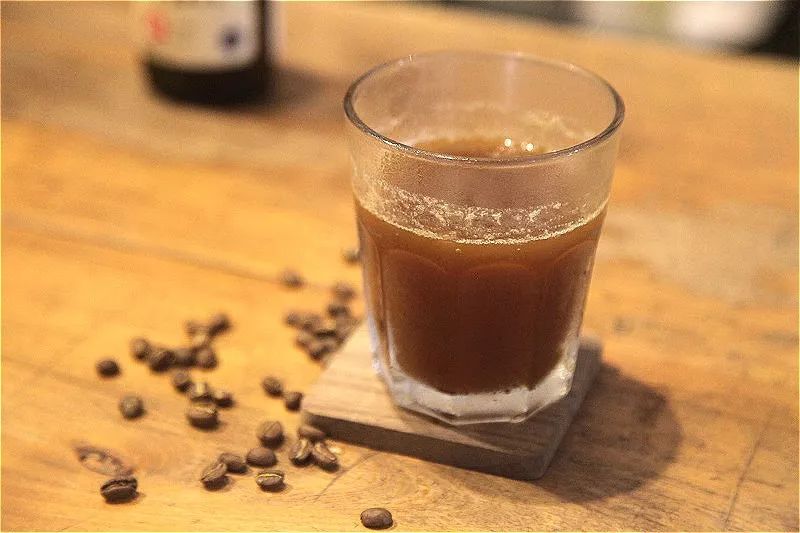
Kopi Joss is a distinctive charcoal coffee from Yogyakarta. Yes, it is made with freshly burned charcoal, not some instant three-in-one charcoal coffee mix.
In this editor's personal chronicle of coffee, having worked through Vietnamese egg coffee, American ice-cream-cone coffee, Finnish cheese coffee, Singaporean butter coffee, Mexican flaming waterfall coffee and Indonesian civet coffee, the addition of Kopi Joss makes a fitting final entry, and a pitch-black, aromatic one at that.
Locally, a cup of civet coffee costs 50,000 Indonesian Rupiah (about 25 yuan), while a cup of Kopi Joss costs only 4,000 Indonesian Rupiah (about 2 yuan). Better still, you get to watch the whole transformation from ordinary coffee into charcoal coffee. You drink and you watch, which makes it unbeatable value for money.
At the roadside tea stalls of Yogyakarta, locals pass the time chatting with friends, smoking, resting or snacking. An authentic cup of Kopi Joss is easy to find, and virtually every visitor tries this famous local drink.
The Preparation and Experience of Kopi Joss
Once you have ordered, the vendor pours coffee into a cup, then adds hot water and sugar. With a practiced hand, they lift the hot water kettle, pull two glowing red pieces of charcoal from beneath it and drop them into the coffee. The hiss that rises from the water proves the charcoal is still alive.
Soon the fiery red blocks cool along with the water and return to the pitch-black look they had before burning.
Kopi Joss is said to have a history of more than 50 years and to have been loved by locals for generations, by now a settled habit.
Some local coffee makers say the drink helps restore a person's strength. Its local fame owes a good deal to simple curiosity.
Kopi Joss contains less caffeine than ordinary coffee, perhaps because the charcoal absorbs part of it. The intense heat of the charcoal also effectively neutralizes the coffee's acidity while releasing a unique aroma with a hint of caramel.
The Benefits of Charcoal Coffee
So what exactly are the benefits of charcoal coffee?
Charcoal is said to help neutralize stomach acid and has long been used as a remedy for bloating, for aiding digestion and for gastrointestinal complaints.
Perhaps you will stare at this "coffee ash," darker than squid ink, for a long while,
asking yourself over and over: should I wait for the ash to settle before drinking?
Or should I drink it now, while it is hot?
Won't it be dirty to swallow charcoal ash?
Don't worry. Everything you eat ends up as something unglamorous anyway, and you have already made peace with civet coffee, haven't you? Different countries have different eating habits and different ways of doing things. Being willing to try is the real meaning of travel.
If you get the chance to go, give it a try. The worst case is an upset stomach, and the many visitors who have tried it do not seem to have suffered any ill effects afterward.
FrontStreet Coffee Recommendation
Kopi Joss is a curiosity worth trying once, but if it is the deep, smoky, full-bodied side of Indonesian coffee you are after, the more rewarding path runs through Sumatra. FrontStreet Coffee's Indonesia Mandheling is the natural starting point. Grown in the Lake Toba area of the Lindong region and processed by the local wet-hulled method, where the parchment is stripped while the beans are still half-dry and left exposed to the air, it develops the herbal, spice-laden character that defines classic Mandheling. Roasted medium-dark, it is low in acidity and heavy in body, with caramel, dark chocolate and toasted bread aromas and a long, sweet finish. If you like your coffee strong, this is where to begin.
For the top of the category, look to FrontStreet Coffee's PWN Golden Mandheling. PWN is a trading house that buys only premium Mandheling green beans, and Golden Mandheling is its flagship. Production is tightly controlled: beans must be 18 mesh or larger, with fewer than three defective beans per 300-gram green sample, which meets the top G1 standard, followed by three rounds of hand sorting to eliminate every remaining defect and lift the cup's cleanliness and sweetness. Rumored to gleam gold in sunlight, it earns its name. Freshly roasted, it pours out sandalwood, herbal and spice notes alongside roasted hazelnut, caramel and dark chocolate, with a clean, sweet, richly layered body. If you want to carry that depth into milk drinks or espresso, FrontStreet Coffee's Classic Blend is the espresso-oriented counterpart, built on Mandheling and Brazilian beans with a small addition of Robusta and roasted dark so the dark chocolate, nut and caramel notes come through even in a beginner's hands.
Important Notice :
FrontStreet Coffee is a long-established specialty coffee roaster in Guangzhou China, selling freshly roasted beans from its own farm in Yunnan as well as dozens of carefully selected single-origin beans from around the world for both pour-over and espresso. The products deliver consistently excellent quality and great value, with shipping within 24 hours. Guangzhou's FrontStreet Coffee shop is recommended by many coffee lovers, and the beans are now available online at the Tmall 。
FrontStreet Coffee has moved to a new address:
FrontStreet Coffee Address: 315,Donghua East Road,GuangZhou
Tel:020 38364473
 Scan and follow the En Gafei WeChat official account. Please indicate that the reprint comes from "En Gafei".