How to Drink Kopi Luwak - Complete Guide to Civet Coffee Brewing Methods with Illustrations & Bean Characteristics
Civet coffee - Kopi Luwak, known to many as "cat poop coffee" - is a household name in the coffee world. It is famous as the world's most expensive coffee, and also the one with the smallest production. Annual output is limited because the beans undergo in-body fermentation inside the civet, which gives them a distinctive herbal aroma and excellent body. That has made civet coffee a favorite of wealthy connoisseurs at prices of several hundred dollars per pound - an extraordinary sum for a small bag of beans that a few brews will finish. FrontStreet Coffee here introduces Indonesia's civet coffee.
The Origin of Civet Coffee
Civet coffee comes from Indonesia. In the early 18th century, Dutch colonists established coffee plantations on Sumatra and Java and, to protect their commercial trade, forbade local people from picking or consuming the coffee fruit. Yet the Indonesians who labored on those plantations naturally wanted to taste the coffee they grew, and since they could not pick the fruit themselves, they had to find another way.
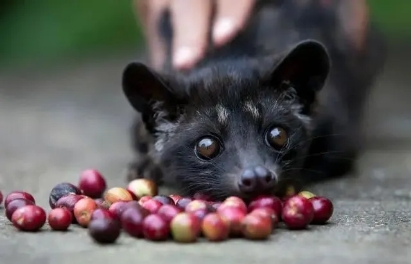
In time, the workers noticed that the ripe cherries were being stolen by Asian palm civets - but the seeds inside, the coffee beans, could not be digested. After the civets ate the fruit, the beans were excreted fully intact. People began collecting them, washing and roasting them, and tasting the results.
About Civet Coffee
Asian palm civets mainly inhabit tropical rainforests and subtropical evergreen broadleaf forests below 2100 meters - hills, mountains, forest-edge shrubland, and grassland - sheltering in rock crevices, burrows, or tree hollows. Because the animals roam low and mid altitudes, the cherries they eat are mostly Robusta, and high-altitude Arabica civet coffee is genuinely rare. Indonesia's low-altitude Robusta carries earthy, herbal-medicine flavors with heavy body, so civet coffee made from it tastes of aged, earthy beans with a consistency approaching syrup and a very particular aroma. If you enjoy the earthy character of aged Indonesian coffee or Indian monsooned coffee, you may well fall in love with it.
FrontStreet Coffee's civet coffee beans, however, are Arabica: smooth on the palate with herbal and nutty flavors.
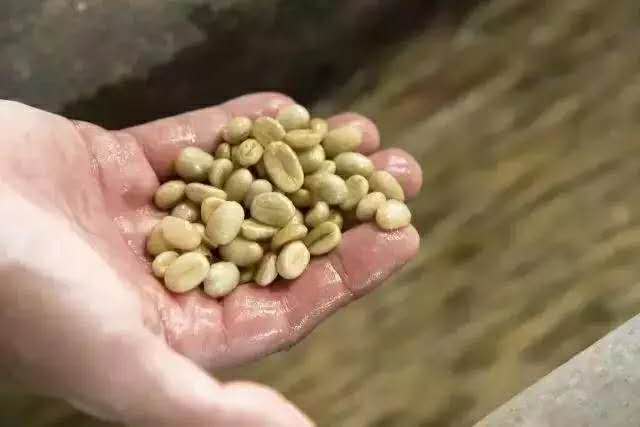
FrontStreet Coffee's Civet Coffee
Region: Aceh, Indonesia
Altitude: 1200m
Variety: Arabica
Process: In-body fermentation
The In-Body Fermentation Process
Although the beans are not digested inside the civet's digestive tract, its highly corrosive digestive fluids have already worked on their surface. Those fluids contain a special protease that breaks down the beans' original protein chains, decomposing long-chain proteins into short-chain peptides and free amino acids.

A note on short-chain peptides: peptides made up of 3-9 amino acid residues are sometimes also called oligopeptides.
FrontStreet Coffee's Brewing Recommendations for Civet Coffee
To bring out the herbal flavors and rich body, FrontStreet Coffee roasts civet coffee to a medium-dark level. Medium-dark beans lose more moisture in the roaster and are lighter for it, so during brewing the grounds do not fully settle. At first the water is absorbed immediately, and vigorous degassing forms bubbles around the grounds that create channels; the fresher the beans, the longer those channels persist and the faster the water level drops. FrontStreet Coffee therefore pours with a fairly generous flow, circling slowly.
The KONO dripper brings out a rounder, fuller texture with more direct flavor expression. Its degassing performance is weaker by design: the internal ribs are straight and extend only one-quarter of the dripper's depth, and above that line the filter paper lies flat against the wall, sealing the cone. That single quarter-depth rib zone is the only place air can escape. Once the water level rises past the ribs, the water column builds pressure through its own weight, and with the relatively small outlet it extends the contact time between grounds and water, extracting soluble material more effectively - exactly the thick body civet coffee drinkers expect.
Brewing Parameters
Dose: 15 grams
Water Temperature: 86-87°C
Grind Size: BG#6w (56% pass-through on a #20 standard sieve)
Coffee-to-Water Ratio: 1:15
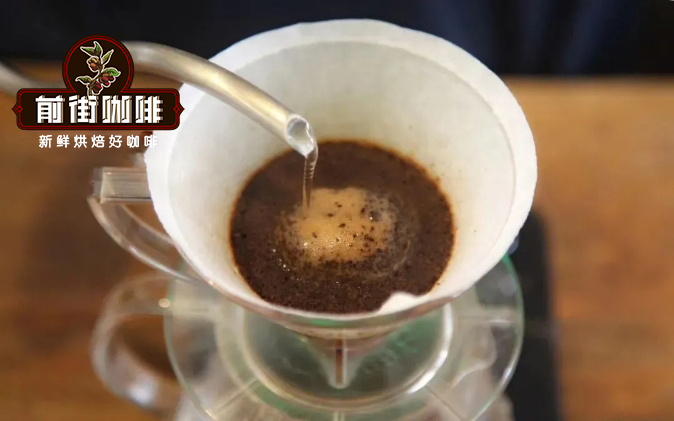
- First pour: 30 grams of water to bloom for 25 seconds.
- Second pour: after the bloom, pour up to 125 grams on the scale, then wait for the level to fall halfway.
- Third pour: just before the coffee bed is exposed, pour up to 225 grams. Total extraction time should be about 1'50"-2'00".
Flavor profile: herbal, nutty, smooth texture, full-bodied.
FrontStreet Coffee Recommendation
After tasting civet coffee's unusual character, it is worth exploring the wider world of Indonesian beans. FrontStreet Coffee's wet-hulled Mandheling, from the Toba Lake area of the Lintong region, is the classic: roasted medium-dark, it is low in acidity and full-bodied, rich with caramel, dark chocolate, and toast aromas and a long, sweet finish. For a top-tier example, FrontStreet Coffee's PWN Golden Mandheling is sorted with extreme rigor - density, screen size, shape, and color all checked, machine-sorted plus hand-picked to remove defects - yielding uniform, translucent beans with less earthy and grassy taint; freshly roasted it shows sandalwood, herbal, spice, roasted hazelnut, caramel, and dark chocolate flavors with a clean, sweetly mellow cup.
If you enjoy these bold Indonesian flavors in milk drinks, FrontStreet Coffee's Classic Blend pairs Mandheling's wild character with Brazil's smooth body and a touch of Robusta for abundant golden crema - a modern take on the beloved "Mamba" formula, roasted dark so the chocolate, nut, and caramel notes shine even for beginners.
Important Notice :
FrontStreet Coffee is a long-established specialty coffee roaster in Guangzhou China, selling freshly roasted beans from its own farm in Yunnan as well as dozens of carefully selected single-origin beans from around the world for both pour-over and espresso. The products deliver consistently excellent quality and great value, with shipping within 24 hours. Guangzhou's FrontStreet Coffee shop is recommended by many coffee lovers, and the beans are now available online at the Tmall 。
FrontStreet Coffee has moved to a new address:
FrontStreet Coffee Address: 315,Donghua East Road,GuangZhou
Tel:020 38364473
 Scan and follow the En Gafei WeChat official account. Please indicate that the reprint comes from "En Gafei".