Papua New Guinea Blue Mountain Flavor Coffee Beans Characteristics Story Brewing Tutorial

Papua New Guinea may be a forgotten origin to many, but FrontStreet Coffee believes its coffee stands apart on the island of New Guinea — distinct even from neighbor Indonesia. Volcanic soils and lush rainforest give its coffee a bright, sweet, fruity-floral character that feels closer to Central and South America. Sitting on the Pacific volcanic belt in the southwestern Pacific, PNG has volcanic geology and fertile soil — essential conditions for fine coffee. Coffee is the lifeblood of the highlands: it is effectively the only cash crop there, and nationwide, 40% of smallholder farming families — more than 2 million people — depend on it. FrontStreet Coffee's PNG coffee cups with a solid mouthfeel, low acidity, and clean flavor, making it especially well suited to Asian palates.

Culturally, Papua New Guinea is one of the most diverse places on earth, with over 800 languages, and most highland tribes had little contact with Western culture until the early 1900s. Commercial coffee cultivation began in 1920, after coffee seeds were imported from Jamaica — the Typica variety known as Jamaican Blue Mountain. The Arusha variety found in Bebe coffee is grown exclusively in PNG.
Initially, most PNG coffee was grown on 18 large plantations. Today, smallholders — who call the coffee simply "PNG" — account for 85% of production, grown in tiny "coffee gardens." These farmers live off their land with coffee as one product among many, and their gardens hold anywhere from a handful to several hundred trees. The Coffee Industry Corporation of Papua New Guinea recognizes that this smallholder coffee possesses exceptional quality with outstanding flavor characteristics, making it a favorite of many overseas buyers.
A Brief History of the Growing Region
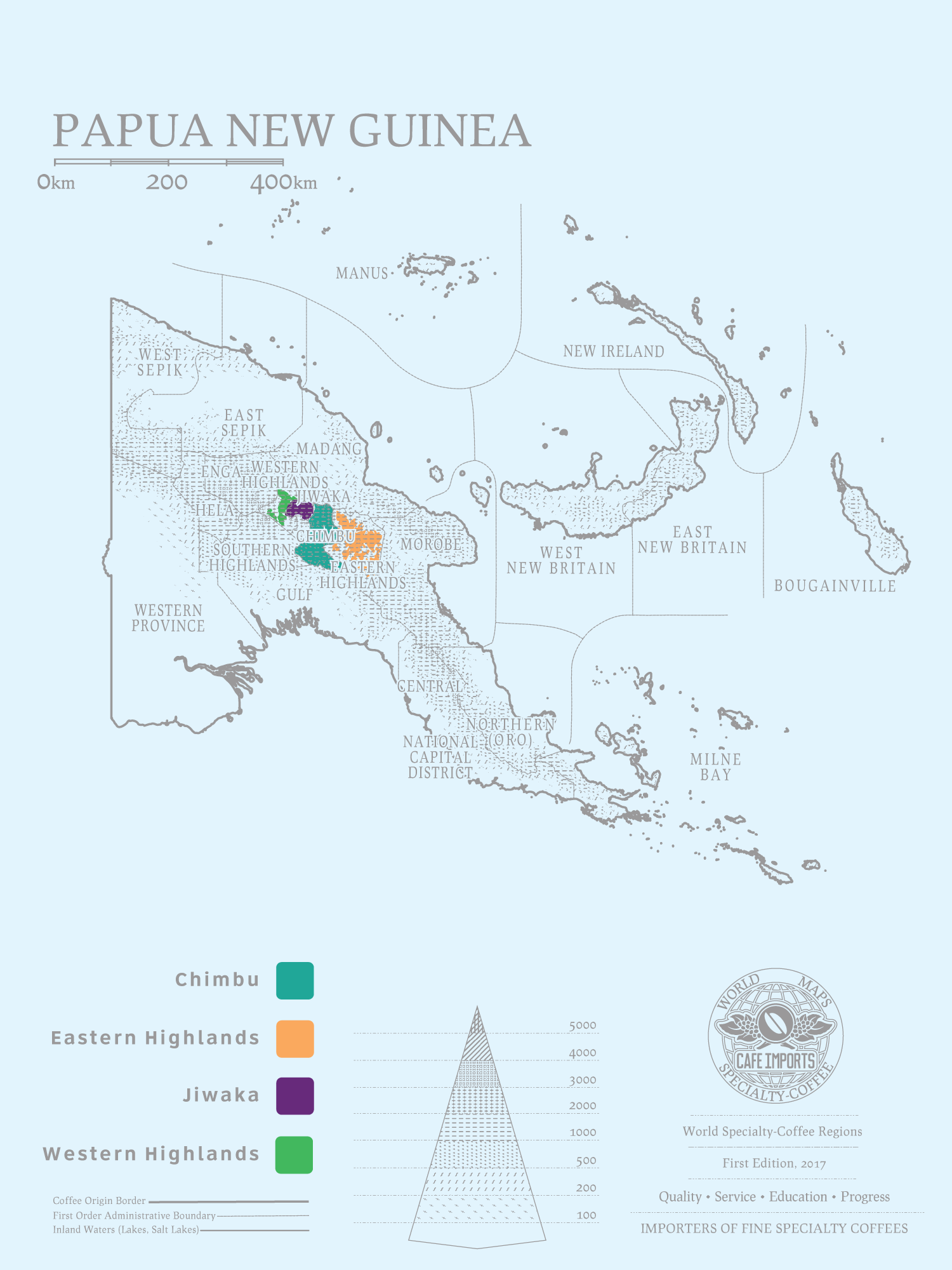
Coffee first arrived in Papua New Guinea with Dutch sailors in the late 18th century, but organized cultivation in the Rigo region began around 1892. By 1908, PNG had 180 acres planted with coffee. By 1970, the country could produce 460,000 bags a year. Today, annual production has reached 900,000 to 1.2 million bags.
Papua New Guinea is divided mainly into four regions: the Eastern Highlands, Momase, the New Guinea Islands, and Southern. East of the Indonesian archipelago and dominated by highland terrain, it supports both large estates and smallholder plots across multiple varieties. FrontStreet Coffee's PNG beans taste distinctly different from other Asian coffees — from Indonesia, South Asia's India, or the Pacific islands. Unlike Indonesian beans from Sumatra or Sulawesi, which are typically wet-hulled and show low acidity, heavy body, and earthy notes, FrontStreet Coffee's washed Papua New Guinea beans are consistently brighter.

Papua New Guinea Coffee Estates
Well-known PNG varieties include the typical Arabica introduced from Blue Mountain, Bourbon from Kenya, Mundo Novo and Caturra from Brazil, Arusha from Tanzania, plus some modern hybrids and the Indian Kent variety. Notable estates include SIGRI Estate in the western Wahgi Valley, KIMEL Estate in the Eastern Highlands, AROKARA, GOROKA, and ARONA. The coffee brewed below comes from FrontStreet Coffee's Sigri Estate Bird of Paradise.
PNG estate coffee comes from larger-scale farms and cups cleaner and more refined — lighter in mouthfeel than Java beans, with subtle aromatics and complexity that sometimes rivals the acidity and brightness of the finest Central American coffees. One renowned American roaster described PNG's natural coffee as "surprising depth and diverse aromatics." Kimel Estate's coffee is bright, acidic, and rich in fruit; Arokara's is more balanced and gentle, making it suitable for espresso.

Papua New Guinea Coffee Grading
PNG coffee is graded on:
1. Bean size
2. Total defect equivalent per kg
3. Bean shape
4. Green bean color
5. Odor
6. Roasting aspects
7. Cup quality
*Defect-based grading combines grade and screen size into 12 levels (Arabica only):
AA >18, A >17 (50%), AB >16 (50%), B >16, C >15, PB 11-14S, X mixed, E >19, PSC >15 mm, Y1 mixed, Y2 mixed, T mixed
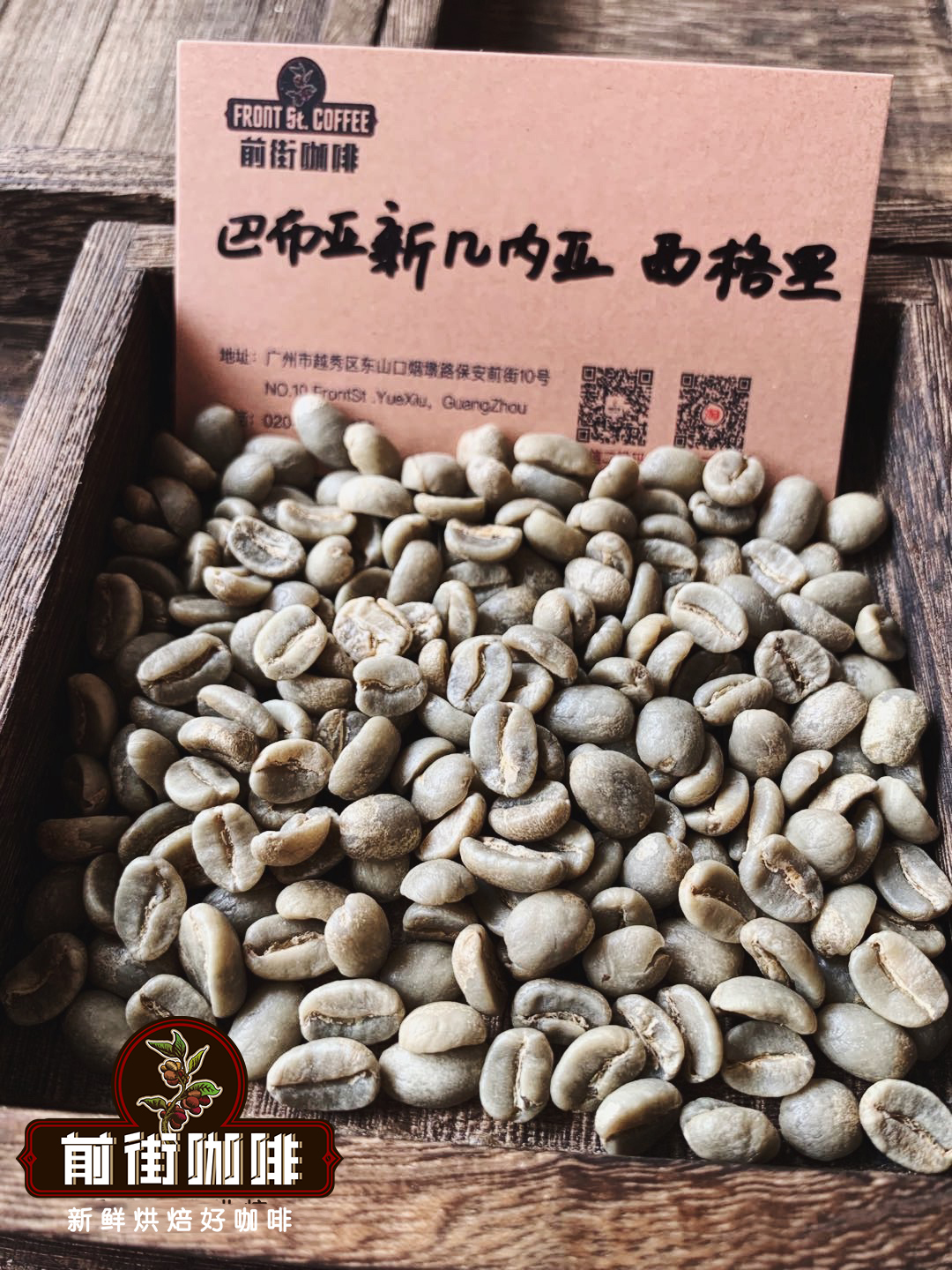
Let's use FrontStreet Coffee's Papua New Guinea Bird of Paradise Sigri as our case study for PNG flavors.
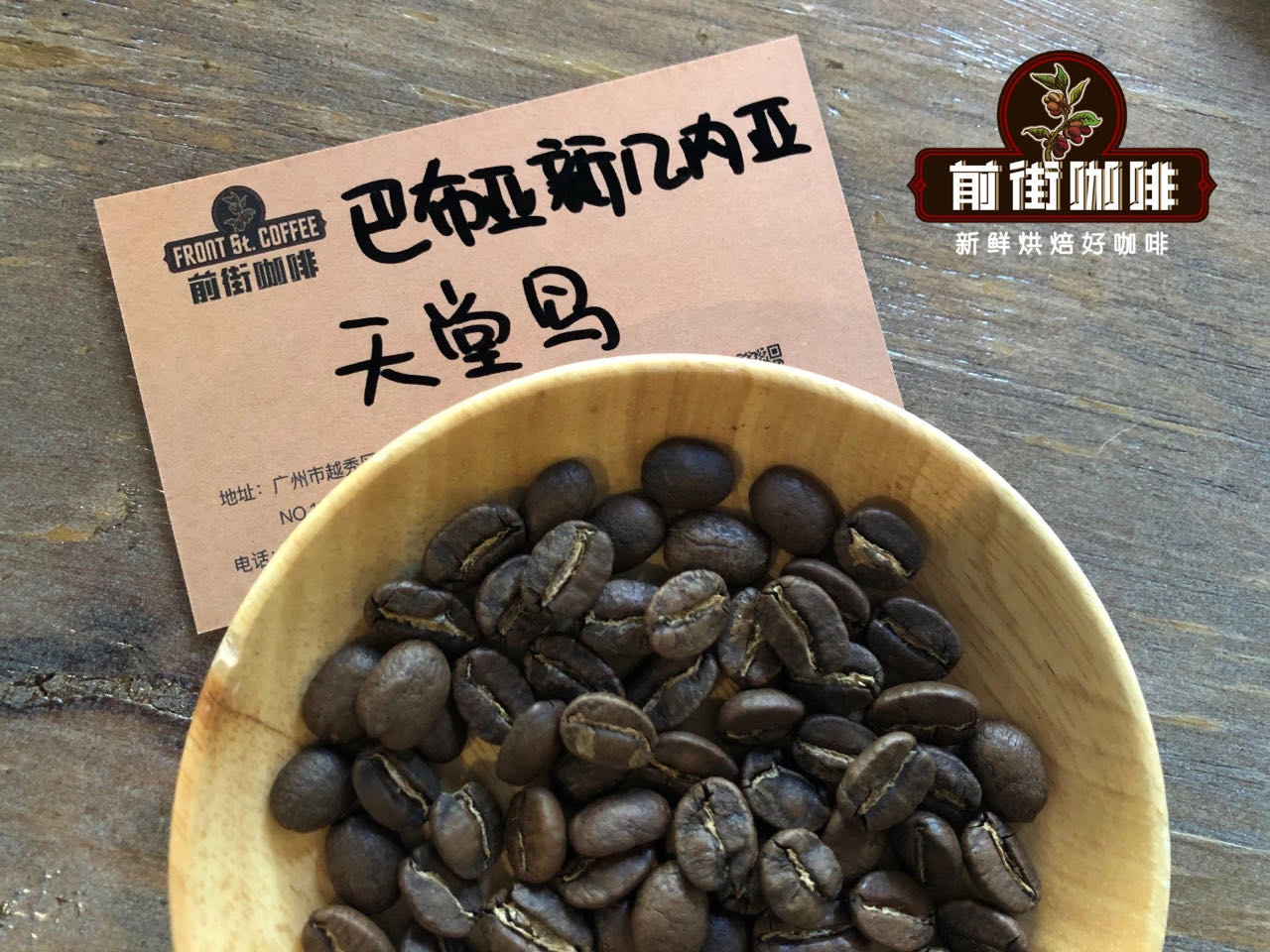
FrontStreet Coffee Papua New Guinea Bird of Paradise Coffee Beans
Country: Papua New Guinea
Region: Sigri
Altitude: 1600-1800 meters
Variety: Typica
Grade: AA
Processing: Washed
Flavor: caramel, dark cocoa, balanced, almond, with citrus acidity at lower temperatures
Sigri Estate
Sigri, the Bird of Paradise Estate, sits in the Waghi Valley of the Western Highlands Province on well-drained volcanic soil, at roughly 1600-1800 meters. Established in 1950, it has operated for over 60 years — a pioneer of the local coffee industry.
About 95% of Papua New Guinea's coffee comes from the highlands. In Sigri's corner of the Wahgi Valley, the climate is cool, the soil fertile, and the rainfall abundant. PNG began widespread coffee cultivation in the 1950s, and Sigri was among the very first plantations — earning international renown for its uniquely high-quality beans.

Sigri has maintained high cultivation and processing standards for decades. During the April-to-September harvest, only fully ripe cherries are hand-picked, ensuring a perfect balance of acidity and sweetness. Cupping is conducted daily to guarantee consistently excellent quality — which has made Sigri a classic of the specialty coffee world.
At peak harvest, Sigri employs roughly 6,000 workers, half of whom live and eat in estate housing. The plantation runs free clinics and primary schools for employees' children.
Sigri also protects its soil and water, refusing pesticides and insecticides and caring for the ecosystem and its birds. Records show the Wahgi Valley hosts over 160 bird species, with 90 of them living on the Sigri plantation — including Papua New Guinea's national symbol, the Bird of Paradise. A true bird paradise.

FrontStreet Coffee Roasting Notes
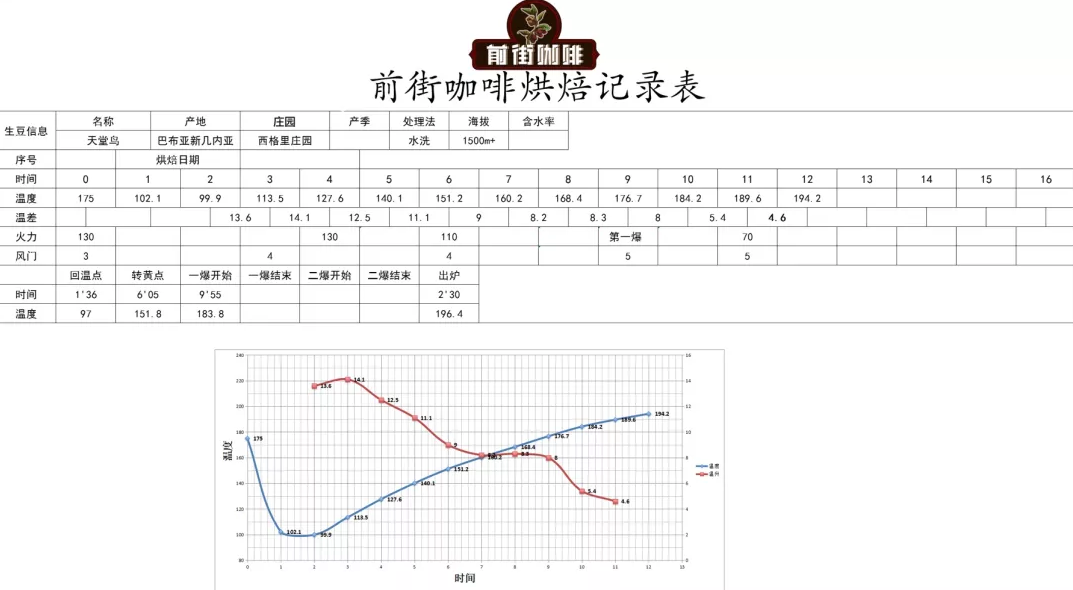
FrontStreet Coffee Brewing Suggestions
FrontStreet Coffee brews this coffee at 88-89°C with a 1:15 coffee-to-water ratio in a KONO dripper, using a sugar-sized grind.

Method: bloom with 30 g of water for 30 seconds, then pour slowly in small circles to 125 g in stages, and continue to 225 g, finishing the brew when the water level is about to expose the coffee bed.
Brewed this way, FrontStreet Coffee's Papua New Guinea Sigri Bird of Paradise offers a balanced mouthfeel with cream, nuts, chocolate, and a soft fruity acidity.
FrontStreet Coffee Recommendation
PNG coffee is often called "little Blue Mountain" for its Typica heritage and balance. If that style speaks to you, try the real thing: FrontStreet Coffee's Jamaica Blue Mountain No. 1, the highest grade, from the historic Clifton Estate — farming coffee since around 1750, at an average of 4,300 feet (1,310.64 m). It ships in the traditional Blue Mountain wooden barrels (15, 45, and 70 kg) with full origin certification, and is medium-dark roasted to bring out its famous balance: cream, caramel, chocolate, and nuts, with a smooth, rounded body and a long, clean finish.
For the same clean, low-acid character at everyday prices, the FrontStreet Papua New Guinea Bird of Paradise from Sigri Estate — Typica, AA grade, washed with three fermentation stages at 1600-1800 meters — is an outstanding choice.
Important Notice :
FrontStreet Coffee is a long-established specialty coffee roaster in Guangzhou China, selling freshly roasted beans from its own farm in Yunnan as well as dozens of carefully selected single-origin beans from around the world for both pour-over and espresso. The products deliver consistently excellent quality and great value, with shipping within 24 hours. Guangzhou's FrontStreet Coffee shop is recommended by many coffee lovers, and the beans are now available online at the Tmall 。
FrontStreet Coffee has moved to a new address:
FrontStreet Coffee Address: 315,Donghua East Road,GuangZhou
Tel:020 38364473
 Scan and follow the En Gafei WeChat official account. Please indicate that the reprint comes from "En Gafei".