How to Distinguish Robusta from Arabica? Which Country is the Origin of Arabica Cultivation?

Popular Science: 100% Arabica Is Not a Type of Coffee
Let's do some clarifying. These days many coffee merchants have started their own coffee beverage lines, and they are not shy about using Arabica for brand promotion, all claiming they use "100% Arabica." In their marketing they even say: freshly ground black coffee is 100% made with Arabica.
Here is the point, dear readers: Arabica coffee is a variety of coffee bean, not a type of coffee.
Coffee Varieties
The three main original species are Arabica, Robusta and Liberica. Arabica ranks first in production, accounting for about 60-70% of the world's coffee, and has sub-varieties such as Bourbon and Typica. Robusta accounts for about 30-40% of world coffee production. Liberica accounts for only 3% of the total and is mostly grown in the Asia-Pacific region.
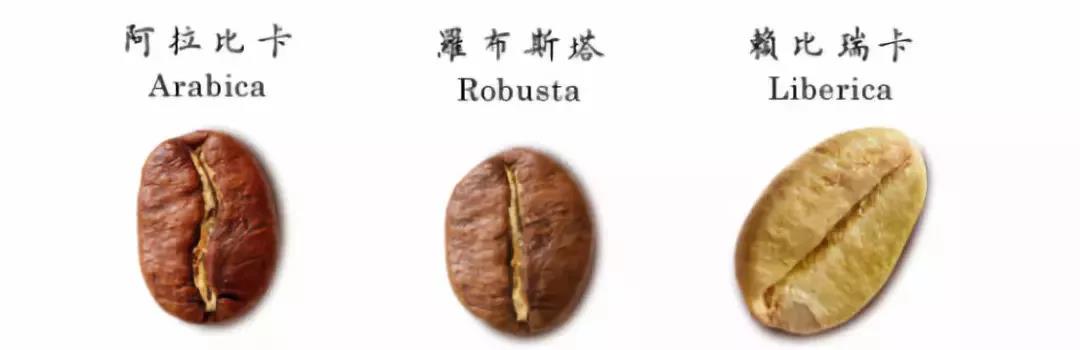
Liberica, also known as large bean coffee, has extremely strong vitality, but its flavor and its resistance to leaf rust are both weak. Its cultivation volume is less than 1%, and it has essentially withdrawn from the commercial market, preserved only for scientific research. So today we will focus on Arabica and Robusta.
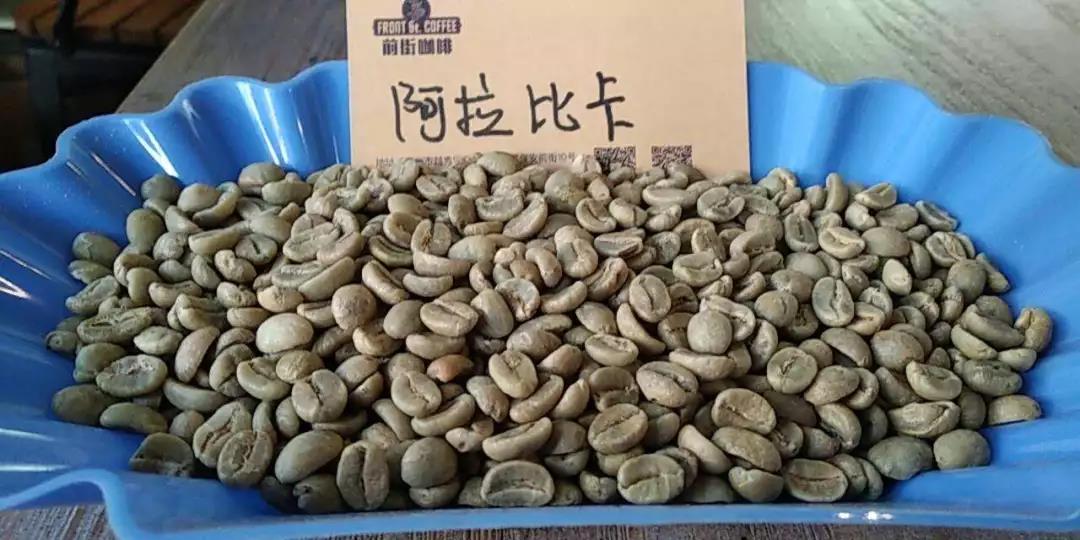
Arabica
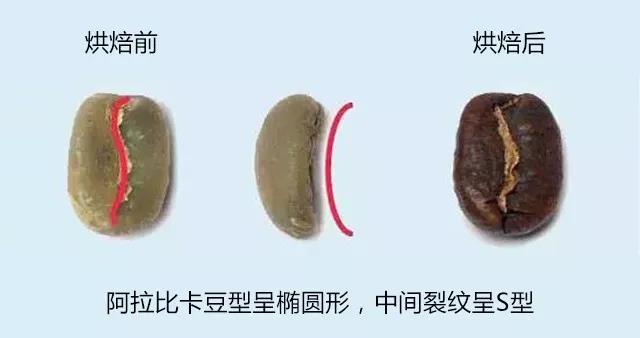
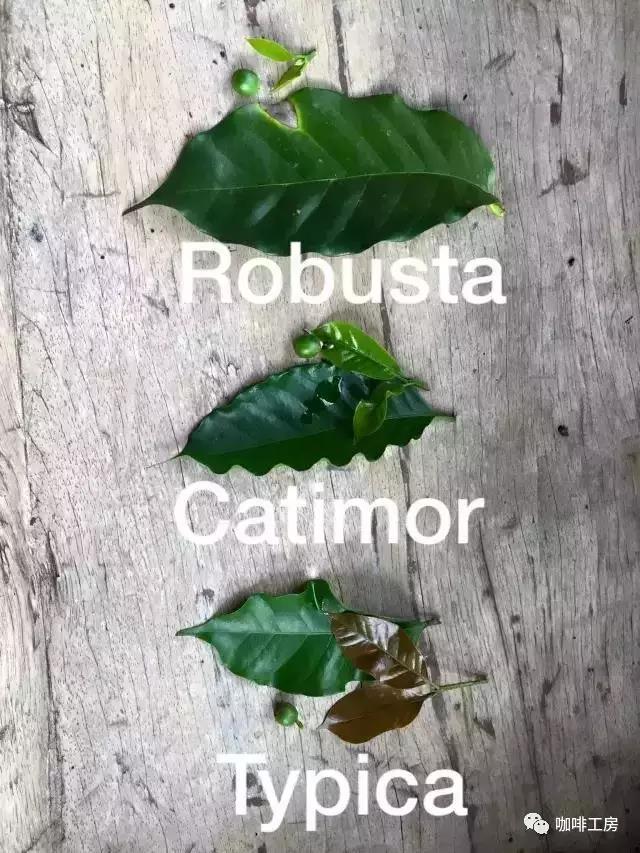
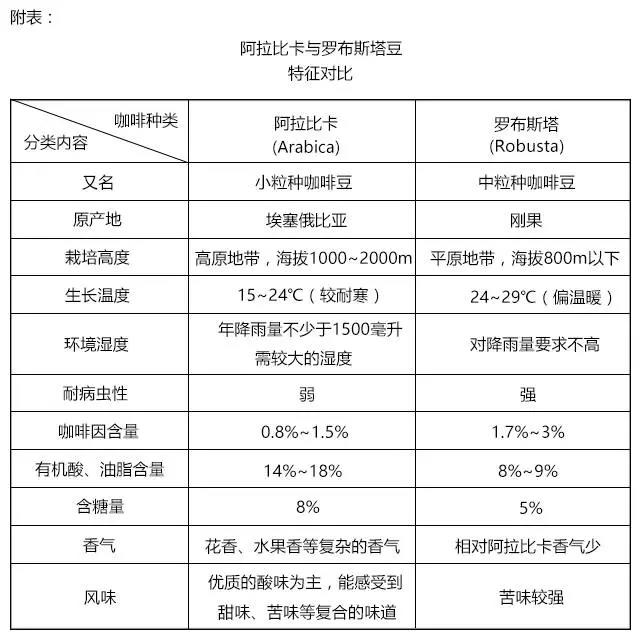
Also known as small bean coffee, originally from Ethiopia. Arabica coffee trees mostly grow at altitudes between 1000-2000 meters; they are relatively cold-resistant and suit growing temperatures of 15-24°C. They need high humidity, with annual rainfall of not less than 1500ml, and they place higher demands on cultivation technique. Arabica trees are larger shrubs, with oval, dark green leaves and oval fruits that generally contain two slightly flat beans. The front shows a long oval shape with a narrow, curved crack in the middle forming an S-shape, while the back of the bean has a relatively flat arc. Caffeine content is about 0.8%-1.5%.
The excellent flavor and aroma of Arabica make it the only one of the original species that can be consumed directly and on its own. Single-origin coffees such as Jamaica Blue Mountain, Indonesia Mandheling, Yirgacheffe and Brazilian coffee all belong to this category. Its resistance to drought, frost damage, pests and disease is weak, however - it is especially intolerant of coffee's greatest enemy, leaf rust - so every producing country is committed to improving varieties.
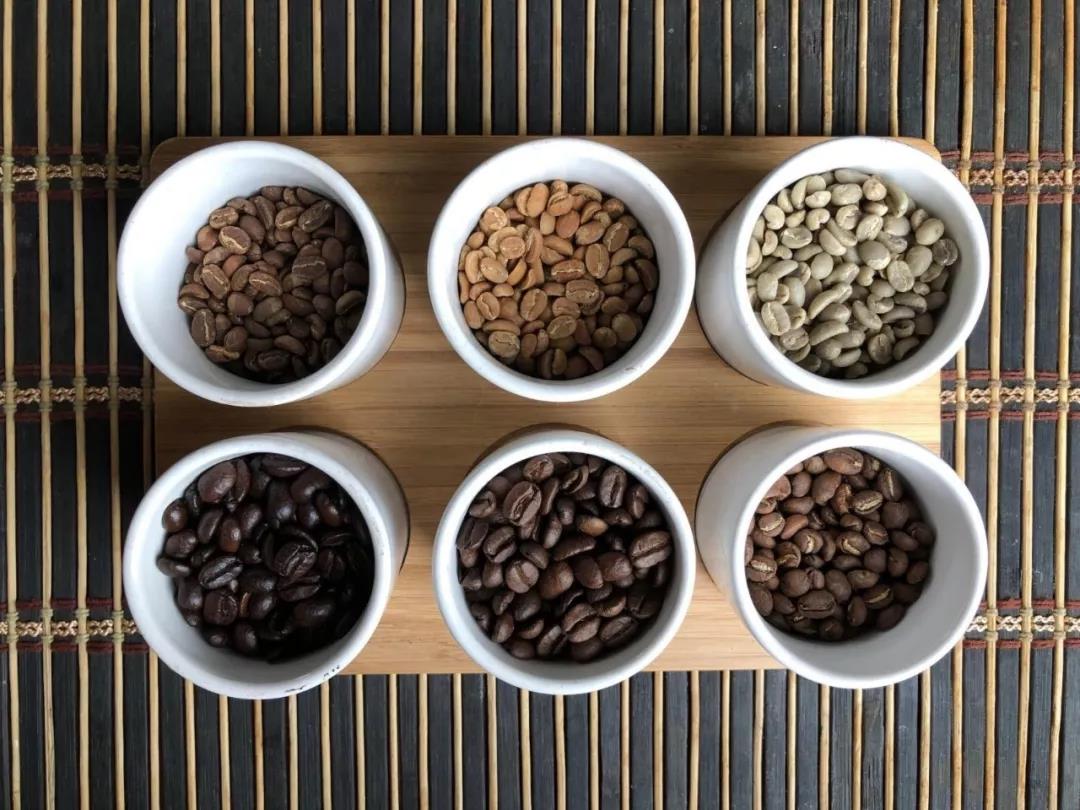
Arabica coffee from different regions, altitudes and climates has its own character and can express completely different personality flavors. Unroasted, it smells of fresh grass. After appropriate roasting it shows "fruity aroma" (light to medium roast) and "caramel flavor" (dark roast). It suits single-origin and blended use alike and can be prepared with many extraction methods.
Robusta
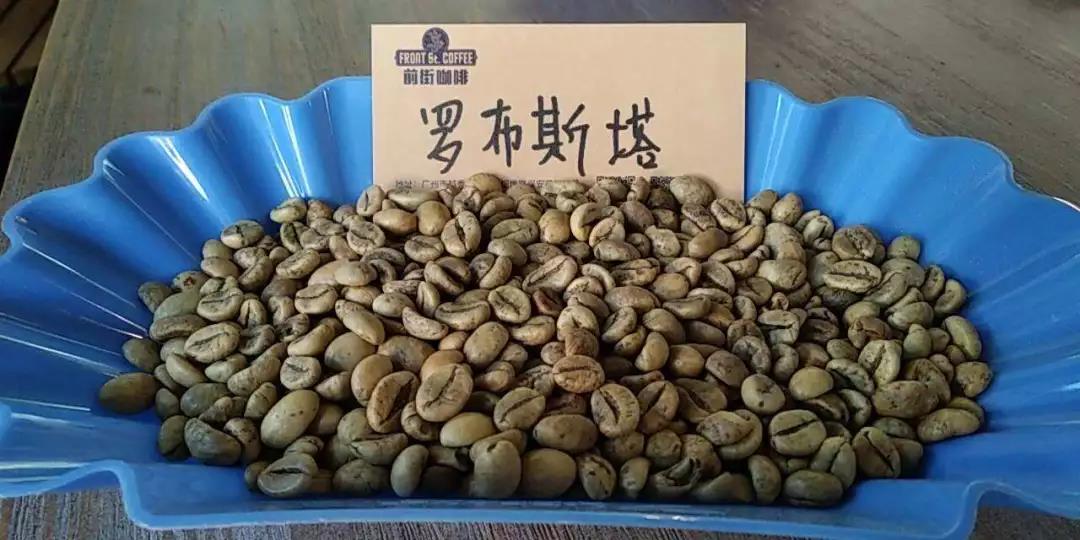
Also known as medium bean coffee, originally from Congo in Africa. Robusta trees are mostly planted at low altitudes of 200-800 meters and prefer warm climates, needing temperatures between 24-29°C, with modest rainfall requirements. The variety relies on insects or wind for pollination, so the time from pollination to fruiting is 9-11 months, longer than Arabica.
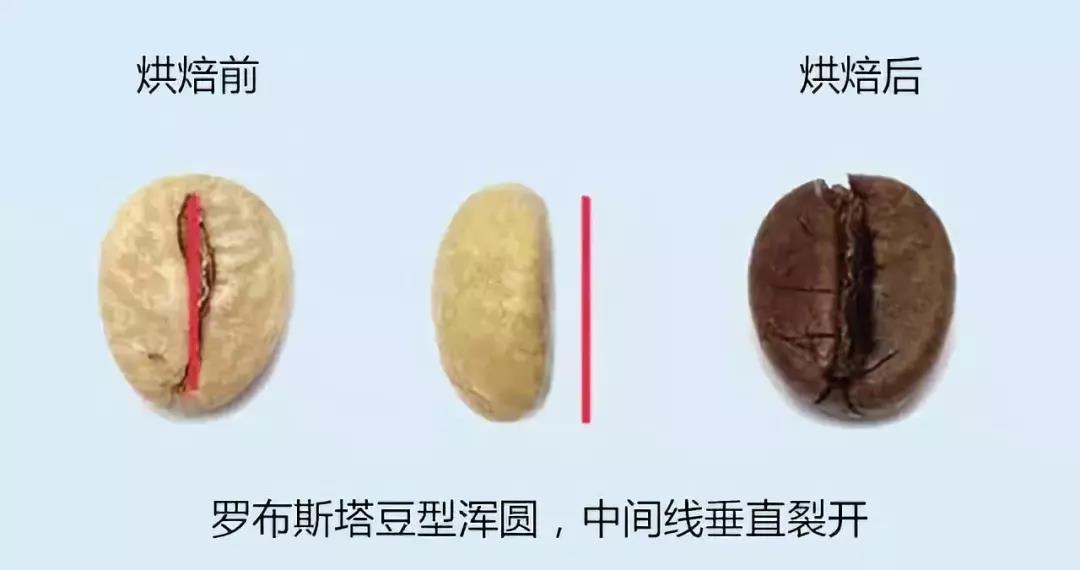
The Robusta tree sits between a shrub and a tall tree, with longer, bright green leaves. It can reach up to 10 meters in height, but its roots are very shallow. The fruit is fuller than Arabica beans, with the center line cracking vertically. Seen from the side, the beans are usually flat or protruding in the middle, and they feel harder than Arabica beans, like small stones.
Robusta Coffee Flavor Is Generally Inferior to Arabica
The Value of Robusta
As a very important variety in the coffee world, Robusta has made indelible contributions to the commercial market. Its value is not to serve as a negative example that highlights Arabica's superiority; it holds an unshakable place in espresso blends. Italian blends add a small amount of Robusta to increase the coffee's body and produce espresso with a richer crema.
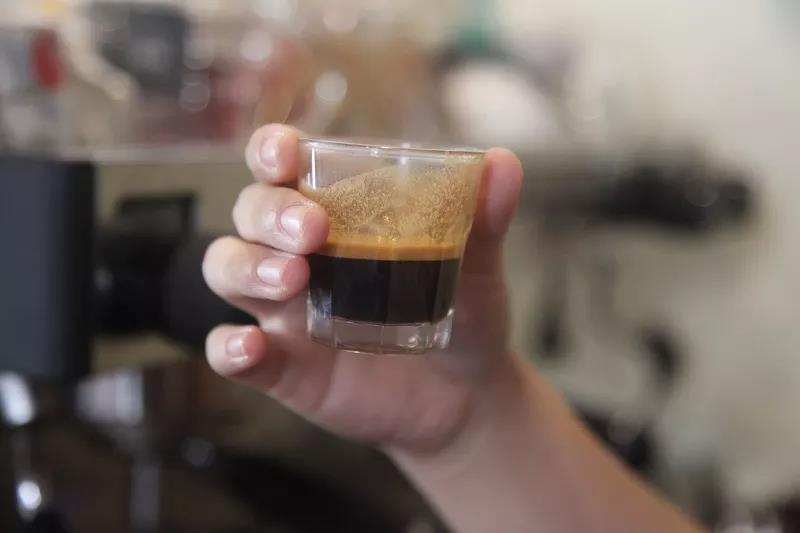
When an espresso blend is combined with milk, it presents a rich, full-bodied texture. Milk coffee becomes richer and more aromatic thanks to the complementary relationship between Robusta and Arabica. Robusta compensates for Arabica's lack of body.

[Robusta]
Mainly used in espresso blends to increase body and obtain a rich crema. Although Robusta's flavor cannot be compared with Arabica's, it has its own value.
Beginner Questions:
1 | What's the difference between 10 yuan and 30 yuan coffee?
From the coffee market's perspective, coffee beans are mainly divided into two categories: commercial beans and specialty coffee beans. In terms of price, Robusta's international futures are about $1,686 per ton, which works out to about 11.5 RMB per kilogram at today's exchange rate. Specialty coffee beans are several times more expensive than commercial beans. From a cost perspective, choosing commercial beans certainly offers larger profit margins, but the flavor obtained from commercial beans is much inferior to specialty beans. They can still be used to make espresso-based drinks such as lattes and cappuccinos.
Between commercial coffee and specialty coffee, 10 yuan and 30 yuan do mean a quality gap. Put simply, specialty coffee beans are high-quality green beans that have been expertly roasted to restore the unique flavors inherent in the bean - flavors that belong exclusively to that type of coffee. Specialty beans are processed using refined methods. Careful washing and sun-drying, and various sophisticated green bean processing techniques, give coffee "layered," "fruity acidic," "sweet" and "mellow" flavors.
Specialty coffee beans are several times more expensive than commercial beans. From a cost perspective, choosing commercial beans certainly offers larger profit margins. Large-scale batch production and packaging generally means commercial beans.
In terms of individual bean flavor, commercial beans are generally chosen for blending. These commercial beans are usually cheaper, and both the green beans and the roasting techniques can only be described as a standardized mass-production process. The biggest difference between specialty and commercial coffee lies in quality and price. Specialty coffee might cost 90 yuan per pound, while commercial beans might go as low as 40-50 yuan per pound.
In reality, though, blends can also produce excellent-tasting coffee - it mainly depends on which beans are used in the blend.
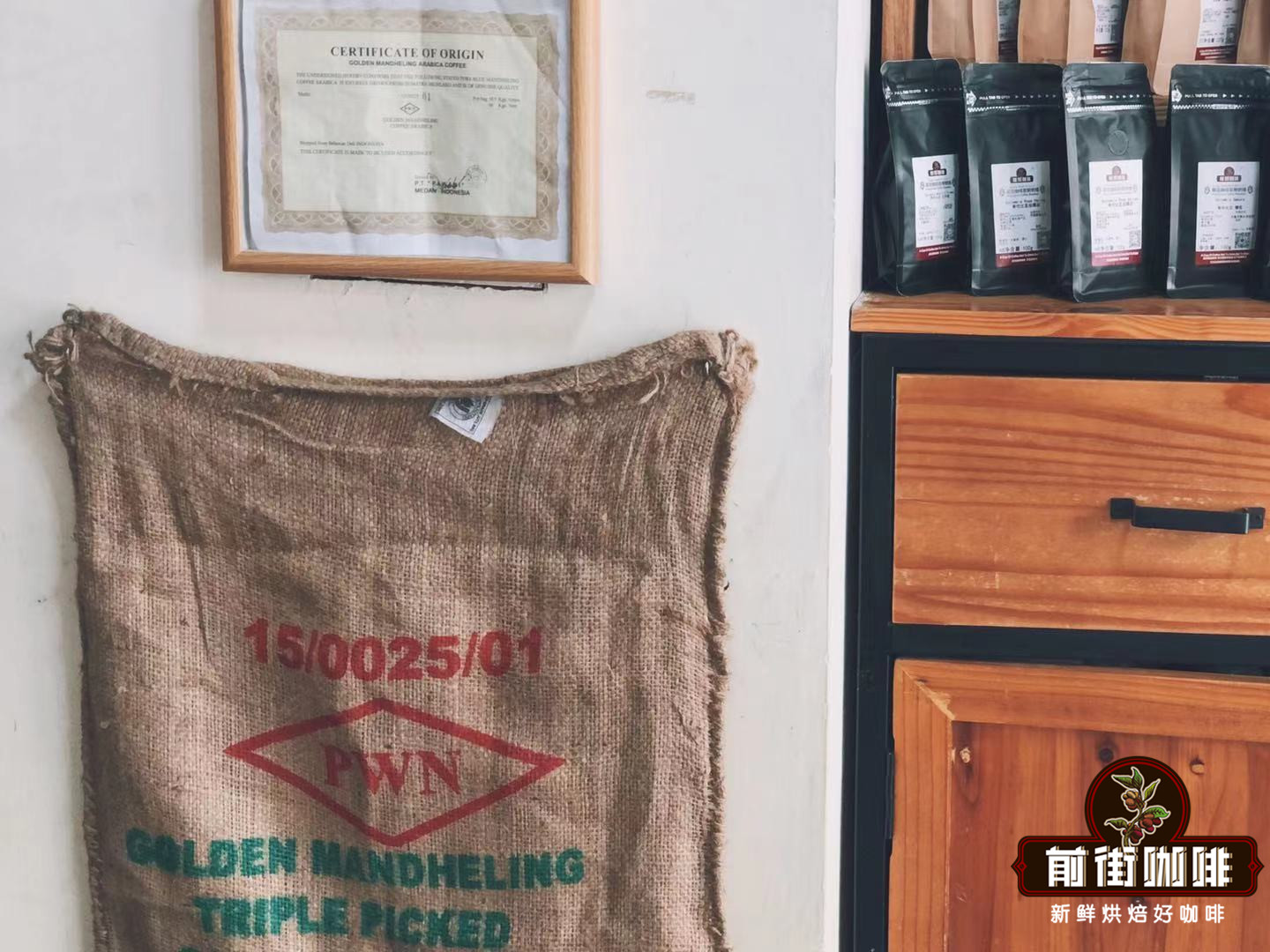
2 | "Blue Mountain Coffee" and "Kopi Luwak" are types of coffee; Arabica is a coffee bean variety
Most people have heard of "Blue Mountain Coffee" and "Kopi Luwak" - these are coffee beverages.
Whereas coffee called "Arabica" refers to a coffee variety.
- "Blue Mountain Coffee" refers to coffee brewed from beans grown in Jamaica's Blue Mountains.
- "Kopi Luwak" exists because an animal called the civet excretes coffee beans intact after eating coffee cherries, and people extract the beans from its droppings and process them.
So the "Arabica" we often see today is actually a classification based on coffee bean varieties.
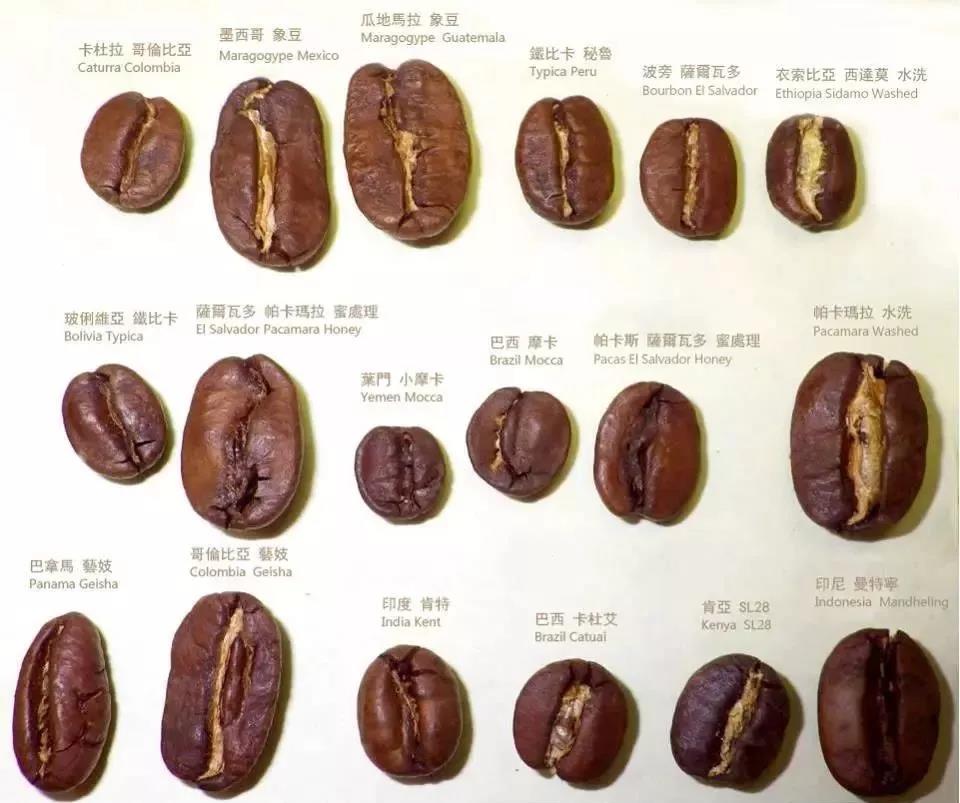
Coffee bean varieties can be divided mainly into three types: Arabica, Robusta and Liberica. Arabica is further divided into Typica, Bourbon, Caturra and so on.
In fact, not all coffee made from Arabica beans is specialty coffee. Unfortunately, many people don't understand this, and many brands take advantage of that by using "100% Arabica coffee beans" as a gimmick to make consumers think their coffee is excellent.
When ordering single-origin coffee in a "relatively professional" coffee shop, you almost never see promotions for "Arabica coffee beans." At FrontStreet Coffee, for example, you will see names like "Kenya," "Colombia" and "Yirgacheffe." Tasting single-origin coffee lets you understand the characteristics and flavors of coffee from a particular country or region.
FrontStreet Coffee Recommendation
Arabica's range is exactly what makes it worth exploring, and FrontStreet Coffee's Ethiopian single origins show how much variety one species can hold. FrontStreet Washed Yirgacheffe is the classic entry point, with white jasmine, bright citrus and lemon acidity and a tea-like body - a clean, clear illustration of why Arabica earns its reputation.
FrontStreet Ethiopia Huakui takes the fruit in a completely different direction, layering strawberry, passion fruit, jackfruit and lychee with pronounced sweetness and very low bitterness. FrontStreet Sun-Dried Red Cherry, a full red-cherry natural, brings berry-juice body, honey sweetness and a creamy texture, while FrontStreet Kafa Forest draws on wild Arabica grown in the UNESCO-listed Kafa Biosphere Reserve at 1400-2100 meters, showing jasmine, citrus and wild-berry aromas with a bright lemon acidity and a green-tea-like finish. Roasted medium-light, all of them stay true to the fruity, floral side of Arabica that commercial-grade beans rarely reach.
Important Notice :
FrontStreet Coffee is a long-established specialty coffee roaster in Guangzhou China, selling freshly roasted beans from its own farm in Yunnan as well as dozens of carefully selected single-origin beans from around the world for both pour-over and espresso. The products deliver consistently excellent quality and great value, with shipping within 24 hours. Guangzhou's FrontStreet Coffee shop is recommended by many coffee lovers, and the beans are now available online at the Tmall 。
FrontStreet Coffee has moved to a new address:
FrontStreet Coffee Address: 315,Donghua East Road,GuangZhou
Tel:020 38364473
 Scan and follow the En Gafei WeChat official account. Please indicate that the reprint comes from "En Gafei".