What is Yunnan Arabica Coffee - Description of Yunnan Coffee Bean Varieties, Taste and Flavor Characteristics

FrontStreet Coffee understands that when most people first enter the world of specialty coffee, they usually start with African coffees from Ethiopia's Yirgacheffe or Sidamo regions, and that when the conversation turns to Asian coffee, most people think first of Indonesia's Mandheling. With the rise of domestic trends, however, Chinese Yunnan coffee has gradually come into view.
When it comes to domestic products, the cosmetics and skincare markets of years past left many people with lingering doubts, a feeling that homegrown quality was not high. That is not actually the case: the quality of Yunnan coffee beans has long been comparable to beans from other major producing regions.
China's Coffee Bean Producing Regions
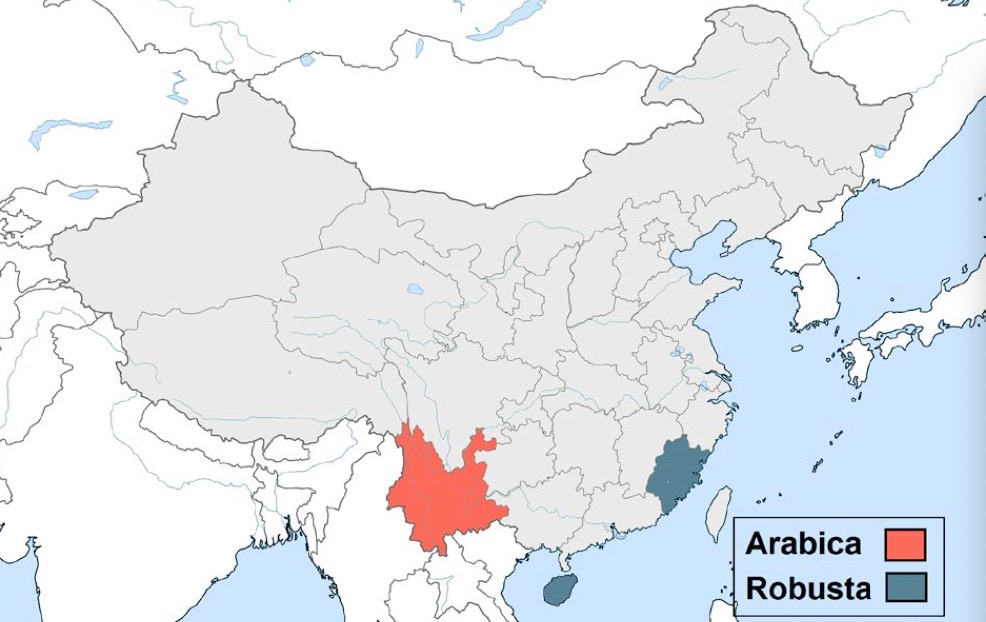
Strictly speaking, China has three main coffee-producing provinces: Fujian, Hainan and Yunnan. Arabica is grown at altitudes between 900 and 2000 meters, while Robusta is grown between 200 and 800 meters. Anyone familiar with Chinese geography knows that Fujian and Hainan are coastal provinces with average altitudes below 500 meters, which is not ideal for Arabica, so those two provinces primarily grow Robusta. Yunnan Province, on the second topographical step with an average altitude of 1000 to 2000 meters, provides ideal growing conditions for Arabica.
When Was the First Coffee Tree Planted in Yunnan?
The earliest place in Yunnan to grow Arabica coffee was Zhukula Village in Pingchuan Town, Binchuan County, Dali. During the late Qing Dynasty, a French missionary known as Father Tian Deneng, who had a habit of drinking coffee, planted a coffee tree beside the church. According to the "Binchuan County Gazetteer": in the 30th year of the Guangxu reign (1904), the French Catholic missionary Tian Deneng was dispatched by the Dali diocese church, bringing the Frenchman Lu Hongru and the Sichuan native Deng Peigen to preach in the Binchuan region. The "History of Yunnan Catholicism" also records: church name and address, Catholic Church, Zhukula, Pingchuan, Binchuan Prefecture; establishment date, 30th year of the Guangxu reign (1904).

These documentary records prove that Father Tian Deneng did build a church in Zhukula Village in 1904 for missionary work. The timeline is somewhat contested, though, with some saying 1892 and others claiming 1902. To this day no definitive evidence has settled exactly which year the first Arabica coffee tree was planted in Yunnan.
As an imported crop, Yunnan's truly commercial-scale cultivation began in the 1950s, when the renowned botanist Professor Qin Renchang of the Institute of Botany, Chinese Academy of Sciences, identified red fruits found in the courtyards of Dai farmers in Luxi County, Dehong Prefecture, as small-seeded coffee. At his suggestion, coffee seedlings were trialed at Mangshi Forest Farm and Lujiangba in Baoshan City; the latter officially went into production in 1955, opening a new era of coffee research and production in New China.

Yunnan coffee truly entered the international market starting in 1988, when Nestlé established a branch in China. Nestlé not only introduced the high-yield, disease-resistant Catimor variety but promised to purchase Yunnan coffee beans as raw material at the then-current US futures price. Brands such as Starbucks and Maxwell subsequently built factories in Yunnan to buy green beans, further expanding the area under cultivation. FrontStreet Coffee's research into the relevant materials shows that, because coffee farmers lacked cultivation knowledge and used crude production and processing methods, Yunnan green beans were long confined to use as raw material for instant coffee and constrained by international coffee futures prices. Breaking free of those constraints requires industrial transformation and upgrading, and specialty coffee production has become Yunnan coffee's new journey.
Yunnan Coffee Bean Varieties
The most famous Yunnan coffee is Yunnan small-seeded coffee. It originally took its name from Typica, because Typica is in fact the small-seeded variety of Arabica, and Typica is the oldest coffee variety in Yunnan. Later, when Nestlé entered Yunnan, Typica's poor disease resistance and the need to raise yields led farmers to be asked to cut down the flavorful Typica trees and plant varieties with inferior flavor but excellent disease resistance and high yields. The rust-resistant S288 was introduced first, followed by the higher-yielding Catimor. As a result, the coffee trees grown in Yunnan today are mainly Catimor.
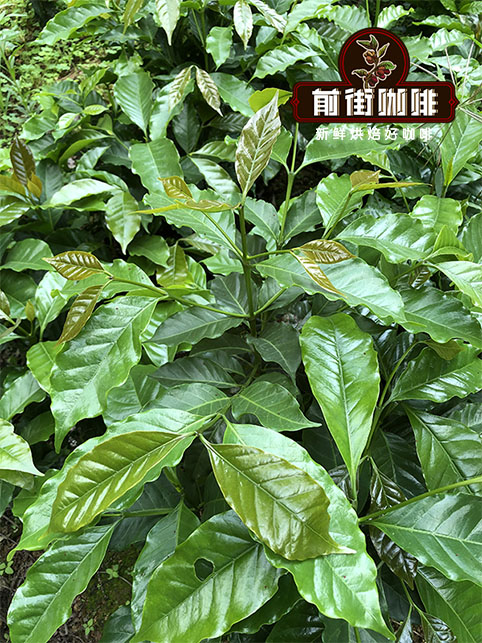
Typica
Typica is one of the oldest varieties within the Arabica species. All Arabica varieties derive from Typica, and their descendants can inherit its excellent flavor genes. Typica trees have bronze-colored terminal leaves, opposite long-oval leaves with smooth surfaces, long terminal branches with few side branches, and oval or slender-pointed beans. Although its flavor is elegant, the plant has a weak constitution, poor disease resistance, susceptibility to leaf rust and lower yields. In recent years Typica in Central and South America has gradually been replaced by Caturra and Catuai, so we see less and less of it.
FrontStreet Coffee primarily grows Typica in Yunnan because Typica has its own subtle aroma and a clean, balanced profile with high flavor clarity. So although Typica is difficult to cultivate, FrontStreet Coffee still wants everyone to experience the best flavors Yunnan coffee can present.

Catimor
Catimor is itself a hybrid cross between Robusta and Arabica. In 1959, the Portuguese moved the Arabica-blooded Bourbon variety Caturra to East Timor, where it was crossed with the local Robusta-blooded Timor hybrid. This produced Catimor, which combines high disease resistance with productivity. Because leaf rust was widespread in coffee-producing countries at the time, Catimor was strongly promoted in various producing countries with the help of international organizations, thanks to its strong disease resistance and high productivity.
Today you can still find both Yunnan natural-processed Typica and washed-processed Catimor on FrontStreet Coffee's bean list - one from Lincang and one from Baoshan - so everyone can taste our country's coffee while also experiencing the differences between varieties.

FrontStreet Coffee 2013 Coffee Beans
Region: Yunnan, Lincang
Altitude: 1300m
Processing Method: Natural
Variety: Typica

FrontStreet Coffee: Yunnan Small-Seeded Coffee
Region: Yunnan, Baoshan
Altitude: 1200m
Processing Method: Washed
Variety: Catimor
Brewing Recommendations
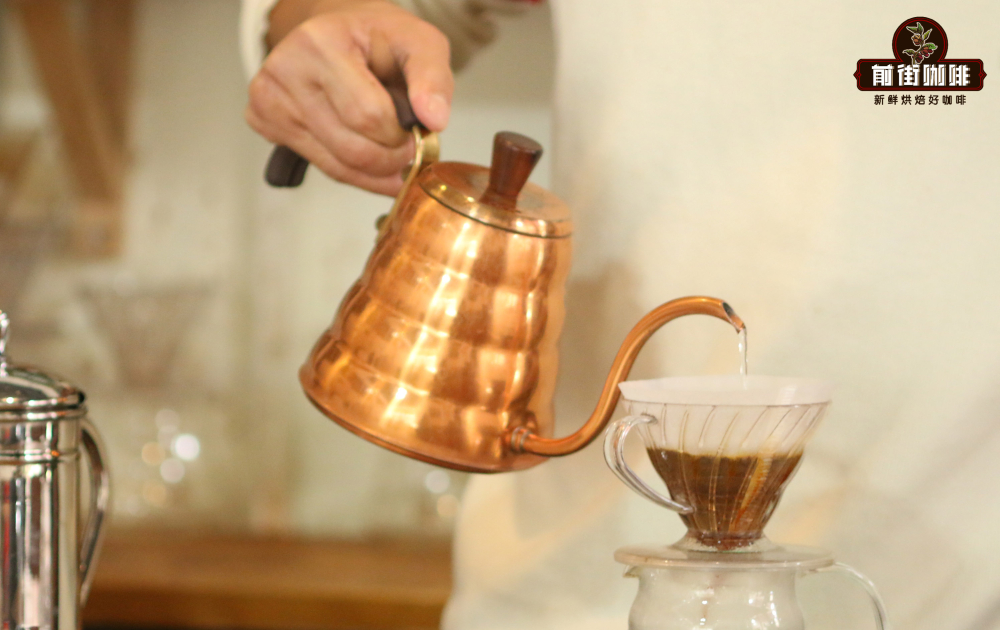
When brewing these two Yunnan coffees, FrontStreet Coffee recommends leaning toward balance - neither pushing acidity to the foreground nor over-modifying the finish. Use 15 grams of coffee with a recommended ratio of 1:15, or 1:16 for a clearer flavor. Use a V60 dripper at 88°C to soften the acidity, and grind to a medium-fine, fine-sugar size (80% pass-through on a #20 sieve).

Use three-stage extraction: 30 grams of water for a 30-second bloom. With a small flow, pour in circles to 125 grams to split the stages. When the water level drops and the coffee bed is about to be exposed, continue pouring to 225 grams and stop. As the water level drops again and the bed is about to be exposed, remove the dripper (timing starts from the bloom). Extraction time is 2'00".
FrontStreet Coffee Recommendation
Yunnan's clean, balanced Typica has a lot in common with the coffees of East Africa, so if you enjoy that gentle sweetness and low bitterness, FrontStreet Coffee's washed Yirgacheffe is a natural companion cup. It is the classic introduction to Ethiopian coffee, known for white jasmine, bright citrus and lemon acidity and a tea-like body, and its approachable price also makes it the first specialty bean for many drinkers.
For a fruitier expression of the same clean style, try the FrontStreet Yirgacheffe Red Cherry. Only fully ripe red cherries are picked and dried on raised beds, giving citrus-like acidity, a juicy berry character, honeyed sweetness and a creamy smoothness.
Important Notice :
FrontStreet Coffee is a long-established specialty coffee roaster in Guangzhou China, selling freshly roasted beans from its own farm in Yunnan as well as dozens of carefully selected single-origin beans from around the world for both pour-over and espresso. The products deliver consistently excellent quality and great value, with shipping within 24 hours. Guangzhou's FrontStreet Coffee shop is recommended by many coffee lovers, and the beans are now available online at the Tmall 。
FrontStreet Coffee has moved to a new address:
FrontStreet Coffee Address: 315,Donghua East Road,GuangZhou
Tel:020 38364473
 Scan and follow the En Gafei WeChat official account. Please indicate that the reprint comes from "En Gafei".