The Origin of Flat White: How to Pronounce Flat White in English? Differences Between Flat White and Latte, Can It Be Served Iced?
Flat White — a phonetic borrowing of the original English name, and better known in China as "Australian White Coffee" — ranks among the top three hot milk coffees at Starbucks. Unlike the latte and cappuccino, a Flat White has the velvety texture of a latte while also delivering the richness of a cappuccino.
The Origin of Flat White
According to Starbucks, Flat White is an Australian creation: a drink that originated in Australia in the 1980s and has been loved by coffee drinkers there ever since. Starbucks customers in Australia have been enjoying it in stores since 2009, customers in the UK and US since 2010, and it reached China in 2012.
New Zealanders, however, dispute that origin story. The New Zealand Herald has called Flat White a "typical New Zealand coffee": while Sydney cafés may have first offered the drink in the 1980s, the paper argues that Wellington is where Flat White was perfected.

Australian food historian Michael Symons researched the question in depth and offered this reading: although Flat White may have come out of Sydney and Melbourne, its best incarnation is found in Wellington. He noted that several cafés from the late 1980s and 1990s have claimed credit for perfecting it, but that claim remains unresolved.
Wherever it truly began, one thing is certain: compared with a latte, a Flat White carries a more intense coffee flavor under a thinner milk foam, making it richer in both texture and taste.
Starbucks Flat White Preparation Method
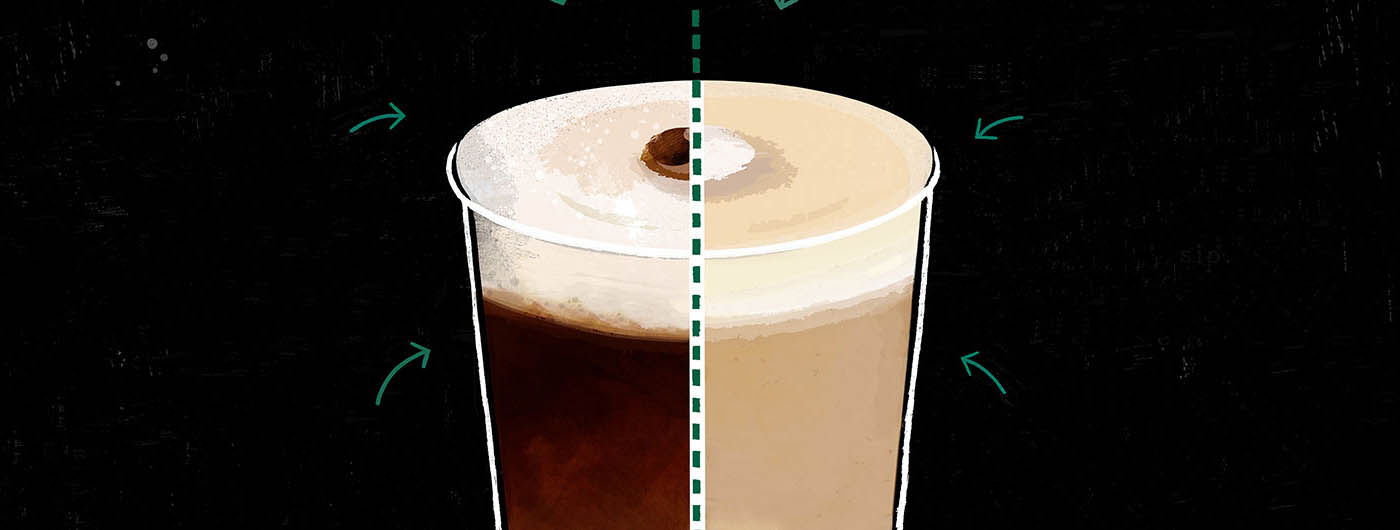
Starbucks builds its Flat White with 2, 3, or 4 shots of ristretto espresso depending on cup size. The hot version adds steamed milk with about 0.5cm of foam, while the iced version fills the cup with ice and milk first, then finishes with ristretto poured on top.

Can Flat White Be Served Iced?
In reality, though, an authentic Flat White comes hot only. Starbucks offers an iced version simply to meet every consumer's customization request. To truly experience the richness of a Flat White, FrontStreet Coffee recommends trying the hot version.
How to Make Flat White at Home?
A Flat White requires a more concentrated (ristretto) espresso, which in turn requires a pump-driven espresso machine and medium-dark roasted espresso beans.
FrontStreet Coffee uses its "Sunflower Warm Sun Espresso Beans" — a blend of natural Yirgacheffe and Honduras Shirley — for its Flat White, extracting 30g of coffee liquid from 20g of grounds with an extraction time of 23–28 seconds.
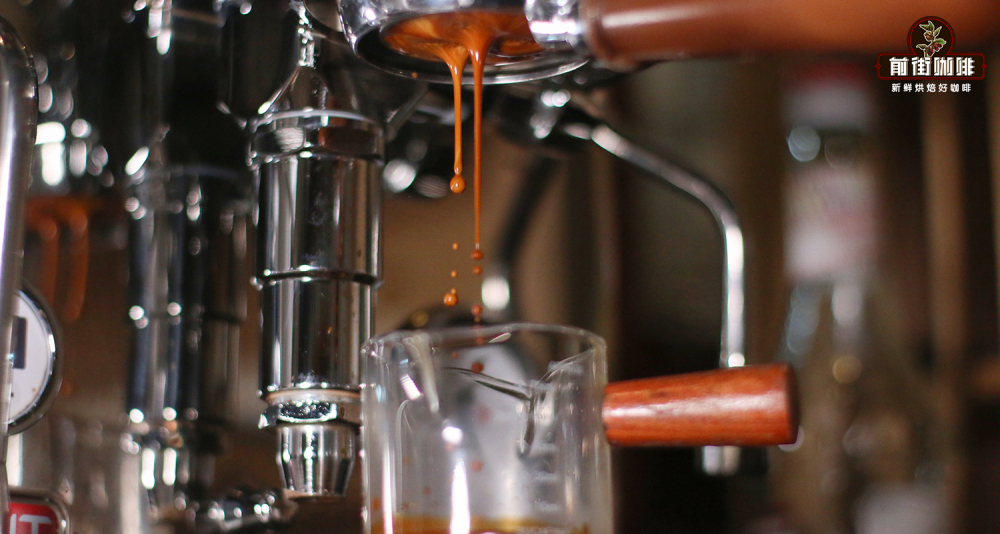
Then pour 150ml of chilled fresh milk into a pitcher, aerate and heat it with the machine's steam wand to create foam about 0.5cm thick, and combine the milk with the coffee.
What's the Difference Between Flat White and Latte?
Although both consist only of espresso and milk, Flat White and latte differ clearly in preparation and taste. "Caffè latte" means milk in Italian, and the latte emphasizes balance between coffee and milk — you should taste both the coffee and the sweet richness of milk, each complementing rather than masking the other. The Flat White, by contrast, uses milk to showcase the coffee: coffee is the protagonist and milk merely the supporting cast, which is why its coffee flavor is fuller and more intense.
For all its defining traits, the industry has no fixed recipe for Flat White. Every barista, guided by their own understanding and their shop's espresso beans, presents it differently.

New Zealand baristas serve Flat White in a smaller cup than latte — about 150ml — and uniformly build it on a double espresso. Less milk, more coffee, and a naturally more intense coffee flavor have earned it the nickname "small latte."
As extraction technique has improved, Melbourne cafés have gone further, replacing the base with a double ristretto while keeping latte-like foam in a 150ml cup. Ristretto means pulling less liquid from the same amount of grounds — essentially a compact espresso focused on the early and middle stages of extraction, yielding a richer taste and placing higher demands on bean quality.
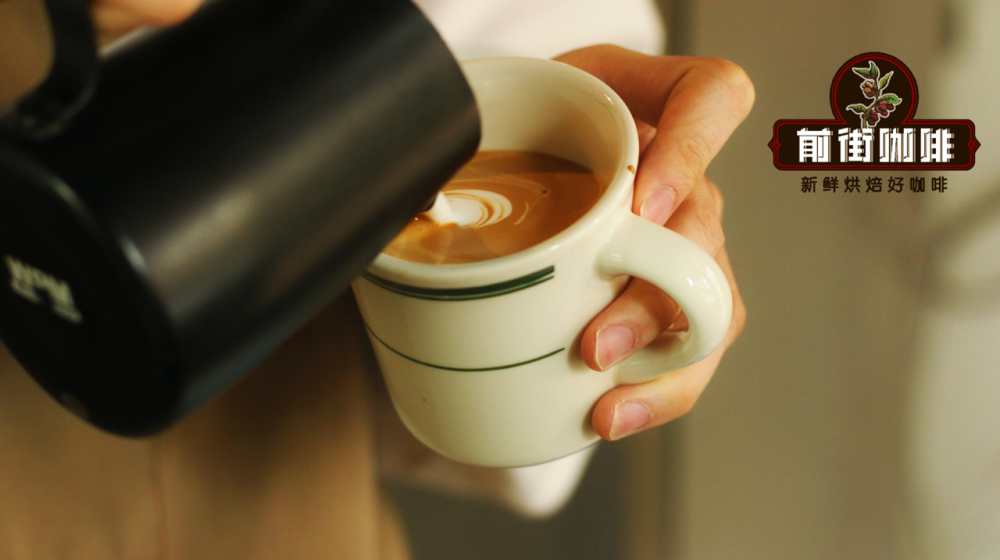
Australian baristas, meanwhile, believe foam simply has to be thinner than a latte's: they use the same cup size as a latte and emphasize only the foam difference. Among milk coffees — latte, cappuccino, and the rest — the Flat White has the thinnest foam, generally 0.3–0.5cm. The "flat" in Flat White is literal: the foam must be thin enough to sit level with the cup rim without bulging, so that every sip of espresso arrives wrapped in a delicate microfoam — hence the other name, "flat white coffee." Latte foam usually domes about 0.5–0.7cm, while Flat White foam must stay under 0.5cm to keep the surface truly flat. FrontStreet Coffee wants customers to taste a creamy smoothness that is never watery, so its baristas standardize on a 0.3cm foam layer.

FrontStreet Coffee Recommendation
Every café guards its own "secret Flat White recipe," but all of them hinge on three points: less milk, thinner foam, and a stronger coffee presence. That means the beans matter most, and the best candidates are espresso beans with a memorable flavor signature. For home brewing, FrontStreet recommends the butter-and-cheese flavored FrontStreet Classic Blend — mellow and low in acidity with full, fine crema, it pairs with milk into a wonderfully dense mouthfeel. Those who prefer floral and fruit aromas should reach for the very low-bitterness FrontStreet Strawberry Candy Espresso Blend, which pulls with full grape and blueberry flavors in a balanced sweet-tart register; with fresh milk it becomes something like a strawberry milkshake you won't soon forget.
Milk matters just as much: if it is too thin the drink falls flat, and if the flavor is too strong it smothers the coffee. FrontStreet recommends chilled fresh milk, whose sweetness and aroma shine after steaming. In its own demonstrations, FrontStreet pulls only the front and middle of the shot as a ristretto base — 20g of grounds yielding 32g of coffee in 22–25 seconds — then combines it with 160ml of fresh milk. For the foam, aerate for just 1–2 seconds (two brief hisses) before sinking the steam tip, whirl the milk into a dense microfoam until it reaches 50–55°C, and pour gently into the crema, raising the pitcher to a thin stream and drawing circles before pushing through the white line in one fluid motion. The result is a visibly silky Flat White with cream, hazelnut, and white chocolate aromas — mellow and rich, yet light enough to finish without ever feeling heavy.
Important Notice :
FrontStreet Coffee is a long-established specialty coffee roaster in Guangzhou China, selling freshly roasted beans from its own farm in Yunnan as well as dozens of carefully selected single-origin beans from around the world for both pour-over and espresso. The products deliver consistently excellent quality and great value, with shipping within 24 hours. Guangzhou's FrontStreet Coffee shop is recommended by many coffee lovers, and the beans are now available online at the Tmall 。
FrontStreet Coffee has moved to a new address:
FrontStreet Coffee Address: 315,Donghua East Road,GuangZhou
Tel:020 38364473
 Scan and follow the En Gafei WeChat official account. Please indicate that the reprint comes from "En Gafei".