Which Tastes Better: Geisha Coffee or Blue Mountain No. 1 Coffee - Flavor and Taste Characteristics of Blue Mountain Geisha Coffee Beans

2020 was arguably the most innovative year in the history of Jamaica's Blue Mountain Clifton Estate. Traditionally, Blue Mountain coffee regions grew Typica exclusively and used washed processing, which is how Blue Mountain earned its reputation for cleanliness, balance, and a rich body. In 2019, Clifton Estate began small-scale production of natural-processed Blue Mountain beans. After the excellent reception it received, the estate scaled up in 2020, and FrontStreet Coffee acquired a batch of that coffee.
The 2020 Innovation: Blue Mountain Geisha
Clifton Estate's biggest innovation in 2020 was its Geisha coffee. The beans reached China in late November, and FrontStreet Coffee obtained a barrel of Blue Mountain Geisha as soon as it landed. As with traditional Blue Mountain No. 1, exported coffee is packed in wooden barrels, and this batch was small. The barrels carry the Rainforest Alliance certification logo - Clifton is currently the only coffee farm in Jamaica's Blue Mountain region with that certification.
About Clifton Mount Estate
All Blue Mountain coffee that FrontStreet Coffee currently offers comes from Clifton Estate. The estate began growing and producing coffee as early as the mid-18th century, around 1750. Its cultivation and processing areas sit at an average altitude of 4,300 feet (1,310.64 meters). Sufficient altitude, gentle afternoon clouds and mist around the mountain forests, abundant sunshine, and mineral-rich soil give the trees excellent growing conditions while extending the ripening of the cherries.
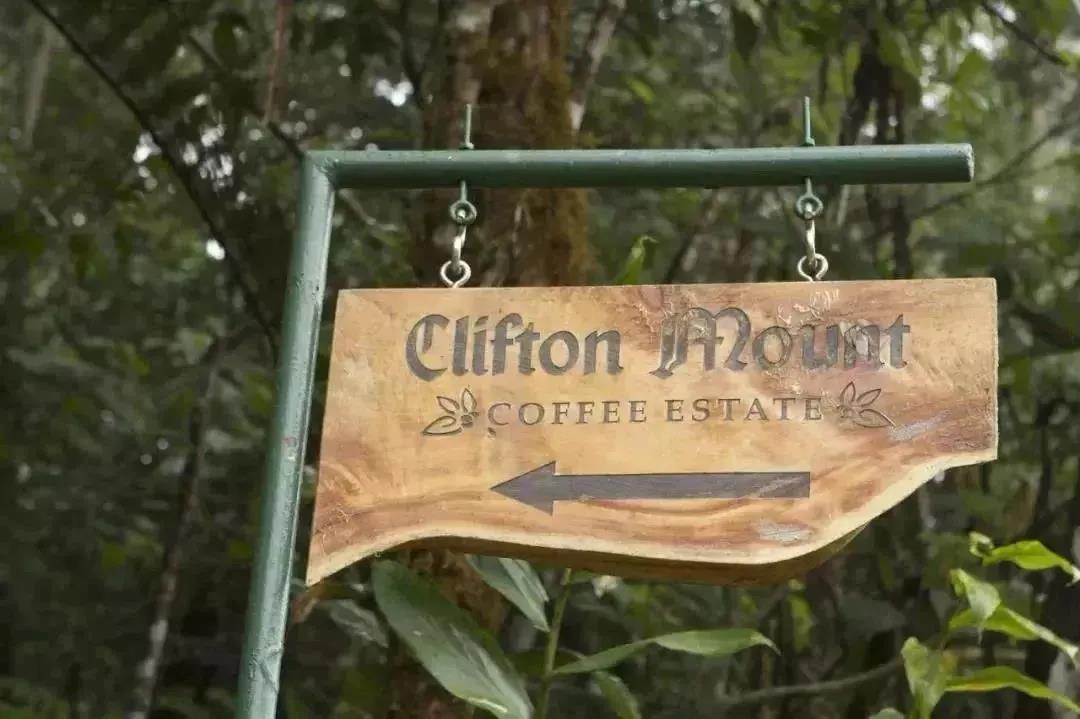
Clifton Estate is also the only estate in the Blue Mountain growing region with Rainforest Alliance certification. Rainforest certification means traditional farming methods that grow coffee under native forest shade, which benefits ecosystem protection. Part of the alliance's revenue also goes toward wildlife protection in tropical rainforest conservation areas and toward improving workers' living conditions.
Why Innovation After Decades of Tradition?
Some time ago, news emerged that Jamaica was experimenting with Bourbon varieties. When FrontStreet Coffee's team heard it, they discussed what might be driving Jamaica. In the past, people's idea of coffee was defined by the rich, Mandheling-like flavors and by the exceptionally balanced, full-bodied Blue Mountain. Traditional Blue Mountain was the undisputed king of its era.
But in recent years, with the growth of the specialty coffee market, the light-roast era first brought the explosively fruity Yirgacheffe, followed by the world-renowned Panama Geisha, sparking a global wave of appreciation for pleasant acidity. Blue Mountain, the steadfast elder of coffee, found itself shaken. Perhaps out of a fear of being left behind, it gradually began to innovate. The newly introduced natural-processed Blue Mountain and the Blue Mountain Geisha are excellent proof of that.
Geisha Coffee Variety
Geisha beans are elongated, and their flavor is refreshingly pleasant. In both respects Geisha does not resemble Central and South American varieties so much as Ethiopian ones. So when did Geisha arrive in Panama? It was discovered in the Geisha forest of Ethiopia in 1931.

Geisha was then sent to coffee research institutes in Kenya. In 1936 it was introduced to Uganda and Tanzania, then to Costa Rica in 1953, and finally to Panama around 1960. Although Geisha has strong disease resistance, its yield was low, so after being used for variety improvement it faded from view - until it was rediscovered in the windbreaks of Hacienda La Esmeralda in 2004. Through competition, Geisha entered the public consciousness. This batch of 2020 Blue Mountain Geisha from Clifton Estate was most likely introduced and planted from Panama's growing region four years earlier.
Geisha beans must be grown at high altitudes to develop their rich, captivating floral aromas. Geisha at Hacienda La Esmeralda averages over 1,500m, for example, while Blue Mountain coffee regions top out around 1,310m. Through cupping, FrontStreet Coffee found that the floral notes of Blue Mountain Geisha are not especially pronounced: only a subtle jasmine aroma emerges on close attention.
Blue Mountain Geisha Processing Method
This batch of Blue Mountain Geisha still uses Jamaica's signature washed processing. During processing, the skin and pulp are removed first, followed by 12-18 hours of fermentation. The fermented beans then go into pools and are moved back and forth, using the friction between beans and the force of flowing water to wash them until they are smooth and clean.

After washing, the beans are still encased in parchment with a moisture content of 50%. They must be sun-dried down to 12-14%, or they will keep fermenting and go moldy. After that, the beans are sorted and stored in dedicated warehouses.
FrontStreet Coffee's Blue Mountain Geisha Roasting
For this batch of Blue Mountain Geisha, FrontStreet Coffee's roaster faced a dilemma: highlight the Blue Mountain character, or highlight the Geisha character? Emphasize Blue Mountain flavor and there is little point using Geisha at all; emphasize Geisha flavor and the Blue Mountain name becomes questionable. To bring out Geisha's character, FrontStreet Coffee's roaster ultimately chose a medium-light roast to lift the floral and fruity aromas.

Start with a drum temperature of 180°C, heat at 130, damper at 3; return temperature at 1'32", when the drum reaches 97°C, maintain heat; at 3 minutes, adjust the damper to 4; at 4 minutes, increase heat to 140. When the drum temperature reaches 153.5°C, the bean surface turns yellow and the grassy aroma disappears completely, marking the dehydration phase. At 8'36", the surface shows ugly wrinkles and black spots, and the toast aroma clearly shifts to coffee aroma, which can be read as the prelude to first crack. Listen carefully for the first crack sound at this point. First crack begins at 9'31"; develop for 1'28" after first crack, and drop the beans at 192°C.
FrontStreet Coffee's Blue Mountain Geisha Cupping Report
FrontStreet Coffee cups roasted sample beans within 8-24 hours. FrontStreet Coffee's baristas typically use 200ml ceramic cupping bowls. The cupping water temperature is 94°C. Grind size is controlled to 70%-75% pass-through on a No. 20 standard sieve (0.85mm). The ratio is 11 grams of grounds to 200ml of hot water, or 1:18.18, which extracts a concentration comfortably inside the 1.15%-1.35% Golden Cup range, with a 4-minute steep.

Cupping Notes:
Dry Aroma: Caramel
Wet Aroma: Floral
Flavor: Citrus, berries, grapefruit, caramel, honey
FrontStreet Coffee's Blue Mountain Geisha Brewing Experience
Dose: 15g
Grind Size: Medium-fine (78% pass-through on a No. 20 standard sieve)
Ratio: 1:15
Water Temperature: 91°C
Dripper: V60#01

FrontStreet Coffee's segmented brewing method: 1. First pour 30g of water for a 30-second bloom. 2. After the bloom, pour the second segment, 100g, in circles from the center outward. This pour should be slow, because Geisha resists extraction and needs enough pouring time to release its aromas. Wait for the water level to drop halfway. 3. When the coffee bed is about to be exposed, pour the third segment of 95g, for a total of 225g. When the coffee has finished filtering, remove the dripper. Total brewing time is 1 minute 50 seconds.
Brewing Flavor: Citrus acidity on entry, the sweet-tart balance of grapefruit, jasmine in the middle, and honey and caramel sweetness in the finish.
For professional coffee knowledge exchange and more coffee bean information, please follow Coffee Workshop (WeChat official account: cafe_style)
For more specialty coffee beans, please add FrontStreet Coffee's private WeChat: qjcoffeex
FrontStreet Coffee Recommendation
If the balance and body of traditional Blue Mountain are what you are after, FrontStreet Coffee's Jamaica Blue Mountain No. 1 is the benchmark. It grows on the historic Clifton Mount Estate, where coffee has been cultivated since around 1750 at an average altitude of 4,300 feet (1,310.64 meters), and it is pure Typica. Medium-dark roasting fuses its acidity, bitterness, sweetness, and body into one smooth whole, with chocolate, roasted nuts, cream, and caramel on the palate, almost no harsh bitterness, only a gentle, well-proportioned acidity, and a long fruity finish.
Brew it with a Kono dripper for a rounder body: 15g of coffee at a 1:15 ratio, 87-88°C water, and a grind size about as coarse as granulated sugar. Bloom with 30g of water for 30 seconds, pour to 120g, then finish at 225g. Resting the beans 4-7 days after roasting gives the best cup. Genuine Blue Mountain No. 1 ships in the traditional wooden barrels stamped with batch details - historically in 15, 45, and 70 kg sizes - and comes with origin certification, which is the simplest way to tell the real thing from an imitation.
Important Notice :
FrontStreet Coffee is a long-established specialty coffee roaster in Guangzhou China, selling freshly roasted beans from its own farm in Yunnan as well as dozens of carefully selected single-origin beans from around the world for both pour-over and espresso. The products deliver consistently excellent quality and great value, with shipping within 24 hours. Guangzhou's FrontStreet Coffee shop is recommended by many coffee lovers, and the beans are now available online at the Tmall 。
FrontStreet Coffee has moved to a new address:
FrontStreet Coffee Address: 315,Donghua East Road,GuangZhou
Tel:020 38364473
 Scan and follow the En Gafei WeChat official account. Please indicate that the reprint comes from "En Gafei".