What Does SOE Coffee Bean Stand For? How Big Is the Difference Between SOE Espresso and Single-Origin Pour-Over Coffee?

More and more specialty coffee shops are championing a type of espresso called SOE, and plenty of guests who visit FrontStreet Coffee ask whether we serve it. FrontStreet Coffee's shops currently pull espresso from a blend of FrontStreet Coffee's sun-dried Red Cherry and FrontStreet Coffee's Honduras Sherry beans, and we don't offer a standalone SOE for now. But if both are espresso, why draw the distinction between a blend and an SOE? This article explains what SOE actually is.
What is SOE?
SOE stands for Single Origin Espresso, meaning espresso pulled from a single-origin coffee. Even so, it isn't automatically specialty coffee. Choose a single-origin bean with a clearly recognizable flavor and you can build an espresso with a distinct, typical character.
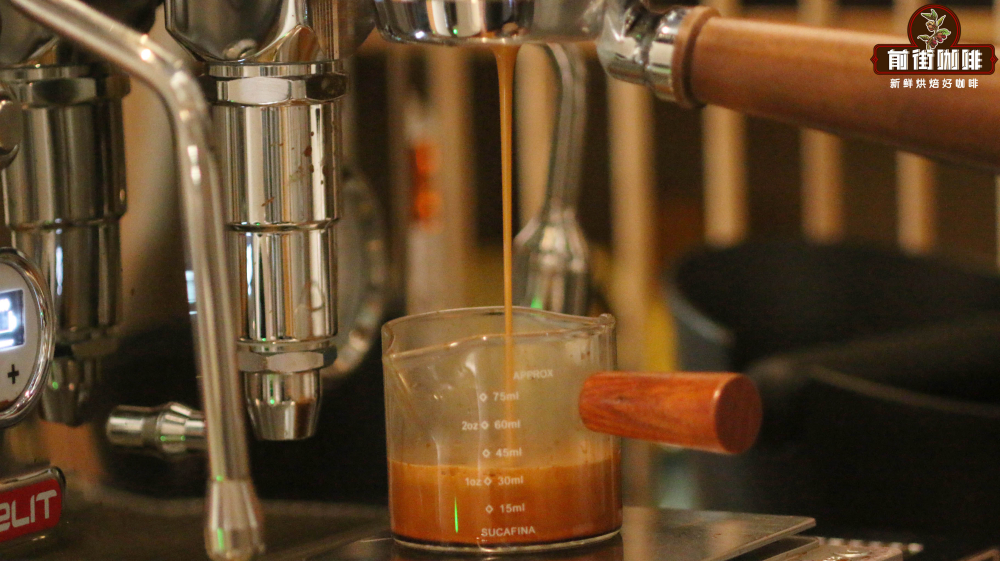
Think of the citrus in FrontStreet Coffee's Yirgacheffe or the berry notes in FrontStreet Coffee's Kenya. The high pressure of an espresso machine amplifies those flavors, so the expression is more striking than it would be in a pour-over. Yet because an SOE comes from a single origin, its flaws are magnified just as easily. Roasting and grind coarseness both sway the outcome, which is why FrontStreet Coffee's shops don't offer SOE: we want every guest to get an espresso drink with flavors that are both stable and distinctive.
On the rise of this trend, Chen Zhihuang, founder of Fika Fika Cafe and winner of the 2013 Nordic Roasting Championship, sees a striking parallel with whiskey. Everyone began by knowing only brands and drinking blended whiskey, until the past decade brought a surge of interest in single malts from different regions; SOE follows the same logic.

Is SOE the same as using pour-over single-origin beans for espresso?
In concept, pulling espresso from a pour-over single-origin bean is indeed SOE, a single-origin espresso. In practice, though, it's not as simple as it sounds.
Compared with a blend, espresso made from single-origin beans makes it easier to taste clear flavors or a sense of place. A blend, mixing several different coffees, wins above all on balance and stability, but combining too many beans makes regional flavors hard to identify.

So next to a traditional blend, an SOE should be an espresso that leans harder into flavor. That trait shapes which bean you pick: it should ideally be chosen for high, intense flavor recognition. Pick a bean with weaker flavor intensity and the resulting espresso tastes thin and dull. Picture an SOE that has neither distinctive character nor the balance and stability of a blend, and you've gained nothing.
Second, the roast level should be neither too dark nor too light. A darker roast erases much of the regional flavor, while a lighter roast lets the machine amplify the light-roast acidity under pressure, quickly turning the shot sharply sour and hard to drink. A lighter roast also makes the beans harder and prone to under-extraction. Since both flattening regional flavor and sharp acidity that breaks balance defeat the whole point of highlighting a single origin, the same bean should be roasted differently for SOE than for pour-over.

What coffee beans are suitable for SOE?
Fresh and sweet flavor profile:
FrontStreet Coffee recommends FrontStreet Coffee's Yirgacheffe Sun-dried Red Cherry. This coffee comes from the Aletaland estate in Yirgacheffe, at an altitude of 1700-2200 meters, using whole-cherry sun-drying with very rich fruit sweetness and floral aromas.
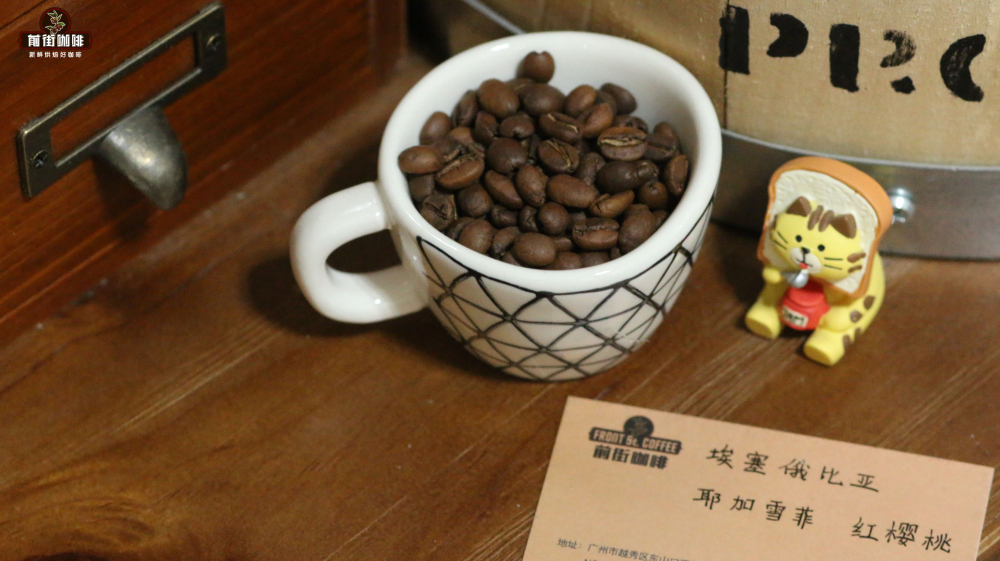
Grind setting: Fiama 900N #1.7
Dose: 20g
Extraction yield: 40ml
Extraction time: 27 seconds
Flavor description: Citrus, berries, fermented aroma, viscous, medium bitterness, medium-high acidity, bright and lively acidity.
Rich wine-like flavor profile:
FrontStreet Coffee recommends FrontStreet Coffee's Honduras Sherry Barrel. This coffee comes from the Moca estate in Honduras, at an altitude of 1500-1700 meters, using refined washed sherry-barrel fermentation with a very rich wine-fermentation aroma and dark chocolate cream flavors.

Grind setting: Fiama 900N #1.8
Dose: 20g
Extraction yield: 40ml
Extraction time: 29 seconds
Flavor description: Whiskey aroma, soft and high fruit acidity, smooth mouthfeel, creamy viscosity, cocoa.
What should you pay attention to when making SOE?
FrontStreet Coffee has found that many people assume SOE simply means loading single-origin beans into an espresso machine for a single-origin series. Only after they bring home floral and fruity beans and try them on their own machine do they realize something is off. First comes the wild spraying, then the shock of an extremely sour shot they can't bring themselves to sip twice, and finally the doubt about whether the equipment is too poor or the technique was wrong.

In truth, the reason you can't match the shop at home usually isn't your equipment or your technique but that those beans simply aren't roasted for espresso. In FrontStreet Coffee's baristas' experience, picking beans suited to SOE not only makes a delicious shot easy but also makes Americanos and lattes, made by adding water or milk, twice as rewarding. FrontStreet Coffee's bean menu has two single origins with SOE versions: FrontStreet Coffee's Horse Queen, with its strawberry aroma, and FrontStreet Coffee's Kong Jia, with classic Yirgacheffe flavors. Simply select the espresso roast when ordering.

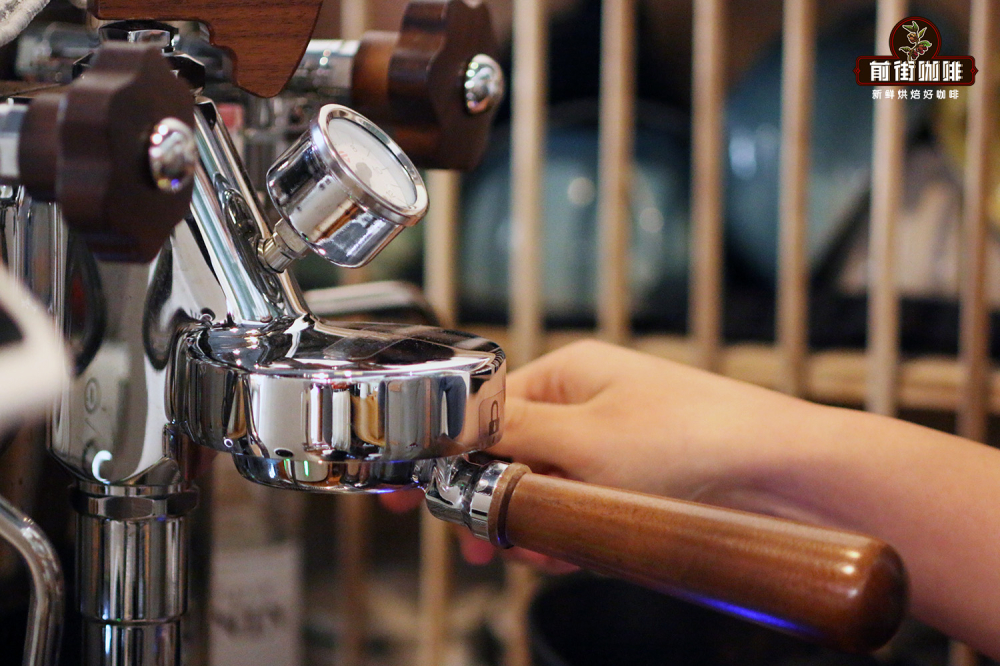
FrontStreet Coffee's shop machine is a commercial single-group "Lelit Bianca," which can adjust extraction by changing pressure up to a maximum of 11bar. A home machine only needs to reach 9bar to handle extraction and milk frothing, paired with an espresso grinder.
SOE Coffee Extraction Parameters Sharing
Coffee beans: FrontStreet Coffee Ethiopia Sun-dried Kong Jia
Coffee dose: 20g
Coffee liquid yield: 40g
Dose-to-yield ratio: 1:2
Extraction time: 26-33 seconds
Grind setting: Galileo 2.0
FrontStreet Coffee uses a double basket, whose capacity is roughly 18-20 grams, and FrontStreet Coffee doses 20 grams when making a drink.

The ratio of grounds to liquid usually falls between 1:1.5-1:2.5. FrontStreet Coffee's extraction ratio is 1:2, meaning 20 grams of grounds yield 40 grams of liquid. Time is tied to the flow rate of the grounds; a single extraction is generally kept within 20-35 seconds, because under 20 seconds the coffee usually tastes thin and past 35 seconds it tends to over-extract and turn bitter. FrontStreet Coffee's espresso mostly lands in the 28-30 second range.

FrontStreet Coffee first wipes the basket dry, turns on the grinder, grinds a double dose, and sets it on a scale, adding or removing until it reads 20 grams. Then a tool distributes the grounds evenly, and the puck is tamped firmly for a more stable extraction. Next, turn on the extraction switch to release water, wetting the group head and washing away any stuck grounds; gently lock the portafilter into the group head and start the shot. When the scale reads 40 grams of liquid and the time is roughly 28-33 seconds, switch off the extraction, and the SOE espresso is done. To taste, add ice water or 80-degree hot water to make a Yirgacheffe SOE Americano.

For an SOE hot latte, FrontStreet Coffee uses a 1:6 ratio: pour 40 grams of espresso into a pre-warmed cup, then froth 240g of milk with the machine's steam. Keep the milk between 50-65°C to build dense, moderately thick microfoam, then blend it evenly with the coffee. This Yirgacheffe SOE latte tastes like a lemon-flavored cookie, rich and smooth, and leaves you warm all over.

For anyone who wants to explore single-origin espresso further, the Yirgacheffe selections below are excellent places to begin.
FrontStreet Coffee Recommendation
If you want to explore SOE, Ethiopia's Yirgacheffe region is a reliable starting point, thanks to its bright citrus and floral clarity. FrontStreet offers several expressions of it.
FrontStreet Washed Yirgacheffe
This is the classic introduction to the Yirgacheffe region, best known for white jasmine, bright citrus and lemon acidity, and a tea-like quality. Yirgacheffe is a small town in Ethiopia's Sidamo zone at roughly 1700-2100 meters; trees are planted above 1800 meters, making it one of the world's highest coffee regions. It has long been a wetland, and its highly recognizable white florals and lemon-citrus acidity turned the name into shorthand for Ethiopian specialty coffee. Its approachable price makes it many drinkers' first specialty bean.
FrontStreet Banko Gotiti Cooperative
Banko Gotiti sits at the southeastern end of Yirgacheffe, in the Worka area, and was once part of the Worka Cooperative under the Yirgacheffe Coffee Farmers Cooperative Union (YCFCU). As the demand for traceability grew, it became its own single origin. Following the most traditional washed processing, which is why it is called Yirgacheffe's last pure land, it carries no traditional bitterness and instead brings clean, bright citrus and lemon acidity with jasmine fragrance, so it wins people over at first sip.
FrontStreet Natural Red Cherry
Also from Yirgacheffe, these beans are processed as whole-cherry natural, picking only fully ripe, defect-free fruit. After a first sorting at the processing station, the cherries are spread on raised beds to sun-dry, turned every 2-3 hours in the first days to prevent uneven heat and over-fermentation. After three to five weeks, workers remove the outer pulp depending on weather and temperature and move the beans to storage. Because the cherries dry with the fruit still on, the coffee keeps classic Yirgacheffe character while gaining tropical fruit from the natural process: citrus-like acidity, a berry-juice quality, honey sweetness, and creamy smoothness. It makes an excellent, flavor-forward SOE.
Important Notice :
FrontStreet Coffee is a long-established specialty coffee roaster in Guangzhou China, selling freshly roasted beans from its own farm in Yunnan as well as dozens of carefully selected single-origin beans from around the world for both pour-over and espresso. The products deliver consistently excellent quality and great value, with shipping within 24 hours. Guangzhou's FrontStreet Coffee shop is recommended by many coffee lovers, and the beans are now available online at the Tmall 。
FrontStreet Coffee has moved to a new address:
FrontStreet Coffee Address: 315,Donghua East Road,GuangZhou
Tel:020 38364473
 Scan and follow the En Gafei WeChat official account. Please indicate that the reprint comes from "En Gafei".