SCA Golden Cup Extraction Standards | Pour-Over Coffee Golden Cup Theory Calculation Formulas and Standards
 Golden Cup extraction is the closest thing the coffee industry has to a shared benchmark, and FrontStreet Coffee treats it as an indicator standard for the trade. So what exactly is Golden Cup extraction, and how do its theoretical formulas work? This article walks through it all.
What is Golden Cup Extraction?
According to FrontStreet Coffee's research, the Golden Cup standards took shape in the 1950s, when the American National Coffee Association (NCA) hired MIT chemistry Ph.D. Dr. Lockhart to study coffee scientifically. Put simply, Golden Cup extraction means holding "concentration" between 1.15–1.45% and achieving an "extraction yield" of 18–22% during pour-over brewing. When FrontStreet Coffee prepares coffee, we make sure both readings meet these standards before serving. Many factors determine whether a cup is good; what we can control is using our skills to extract all the good flavors this particular coffee actually contains.

How is the coffee extraction yield calculated?
Generally: extraction yield = coffee liquid amount × coffee concentration / coffee grounds amount. Different countries, however, define the Golden Cup slightly differently. Here are the extraction standards FrontStreet Coffee has compiled from various national associations:
Specialty Coffee Association of America (SCAA):
Extraction Yield [18%-22%] Concentration [1.15%-1.35%]
Specialty Coffee Association of Europe (SCAE):
Extraction Yield [18%-22%] Concentration [1.2%-1.45%]
Norwegian Coffee Association (NCA):
Extraction Yield [18%-22%] Concentration [1.3%-1.55%]
Brazilian Coffee Association (ABIC):
Extraction Yield [18%-22%] Concentration [2%-2.4%]
The definitions differ slightly by country, and the concentration targets vary, but one thing is broadly agreed: when extraction yield falls between 18% and 22%, the substances drawn from the grounds taste quite delicious.
The most famous expression of the standard is the Golden Cup extraction chart: the horizontal axis is the extraction yield of the grounds, the vertical axis is the concentration of the coffee liquid, and the diagonal lines represent the coffee-to-water ratio (grounds amount / water amount).
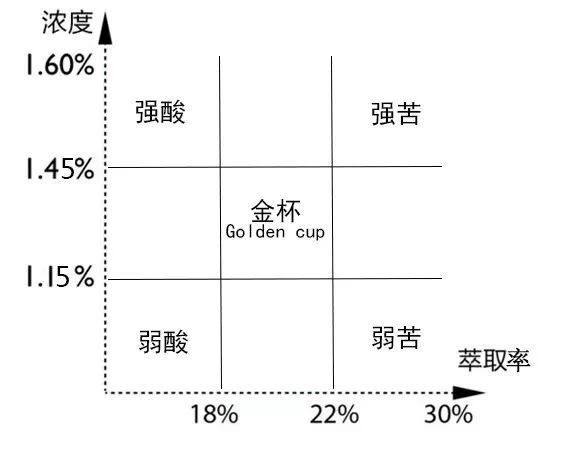
Concentration is the proportion of "extracted coffee substances" to the total coffee liquid in the cup.
Extraction yield is the proportion of "extracted coffee substances" to the total weight of the coffee beans.
Under-extraction means a yield below 18%; over-extraction means a yield above 22%.
FrontStreet Coffee uses this range to standardize its brewing parameters. Whenever new beans arrive, they go through adjustments in roasting, cupping, and pour-over; the direction of the pour-over adjustment is set by TDS concentration readings. Home brewers don't need to buy instruments, you can judge concentration by taste.
That said, enthusiasts who value precision might consider a dedicated instrument. The device was invented in 2008 by Vince Fedele, president of the American VST company: drop 2–3 milliliters of cooled coffee liquid onto the optical instrument and it returns an accurate concentration reading, very convenient, and it spares you the old method of oven-drying coffee liquid or grounds to weigh dissolved solids.

Without a VST to help, calculating extraction yield is far more tedious. Dr. Lockhart started with the simplest possible method: brew coffee in an American drip machine, record the milliliters of black coffee, pour it into a metal container, and bake it in an oven until the water fully evaporates. What remained, the extracted coffee solids (water-soluble compounds), was weighed, and dividing that weight by the weight of the grounds used gave the extraction yield.
Demonstration with Ethiopian Guji 4.0
That's the theory; next, a hands-on demonstration with the Ethiopian Guji 4.0. To follow along you'll need: a finished cup of pour-over, a coffee concentration tester (ExtractMojo), titration tubes, and clean water.

FrontStreet Coffee Ethiopian Natural Guji Coffee Beans
Country: Ethiopia
Region: Sidamo
Altitude: 2250-2350m
Variety: Local native varieties
Processing: Natural processing
Flavor: Rose, cream strawberry, citrus, passion fruit, oolong tea
Brewing Recipe:
Dose: 15g
Ratio: 1:15
Grind: fine grind (80% pass-through on a #20 standard sieve)
Temperature: 91°C
Dripper: V60
Brewing Process:
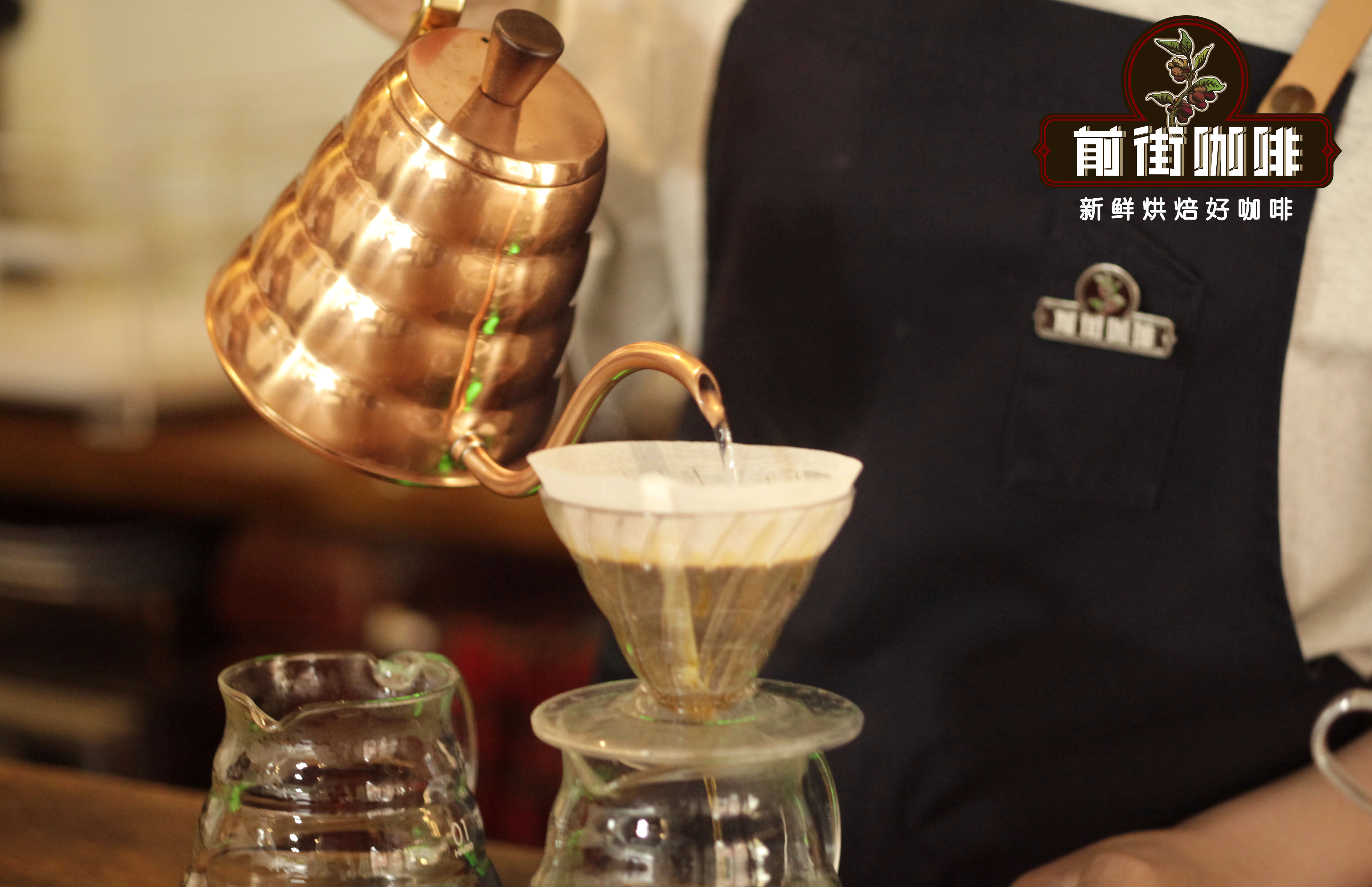
First stage: pour 30g of water for a 30-second bloom.
Second stage: pour 95g (scale shows around 125g), completed in about 1 minute, with a 10-second pause.
Third stage: pour the remaining 100g (scale shows around 225g), completed in about 1 minute 40 seconds.
Dripping completes at about 2 minutes, remove the dripper and the extraction is done.
How to Measure Coffee Concentration?
First calibrate the concentration tester with pure water to zero the standard. Then stir the finished pour-over, draw coffee liquid with a titration tube, place it in the tester, and press measure. Repeat until the reading stabilizes.

How to Calculate Coffee Extraction Yield?
From the definitions: concentration is extracted-substance weight over coffee-liquid weight, and extraction yield is extracted-substance weight over coffee-bean weight. Rearranged, extraction yield equals concentration × coffee liquid weight ÷ coffee bean weight.
FrontStreet Coffee typically assumes the grounds absorb water at a 1:2 rate, so the beverage weight is estimated as 225 − (15 × 2) = 195g. With a measured concentration of 1.45%, the extraction yield is 1.45% × 195 ÷ 15 = 18.85%.
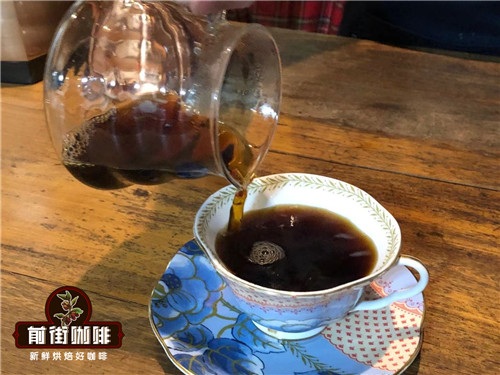
So this is a pour-over with 1.45% concentration and 18.85% extraction yield, slightly high concentration with a moderate yield. From here, the data and ratios can guide adjustments to extraction concentration.
Of course, Golden Cup is just a reference system. Everyone's palate is different, and a cup that meets Golden Cup numbers isn't automatically delicious. FrontStreet Coffee's advice: experiment more, taste more.
One more variable matters enormously: the coffee-to-water ratio. Too much water and the brew comes out thin and flat; too little and it over-extracts into bitterness. FrontStreet Coffee has settled on its ratios through practical experience, shared below.
Pour-over Coffee Coffee-to-Water Ratio
According to SCA Golden Cup extraction theory, the ratio parameters for different taste preferences are as follows:
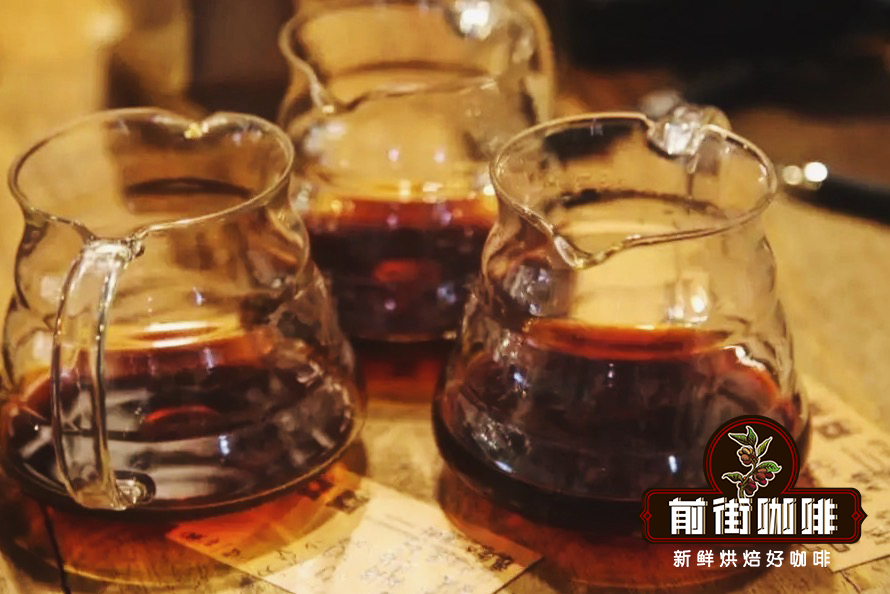
Full-bodied: 1:10~1:11 (equivalent to Golden Cup standard 1:12.5~1:13.5)
Balanced: 1:12~1:13 (equivalent to Golden Cup standard 1:14.5~1:15.5)
Light & Bright: 1:14~1:16 (equivalent to Golden Cup standard 1:16.5~1:18.5)
A ratio of 1:14.5~1:15.5 most easily lands in the Golden Cup range of 18%~22% extraction yield and 1.15%~1.35% concentration, which is exactly why FrontStreet Coffee has always recommended brewing at 1:15.
These parameters come from repeated validation. Although 1:12–1:15 is only a suggested range, FrontStreet Coffee also tested parameters outside it: at 1:10 the drip coffee tastes very light, while 1:20 turns very strong. After adjustment testing, 1:15 proved suitable for brewing most beans. Some brewers use 1:14 or 1:17, that's fine too; the key is whether it tastes right to you. FrontStreet Coffee simply offers a reference point most people can accept.
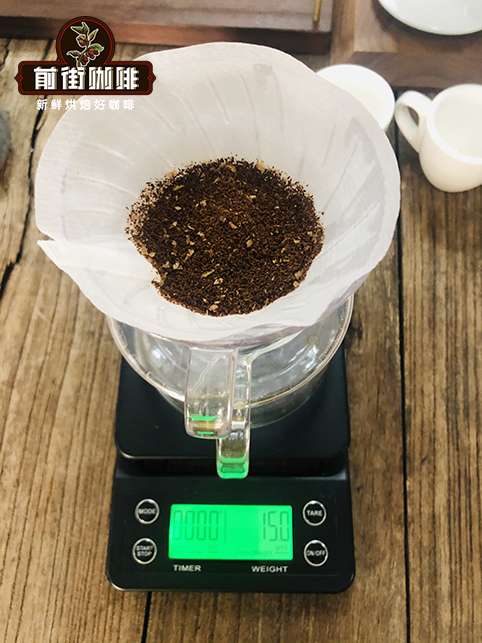
Once the ratio is set, the dose follows: FrontStreet Coffee's single serving is 15g of grounds with 225g of water, a perfect single cup.
We hope this helps you put more theory behind your pour-over practice, and a framework to experiment within.
FrontStreet Coffee Recommendation
Ask an experienced pour-over hand to recommend a practical, beginner-friendly dripper, and the answer is very likely the V60. Hario, its maker, was founded in Tokyo in 1921 as a renowned producer of scientific glassware, the heatproof glass server that accompanies every pour-over setup is one of its signature products. In 2004 Hario redesigned the V60 prototype into its modern form, named for the 60-degree cone angle and V shape, and launched it the following year.
The cone and 60-degree angle force water toward the center before it drips through, extending water-to-coffee contact so aroma and flavor extract fully. The V60's signature single large outlet lets liquid flow unimpeded; flow rate depends almost entirely on the brewer's pour control, and it shows directly in the cup.
Before the 2000s the market favored medium-dark roasts, full body, high sweetness, lingering finish, and caramelized dark-roast notes like chocolate, maple, nuts, and vanilla, shown best through siphon or cloth brewing; Blue Mountain No. 1 and PWN Golden Mandheling were the era's icons. With the third wave, taste of place took over, Ethiopian white florals, Kenyan berry acidity, roasting turned lighter, and the V60's fast extraction proved ideal for floral, fruity-acid, sweet, and tea-like profiles. Floral-fruity beans such as FrontStreet's Idido (classic Yirgacheffe), the tropical Huakui, the Gesha-style Strawberry Sugar, and the raisin-noted Mozart are natural V60 candidates.
For light roasts: the FrontStreet Yirgacheffe Idido is many enthusiasts' entry into specialty, clear citrus, berries, and florals with a green-tea finish; its acidity is soft and bright, like fruit itself, never harsh. The Ethiopia Huakui bursts with strawberry, passion fruit, jackfruit, and lychee, sweet, nearly bitter-free, and juicy. The Panama Esmeralda Red Label Gesha remains the connoisseur's grail: jasmine, citrus and bergamot, black-tea nuance, clean and layered. The Kenya Cherry Tomato (SL28/SL34, Thika, 1,550–1,750m, 72-hour double washing, light roast) delivers vivid cherry-tomato and dried-plum acidity, snow pear and black plum mid-palate, and a clean yellow-sugar finish.
For medium-dark roasts: the PWN Golden Mandheling is low-acid, thick, herbal, and dark-chocolatey with a whisper of earth. The Brazil Queen's Estate is balanced with nut, cocoa, and caramel sweetness, smooth in pour-over, espresso, or moka pot. The Jamaica Blue Mountain No. 1 balances cream, caramel, chocolate, nuts, honey, and light fruit into the "coffee most people can love." The 2013 Yunnan natural Typica offers clean citrus-caramel sweetness with nut, chocolate, and brown sugar at medium-dark roast. And the Papua New Guinea Paradise Bird ("Little Blue Mountain"), Typica at 1,600–1,800 meters, AA grade, triple washed, is clean, sweet, and delightfully low in acidity.
Important Notice :
FrontStreet Coffee is a long-established specialty coffee roaster in Guangzhou China, selling freshly roasted beans from its own farm in Yunnan as well as dozens of carefully selected single-origin beans from around the world for both pour-over and espresso. The products deliver consistently excellent quality and great value, with shipping within 24 hours. Guangzhou's FrontStreet Coffee shop is recommended by many coffee lovers, and the beans are now available online at the Tmall 。
FrontStreet Coffee has moved to a new address:
FrontStreet Coffee Address: 315,Donghua East Road,GuangZhou
Tel:020 38364473
 Scan and follow the En Gafei WeChat official account. Please indicate that the reprint comes from "En Gafei".