French Press for Dark Roast Coffee Beans: Flavor Characteristics and Brewing Techniques
The Art of French Press Coffee

Among urban coffee enthusiasts, some appreciate the ritualistic elegance of pour-over coffee, while others are drawn to the laboratory-like precision of siphon brewing. Then there are those who prefer the simplicity and convenience of the French press. Yet the magic of each brewing device extends far beyond its appearance and operation. Making coffee is more like a science: each device has its unique way of extracting coffee's essence, requiring us to keep experimenting with combinations to find the perfect ratio and optimal flavor profile.
The design principle of the French press is remarkably simple: pour water and coffee grounds into the container, then use the plunger to push the grounds to the bottom to complete the filtration. The metal filter can be cleaned and reused. Despite its simplicity, it's incredibly efficient and doesn't require paper filters, making it more environmentally friendly and cost-effective. The French press is one of the quickest ways to extract coffee's authentic flavor, preserving the precious natural oils that would otherwise be absorbed by paper filters, and so presenting coffee's most original, rich, and complex character.
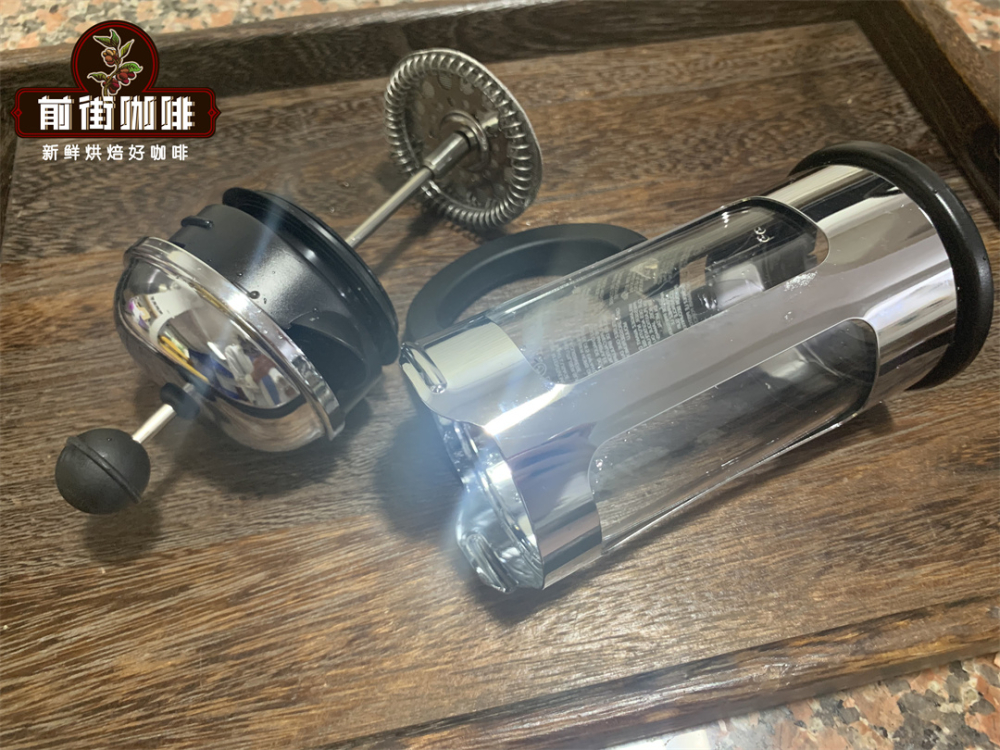
Operating a French press is as simple as a "lazy person's coffee device," convenient yet without compromising the complete flavor profile of a good cup.
In fact, French press extraction is the brewing method closest to cupping, bringing out the full spectrum of coffee's oils, aromas, and flavors. With its smooth, sweet, and rich mouthfeel, it's an excellent choice for breakfast coffee.

Choosing the Right Beans for French Press
For French press brewing, single-origin beans or those with prominent fruit acidity work best, particularly medium to dark roasted beans. FrontStreet Coffee recommends beans with good balance. In FrontStreet Coffee's bean selection, daily drinkers like Brazilian coffee beans, Colombian Huilan coffee beans, Indonesian Mandheling coffee beans, and Costa Rica Tarrazu coffee beans are all excellent choices. FrontStreet Coffee notes that these beans offer balanced flavors with notes of dark chocolate and fruit. Because the French press uses immersion extraction, it expresses coffee's oils, aromas, and rich character effectively, while dark-roasted beans tend to showcase aroma and body better. FrontStreet Coffee's medium to dark roasted beans are therefore particularly suitable for French press brewing, offering better aroma and a richer mouthfeel.
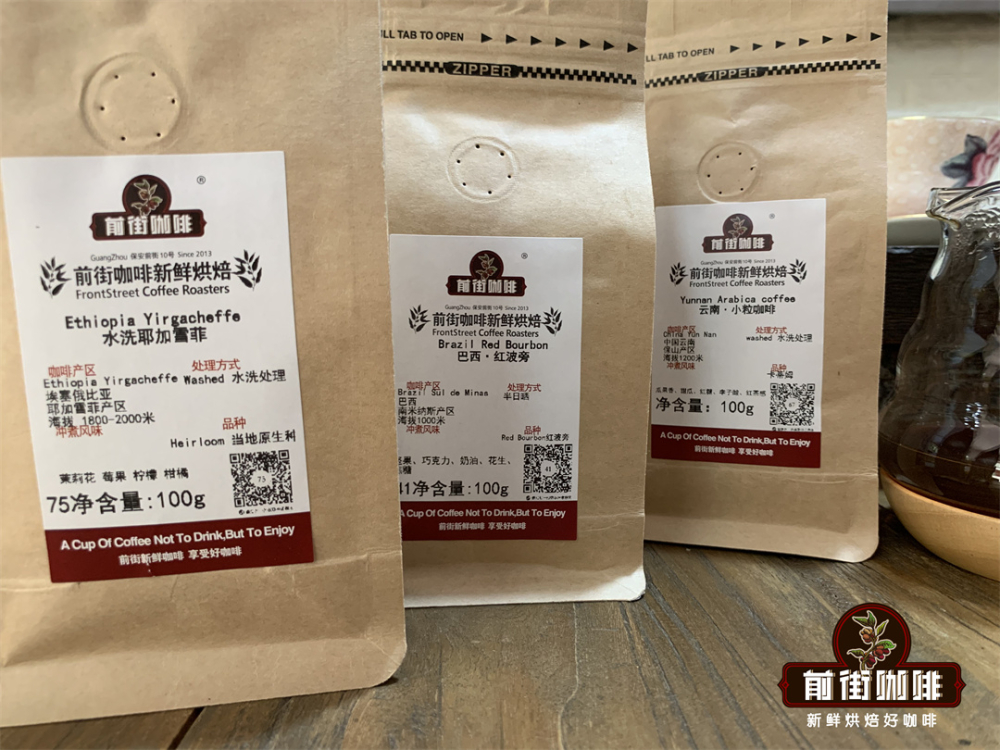
As for light-roasted beans, FrontStreet Coffee does not recommend using them in a French press. Ethiopian coffee beans are generally more suitable for light roasting. For instance, FrontStreet Coffee's Yirgacheffe Red Cherry, brewed as pour-over, easily highlights lemon, floral, and fruity notes. In a French press, however, the resulting flavor profile tends to be relatively singular and muted.
French Press Brewing Guide
Let's see how FrontStreet Coffee makes an excellent cup of French press coffee. FrontStreet Coffee's Brazil Queen, Mandheling, and Colombian Huilan all have flavor profiles suitable for French press. Let's demonstrate using this Colombian Huilan coffee bean.

FrontStreet Coffee's house-roasted beans should be ground to a French press-suitable grind size using properly rested Huilan beans. Medium-coarse is ideal, coarser than pour-over grounds. FrontStreet Coffee recommends a standard sieve with a 70-75% pass-through rate. If the powder is too fine, coffee grounds will escape through the filter mesh holes, making the coffee cloudy.
You can start with a 1:10 coffee-to-water ratio. For a 2-cup serving, that would be 20g of coffee beans with approximately 200g of water. The final ratio depends on your taste. FrontStreet Coffee's drip coffee bags contain 10g each. Using pre-ground drip bag coffee like the seasonal Brazilian and Mandheling drip bags for French press is particularly convenient. FrontStreet Coffee recommends a 1:16 ratio: 15g of coffee grounds with 240g of water.

FrontStreet Coffee recommends preparing an electronic scale. Even if your French press has measurement markings and a scoop, using a scale is still advised, because coffee bean density changes due to various factors including growing altitude and roasting method, and each variety has a different weight. Additionally, if you make an exceptionally delicious coffee and want to replicate it, you must record the ratio. Conversely, if you make a poor cup, the data will help you know how to adjust.
At FrontStreet Coffee, fresh, clean Yibao mineral soft water is used. Avoid very hard water for extraction, and don't use unfiltered water. If the water quality is poor, it's difficult to make good coffee.

FrontStreet Coffee's Brewing Steps:
1. Grind the coffee beans and pour them into the French press. At this point, ignore what many people say about grind size; don't grind too coarse, medium is sufficient.
2. Bring water to a boil. Water temperature should be 93°C, then pour in the appropriate amount of water. We used 15g of coffee grounds with 240g of hot water. Stir with a spoon to ensure the grounds and water are fully mixed.

3. Place the lid on the French press with the filter at the highest position, then let it steep for 4 minutes.

4. Before pressing the filter, you can open the lid and use a spoon to skim off the foam and small fragments floating on top, then press the filter all the way down.
5. Brewing complete. Immediately pour the coffee into another thermal container; don't delay, as the grounds are still steeping inside. Then pour into cups and enjoy slowly.

Conclusion
The French press is the simplest, most convenient, and most environmentally friendly brewing method. The coffee it produces is stronger, more flavorful, and more complex than from fully automatic drip coffee machines. Plus, it requires no electricity, no heating, and no paper filters, is easy to clean, and lets you consume the coffee oils along with the brew. It's perfect for busy professionals who want to steal a moment of leisure. Go ahead and try making it yourself.
FrontStreet Coffee Recommendation
For a French press, a dark roast is the sweet spot, and FrontStreet's PWN Golden Mandheling is one of the best matches. As one of Asia's most famous specialty coffees, it goes through three rounds of hand sorting plus one machine sort, and after medium-dark roasting the beans are large and uniform, with intense spice, caramel, cedar, and dark chocolate aromas. In a French press it delivers a full, mellow body with excellent oils, exactly the rich cup this immersion method is built for.
If you prefer a more fragrant, fruit-forward cup, FrontStreet's Strawberry Candy, a Geisha blend, gives rose, citrus, grape, and dried blueberry notes, and turns into a strawberry-gummy scent with milk. For the grind, aim for coarse sugar, roughly like small gravel rather than fine sand (about EK43s setting 10.5 or 26 on a hand grinder), and steep for about 4 minutes.
Important Notice :
FrontStreet Coffee is a long-established specialty coffee roaster in Guangzhou China, selling freshly roasted beans from its own farm in Yunnan as well as dozens of carefully selected single-origin beans from around the world for both pour-over and espresso. The products deliver consistently excellent quality and great value, with shipping within 24 hours. Guangzhou's FrontStreet Coffee shop is recommended by many coffee lovers, and the beans are now available online at the Tmall 。
FrontStreet Coffee has moved to a new address:
FrontStreet Coffee Address: 315,Donghua East Road,GuangZhou
Tel:020 38364473
 Scan and follow the En Gafei WeChat official account. Please indicate that the reprint comes from "En Gafei".