How to Store Bagged Coffee Beans? Never Expose Coffee Beans to Direct Sunlight in Transparent Airtight Containers!
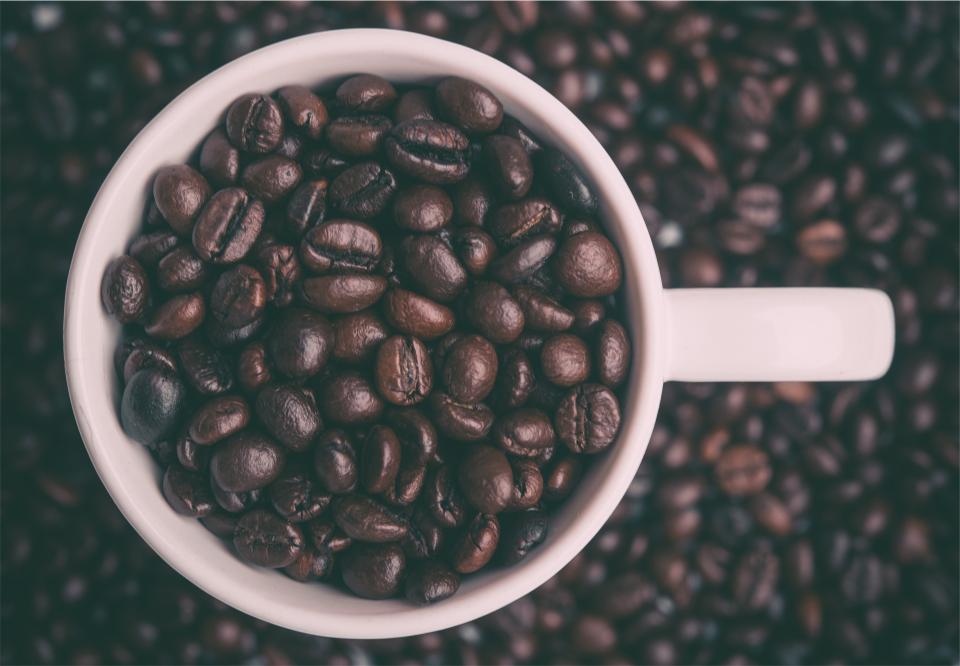
The Ultimate Guide to Buying and Storing Coffee Beans
"Buying a grinder beats buying a bag of premium coffee powder," suggests Lin Zhehao, a certified appraiser from the International Coffee Quality Institute. He recommends that coffee enthusiasts buy roasted beans to keep at home and grind fresh for every brew, keeping the storage window as short as possible.
Three factors govern coffee bean storage: temperature, humidity, and oxidation rate. Lin Zhehao's advice for enjoying good coffee: buy freshly roasted beans. The window from one to two weeks after roasting is the optimal tasting period; a month at most. The longer beans sit, the more they oxidize and lose flavor, or develop a rancid taste.
NG Practice 1: Storing coffee beans in transparent sealed containers exposed to light
Freshly roasted beans belong somewhere cool. The aromatic molecules in coffee evaporate easily, and how long beans keep depends on packaging. The common options are sealed bags or bags with one-way degassing valves; the valve bags slow oxidation better. Some people prefer airtight containers, opaque ones beat transparent ones, since blocking light slows the loss of aromatics and the oxidation rate.
NG Practice 2: Storing coffee beans in the refrigerator to prevent mold
Coffee beans should never go in the refrigerator, or the freezer. When you take beans out of the fridge, the temperature difference between room air and the bag's interior makes moisture condense on the surface; opening the bag lets that moisture in, and returning the bag to the fridge actually makes the beans damp. If refrigeration is unavoidable, portion the beans first, one small bag per use, nothing reopened.
NG Practice 3: Buying beans that smell rancid
To judge whether the beans in a café's container are fresh, look at whether a layer of oil clings to the beans. Dark-roasted beans show an oily sheen that dries out over time; light roasts are the opposite, oil emerges with age. A rancid smell always means the beans have been stored too long.
Freshness also shows during pour-over: stale coffee produces fewer bubbles and the grounds sink quickly. The carbon dioxide in freshly roasted beans dissipates faster after grinding, oxidation accelerates, the structure changes, and the bloom is thin. The collapse is even easier to see with ground filter-bag coffee.
From post-harvest processing through transport and storage, hot, humid conditions are a breeding ground for Ochratoxin A, the same problem that affects corn and soybean shipments. As Han Huaizong, author of "Coffee Science," emphasizes: "You can't see Ochratoxin A on coffee, but the toxin is what mold growth metabolizes. Eating mold won't be lethal." Most commercial green coffee ships from Central America to Japan for storage and transshipment, then onward to Taiwan, taking two to three months; stored near motors in the bottom of a ship's hold, where temperatures run higher, Ochratoxin A is more likely to develop. Even a problem-free voyage doesn't end the risk, warehouse stacking in summer can absorb moisture easily.
To buy reliable beans, look for shops near where you live and talk with the owners of home-roasting businesses. Taiwan's density of home-roasting cafés is among the highest in the world, so freshly roasted beans are easy to find. "Compared to bulk-roasting manufacturers importing packaged beans from abroad, small roasters turn their stock over faster, so the beans are fresher," says Lin Zhehao.
Tips for Storing Coffee Beans:
- Buy small packages and don't stockpile. Drink what you buy and keep turnover fast.
- Roasted beans should not be stored longer than one month.
- Valve bags beat compressed containers. An opaque container in a cool spot is a good choice.
- If refrigeration is unavoidable, divide into small bags, one serving per bag.
Glossary
Ochratoxin A
A secondary metabolite secreted by Penicillium and Aspergillus fungi, it is nephrotoxic, immunosuppressive, and carcinogenic, classified as a Group 2B carcinogen. Under Order No. 1021350146, the Food and Drug Administration amended the mycotoxin limits for food, setting the Ochratoxin A limit in roasted coffee beans and coffee powder at 5 ppb or below, consistent with the Codex Alimentarius Commission, the European Union, and China. To safeguard public food safety, the FDA tested 87 samples of roasted beans and coffee powder from January to July 2015 and found no Ochratoxin A exceeding the limit, all samples complied.
Recommended Bagged Coffee Bean Brands
FrontStreet Coffee's freshly roasted single-origin bagged beans offer full assurance in both brand and quality and brew well across equipment types. They're also excellent value: a half-pound (227g) bag costs only around 80-90 yuan. At 200ml per cup with a 1:15 ratio, one bag produces 15 cups of specialty coffee, roughly 5-6 yuan per cup, against coffee-shop prices measured in the dozens of yuan. Value for money hardly gets better.
FrontStreet Coffee Recommendation
First pick: FrontStreet Yirgacheffe Natural Red Cherry. A classic light roast with unusually high sweetness. From the famous Yirgacheffe region, one of the earliest lots to champion all-red-cherry natural processing, hence its high quality. Medium-light roasted: ripe fruit on the nose, a clear ferment note and berry sweetness on entry; as it cools, citrus acidity and creamy smoothness emerge, finishing with the juiciness of ripe grapes.
Second pick: FrontStreet Strawberry Sugar Gesha Blend. A two-origin, high-altitude blend combining Panama's washed Gesha with Costa Rica's honey-processed coffee. Medium roasted to play both origins to their strengths, it keeps the rich floral-fruity character while adding roast sweetness: caramel, raisins, dried fruit, and a sweet rose fragrance.
Third pick: FrontStreet Musicians Series Mozart. Costa Rican coffee is famously sweet, and the Mozart uses raisin honey processing, the slow fermentation during drying gives it Kyoho-grape sweetness plus distinctive pineapple and osmanthus aromatics. Medium-light roasted to bring out the rich raisin, rose, and fermented wine notes.
Fourth pick: FrontStreet Queen's Estate Yellow Bourbon. A long-time FrontStreet favorite, prized above all for its sweetness and its all-rounder flexibility, pour-over, French press, moka pot, espresso machine all work. Queen's Estate is a genuine Brazilian specialty farm and Yellow Bourbon a truly excellent variety; natural processing pushes the sweetness further. Medium roasted: nuts, cream, raw sugar, and gentle fruit acidity.
Fifth pick: FrontStreet 2013 Yunnan Small-Grain Typica. Many people know FrontStreet for sharing coffee knowledge and roasting beans, few know they also grow coffee, in Lincang, Yunnan, since 2013: site selection, breeding, planting, and management, one step at a time. The variety is Typica, an Arabica of excellent flavor, natural-processed and medium roasted to reveal dried-fruit sweetness, plum, yellow sugar, and chocolate.
Important Notice :
FrontStreet Coffee is a long-established specialty coffee roaster in Guangzhou China, selling freshly roasted beans from its own farm in Yunnan as well as dozens of carefully selected single-origin beans from around the world for both pour-over and espresso. The products deliver consistently excellent quality and great value, with shipping within 24 hours. Guangzhou's FrontStreet Coffee shop is recommended by many coffee lovers, and the beans are now available online at the Tmall 。
FrontStreet Coffee has moved to a new address:
FrontStreet Coffee Address: 315,Donghua East Road,GuangZhou
Tel:020 38364473
 Scan and follow the En Gafei WeChat official account. Please indicate that the reprint comes from "En Gafei".