Introduction to Rare Pink Bourbon Coffee Beans - Origin Story and Cultivation Details

Professional coffee knowledge exchange. For more coffee bean information, follow FrontStreet Coffee's official channel.
Colombia: The Land of Pink Bourbon
As the world's third-largest coffee producer, Colombia is home to a national-treasure variety: Pink Bourbon, a coffee capable of charming even the most reserved drinker. Colombia permits only Arabica cultivation, so Pink Bourbon is an Arabica variety, believed to be a hybrid of Yellow Bourbon and Red Bourbon. It takes its name from the pink color of the cherries when ripe. Because that pink color cannot be stabilized, the variety is extremely rare. FrontStreet Coffee wants to share this delightful variety today.
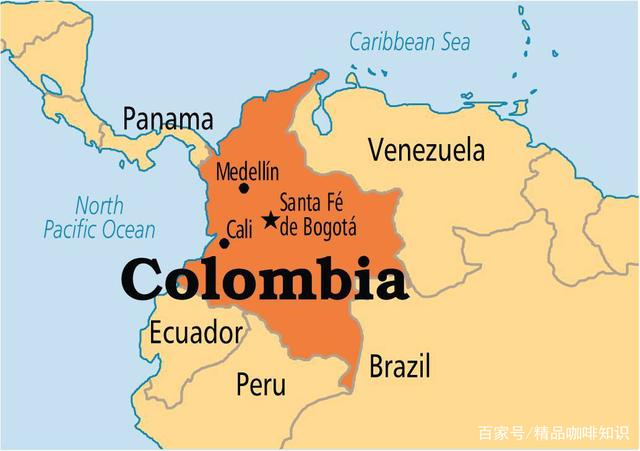
In 1808, a priest first introduced coffee to Colombia from the French Antilles by way of Venezuela. Today the country is the second-largest coffee producer after Brazil, the world's largest exporter of Arabica beans, and the world's largest exporter of washed coffee.
Colombian coffee is often described as silky and smooth. Among all coffees it has the finest balance, with a soft, smooth texture that suits any time of day. It has earned praise other coffees rarely receive: it has been hailed as "green gold."
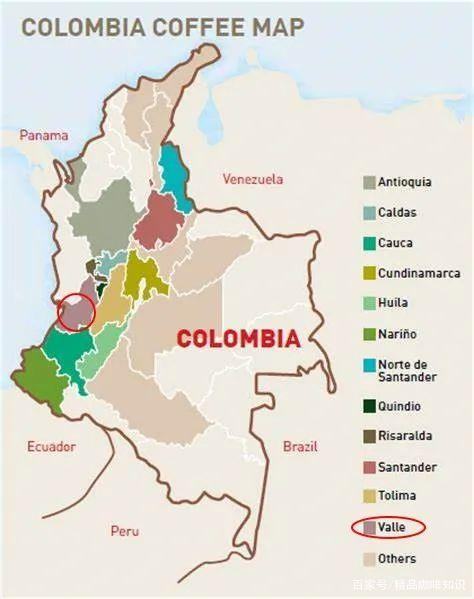
Cauca Department
Cauca Department, named after the Cauca River, lies in southwestern Colombia. Together with Nariño Department and Huila Department, it forms one of Colombia's important specialty coffee regions.
Cauca is a Colombian origin-certified region with an average altitude of 1758m, reaching 2100m at its highest. Its topography, rainfall, temperature, and volcanic soil create ideal conditions for coffee. Eighty percent of the area is mountainous, with parallel ranges to the east and center forming part of the Andes. The central range includes two main volcanoes, Sotara and Petacas. As in other southwestern regions, rainfall follows a clear single peak, with the dry season mainly from August to September each year. The following rainy season brings a concentrated flowering period, and the next year a concentrated harvest.
The biggest climatic difference between Cauca and other regions is probably its wide temperature range. The daily average temperature is 11°C, while the daytime average is 18°C. This day-night swing is an important factor in forming high-quality coffee. Lower nighttime temperatures and relatively higher altitudes slow the coffee's growth rhythm, letting the seed and bean absorb nutrients from the fruit more fully, which creates Cauca coffee's better acidity and its acclaimed sweetness.
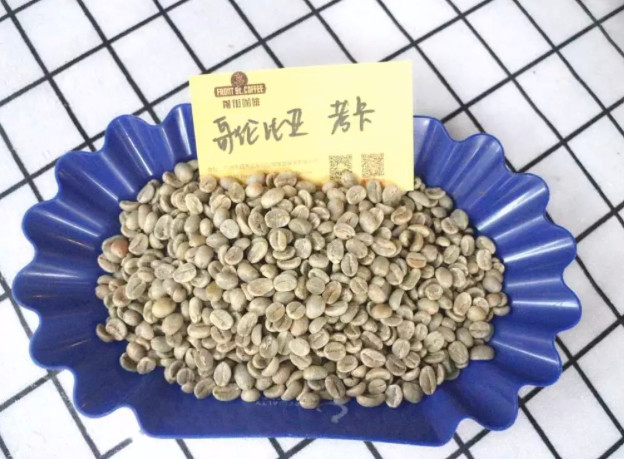
Coffee Beans
FrontStreet Coffee Colombia - Cauca
Region: Cauca Department
Micro-region: Suay micro-region
Soil: Volcanic clay
Altitude: 1758-2100 meters
Variety: Caturra
Processing: Washed method
Flavor: Nuts, chocolate, soft fruit acidity
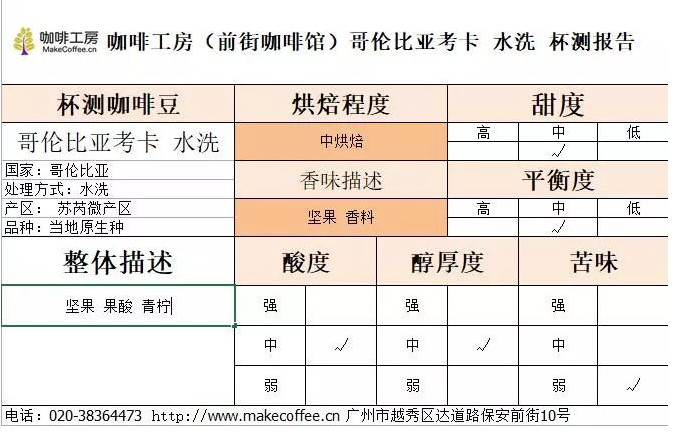
Cupping chart
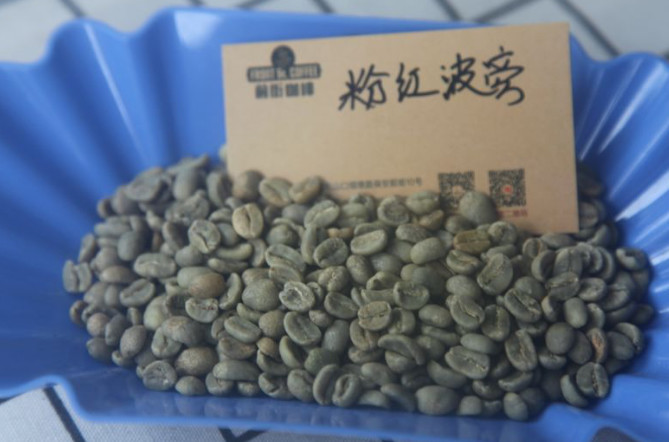
FrontStreet Coffee Colombia - Pink Bourbon
Region: Cauca Department
Estate: Paraiso Estate
Variety: Pink Bourbon
Processing Method: Washed processing
Altitude: 1930 meters
Flavor: Citrus, cocoa, caramel, roasted almonds
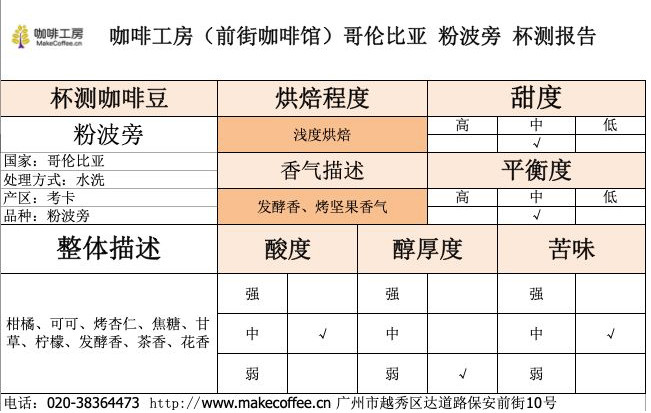
Cupping chart
Notes
1. Flavor descriptions vary from person to person and are influenced by water temperature and brewing method. This cupping report is limited to the flavor wheel under the same brewing equipment and parameters, for reference only.
2. Content is updated promptly as new information becomes available. The latest update prevails.
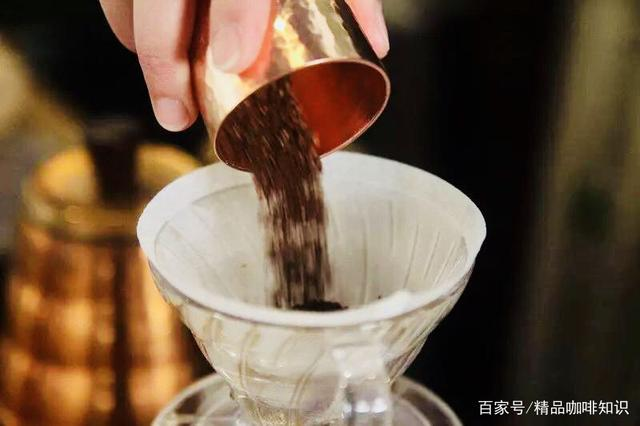
Brewing
Recommended brewing method: Pour-over
Dripper: V60
Water temperature: 88-90°C
Grind size: Medium-fine (BG 5R: 58% pass rate through a China standard #20 sieve), equivalent to white sugar granules
Coffee-to-water ratio: 1:15
Extraction technique: 15g of coffee, bloom with 30g of water for 30 seconds. Pour to 118g and pause, wait until the water level drops to just above the coffee bed, then continue pouring to 227g and stop. Remove the dripper when the water level drops to just above the bed. Total extraction time is 2 minutes.
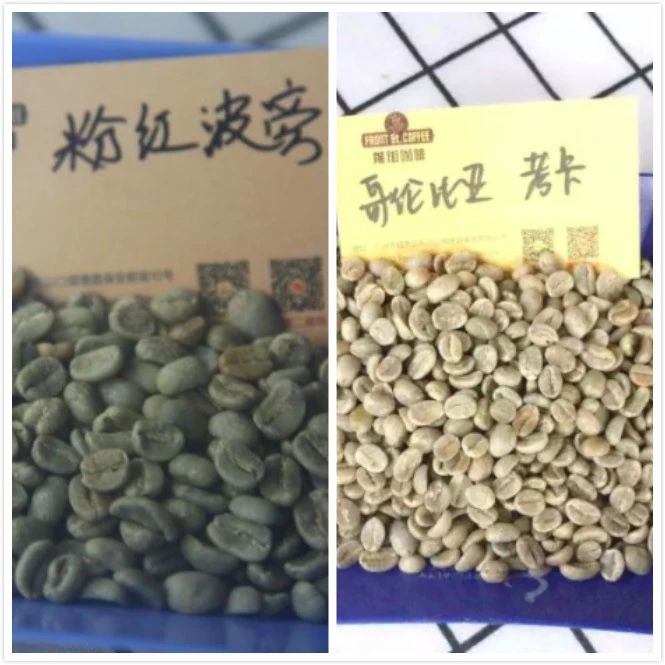
Flavor
[FrontStreet Coffee Colombia - Cauca] Noticeable lime acidity on entry, floral notes, nuts, and chocolate. Smooth, balanced mouthfeel.
[FrontStreet Coffee Colombia - Pink Bourbon] Flavors of peach, plum, grapefruit, cream, roasted almonds, and cocoa, with persistent tea and floral notes in the aftertaste. Light, smooth mouthfeel.
Conclusion
A flavor comparison shows how much coffee mouthfeel can differ. In fact, coffees cannot be assumed to taste the same simply because they come from the same producing region; different processing methods, different varieties, and other differences are very obvious. The Caturra variety in [FrontStreet Coffee Colombia - Cauca], for example, has excellent sweetness and body, while the Pink Bourbon variety in [FrontStreet Coffee Colombia - Pink Bourbon] is an extremely rare new variety hybridized from Red Bourbon and Yellow Bourbon. Its flavor tends toward fruity notes with a comparatively lighter mouthfeel.
FrontStreet Coffee Recommendation
If Pink Bourbon's clean fruit sweetness appeals to you, FrontStreet Brazil Queen's Estate is a like-minded everyday choice. This rare yellow Bourbon grows in the Mogiana region near South Minas, where fertile red volcanic soil feeds the fruit into a full, generous aroma. Yellow Bourbon arose as a genetic mutation of Red Bourbon, and its fruit character is even cleaner; brewed as a pour-over, moka pot, or home espresso, it reveals the sugarcane-like sweetness found in few other origins, together with fruit and chocolate notes. For a lighter, more approachable take on Brazilian flavor, FrontStreet Brazil Cerrado Red Bourbon is a classic single-origin, a red Bourbon common across South America. At a medium roast it shows rich aromas of creamy peanut, toast, caramel, and hazelnut, with a rounded, low-acid body and a light bitterness, and it works just as well in a pour-over as it does in a moka pot, espresso SOE, siphon, or French press.
Brew either of these with water around 88-91°C and a 1:15 ratio, using a medium-fine grind for pour-over or a slightly coarser grind for a moka pot or French press. Their balance and low acidity make them very forgiving, which is exactly why Brazilian beans have become the backbone of so many espresso blends.
Important Notice :
FrontStreet Coffee is a long-established specialty coffee roaster in Guangzhou China, selling freshly roasted beans from its own farm in Yunnan as well as dozens of carefully selected single-origin beans from around the world for both pour-over and espresso. The products deliver consistently excellent quality and great value, with shipping within 24 hours. Guangzhou's FrontStreet Coffee shop is recommended by many coffee lovers, and the beans are now available online at the Tmall 。
FrontStreet Coffee has moved to a new address:
FrontStreet Coffee Address: 315,Donghua East Road,GuangZhou
Tel:020 38364473
 Scan and follow the En Gafei WeChat official account. Please indicate that the reprint comes from "En Gafei".