Can Espresso Grinds Be Used for Cold Brew? Cold Brew Coffee Maker Water-to-Coffee Ratio, Time, and Methods

Cold brew may be the easiest of all coffee extraction methods, requiring virtually no technical skill, which makes it a way for every coffee novice to make delicious iced coffee. FrontStreet Coffee has shared quite a few articles on cold brew knowledge and run numerous comparative experiments on various parameters. Recently, though, a friend asked FrontStreet Coffee: can espresso grounds be used for cold brew?
What Are the Characteristics of Cold Brew Coffee?
Cold brew tastes great because low-temperature water immersion does not easily release undesirable compounds from coffee, such as bitterness and astringency, while fully extracting the desirable ones, such as fruit acids and sweetness. Compared with other high-temperature brewing methods, cold brew is cleaner, with a rounder mouthfeel and a fuller flavor profile.

If cold brew has drawbacks, FrontStreet Coffee sees two. One is that preparation takes a relatively long time, typically 8-12 hours of cold refrigeration immersion. FrontStreet Coffee feels good coffee is worth waiting for: immerse it before bed at night, then filter it the next morning for a cup of energizing cold brew. The other is that choosing the wrong beans easily produces negative flavors, making the coffee taste like a cup of Chinese herbal tea. So beyond controlling the parameters, picking beans that suit your taste matters just as much.
What Coffee Beans Are Recommended for Making Cold Brew?
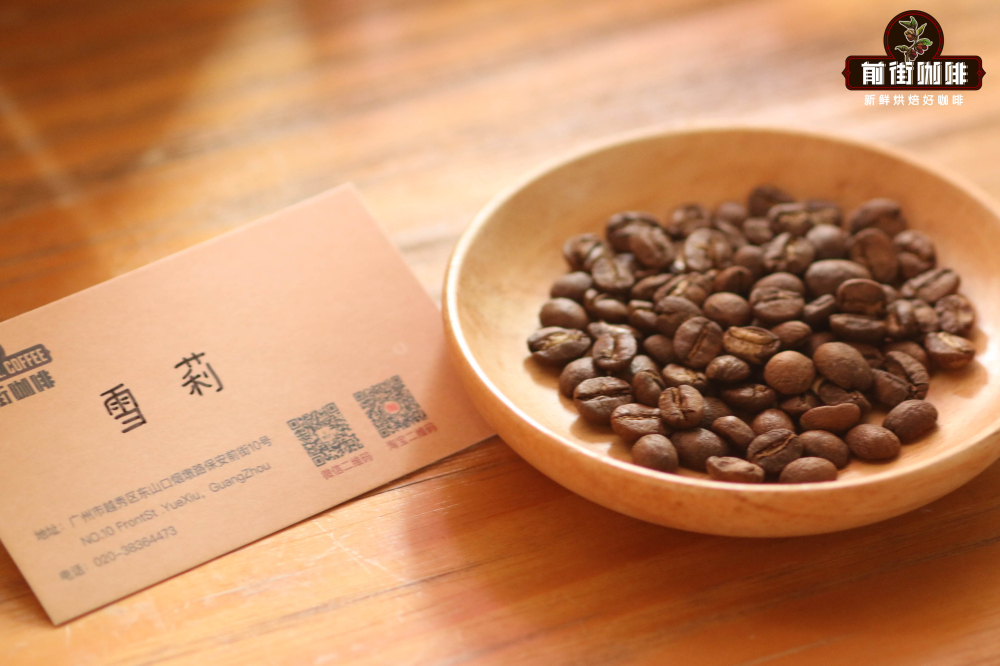
Cold brew is, as the name suggests, a cold beverage. Choose a dark roast and the resulting liquid will likely be both icy and bitter, and without the support of high temperature the bitterness lingers, making people unwilling to take a second sip after the first. For everyday home cold brew, FrontStreet Coffee typically recommends light to medium-roasted beans with prominent aromas or clear sweet-and-sour character. The resulting iced coffee has balanced sweetness and acidity and a refreshing, cool, juice-like sensation, especially suited to summer.
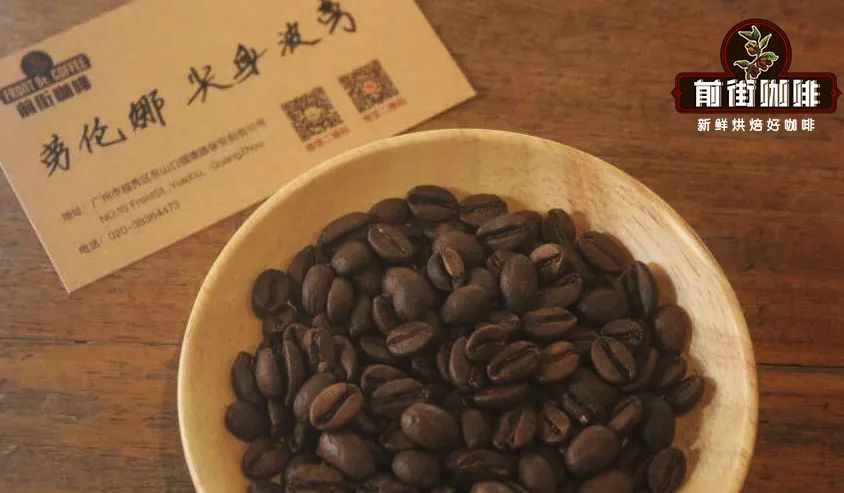
For example, FrontStreet Coffee's current FrontStreet Ethiopia Natural Alo Village Coffee Beans have light floral aromas, rich berry sweetness and acidity, moderate fermentation and a black tea-like aftertaste; FrontStreet Panama Butterfly Coffee Beans bring bright citrus acidity, fresh white florals, honey sweetness and a green tea-like aftertaste; and FrontStreet Honduras Sherry Coffee Beans offer whiskey aroma, vanilla cream cake-like sweetness and smoothness, and a nut caramel finish, leaving an endless aftertaste.
Cold Brew Water-to-Coffee Ratio and Step-by-Step Instructions
The ratio for cold brew is 1:10 to 1:12. With 30g of coffee grounds, for example, we typically use 300g of cold water for the immersion.
For grind size, FrontStreet Coffee recommends grounds with the consistency of fine granulated sugar, a 75% retention rate on the China No. 20 standard sieve. If you do not have a grinder at home, you can add a note requesting a cold brew grind when ordering. FrontStreet Coffee must stress that ground coffee aroma dissipates faster, so if conditions allow, grind fresh and brew immediately.
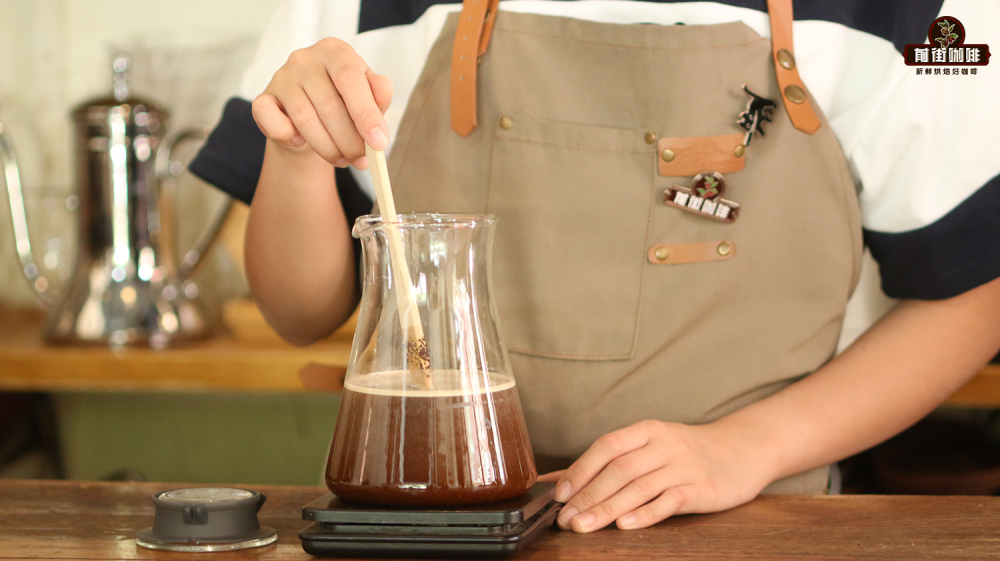
To make cold brew, choose a clean, sealable container, pour in the coffee grounds and the right amount of water, and stir to ensure full contact between grounds and water. Then seal it and place it in the refrigerator for 8-12 hours of cold brewing.
When the extraction time is up, take it out and filter it, then pour the liquid into another clean, sealable container and refrigerate. After the grounds are filtered out, cold brew typically keeps for about 5 days, during which it should be drunk as soon as possible.

Can Espresso Grounds Be Used for Cold Brew?
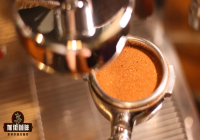
Back to the main topic and our friend's question. The reason it comes up is that the grind size does not meet cold brew's requirements. We all know the grind size for espresso is typically as fine as flour. Using the ratio above and undergoing long immersion, such fine grounds release soluble substances more easily than a regular cold brew grind, at fine granulated sugar consistency, ultimately making the coffee thick, bitter and even astringent. To avoid over-extraction, we need to adjust both the immersion ratio and the time.

Here FrontStreet Coffee uses FrontStreet Indonesia Lindong Mandheling as a demonstration. This bean is roasted to a medium-dark degree, with caramel, roasted nuts, dark chocolate and herbal notes and a caramel aroma when brewed as pour-over. It suits various brewing methods and has a mouthfeel closer to commercially available espresso grounds. Made into espresso, it also carries a rich crema.
To recreate the situation everyone encounters, FrontStreet Coffee used the store's espresso grinder, a Galileo Q18, adjusted to setting 2.5 for espresso extraction, producing particles as fine and uniform as powdered sugar.

Since the grind size is already fixed, to reduce the extraction rate we must first shorten the water immersion time, and second increase the coffee-to-water ratio, changing the coffee concentration to make the flavor lighter. The specific parameters are as follows:
Coffee grounds: 50g
Coffee-to-water ratio: 1:14
Cold water: 700g
Immersion time: 3 hours
After filtering: refrigerate for another 2 hours

Because the grounds are fine, there is greater resistance to water flow during filtering, so it takes longer. The freshly filtered liquid typically has a slightly powdery taste, because flavor compounds are still suspended in the water. Seal it and place it in the refrigerator for a short period of cold storage, letting the suspended particles settle slightly, and the mouthfeel becomes cleaner.

Espresso grounds also tend to be dark roasted, with predominantly caramelized aromas, a thick mouthfeel and slightly heavy bitterness, so FrontStreet Coffee suggests adding an appropriate amount of ice cubes after filtering before tasting.

Like today's cup of FrontStreet Indonesia Mandheling cold brew with ice added, it has distinct spice notes, predominantly dark chocolate and caramel flavors, and a Pu'er tea-like aftertaste. The mouthfeel is icy and refreshing, very invigorating.
FrontStreet Coffee Recommendation
Cold brew rewards the right beans, and FrontStreet's light and medium-light options are built for it. FrontStreet Natural Huakui from Ethiopia is an excellent choice: cold brew intensifies floral and fruity notes while softening woody and roasted ones, and because Huakui is natural processed, the beans absorb plenty of sweet aroma from the fruit and skin. The result is magnolia, creamy strawberry, dried mango, guava and red tea.
For a juicy, full-bodied cold brew, FrontStreet Kenya Small Tomato brings cherry tomato, snow pear, black plum and dried plum in a sweet-and-sour balance that low-temperature extraction shows at its best, with low bitterness and full acidity, refreshing over ice. It comes from Kenya's Sika region, grown at 1550-1750 meters from the classic SL28 and SL34 varieties, and the local K72 double-washed method makes the most of the bean's own flavor; a medium-light roast then turns the aroma precursors into something more complex. FrontStreet Yirgacheffe Gudingding Cooperative is the everyday option, with its clean, bright sweet-and-sour character and sweet berry, layered, honeyed notes in cold brew.
Because cold brew usually uses more grounds than a pour-over, an affordable base is smart, and blending is a good way to get both flavor and value. Many drinkers love the passion fruit, grape, apricot and dried fruit sweetness of FrontStreet Colombia Xizhua, but for cost reasons you can mix it 1:2 with FrontStreet Costa Rica Tarrazu, keeping Xizhua's floral and fruit notes and Tarrazu's crisp citrus acidity while improving the value. If you want the most aromatic cup, FrontStreet Strawberry Candy Geisha Blend pairs a Panama Geisha with a Costa Rica honey-processed coffee for rose, orange, grape, dried blueberry and strawberry fudge; given a little fermentation and settling in the cold brew, it can even take on a fruity wine-like character.
Important Notice :
FrontStreet Coffee is a long-established specialty coffee roaster in Guangzhou China, selling freshly roasted beans from its own farm in Yunnan as well as dozens of carefully selected single-origin beans from around the world for both pour-over and espresso. The products deliver consistently excellent quality and great value, with shipping within 24 hours. Guangzhou's FrontStreet Coffee shop is recommended by many coffee lovers, and the beans are now available online at the Tmall 。
FrontStreet Coffee has moved to a new address:
FrontStreet Coffee Address: 315,Donghua East Road,GuangZhou
Tel:020 38364473
 Scan and follow the En Gafei WeChat official account. Please indicate that the reprint comes from "En Gafei".